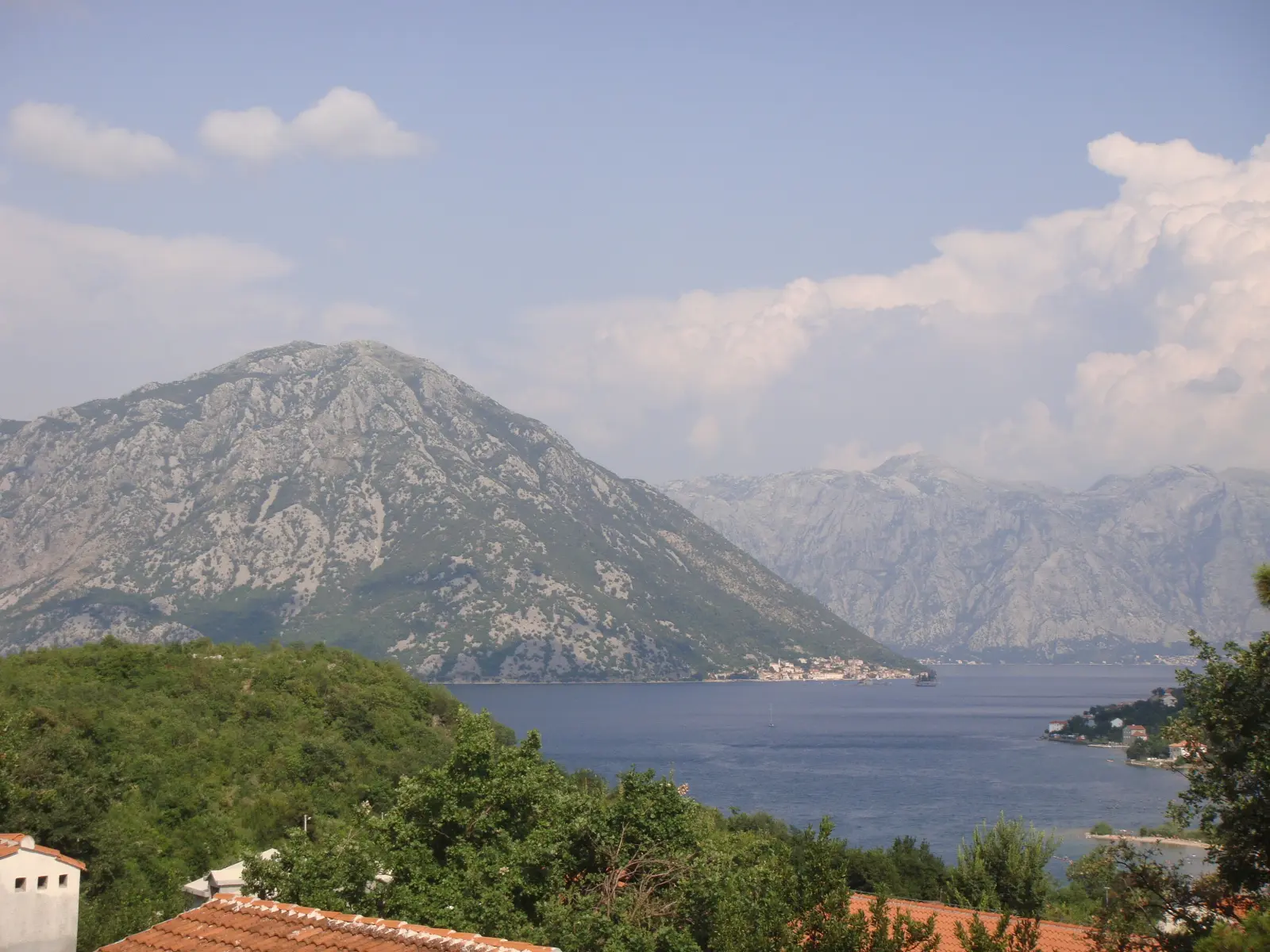
Morinj: What This Place Is and Why It's Special
Geographically, Morinj sits somewhere between everything. It's about 25 kilometres from Kotor along the E65 coastal road, and just under 15 from Herceg Novi. The Kamenari ferry crossing that cuts across the bay is only a few kilometres further west – making Morinj a natural first or last stop for anyone entering or leaving Boka from the Herceg Novi side.
Historically, this was a milling town. The streams rising from Mount Orjen and the Risan hinterland powered mills that ground olives and grain for the entire surrounding area. That craft slowly died out, the mills fell into disuse, but the streams remained. And that, paradoxically, is precisely why Morinj today is home to one of the most memorable gastronomic addresses in the Balkans.
Upper Morinj, perched above the shore along steep cobblestones, preserves architectural traces of earlier times: stone houses, round threshing floors, churches and the remnants of a defensive wall climbing into the mountains. In summer it makes for a short but rewarding walk. In winter, Upper Morinj is almost deserted – the mountain blocks the sun and the overall season here is short but intense.
Did you know?
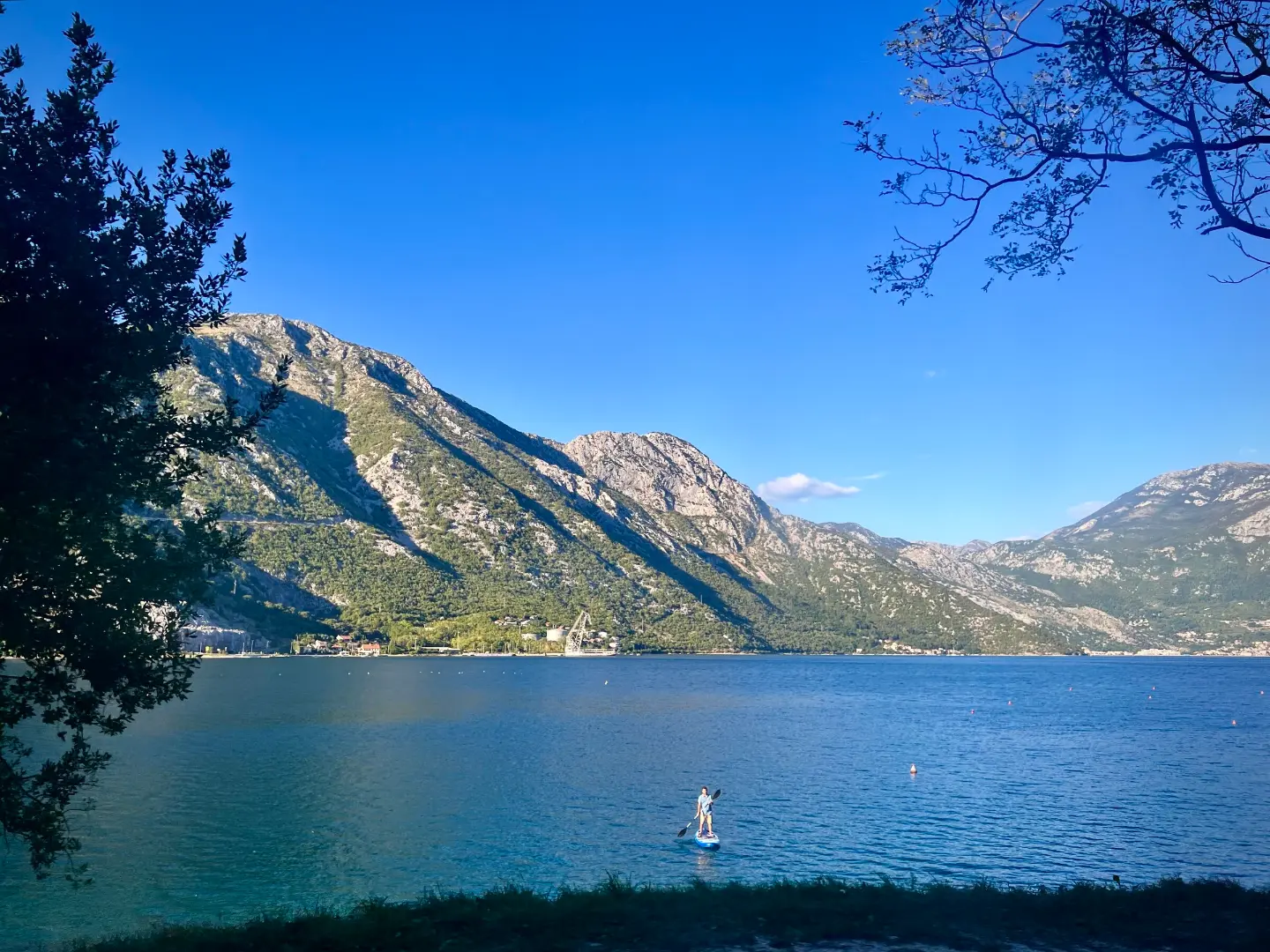
The sea at Morinj is measurably colder and cleaner than the rest of the Bay of Kotor, thanks to a network of freshwater underwater springs that continuously flow along the Morinj shoreline. Local fishermen say it is precisely this mixture of fresh and salt water that gives the bay's mussels a unique sweetness that cannot be replicated anywhere else in the bay.
Ćatovića Mlini: The Story of the Mills and the Family That Never Forgot Them
The Ćatović family has lived in Morinj for a long time. The mills where they ground grain and olives had been in their possession for over two centuries – spread across a broad green plot right by the sea, beside the streams that rise at the foot of the mountain. Then the mills stopped working. They fell into disuse, like so many old crafts in Boka when the sea began offering more than the mountains.
Lazar Ćatović, sometime in the mid-nineties, decided otherwise. Stone by stone, plant by plant – as he himself puts it – he transformed the mill and the family home into a tavern that today bears the family surname as a title. In doing so, he demolished or destroyed nothing that had any connection to tradition. Everything that was there – the old millstone, the stream still flowing through the property, the greenery that had grown on its own for decades – remained. It was all preserved and woven into a restaurant that looks as though it has always been there, only now with white tablecloths and a menu.
Today, more than thirty years after opening, Ćatovića Mlini is regarded as one of the benchmark restaurants in all of Montenegro – not just in Boka. Swans and ducks wander across the grass between the tables, the stream murmurs beneath the terraces, and the mountain stands right there, within arm's reach. A few metres away is the sea. An atmosphere that needs no marketing whatsoever.
Heads-up
A Reservation Is Not Optional – It's Essential
In summer (June–September) Ćatovića Mlini fills up for weekends days in advance. Call +382 32 373 030 or book through catovica-mlini.com. If you're flexible with timing, arriving for lunch on a weekday (12:00–14:00) offers a calmer experience and better service than the busy Friday or Saturday evening rush.
What to Eat: Boka Cuisine the Morinj Way
Boka cuisine is a complex thing. For centuries, Venetians, Austrians and Ottomans passed through this bay, and each left something on the plate. The result is a cuisine that is Mediterranean but not identical to Italian or Greek – it has its own logic, its own specialities, and its own methods of preparation that are not written in cookbooks but passed down from generation to generation.
At Ćatovića Mlini that principle is visible at every table. Everything comes from the surrounding area: fish from the bay, oil from local olives, prosciutto smoked at Njeguši, vegetables from the Grbalj plain. Homemade cheese and prosciutto as a starter, then fish baked in a salt crust – a whole sea bass brought to the table, broken open in front of the guests, smelling of the sea and bay leaf at the same time. Saffron yellow risotto with prawns, ordered as a starter but finishing as a main course because the portion is generous. Black cuttlefish ink risotto – a Boka classic, deep in colour and rich in flavour. Octopus cooked under the peka for hours, falling apart on the fork without any effort. And to finish, if you have room: Torta od Boke, a dessert tied exclusively to this region.
Trout appears on the menu occasionally – depending on the season and supply. If it's there, order it. Boka is not a highland region, but the connection with the interior is alive, and fresh river trout in the Morinj setting is a combination that is hard not to pause over.
Recommended Dishes for a First Visit
- Homemade prosciutto and cheese in olive oil – an essential start; the Njeguši prosciutto here is sliced thinner than in typical taverns
- Mussels in buzara sauce (white or red) – Bay of Kotor mussels, sweet from the mix of fresh and salt water, served with homemade bread to soak up the sauce
- Saffron yellow risotto with prawns – the signature dish; order it as a starter for two
- Salt-baked fish (sea bass or sea bream) – priced per kilogram, usually 20–30 EUR per kg (summer 2026; check on the website or on the day)
- Black cuttlefish ink risotto – a Boka classic, dark and aromatic
- Octopus under the peka – takes time; order in advance if you're coming for dinner
- Torta od Boke – the dessert not to be skipped
In Boka, food is not merely eaten – it is savoured.
Money saver
Prices: Slightly Above Average, but Justified
Prices at Ćatovića Mlini are somewhat higher than the Boka average – expect 30–55 EUR per person with wine for a full lunch or dinner (summer 2026). Fish is priced by the kilogram and can push the bill higher – ask the waiter for the daily catch and the weight before ordering. Lunch on a weekday outside July–August is always calmer and, in some cases, cheaper per glass of wine.
Bay of Kotor Mussels: Why They're Different Here
Bay of Kotor mussels have a reputation that reaches far beyond Montenegro's borders. They are farmed at several locations along the bay – Herceg Novi, Risan, the Morinj area – in water that is distinctive for its ratio of fresh to salt components. Mountain rivers and streams that continuously flow into the sea dilute the salinity and give the mussels a flavour that is softer and sweeter than what you're used to elsewhere on the Adriatic.
At Ćatovića Mlini they arrive fresh, as a rule on the same day. They are served either in white or red buzara – the white version with wine, garlic and parsley, simple and clean; the red with tomato and a little heat, fuller and warmer. Bread comes alongside, and it really should be dipped in the sauce. That's the whole point.
If you visit out of season (October–April), mussels are still available – farming is continuous – but in smaller quantities and a reduced selection should be accepted as the natural rhythm of things, not as a shortcoming. In May and June the sea has only just begun to warm up, but the fish is fresher and the restaurants are quieter. A worthwhile trade-off for those who don't have to be by the sea in July.
What Else to Do in Morinj and the Surrounding Area
Morinj is not a place for a full day – and that is its strength. You arrive, eat well, take a stroll, swim if it's the right season, and leave satisfied. No need to force an itinerary that doesn't make sense.
The beach in Lower Morinj is pebbly with limited space, but the water is clean and cool – perfect in the late afternoon when the sun eases off. Tramontana Beach Bar right on the shore offers coffee or a cold drink with views across the bay. It's popular in the afternoon, but can get noisy in the evenings in summer, so if you want peace and quiet, plan your visit for the late afternoon.
Upper Morinj is worth the short climb up the old cobbled path – stone houses, an old church and round threshing floors stand there, remnants of a way of life long since changed. It's not a museum with an entrance fee, but a living village that doesn't get photographed nearly enough. In May and June the paths are in bloom; in July the grass burns dry; in September the colours return. Every month has its own logic.
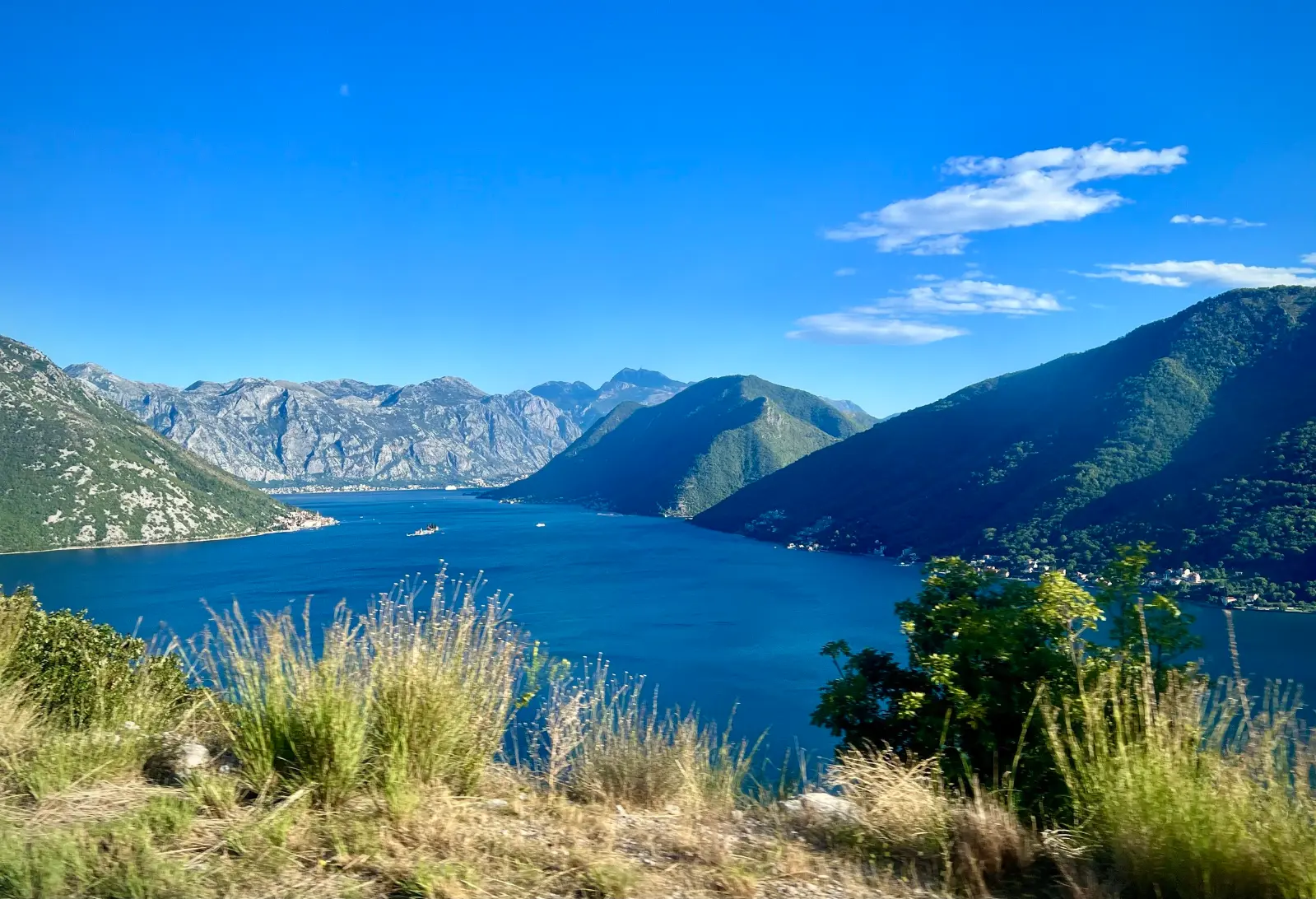
For those planning a longer stay: Risan is 5 km towards Kotor and has Roman mosaics depicting Hypnos, the god of sleep – the only such motif in the region. Perast is 10 km towards Kotor, with two churches on islands in the middle of the bay and one of the most photographed panoramas in Montenegro. Kotor is 25 km further, with its UNESCO-listed city walls.
Risan and the Roman Mosaics
Just 5 km from Morinj towards Kotor, Risan conceals Roman mosaics from the 2nd century AD featuring the figure of Hypnos – the god of sleep. The entrance fee is nominal and the mosaics are protected by a roof structure. It pairs perfectly with lunch in Morinj – arrive, view the mosaics, then head to Ćatovića Mlini for a meal.
Perast and the Islands of Our Lady of the Rocks / St. George
10 km from Morinj towards Kotor. A small Baroque town with the Bujović Palace and two islands in the middle of the bay reached by boat. The Church of Our Lady of the Rocks is an artificial island built by sailors over the centuries. A great afternoon excursion after lunch in Morinj.
Practical Information for Your 2026 Visit
How to Get to Morinj
By car: The E65 main road passes directly through Morinj. From Kotor it is about 25–30 minutes' drive, from Herceg Novi 20–25 minutes. Parking at Ćatovića Mline is free and mostly available even in July – access is from the main road, and the inn stands in greenery, slightly set back from the road.
By bus: The Kotor–Herceg Novi line passes through Morinj and stops on the main road. The schedule is not always reliable in the summer peak, but the option exists for those without a car. From Tivat Airport to Morinj by taxi is about 30–40 minutes and 25–35 EUR, depending on traffic and negotiation.
By boat/ferry: The Lepetane–Kamenari ferry is 5-6 km from Morinj and shortens the journey from Tivat by 30+ minutes. If you are coming from the south of Montenegro or from Budva, this is the fastest route. The ferry price is symbolic (€5 per car, price list at trajekt.me), with a queue of up to 20 minutes in summer.
Tip
Coming from the South? The Ferry Is Smarter Than Going Round
If you are coming from Budva, Tivat or Petrovac, the Lepetane–Kamenari ferry saves 30–40 minutes of driving around the bay. In July and August there can be up to an hour of queueing. The wisest move: leave early in the morning or late in the afternoon – the traffic thins out. The price for a car is €5 (price list at trajekt.me, 2026).
When to Visit – A Seasonal Compass
May–June: A genuine discovery. The sea is still too cold for swimming – even colder than the rest of Boka at the best of times – but the terraces are free, the food is fresh, and there's no waiting for a table. Ćatovića Mlini is open but without the summer crowds. I'd recommend this window to anyone who has the flexibility to choose.
July–August: Busy, but the tavern handles it with dignity. Book a week ahead for weekends, two to three days ahead for weekdays. The menu is at its peak – everything is available and the fish is fresh. But arriving at 13:00 and expecting a table without a reservation on a Friday in July is not a strategy that works.
September–October: The golden season. The sea has cooled a little but is still perfectly swimmable, the tourists have dispersed, and the tavern runs at a normal pace. The mussels are excellent. The surroundings begin to shift into colours that make the E65 one of the more beautiful drives in this part of the Mediterranean.
November–April: Morinj enters its winter mode. Upper Morinj is largely empty, the mountain blocks the sun earlier than in other parts of Boka. Ćatovića Mlini operates shorter hours or temporarily adjusts its schedule – always check in advance by phone or on the website.
Estimated Costs for a Visit to Morinj (Summer 2026)
EUR| Item · note | Price |
|---|---|
| Starter – prosciutto and cheeseNjeguši prosciutto, cheese in oil | 10–14 € |
| Mussels in buzara sauceSingle-person portion as a starter | 12–18 € |
| Saffron yellow risotto with prawnsOrdered for two | 16–22 € |
| Salt-baked fish (sea bass/sea bream)Ask about the weight before ordering | 20–30 / kg |
| Black cuttlefish ink risottoClassic Boka portion | 14–18 € |
| Glass of local wine (Vranac/Krstač)Local wines on the menu | 4–7 € |
| Torta od Boke (dessert)Worth leaving room for | 5–8 € |
| Lepetane–Kamenari ferry (car)Check at kamenarima.me | ~4–5 |
Good to know
Pets Welcome
Ćatovića Mlini is one of the few taverns in Boka that actively welcomes pets. If you're travelling with a dog, you can sit out on the terrace by the stream – which is the lovelier option anyway. The swans and ducks that freely roam the grounds are generally calm around visitors, but children should be told not to get too close to them at the table.
Broader Gastronomic Notes on Boka
Morinj and Ćatovića Mlini do not exist in a vacuum. They are part of a wider Boka gastronomic story stretching back centuries. Boka stood at the crossroads of Venetians, Ottomans and Austrians – each cuisine left a trace that can be read in today's menus. Black risotto is not a Montenegrin invention, but the Boka version differs from the Triestine one. Mussels in buzara are known in Italy too, but the bay's water gives the meat a specific sweetness.
If you're planning a gastronomic tour of Boka, Morinj is a fine base but not the only stop. Perast has taverns overlooking the islands. Kotor offers Konoba Kantun in the old town for fish and seafood in an urban setting. Herceg Novi has its own fishing-village experience along the promenade. And finally, the village of Njeguši at the foot of Mount Lovćen – 40 km further into the interior – for those who want to understand the highland side of the Montenegrin table: prosciutto, cheese, kastradina and Vranac.
Before You Go: Practical Tips
Reservation by phone or email
Ćatovića Mlini: +382 32 373 030, catovica-mlini.com – essential in summer, advisable in May and September too
Cash + card
The tavern accepts cards, but cash is always the safer option in smaller Boka villages
Light clothing and footwear for pebbles
The beach is pebbly; the tavern terrace is shaded but can be warm at midday – light clothing is recommended
Sunglasses for driving
The E65 from Kotor towards Herceg Novi runs alongside the sea with a westward-setting afternoon sun – it can be blinding at certain hours
Phone charger / powerbank
For photographing the nature around the tavern and for navigation – the signal is good, but the battery drains faster than you'd expect
Plan B for dessert
If Torta od Boke isn't available (it sometimes sells out), asking the waiter about the daily dessert is always a good idea
Plan Your Gastronomic Tour of the Bay of Kotor
Morinj is one link in the gastronomic chain stretching from Herceg Novi to Kotor. Discover more places, taverns and experiences along the bay.
Explore Montenegro's Food Scene