Why Kotor Should Be on Every Montenegro Travel Itinerary
There are cities you visit and forget. And then there are those that stay with you – in the scent of sun-warmed stone on a late afternoon, in the sound of church bells echoing above red-tiled rooftops, in the view that opens up from 260 metres above as the entire Bay of Kotor stretches out below you. Kotor belongs to the second category.
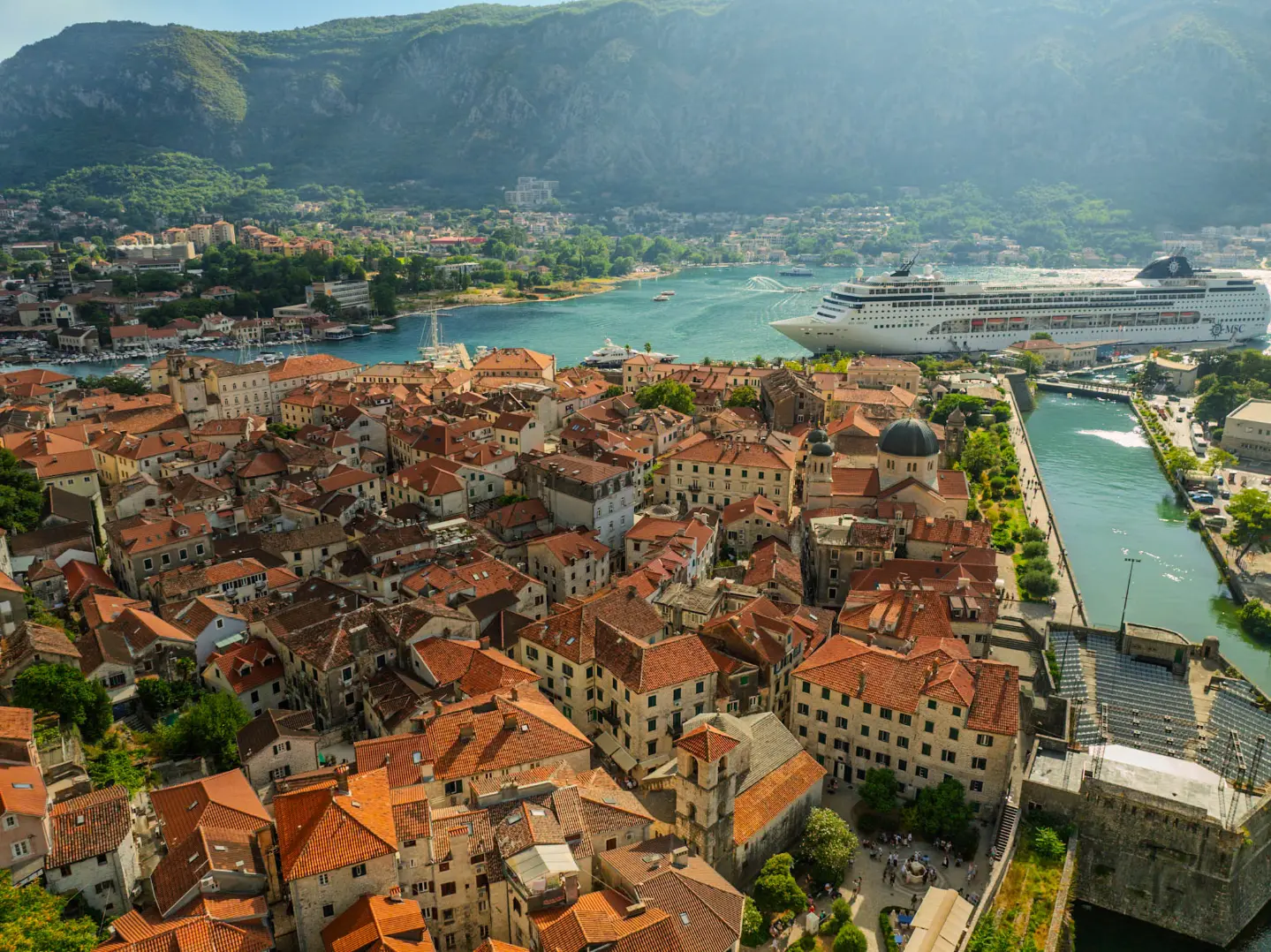
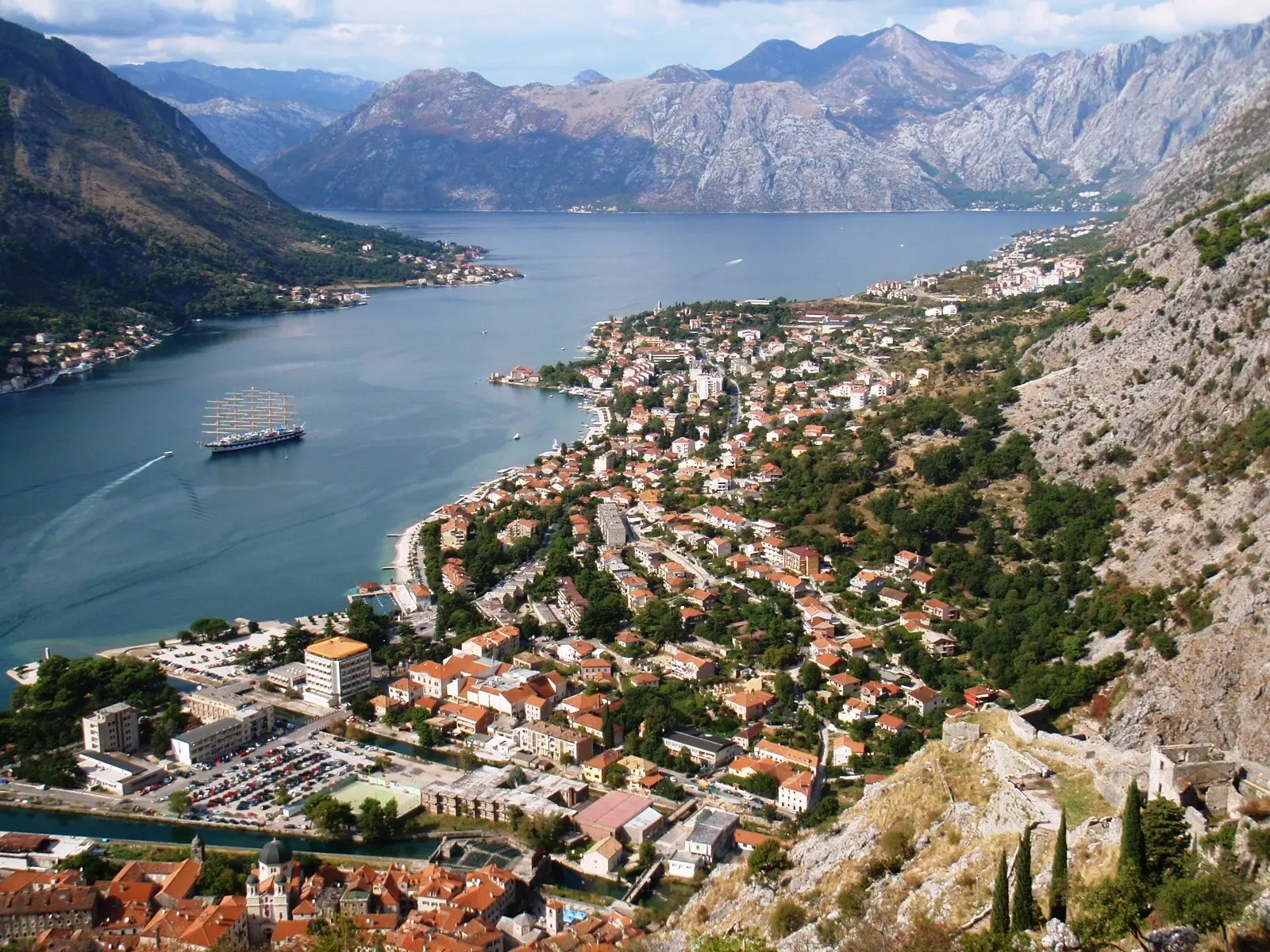
Nestled at the deepest point of the Bay of Kotor, Kotor is a city where every cobblestone street tells its own story. Towering walls rise from the sea and climb along the rocky hillside all the way to the fortress at the summit, offering breathtaking views over one of the most beautiful bays in the Mediterranean. UNESCO recognised this back in 1979, placing Kotor's Old Town on the World Heritage List – and it was not wrong to do so.
This guide will give you everything you need to know: which sights to visit and in what order, how much the fortress ticket costs, where to park, when to come to avoid cruise ship crowds, and what to wear for the climb that won't let you rest until you reach the top.
Kotor Old Town: An Open-Air Museum
Entry into the Old Town is possible through three gates. The most important and most popular is the Sea Gate (Vrata od Mora) – at one time, the sea literally reached its threshold. Passing through the thick walls of the gate, you walk beneath a 15th-century relief depicting the Virgin and Child, Saint Tryphon, and Saint Bernard. Just to the right, at the Tourist Organisation information desk, you can pick up free tourist maps – use them, as it is easy to get lost in the labyrinth of Kotor's streets, though that is not always a bad thing.
As soon as you pass through the gate, Arms Square (Trg od oružja) opens up before you – the largest square in the Old Town, which got its name during the rule of the Venetian Republic, when it was used for the repair and storage of weapons. It is dominated by the Clock Tower, built in 1602 under the Venetian governor Antonio Grimaldi. If you look carefully, you will notice it leans by about twenty centimetres – a consequence of the devastating earthquakes that have struck Kotor on multiple occasions. In front of the tower stands the Pillar of Shame, to which thieves and swindlers were tied in the Middle Ages for the whole city to see.
Continue further into the city and discover the Flour Square, the Karampana fountain – once the only source of drinking water in the city – and the palaces of wealthy families: Bizanti, Buća, Pima, Grgurina. Every corner of this city looks like a landmark.
Tip
Tip for Avoiding Crowds
If cruise ships are in port, arrive early in the morning (before 9am) or late in the afternoon (after 5pm) to avoid the biggest crowds at Arms Square and in the narrow lanes of the Old Town.
Cathedral of Saint Tryphon: The Heart of Kotor's Identity
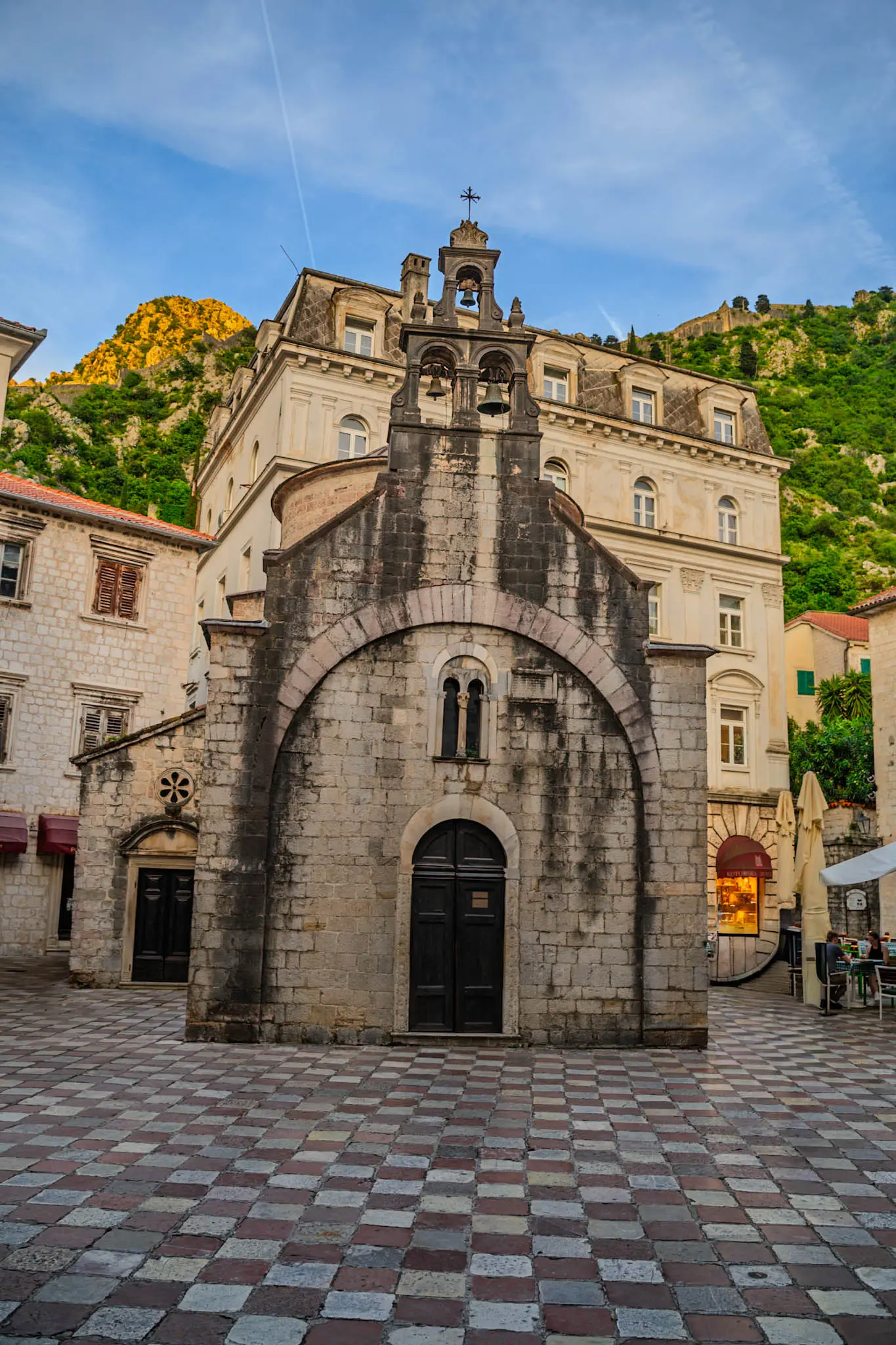
The Cathedral of Saint Tryphon, built in the 12th century, is the most important symbol of Kotor and the first place you should visit after entering through the Sea Gate. Its Romanesque façade with two distinctive bell towers dominates the square named after the city's patron saint. The interior holds precious frescoes and relics – the atmosphere is such that even non-believers pause for a moment and fall silent.
Right next to the cathedral is the Maritime Museum, located on Bokeljska Navy Square. This is a quick and engaging introduction to the story of the bay – the museum covers maritime history from the 9th century to the Second World War. Check the ticket price on site; the audio guide with additional information is worth taking.
Kotor City Walls: Four and a Half Kilometres of History
The Kotor city walls are one of the wonders of medieval fortification architecture on the Adriatic. Up to 20 metres high, 2 to 16 metres thick, and approximately 4.5 kilometres long, they encircle the city centre like an impenetrable stone ring. Construction began as early as the 9th century and continued to be expanded over the following ten centuries.
The walls and San Giovanni Fortress form a single complex with one ticket: adults pay €15, and residents of Montenegro enter free. You climb onto the walls from the entrances in the Old Town, and the view that opens up – over the old and new parts of Kotor on one side and the bay on the other – is worth the climb.
Did you know?
The Kotor city walls began to be built in the 9th century and were continuously constructed for the following ten centuries. Today they stretch approximately 4.5 km, stand up to 20 metres high, and are up to 10 metres wide – all of it built stone by stone, generation after generation.
San Giovanni Fortress: A Climb You Will Never Forget
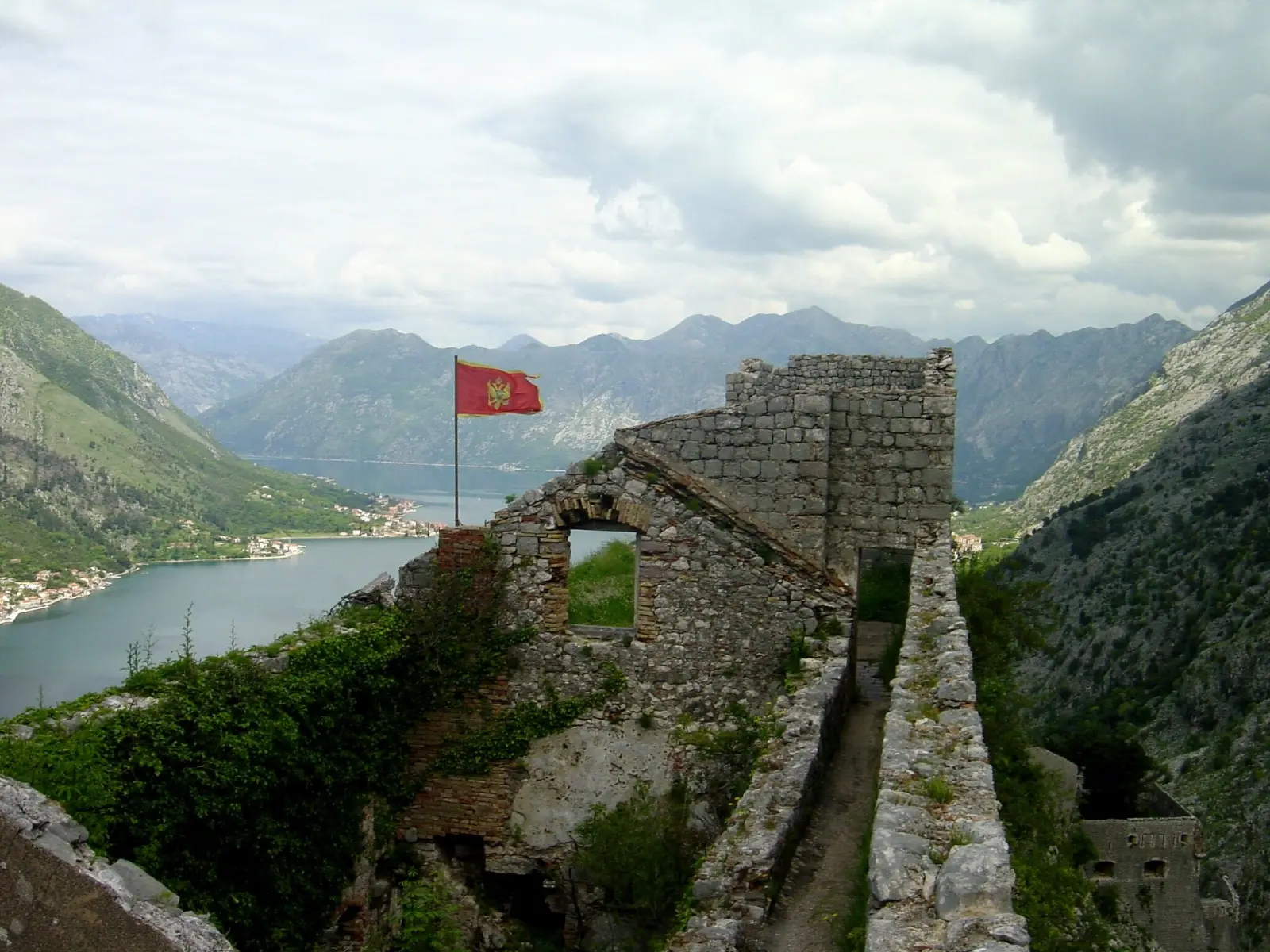
If you had to choose just one thing to see in all of Montenegro, many would say it is San Giovanni Fortress (Saint John). And they would be hard-pressed to be wrong. Perched at 260 metres above sea level above Kotor, this fortress offers a view that is literally breathtaking – both literally and figuratively, as the ascent is no leisurely stroll.
About 1,350 steps lead to the top – the exact number depends on who is counting and which route they take. The steps are small, large, narrow, wide, high, low, intact, broken – every kind imaginable. Halfway up stands the Church of Our Lady of Health, built as a thanksgiving by survivors of the plague, where you can stop, catch your breath, and realise that the view already opening up at that point was worth the effort. Still, press on – because the most impressive panoramic vista awaits at the very top.
From the fortress, wherever you look, you will see something different: greenery and stone walls intertwined with the rugged slopes of mountains plunging into the blue Adriatic. Below you, the red rooftops of the Old Town look like a scale model. And the Montenegrin flag flies proudly in the wind that never settles here.
For those in good shape, the ascent takes about 40 minutes. For those photographing every step – considerably longer. The main entrance to the fortress is on the northern side of the city, at the North Gate, but it can also be accessed from inside the Old Town.
Heads-up
Essential Items to Bring
Do not attempt the fortress in flip-flops or sandals – the steps are uneven and slippery in places. Good trainers are a must. Bring enough water (at least 1 litre per person), as vendors along the ascent are not always available during the season. Sunscreen is essential – shade on the path is almost non-existent.
Ticket Prices and Activities in Kotor
EUR| Item · note | Price |
|---|---|
| San Giovanni Fortress (entrance ticket)Walls and fortress, one ticket; residents of Montenegro enter free | 15 € |
| Kotor City Walls (walk)Same ticket as the fortress – the walls and fortress are one complex | 15 € |
| Boat to Our Lady of the Rocks (from Perast)Per person, return trip | 3 € |
| Entry to Our Lady of the Rocks church (with guide)Per person | 1.50 € |
| Cat MuseumPrice varies; a portion of proceeds goes towards the care of Kotor's cats | 3–5 € |
| Local bus to Perast (Blue Line)A cheaper alternative to private transfers | 1.50 € |
Kotor: City of Cats – The Cat Museum and Kotor's Feline Residents
It is impossible to be in Kotor without encountering a cat. You will find them on the Old Town walls, outside restaurants, on chairs, windowsills, benches, and squares. These are no ordinary street cats – Kotor's cats are well-fed, cared for, tame, graceful, and generally vaccinated and neutered. They hold a special status in this city, which has long embraced them as part of its identity.
Since 2013 the Old Town has also had a museum devoted to cats, in the former refectory of the Poor Clares' convent. The Cat Museum is worth visiting not only for the exhibition itself, but also because a portion of the proceeds from tickets and souvenirs goes directly towards feeding and caring for Kotor's cats. Cat-themed souvenirs are everywhere here – and these are the only souvenirs you will buy without a guilty conscience.
If Kotor were a word, it would surely mean 'enchanting' – walking around and through its cobblestone streets is like living inside a fairy tale.
Beyond the Walls: What to Visit in the Kotor Area
Our Lady of the Rocks: The Island Built by Human Hands
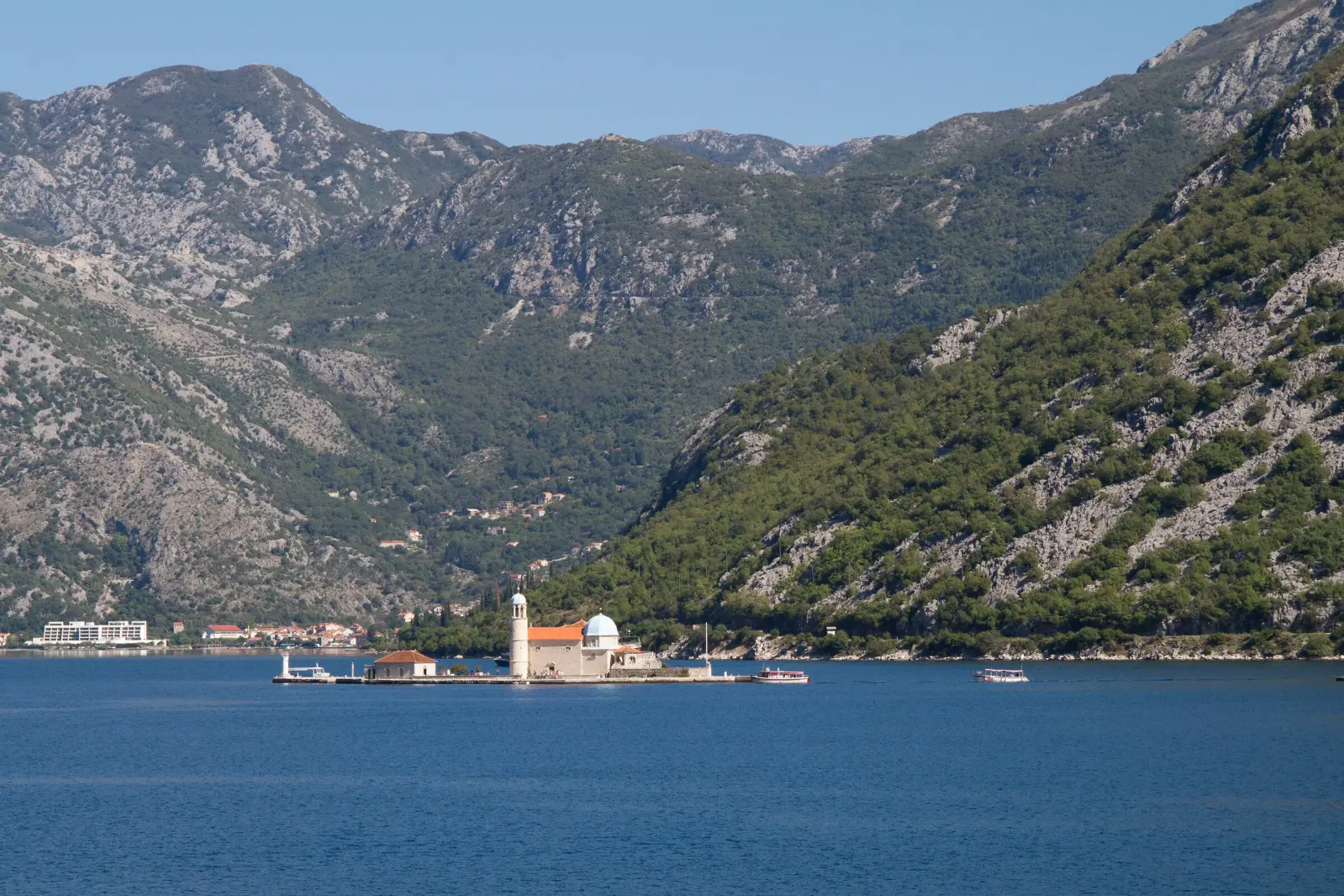
About 15 minutes' drive from Kotor, in the direction of Perast, one of the most unusual places on the Adriatic awaits you. Our Lady of the Rocks is an island that did not form naturally – it was built by the people of Perast over the centuries, by throwing stones and sinking old ships onto a shallow reef where, according to legend, an icon of the Virgin Mary was found in 1452. Today the island is home to a church, a museum, and a Place of Reconciliation.
The island is reached by boat from Perast – the trip costs 3 EUR per person (return), and entry to the church with a guide is 1.50 EUR. The entire excursion, including a stroll through Perast – a quiet little town with a single long street running along the waterfront – can be nicely combined into one day with Kotor. Follow this order: Kotor in the morning, Perast and Our Lady of the Rocks in the afternoon.
Blue Cave on the Luštica Peninsula: The Sapphire of the Bay
For those who want more than history and stone, the Bay of Kotor also offers natural wonders. Located on the Luštica Peninsula, the Blue Cave is a stunningly beautiful spot with an extraordinary water colour. The enormous rocks inside the cave, bathed in shades of blue, create an atmosphere that is hard to find anywhere else. It is reached by boat – organised tours depart from Kotor and Tivat, and prices vary depending on the operator and group size. Tip: check in advance which stops are included in the tour before you pay.
Shellfish Farms in Herceg Novi and Risan
The Bay of Kotor is not just history – it is also a living gastronomic story. Adriatic oysters and mussels are farmed at the shellfish farms in Herceg Novi and Risan, and local residents are happy to show how the shellfish are cultivated and how they are traditionally prepared – in a red or white buzara sauce. This is an experience that engages all the senses: the smell of the sea, the sound of cooking, the taste of freshness. If you are planning to visit the Bay, do not miss this side of the inlet.
Practical Tips: How to Get There, Where to Park, and When to Visit
How to Get to Kotor
The nearest airport is Tivat (TIV), located just about 8 kilometres from Kotor – a taxi ride costs between 10 and 15 EUR, while local buses run regularly and are considerably cheaper. Podgorica Airport (TGD) is further away (about 90 km), but offers more international connections.
If you are arriving by car, Kotor is located on the E65 main road along the Montenegrin coast. The journey from Dubrovnik takes about 2 hours, and from Podgorica about an hour and a half. Be mindful of the serpentine road connecting Kotor with Cetinje – 32 hairpin bends with an elevation difference of 423 metres offer spectacular views, but demand full attention at the wheel.
The local Blue Line bus connects Kotor with Perast and Dobrota for just 1.50 EUR – an excellent and affordable option for exploring the bay without a car.
Parking in Kotor
Parking in Kotor can be a challenge, especially during the summer season. The harbour car park is the closest to the Old Town, but fills up quickly. Alternatively, there is a car park just behind the Old Town, near the Idea supermarket – it has a barrier and charges a fee, making it a more reliable option. From there, it is just a few minutes' walk to the Sea Gate. During the season, it is advisable to arrive early in the morning and secure a parking space before the cruise ships disembark their passengers.
Heads-up
Beware of Unauthorised Guides
Avoid individuals near the Old Town walls who offer 'exclusive' or 'cheaper' tours to San Giovanni Fortress. Purchase tickets exclusively at official ticket booths. The same applies to 'free' city walks that end with aggressive demands for a tip.
When to Visit Kotor
May and June are the ideal months to visit Kotor – temperatures are a pleasant 22–25°C, and crowds are half what they are in August. September and October are an excellent alternative: the sea is still warm, the cruise ship season winds down, and the city regains some of its authentic character.
Kotor is a city that functions outside of the season too. In winter, the Old Town transforms into an entertainment hub with carnival events – the Winter Kotor Carnival is a tradition spanning half a millennium and holds the status of intangible cultural heritage. In summer, the city takes on a special charm at night: restaurants within the walls, music, and lighting turn the stone streets into a stage.
In August, avoid arriving at midday – the heat and the crowds of cruise passengers can turn a walk through the Old Town into an unpleasant experience. Morning hours (before 9am) or late afternoon (after 5pm) are the golden time slots.
Money saver
Combined Museum Ticket
A combined OJU Muzeji Kotor ticket is available for 15 EUR, covering multiple sites including the Perast Museum and Roman mosaics. If you are planning to visit several museums, this is a more cost-effective option than buying individual tickets.
Recommended One-Day Itinerary in Kotor
07:30 – 09:00: Ascent to San Giovanni Fortress. Set off early to avoid the heat and crowds. Purchase tickets at the North Gate and begin the climb. Halfway up – the Church of Our Lady of Health and your first view of the bay. At the top – stay as long as your heart tells you to.
09:00 – 11:00: Stroll through the Old Town. Arms Square, the Clock Tower, the Pillar of Shame, the Cathedral of Saint Tryphon, the Karampana fountain. Get lost in the lanes – intentionally.
11:00 – 12:00: Maritime Museum on Bokeljska Navy Square. A quick and engaging introduction to the story of the Bay.
12:00 – 13:00: Lunch inside the walls or at one of the restaurants by the sea. Try Montenegrin fish soup or mussels in buzara sauce.
13:30 – 16:00: Drive to Perast (15 minutes) and a boat trip to Our Lady of the Rocks. Return through Perast – one street, countless stories.
16:30: Return to Kotor. Cat Museum, souvenir shopping, coffee on Arms Square as the sun dips behind the mountains.
What to Bring With You
Good Sports Shoes
Essential for the fortress ascent – the steps are uneven, slippery in places, and damaged in spots. Flip-flops or sandals are out of the question.
Water (minimum 1 litre per person)
There are no reliable vendors on the path to the fortress, especially outside of season. Do not rely on sellers along the ascent.
Sunscreen and a Hat
The path to the fortress is largely without shade. In the summer months, the sun is intense from early morning.
Cash in EUR
Cards are accepted at most restaurants and museums, but boats to Our Lady of the Rocks and smaller vendors often require cash.
Tourist Map of the Old Town
Available free of charge at the information desk next to the Sea Gate. Use it – GPS signal in the narrow lanes is not always reliable.
Plan Your Trip to Montenegro
Kotor is just the beginning. Montenegro offers Durmitor, Lake Skadar, Budva, Cetinje, and much more – all within a compact area you can explore in a week.
Explore More Destinations in Montenegro