Travel to Montenegro
Old walls, living stories: rural heritage of Montenegro
Culture & History

Stone houses of Njeguši, dry-stone walls and threshing floors of Luštica, towers of Plav, katuns of Komovi and watermills that still grind

Old walls, living storiesRural heritage of Montenegro

The Montenegrin village was built from what was at hand: stone, water and communal labour. In the karst, building was done without mortar; in the north, people defended themselves with towers; in summer they moved to katuns; and grain was ground in watermills. Much of this can still be seen today, from Njeguši and Luštica to Plav and Komovi, if you know where to look.

How the Montenegrin village was built, what a gumno, a kula, a katun and a moba are, and where you can still see them today.
The stone house

The stone house

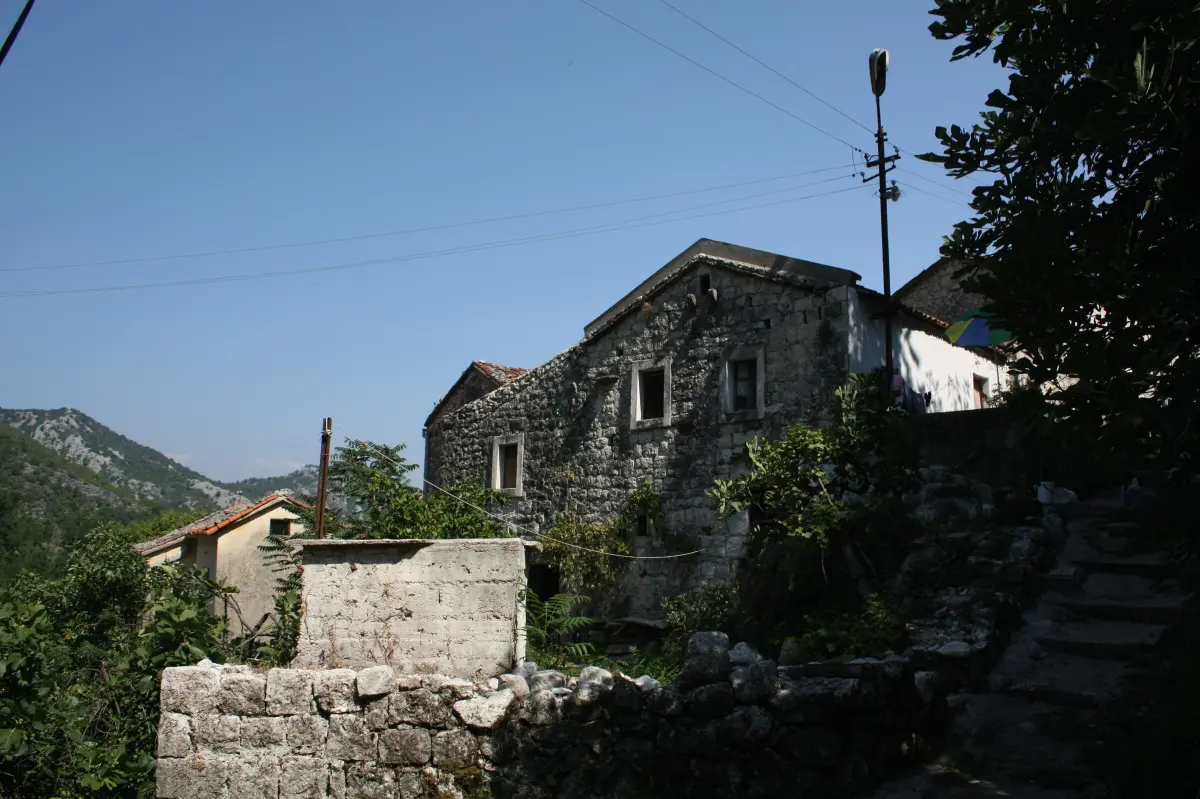
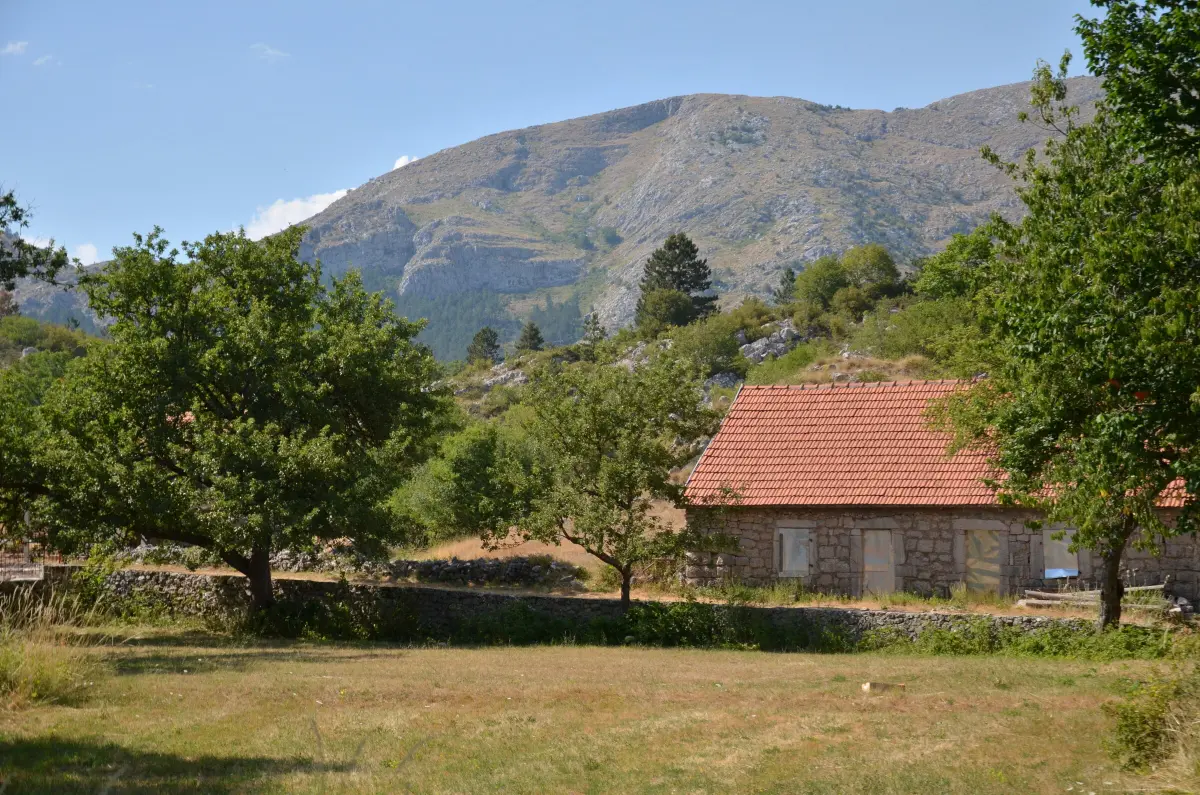
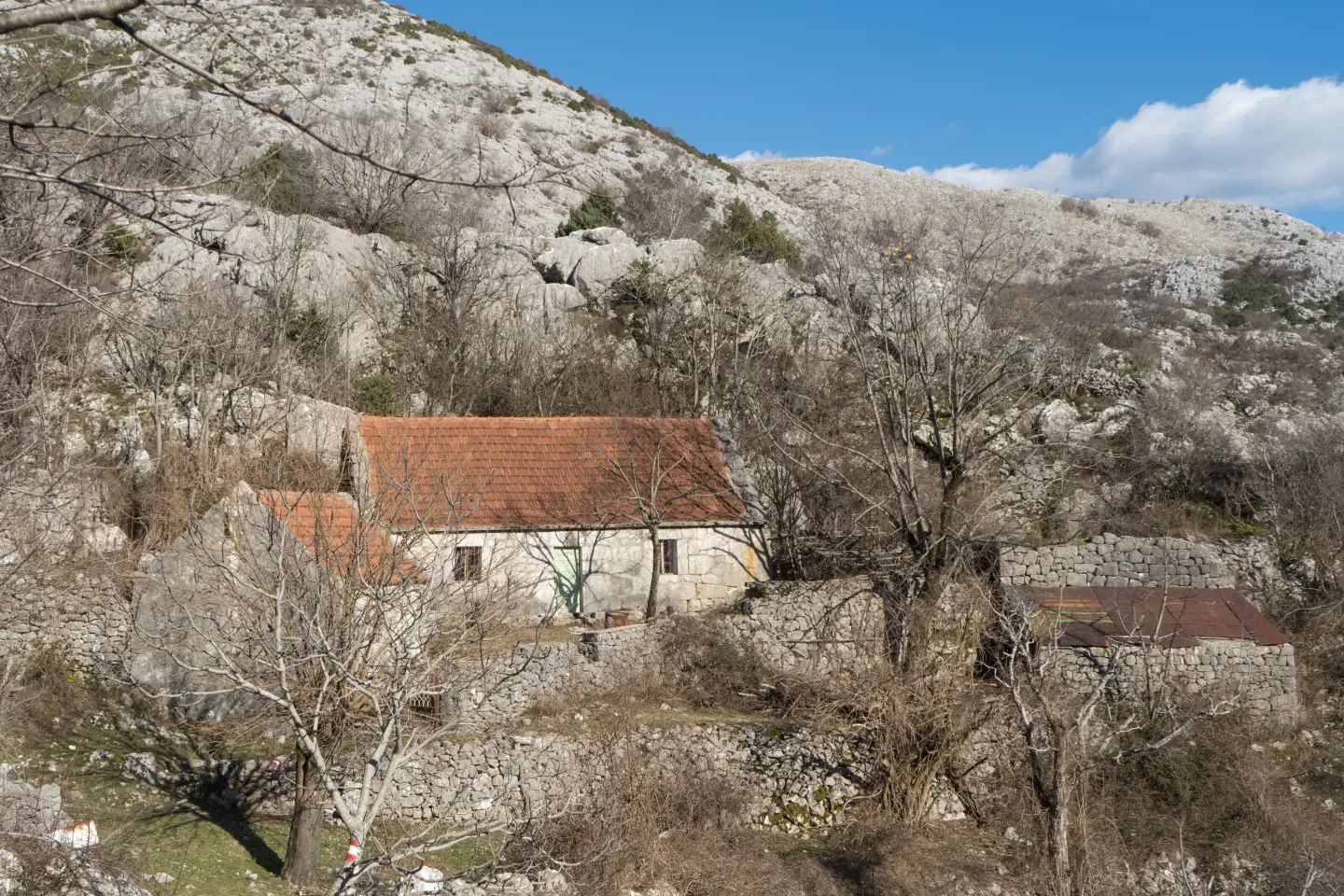
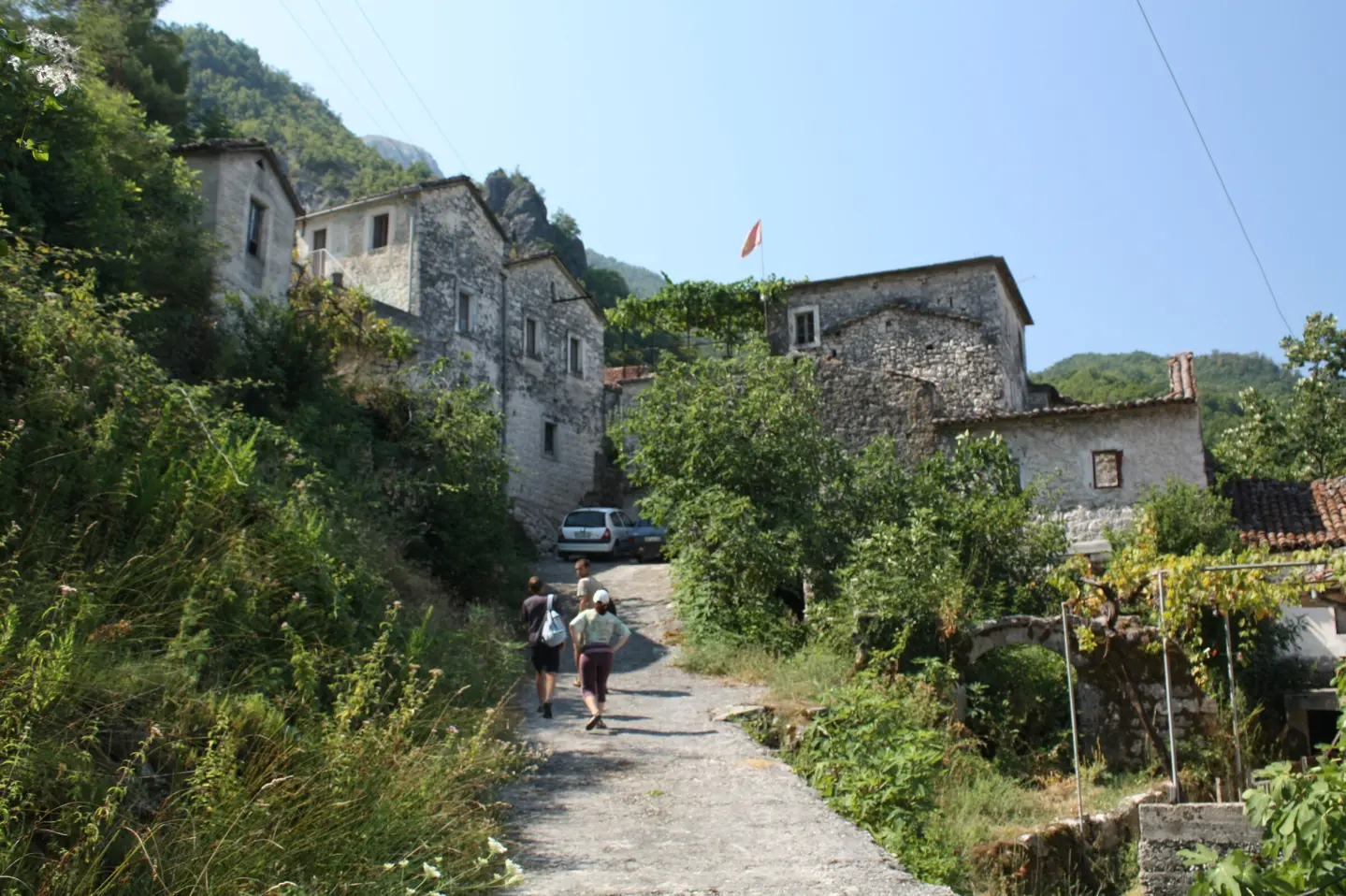
In the karst of Old Montenegro wood was expensive and stone was everywhere. So the traditional house of the Katunska nahija was built of dressed or broken limestone: rectangular, with thick walls and small windows. On the ground floor is the konoba, where wine, cheese, pršut and tools are kept, and above it life centres on the hearth. Njegoš's birth house in Erakovići, Njeguši, where Njegoš was born in 1813, is just such a house. Bishop Petar I renovated it and divided it into three parts for three brothers, and it has been a memorial museum since 1973.

The hamlets of the Njeguši clans ring the fertile Njeguško polje, with houses set along its edges and on the slopes so as not to take a single strip of farmland. Above Lake Skadar the Crmnica village of Godinje was built house against house and house above house, its konobas linked by passages, and locals say you could once cross the whole village without stepping into the street. Durmitor is different: a stone ground floor with a log house above it and a steep shingle roof, because snow lies there for months.
Dry-stone walls, threshing floors and cisterns

Dry-stone walls, threshing floors and cisterns

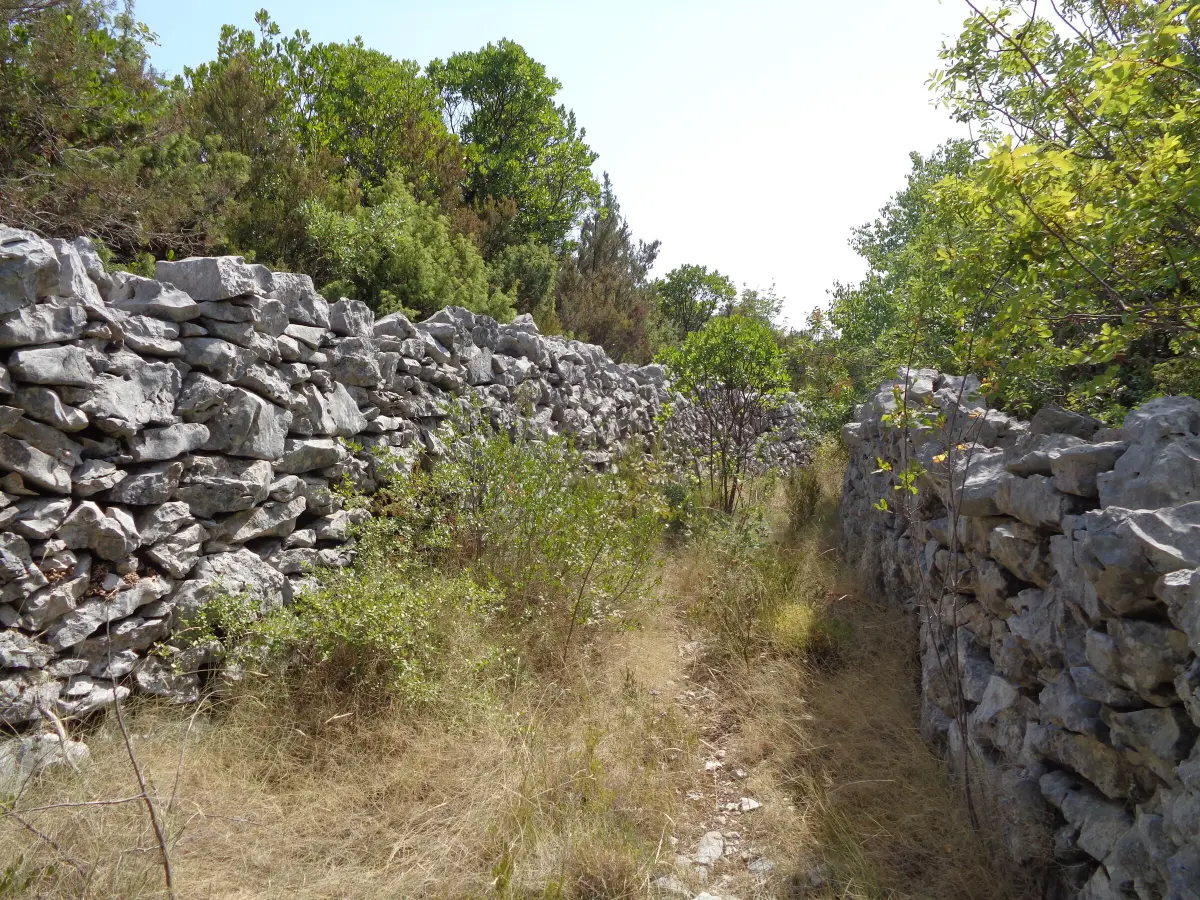
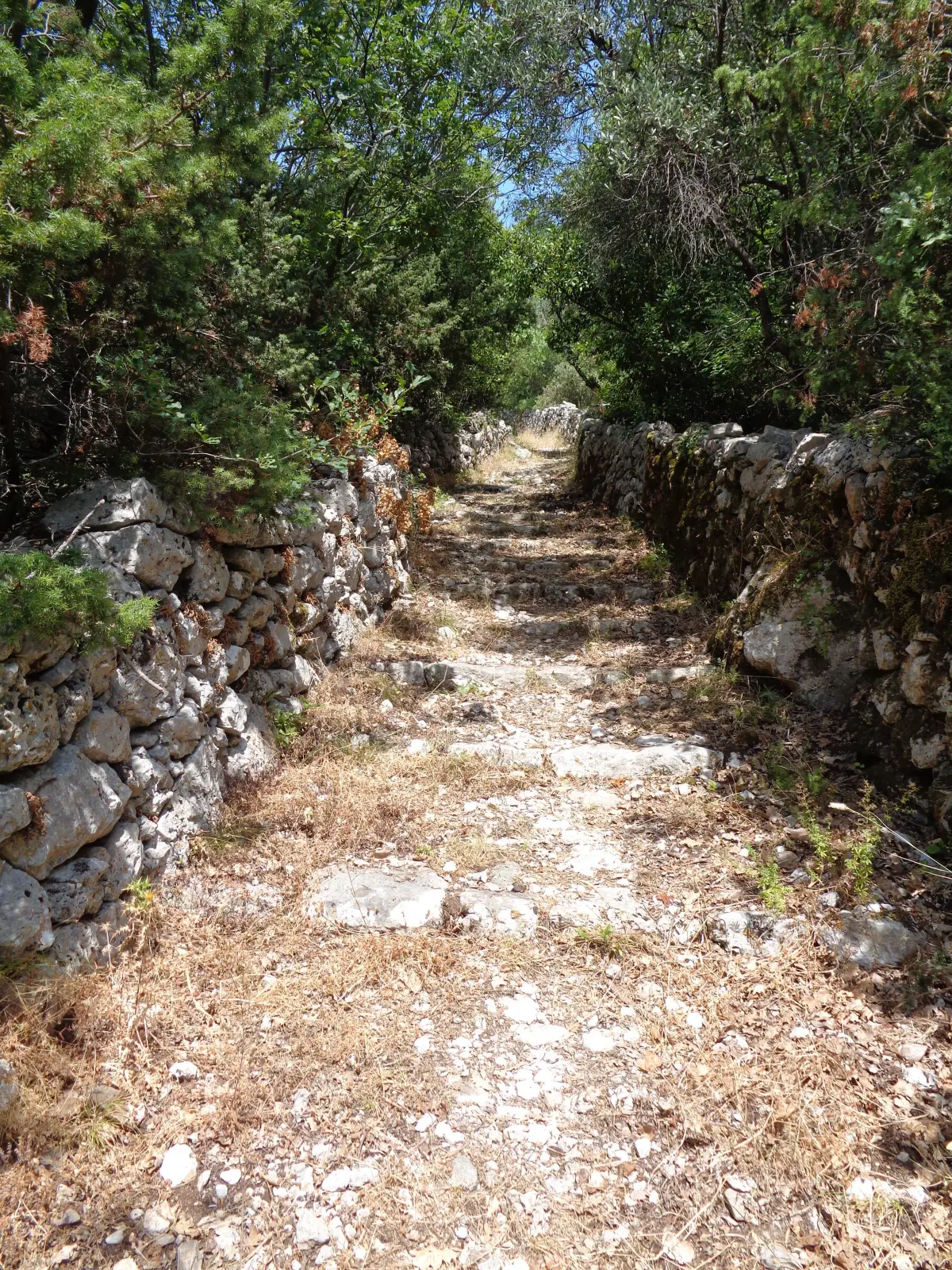
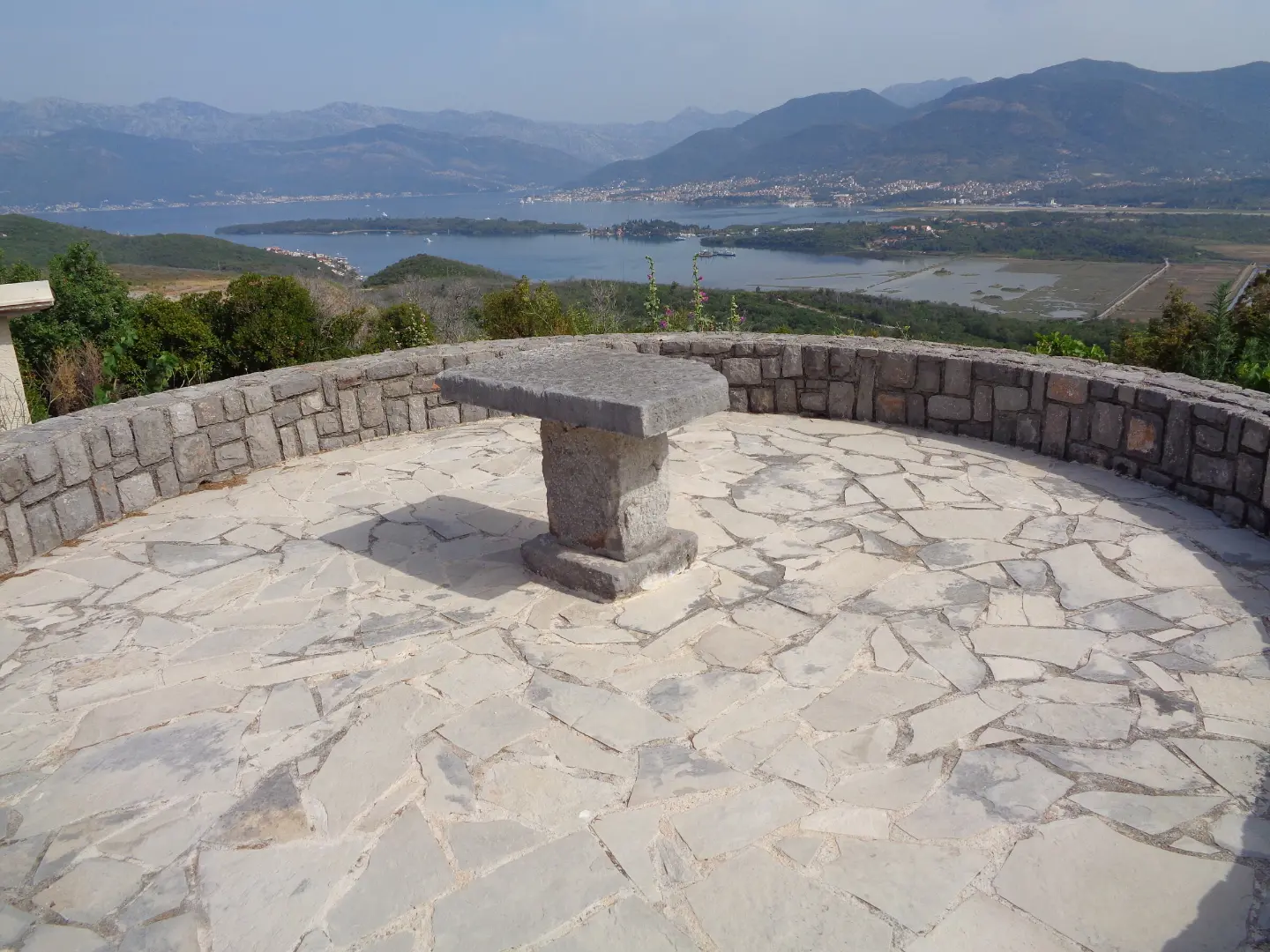
The village's greatest work is not its houses but kilometres of walls built without mortar. A suvomeđa is stacked from stone taken out of the field itself, so the same work cleared the land and raised a boundary or terrace. Nowhere is this clearer than on Luštica, where kilometres of walls record centuries of olive growing.

A gumno is a round platform paved and walled with stone, where grain was threshed. It was also the village square: people sat there, danced the kolo and settled village matters. Gornja Lastva above Tivat, a village of about a hundred houses in the first half of the 20th century, had 12 threshing floors, seven olive mills and 24 wells. In the karst rainwater was collected in ublovi and bistijerne, stone cisterns, and the village of Ubli, the centre of the Kuči clan, takes its name from the ubao.
Watermills and crafts

Watermills and crafts

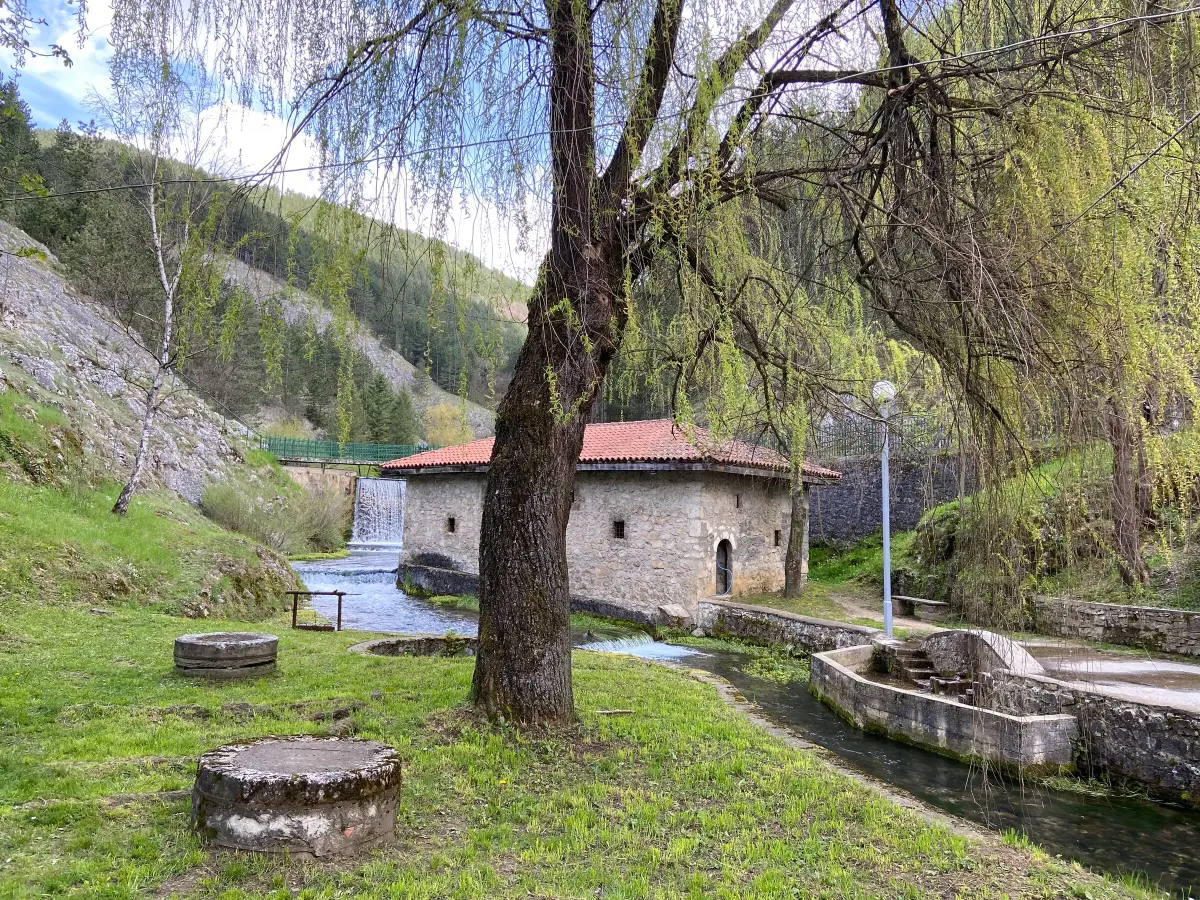
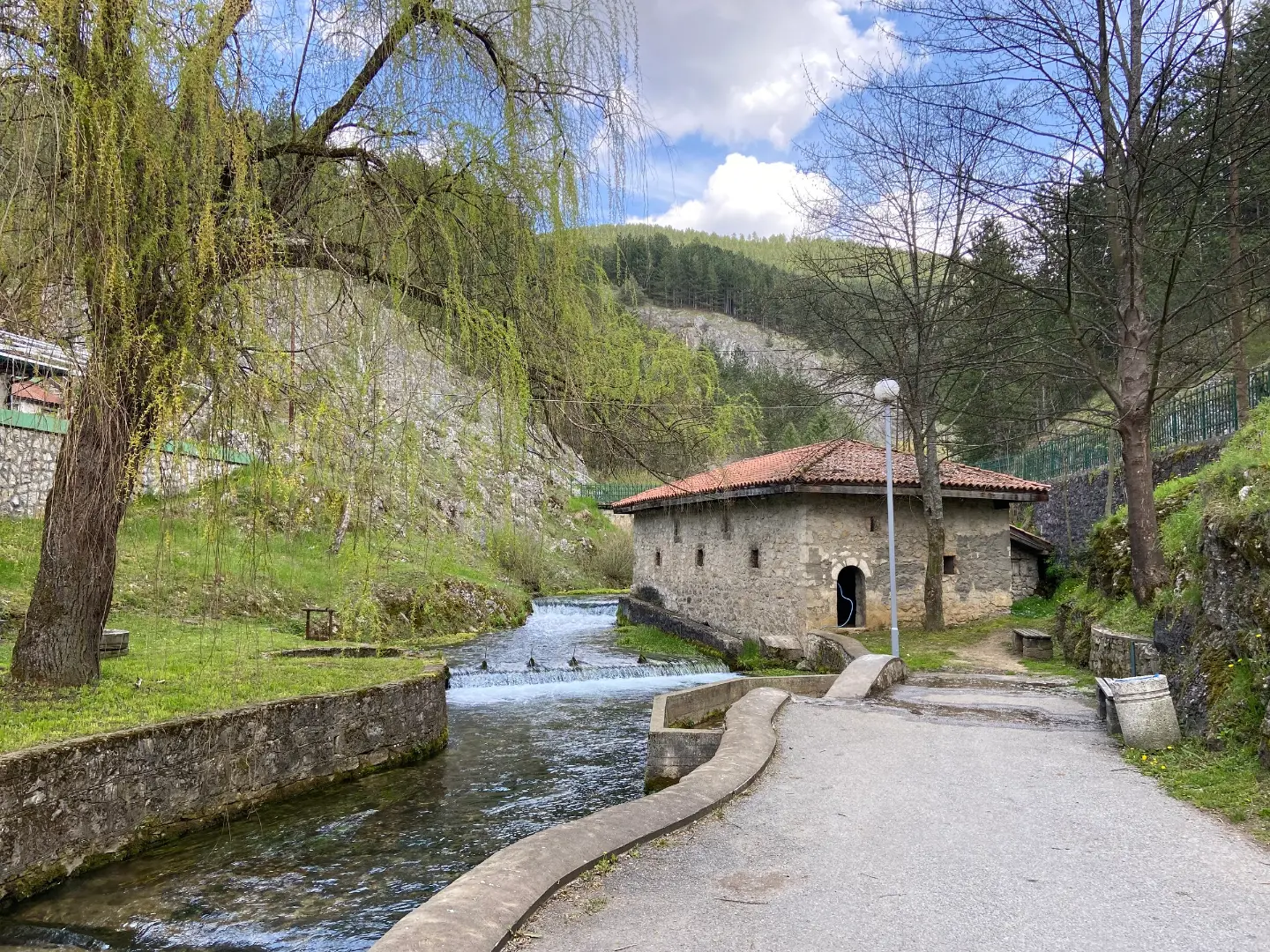
Where there was running water, there were mills. A stream watermill grinds corn and wheat with the force of a brook, and beside it there was often a stupa, a fulling mill where woollen cloth was beaten until it became dense. In Fundina in Kuči, where 76 springs rise within about two square kilometres, more than 30 watermills once worked. Near Pljevlja, the Ćirović Ethno Watermill keeps a hundred-year-old stream mill that has never stopped turning.

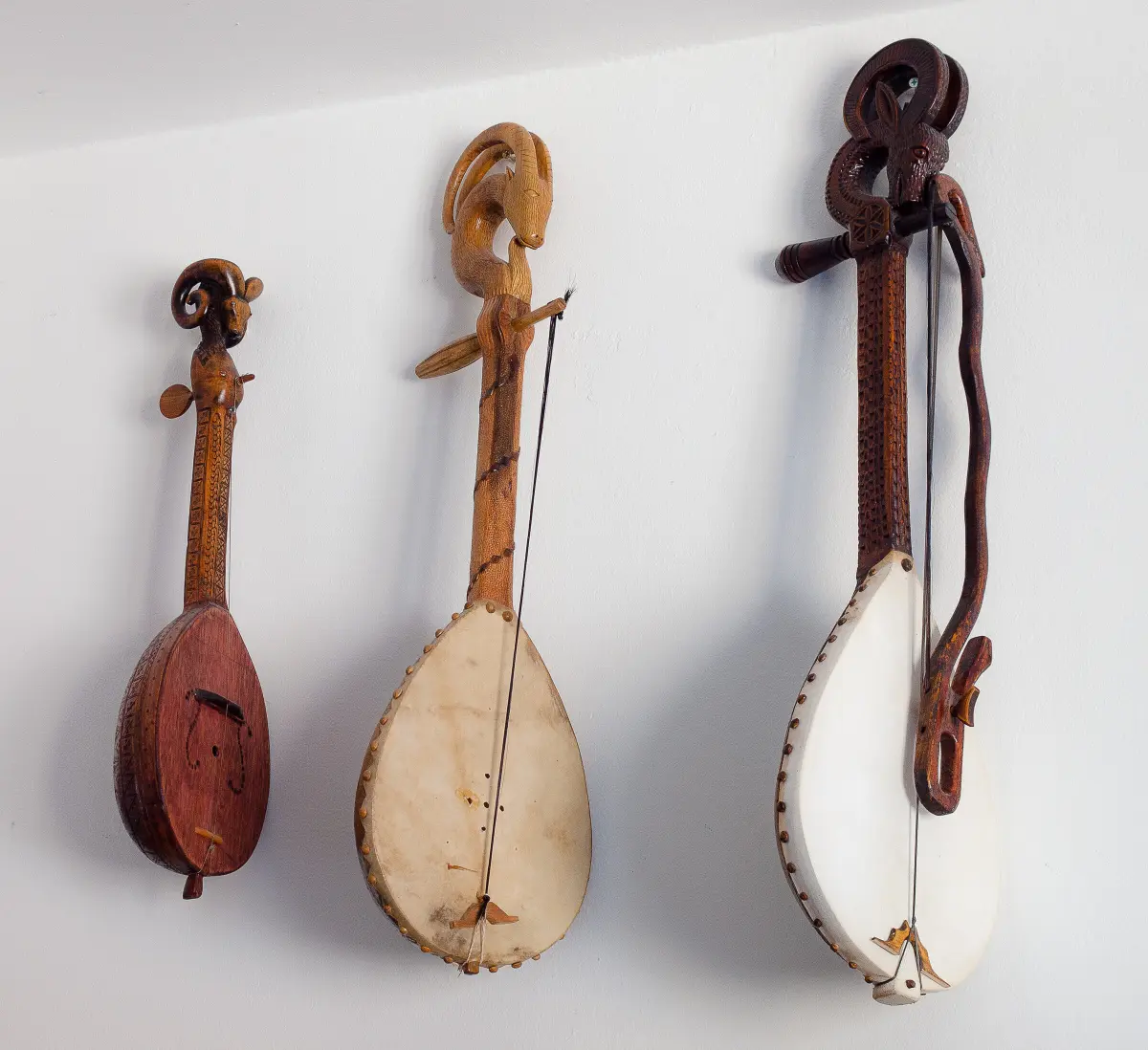
The village made almost everything it needed: stonemasons built houses, thresholds and troughs, craftsmen split shingles, and women spun, wove and embroidered. On the Bihor kilim, from the Petnjica area, blood brotherhoods were sworn and marriages arranged, and the mosque in Petnjica keeps a collection of more than 500 kilims. With the gusle, whose single string is made of about thirty horsehairs, the guslar accompanies his own heroic songs.

Did you know?

When the carved entrance door was stolen from Redžepagić Tower in Plav during the Balkan Wars, Šaban-beg swore he would never enter through that entrance again. He walled up the old entrance on the north side and opened a new one on the south.
Towers: when a house had to be a fortress

Towers: when a house had to be a fortress

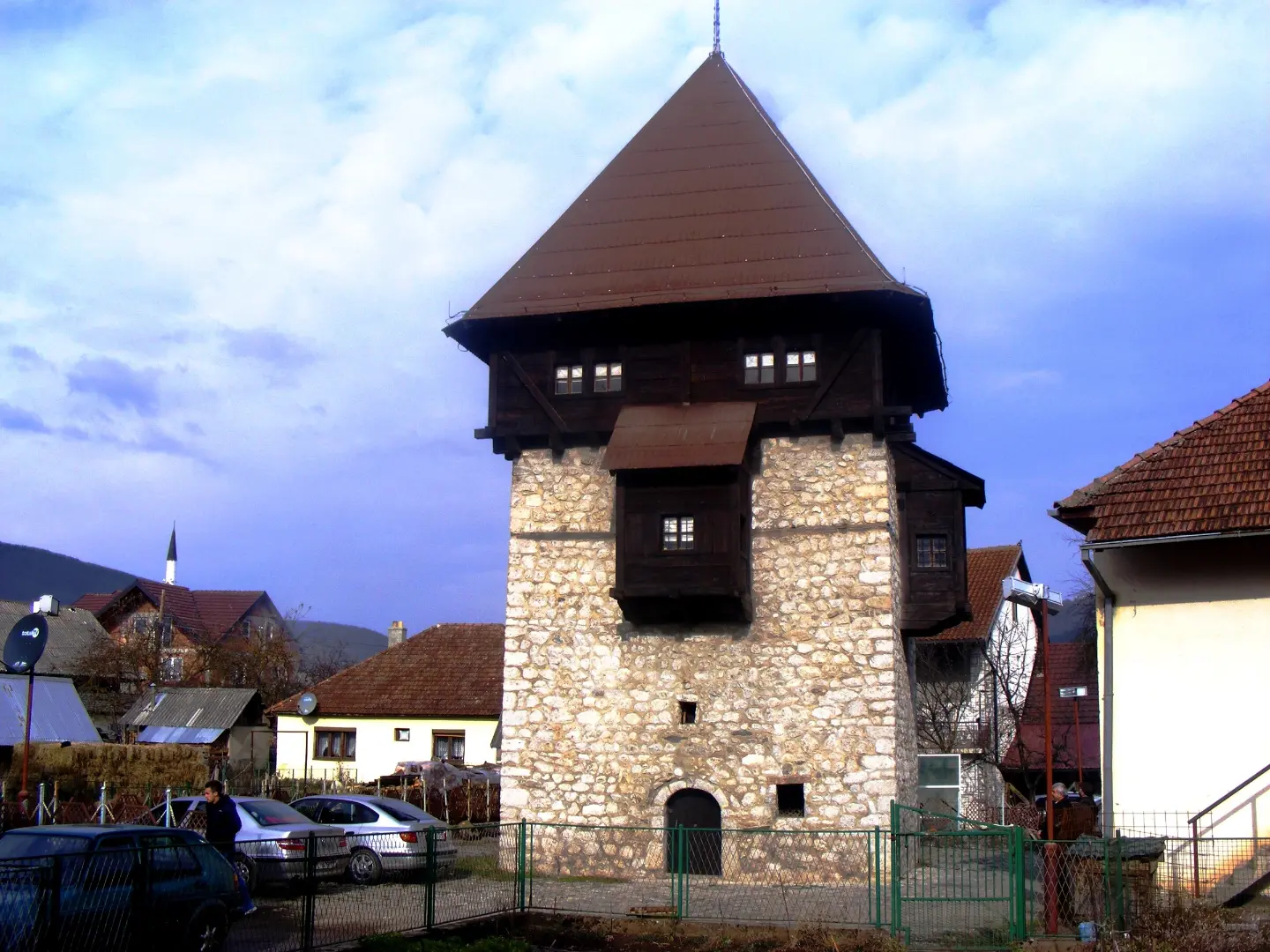
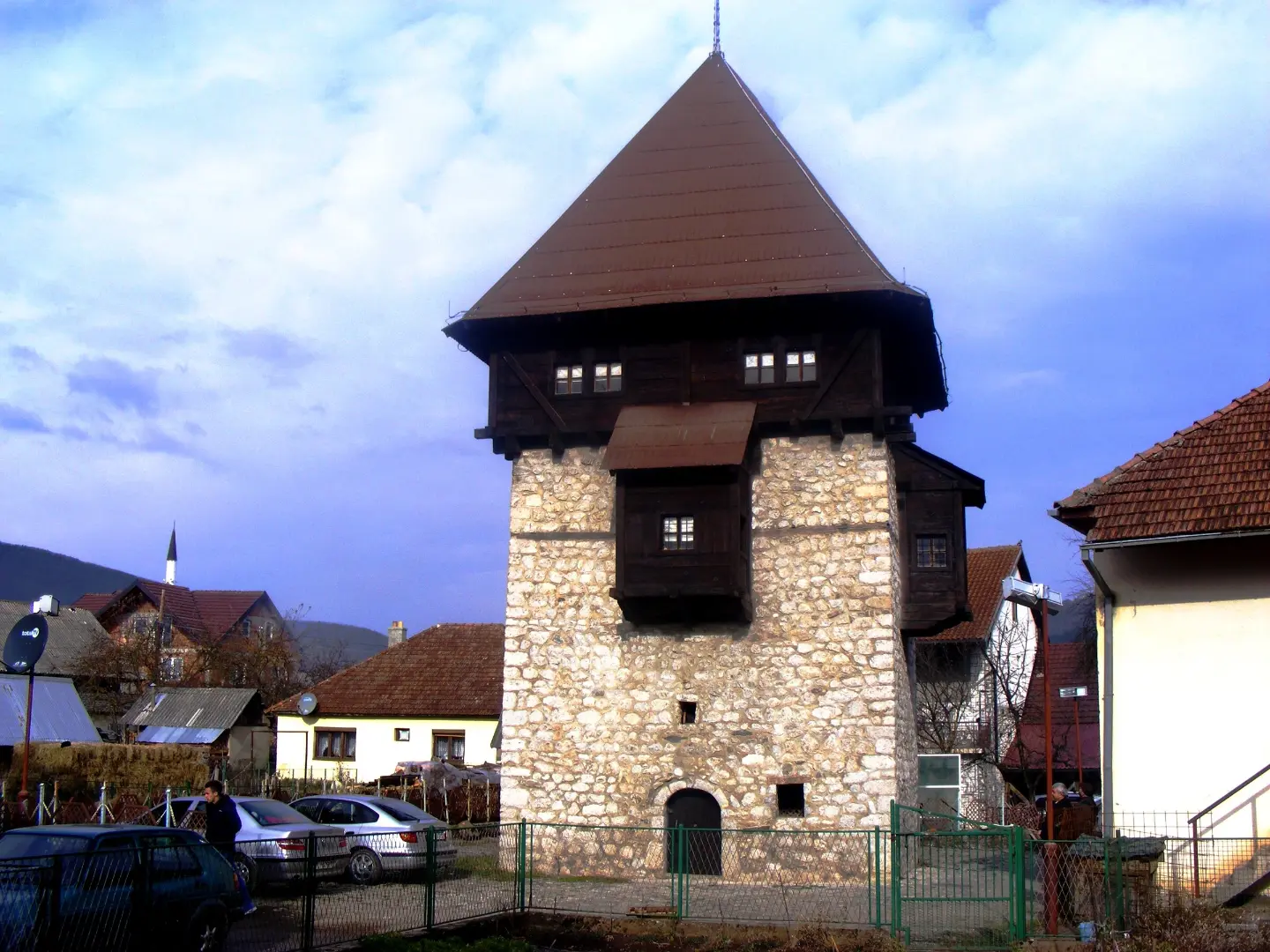
Where danger was constant, the house grew upwards. A kula is a fortified house with thick stone walls and gun slits on every side. The oldest in the Plav-Gusinje area is the Redžepagić Tower in Plav, dated to 1671 by the Plav Tourist Organisation. Its walls are more than a metre thick, and its trademark is a wooden top storey with covered balconies above the gun slits, called ćošak. When an attack came, the livestock were brought into the ground floor and the family defended from above. The tower has been a museum since 1979.

Towers are not only a northern story. In Njeguši the Petrović tower stands beside Njegoš's birth house, and at Medun in Kuči, below the remains of Illyrian Meteon, the duke and writer Marko Miljanov (1833–1901) was born; a museum there is dedicated to him.
Moba, sijelo and sabor

Moba, sijelo and sabor

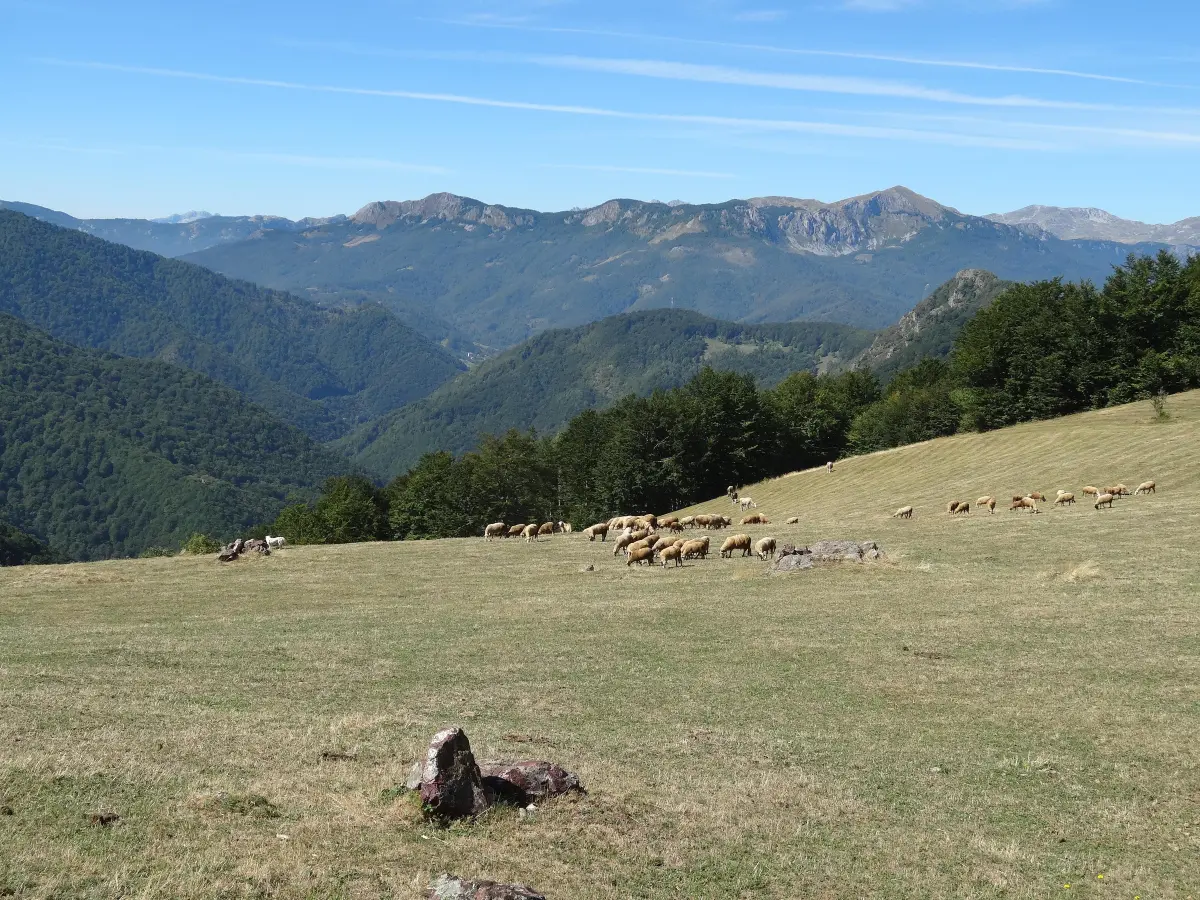
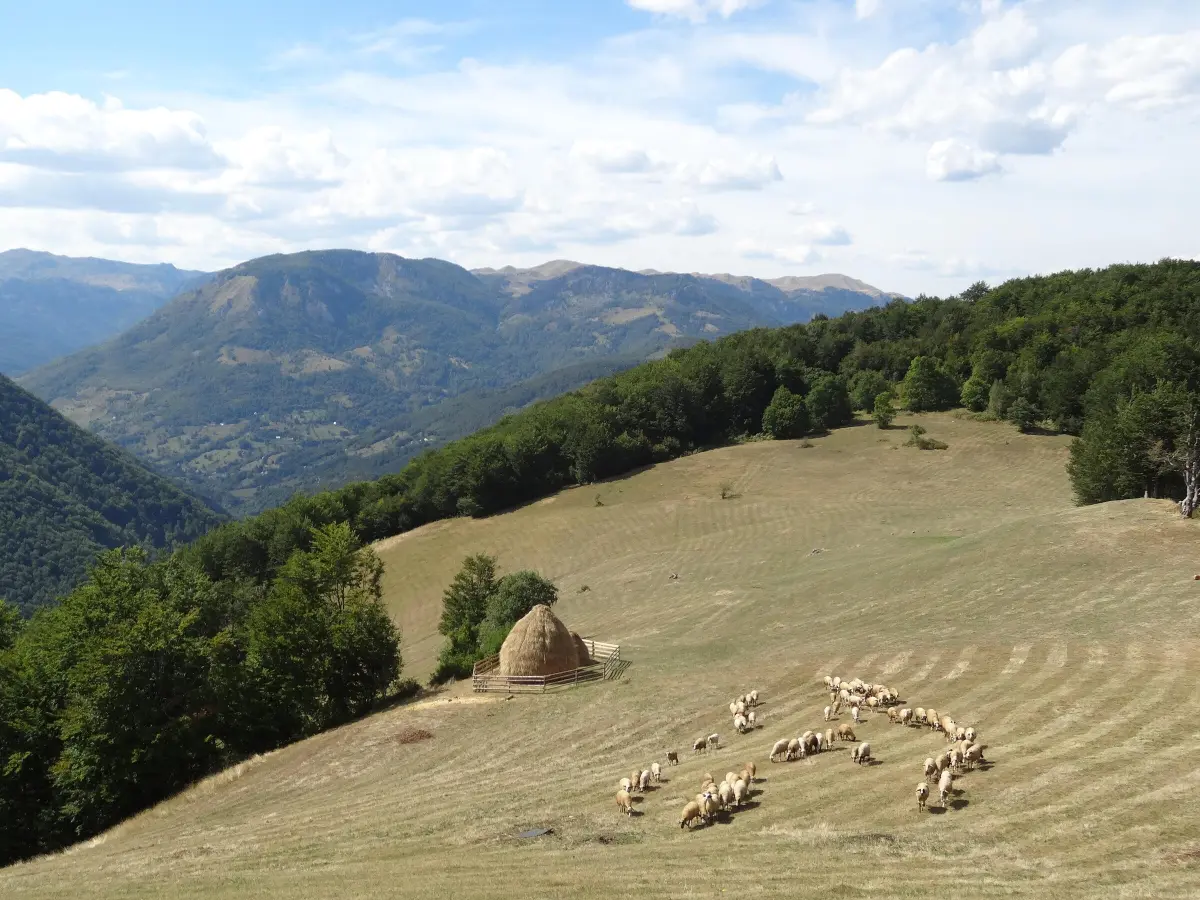
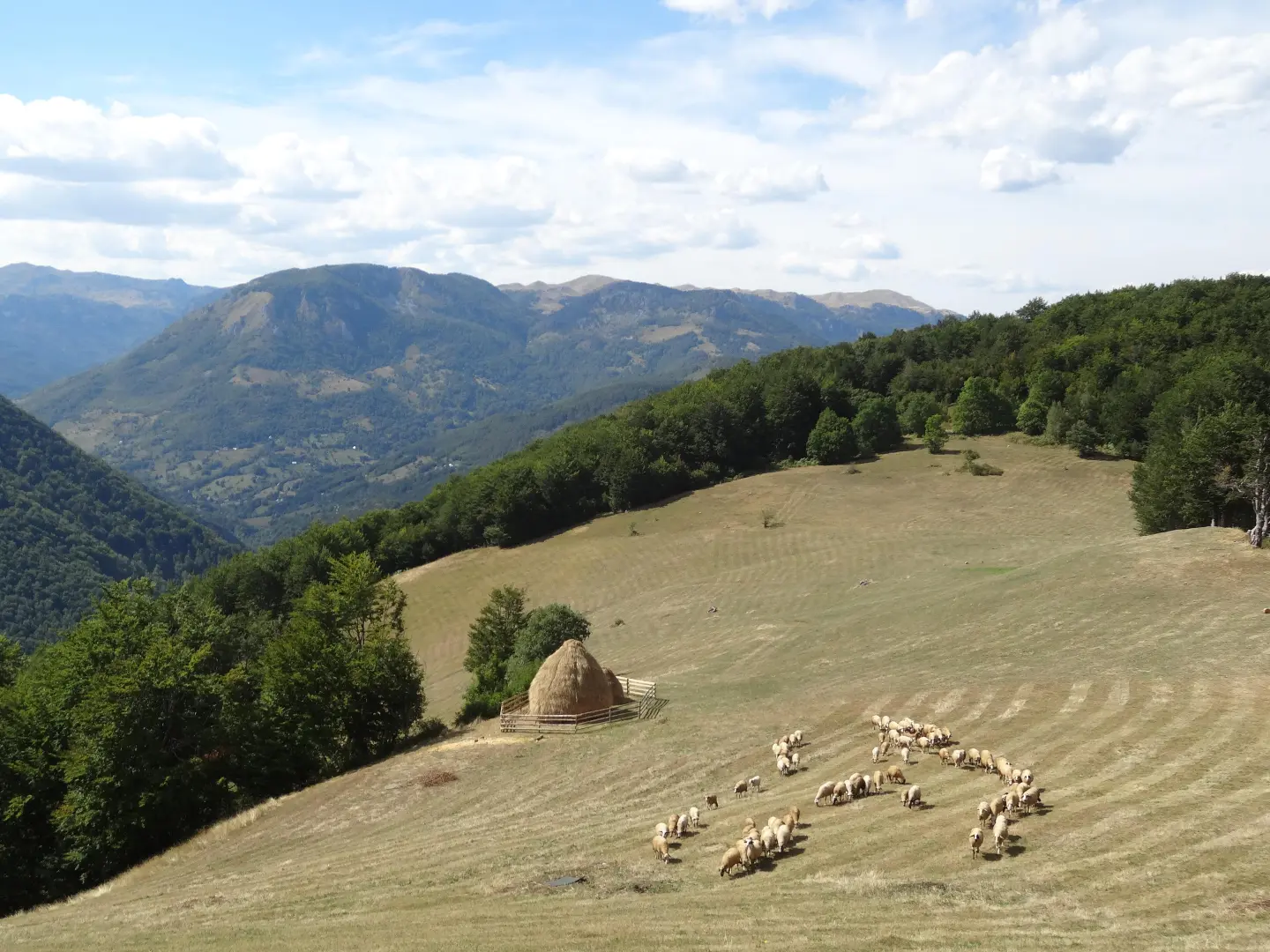
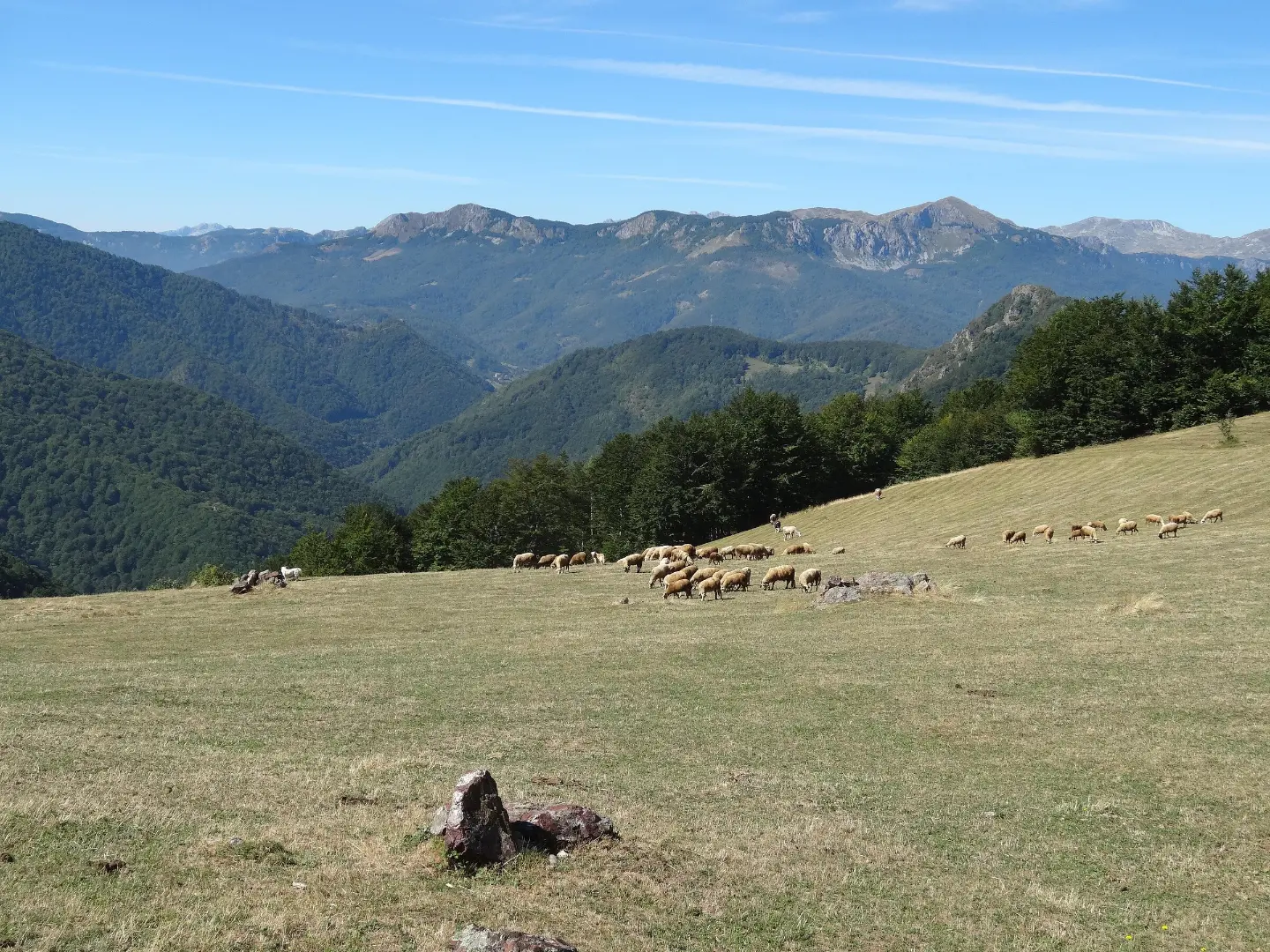
The hardest jobs were never done alone. Moba is voluntary shared work: neighbours come to help with mowing, harvest, threshing or building a house, the host lays the table, and the help is returned when someone else needs it. In summer families moved with their herds to the katuns, summer settlements on the high pastures, and winter evenings belonged to the sijelo and prelo around a single hearth.

The sabor was, and still is, the biggest gathering. At the Church of St Elijah at Kučka korita the clans met to decide important matters, and the great mountain gathering is still held every St Peter's Day, 12 July, on Mount Ljuban near Andrijevica, drawing several thousand people. None of this is just a museum display: pršut is still smoked in Njeguši, dry-stone walls are being restored on Luštica, and in Gornja Lastva the kolo is danced at the Lastva Fešta on the first Saturday of August.
Old walls, living stories: rural heritage of Montenegro
Stone, water and people

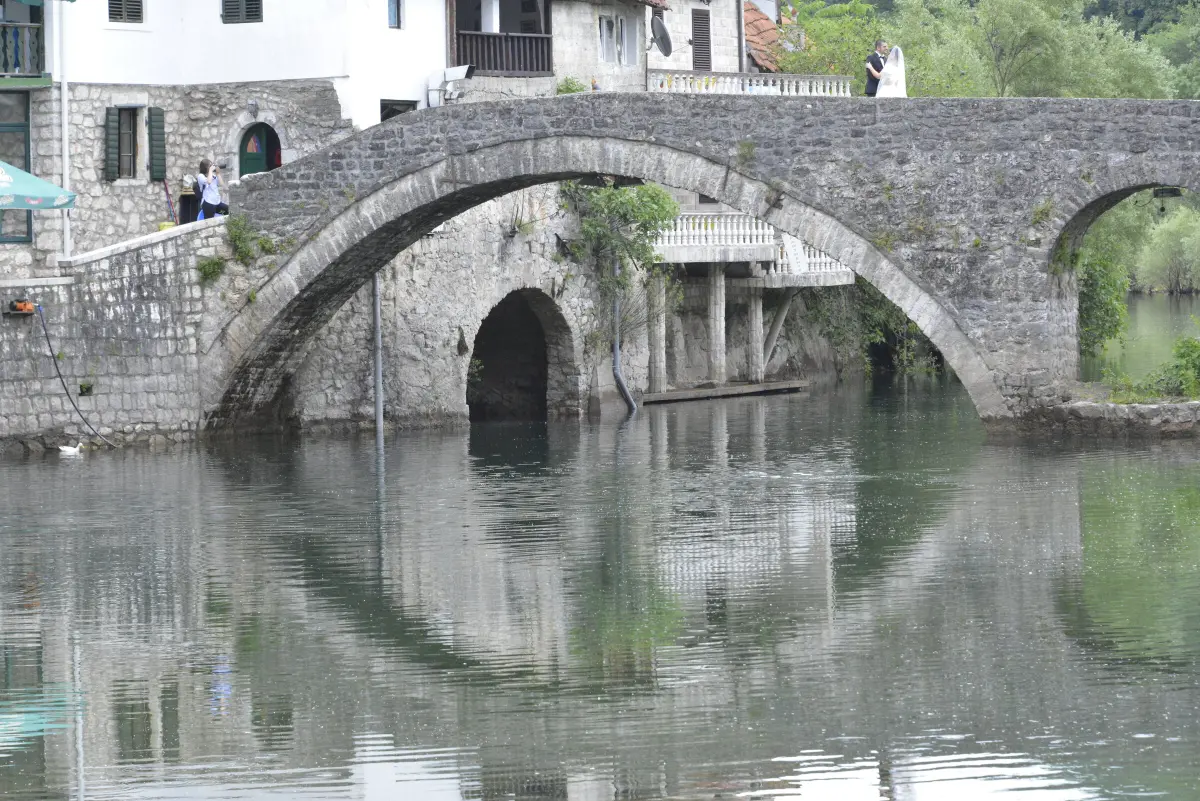
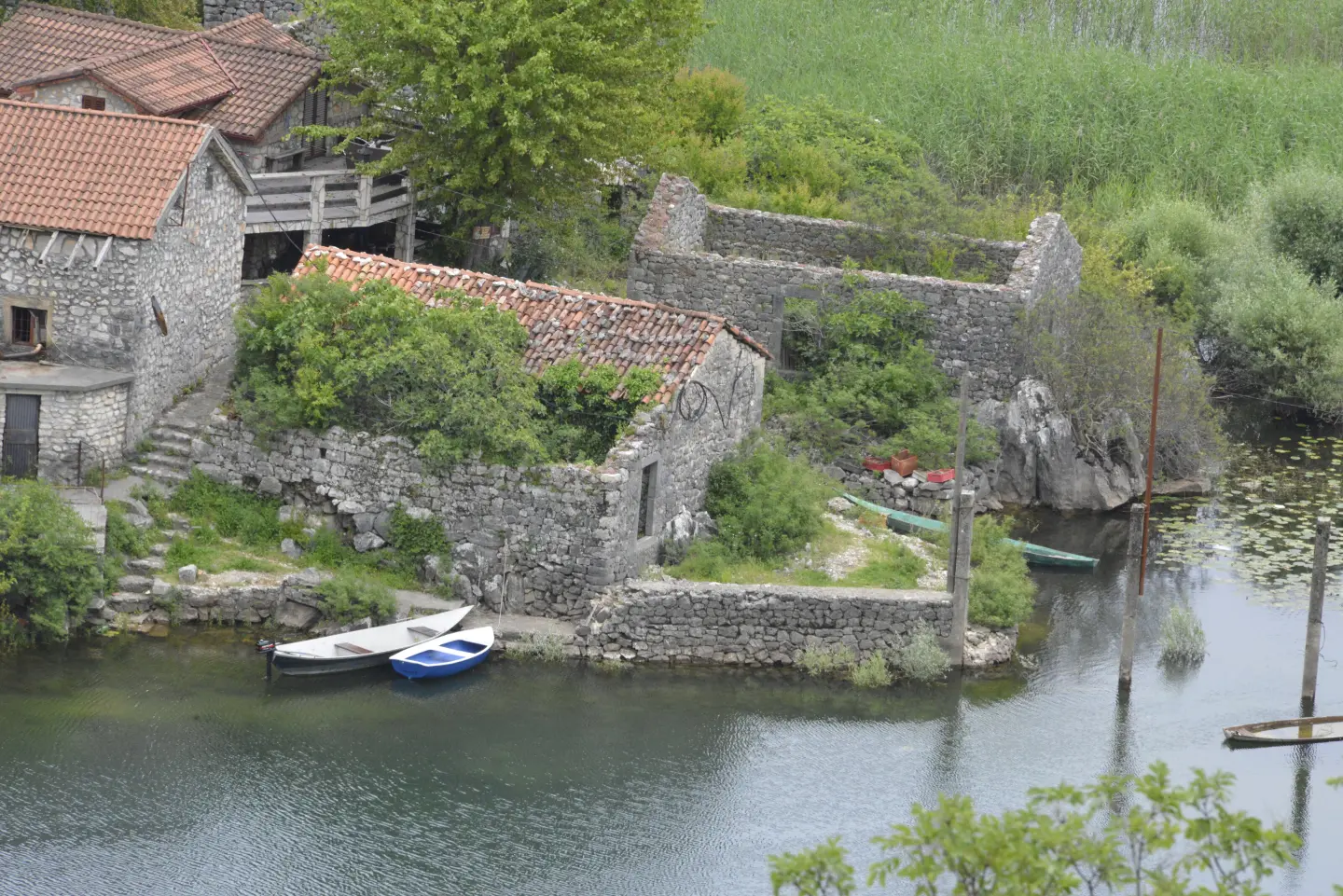
Rijeka Crnojevića, where houses, mills and the bridge are made of the same stone

Stone, water and people

From Njeguši dry stone walls and Luštica threshing floors to the towers of Plav and the katuns of Komovi: the Montenegrin village was built from what was at hand, and that is why it endures.

Signatures

Signatures of the tradition

Stone house with a konoba

Stone house with a konoba

In the karst wood was expensive, so houses were built of limestone: rectangular, thick-walled, with small windows and a konoba on the ground floor for wine, cheese and pršut. Njegoš's birth house in Njeguši is one. In Crmnica's Godinje the houses stand wall to wall, their konobas linked by passages.

Read more
Dry-stone walls and threshing floors

Dry-stone walls and threshing floors

Mortarless walls, stacked from stones dug out of the same field, enclose the olive groves of Luštica and the fields of Njeguši. The threshing floor is a round stone platform for threshing grain, but also a village square for circle dancing and decision-making: Gornja Lastva above Tivat had 12 of them.

Read more
Towers: the house as a fortress

Towers: the house as a fortress

Where danger was constant, the house grew upwards. According to the Plav Tourist Board, the Redžepagić Tower in Plav dates from 1671 and has walls more than a metre thick, gun slits, and a wooden upper storey with corner balconies. It has been a museum since 1979.

Read more
Katun: summer on the mountain

Katun: summer on the mountain

In summer families moved with their herds to the high pastures and made cheese, kajmak and butter until autumn. About 200 katuns have been recorded on Kučka planina alone. Many are empty, but some still fill up every summer, and eco-katuns such as Štavna welcome guests.

Read more
Watermills and fulling mills

Watermills and fulling mills

A stream watermill grinds grain using the power of the stream, and a fulling mill fulls woollen cloth. In Fundina in Kuči, more than 30 watermills once operated; in Morinj there were twenty mills; and near Pljevlja the Ćirović Ethno Watermill still grinds and receives guests.

Read more
Gusle and the Bihor kilim

Gusle and the Bihor kilim

Playing the gusle, a one-stringed instrument with a horsehair string, the guslar accompanies his own heroic song. On the Bihor kilim, blood brotherhoods were formed and weddings were arranged, and the mosque in Petnjica keeps a collection of more than 500 rugs.

Read more
Moba, sijelo and sabor

Moba, sijelo and sabor

Heavy work was done as moba, the voluntary help of neighbours, and winter evenings were spent at the sijelo and prelo. At gatherings decisions were made and men competed at throwing a stone from the shoulder; the great gathering on Ljuban near Andrijevica is still held on St Peter's Day, 12 July.

Where to go

Where to experience it

Njeguši and Njegoš’s Birth House

Erakovići, Njeguši (Cetinje)

The stone house where Njegoš was born in 1813, now a memorial museum with ethnographic objects and weapons, open from mid-April to mid-November. Around it lie Njeguško polje, dry-stone walls, the Petrović tower and Duke Mirko's house with its threshing floor.

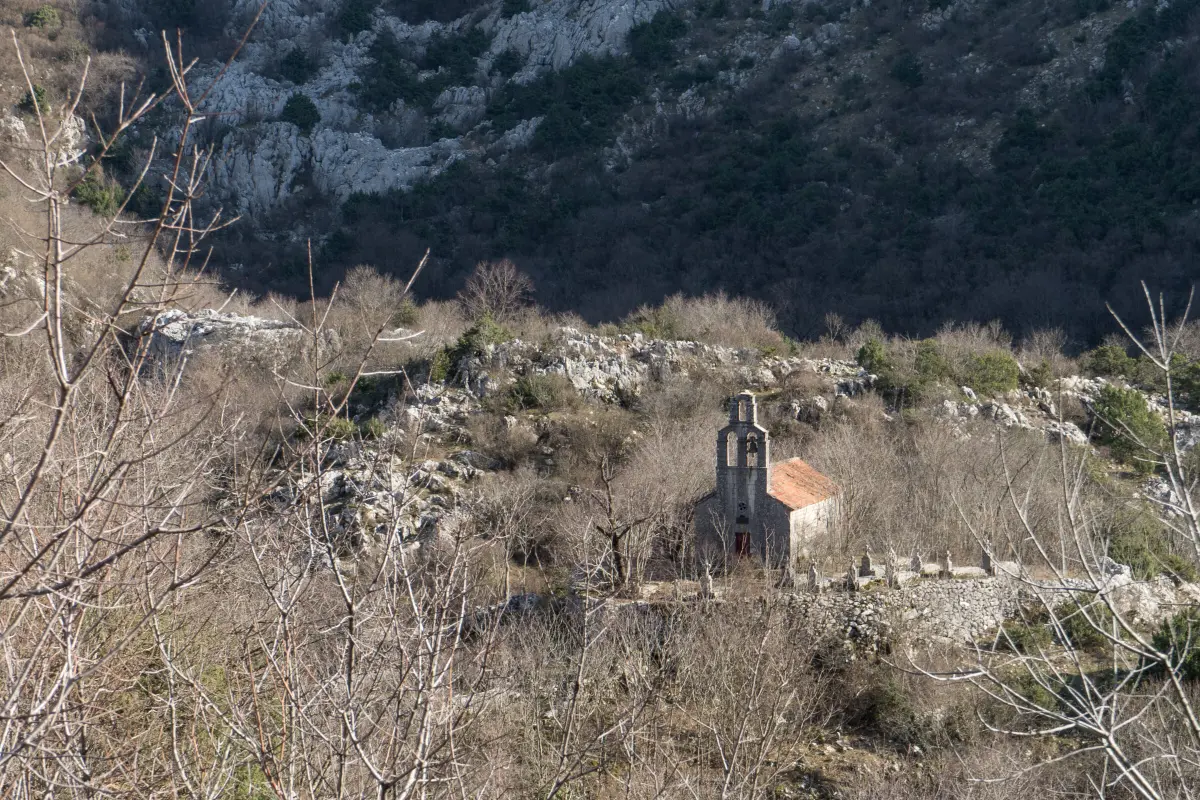
Mali Zalazi

Above Kotor, on the slopes of Lovćen

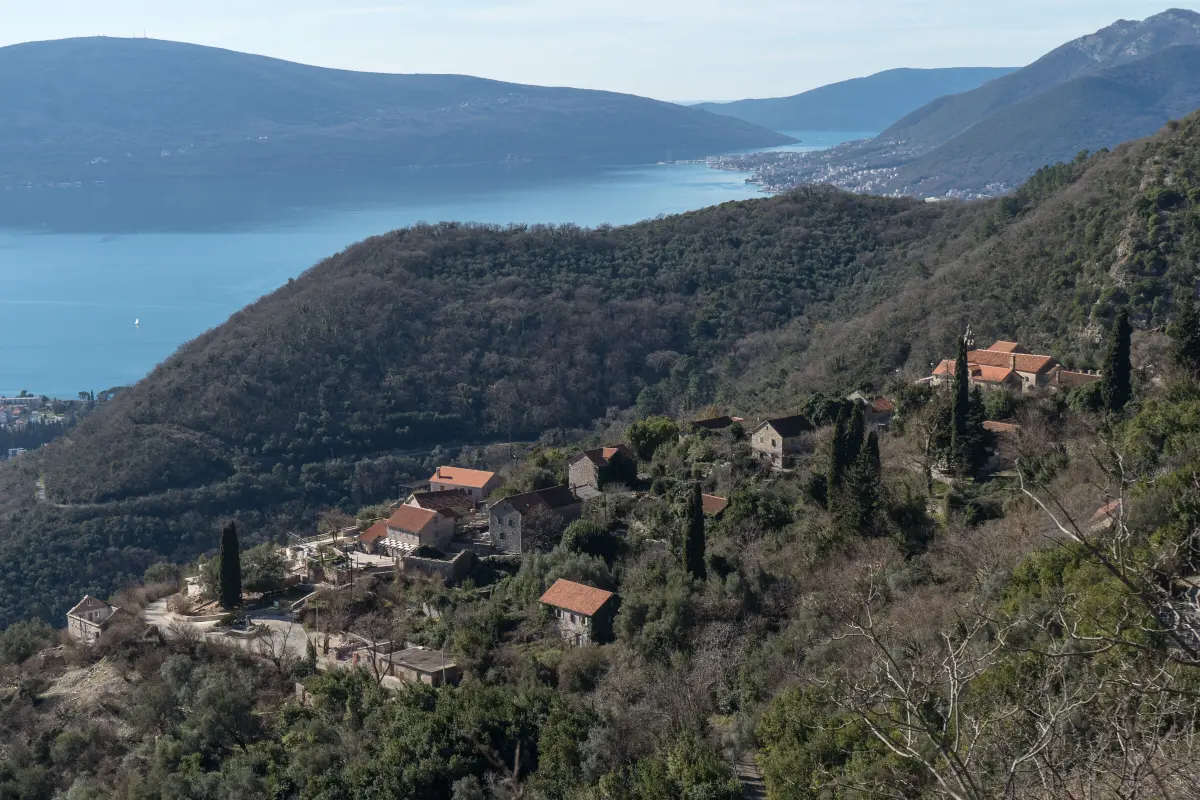
Abandoned hamlet on a hiking trail above Boka: stone houses, threshing floors and a small church that the karst is slowly reclaiming. Reachable only on foot; bring water and do not enter the ruins.

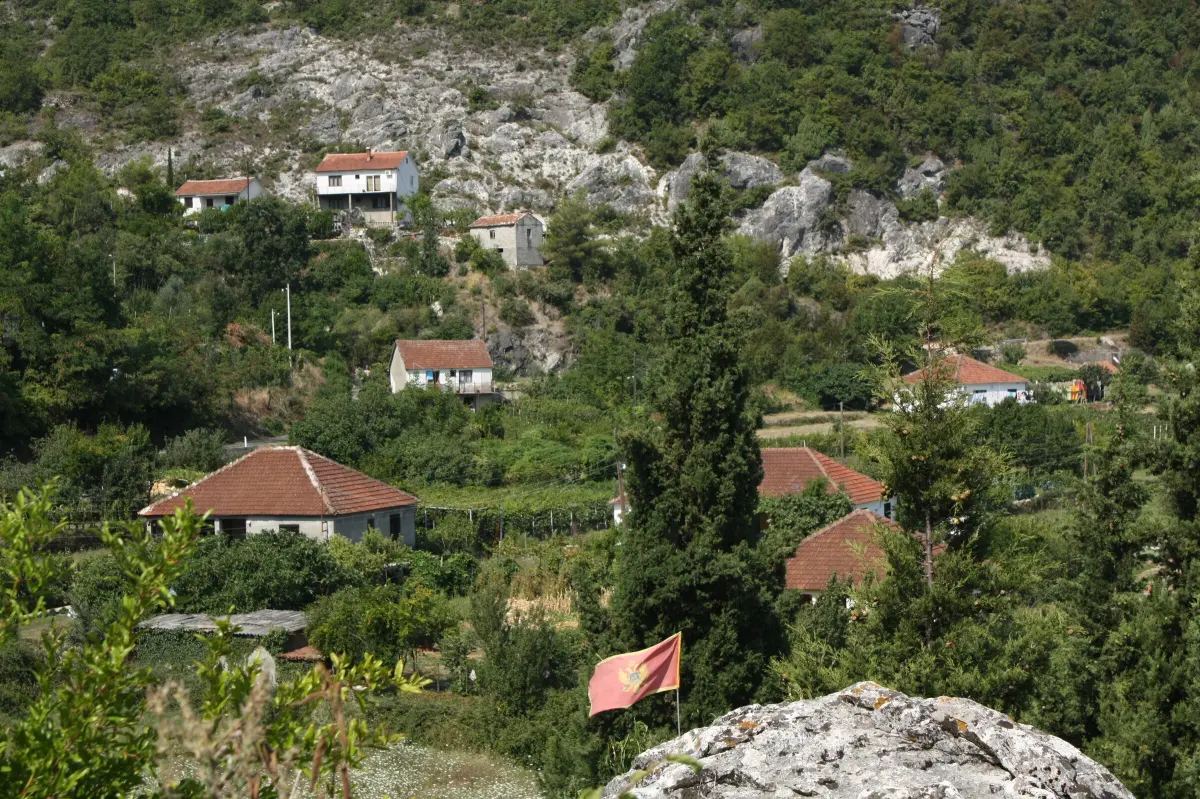
Godinje

Crmnica, Lake Skadar (Bar)

A wine village above the lake, built house next to house and house above house, with wine cellars connected by passageways. Family cellars offer Vranac tastings by appointment.

Rijeka Crnojevića

Cetinje

A river village at the head of Lake Skadar, with stone houses along the water and Danilo's Bridge of 1853, a double-arched limestone bridge 43 metres long. Riverside restaurants serve the lake's cooking.

Gornja Lastva

Above Tivat, 300 m above sea level

A well-preserved village on Vrmac above Tivat: 12 threshing floors, an old olive mill, churches and paths through the olive groves. The Lastva Fešta is held here on the first Saturday of August.
Luštica: dry-stone walls and threshing floors

Klinci, Mrkovi, Đuraševići (Herceg Novi and Tivat)

Kilometres of dry-stone walls around olive groves, threshing floors, vaulted passageways and stone houses along the panoramic road “Life on Luštica”. The most beautiful scenes are around village churches, with views over Boka.

Medun and the Marko Miljanov Museum

Kuči, about 12 km from Podgorica

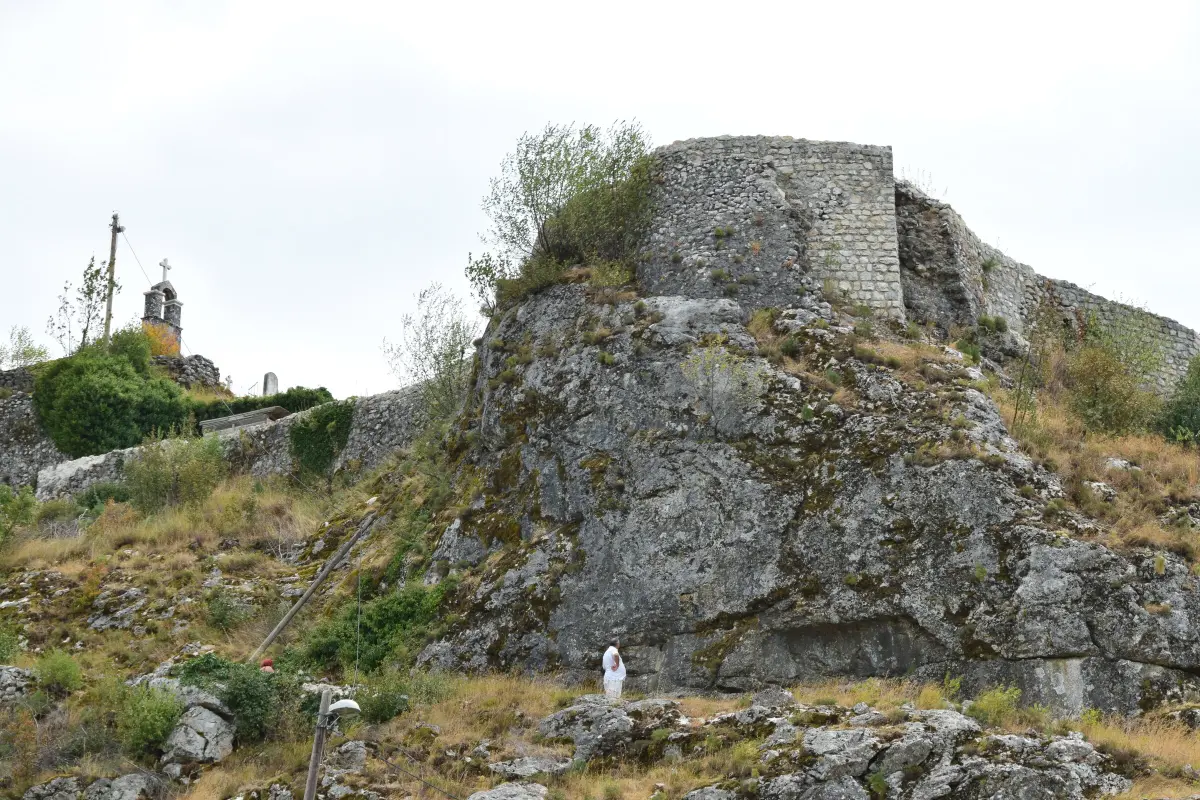
The remains of Illyrian Meteon and a medieval fortress, and the house-museum of the Kuči duke Marko Miljanov, opened in 1971. Ask the Podgorica Tourist Organisation for opening hours; Medun lies on the Krug oko Korita panoramic road.

Redžepagić Tower

Plav

The oldest fortified house in the Plav-Gusinje area, with a wooden top storey and corner balconies called ćošak. A museum since 1979, with folk costumes, handicrafts and tools.

Ćirović Ethno Watermill

Odžak, 12 km from Pljevlja

A rural household with a century-old stream-fed watermill that has never stopped working and a “Miller’s Room” with old objects. Guests can stay overnight and take part in work on the estate.

Calendar

Through the year

  1. Mid-April – mid-November

    Njeguši

    Njegoš's birth house is open to visitors.

  2. 6 May

    St George's Day

    Around the herders' feast the flocks traditionally head for the mountain.

  3. June – September

    Katuns

    Katuns on Komovi, Bjelasica and Sinjajevina welcome guests.

  4. 12 July

    Ljuban, Andrijevica

    The great mountain gathering on St Peter's Day.

  5. Mid-July

    Plav

    Plavski otkos, a contest of mowers with hand scythes.

  6. First Saturday of August

    Gornja Lastva, Tivat

    Lastva Fešta, when the kolo is danced in the old village.

Customs

Customs and good to know

Come between April and November

Njegoš's birth house is open from mid-April to mid-November, katuns welcome guests mostly from June to September, and village festivals and gatherings happen in summer. In winter many villages are quiet and the roads to the katuns are closed by snow.

Arrange your visit in advance

For the Marko Miljanov Museum at Medun, check opening hours and book through the Podgorica Tourist Organisation (+382 20 667 535). Village households, katuns and ethno-watermills are homes, not museums with opening hours: get in touch a day or two ahead.

Do not touch dry-stone walls

A dry-stone wall stands only because every stone is in its place. Do not climb on the walls, do not take a stone as a souvenir, and close every gate you pass through.

Threshing floors and courtyards are someone’s property

Most threshing floors, cellars and courtyards are private. Ask before you enter or photograph people; a host will gladly show you more than you would find on your own.

Abandoned villages: on foot and with care

Mali Zalazi can only be reached by a hiking trail. Bring water and sturdy footwear, and do not enter ruins: the walls and roofs of abandoned houses can collapse.

Stay overnight in the countryside

The Rural Tourism Association lists more than 175 village households with contacts at ruralholiday.me. On Komovi you can stay at the Štavna eco-katun, and near Pljevlja at the Ćirović Ethno Watermill.

FAQ

Frequently asked questions

A round platform paved and walled with stone, where horses or oxen threshed the grain. It was also the village square: people danced the kolo, sang to the gusle and settled village matters there. Well-kept threshing floors survive on Luštica, in Gornja Lastva and in Njeguši.
A katun is a herders' summer settlement on high pastures, where the animals graze and cheese and kajmak are made until autumn. Many are now empty, but some still fill up in summer, and eco-katuns such as Štavna on Komovi welcome guests, mostly from June to September.
Voluntary collective work by neighbours on a job too large for one family: mowing, harvesting, threshing or building a house. The host prepares a meal, and the help is returned when another neighbour needs it.
A gathering of a village or clan at which common decisions were made, and alongside this people danced, sang and competed in stone throwing from the shoulder, long jump and horse races. At the Church of Saint Elijah at Kučka Korita, the clans discussed important matters, and the great gathering on Mount Ljuban near Andrijevica is still held on St Peter’s Day, 12 July.
The Redžepagić Tower in Plav, the oldest residential-defensive building in the Plav-Gusinje area, has been a museum since 1979 and houses a collection of folk costumes, handicrafts and tools. For current opening hours, ask at the tourist information office of the Plav Tourism Organisation.
From mid-April to mid-November, every day; in winter it is closed. The house in Erakovići at Njeguši is part of the National Museum of Montenegro, so check current opening hours and ticket price at narodnimuzej.me.
Because it is built without mortar: it is held together only by the weight and arrangement of the stones. A single stone removed can set the whole wall in motion. Dry-stone walls are also boundaries of other people’s land, so do not climb over them or pull them down.
In village households listed by the Rural Tourism Association (ruralholiday.me), at the Štavna eco-katun on Komovi, four kilometres from the Trešnjevik pass, or at the Ćirović Ethno Watermill near Pljevlja, where you sleep beside a mill that still works.

Zora

Your Montenegro travel guide

Hi, I'm Zora

Ask me about places, beaches, food, events or a trip plan – in any language.