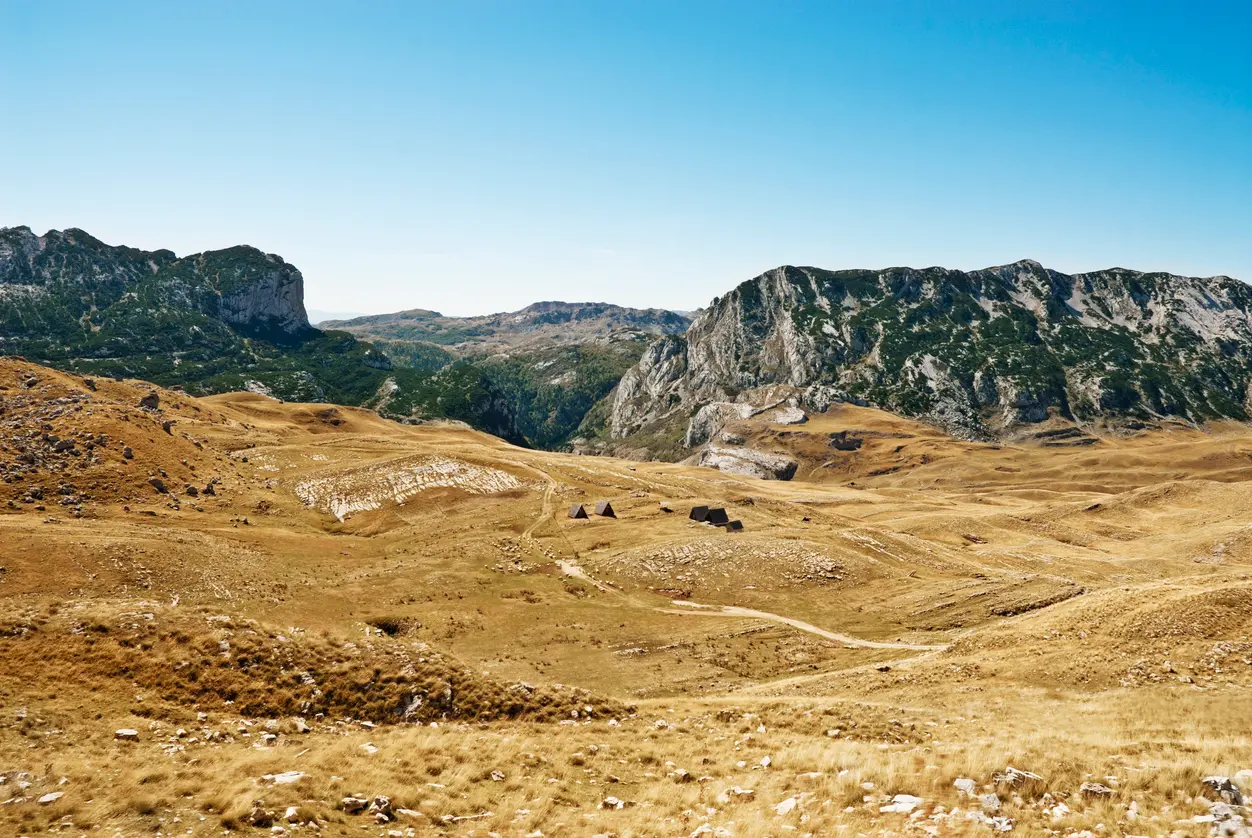
Seasonal pastoral life on Montenegro's mountains — the ancient tradition of izdig, the daily rhythm of herders, and authentic cuisine that survives into the 21st century.
On the mountains of northern Montenegro, above 1,000 metres above sea level, settlements still exist that function according to rhythms centuries old. Every year, as soon as the snow retreats, families set off on izdig — the seasonal migration with their livestock to the summer pastures. A katun is neither a hotel nor a museum: it is a workplace, a home and a community all in one. Here, the day is measured by milking, cheese-making and the movement of the herd — not by the clock on a phone.
Katuns are the heart of Montenegrin mountain identity — seasonal settlements where families still live by rhythms dictated by nature, not the clock.
Did You Know?
Katuns are mentioned in written sources as far back as 1435, and some of today's Montenegrin villages grew up on the very sites of former katuns. In 2025, Montenegro launched a formal process to protect the katun tradition as a heritage of national significance and is preparing a nomination for the FAO's GIAHS list.
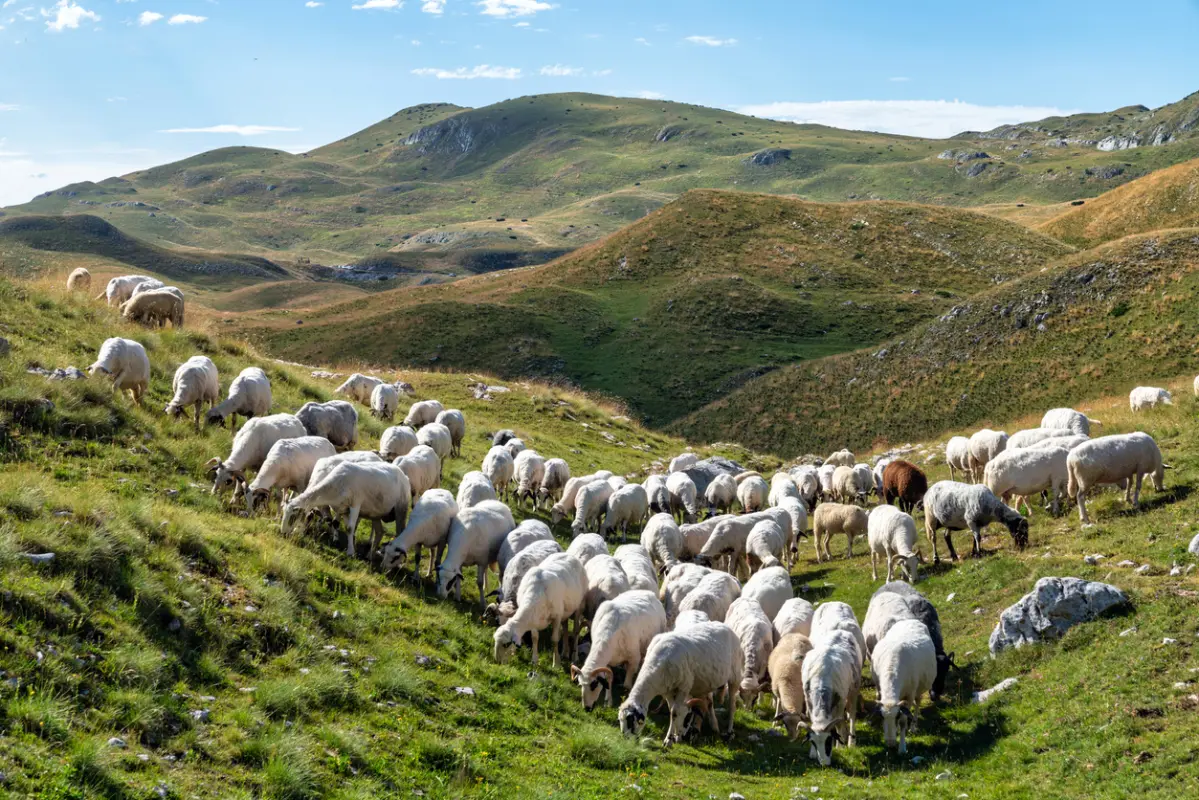
Every year, as soon as the snow retreats (usually in late May or early June), families set off on izdig with their livestock up to the mountains. This practice is not symbolic — it is a functional economic strategy that has ensured survival for centuries. The livestock remain on the mountain until the first October frosts.
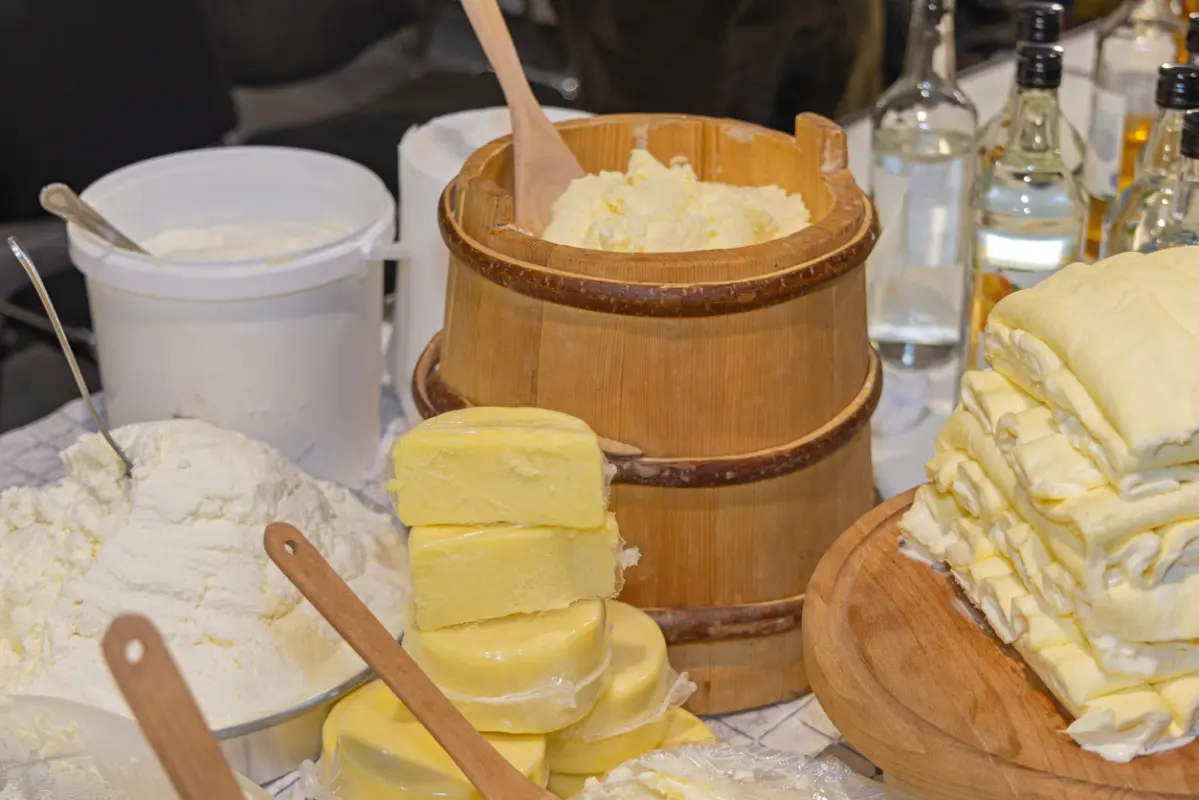
Every morning on the katun begins with milking the sheep and cows. The fresh milk is immediately processed into cheese and kajmak — using traditional methods, without any industrial equipment. Mountain cheese from Durmitor and Sinjajevina has a distinctive flavour that cannot be reproduced in the valley, thanks to the richness of the alpine grasses.
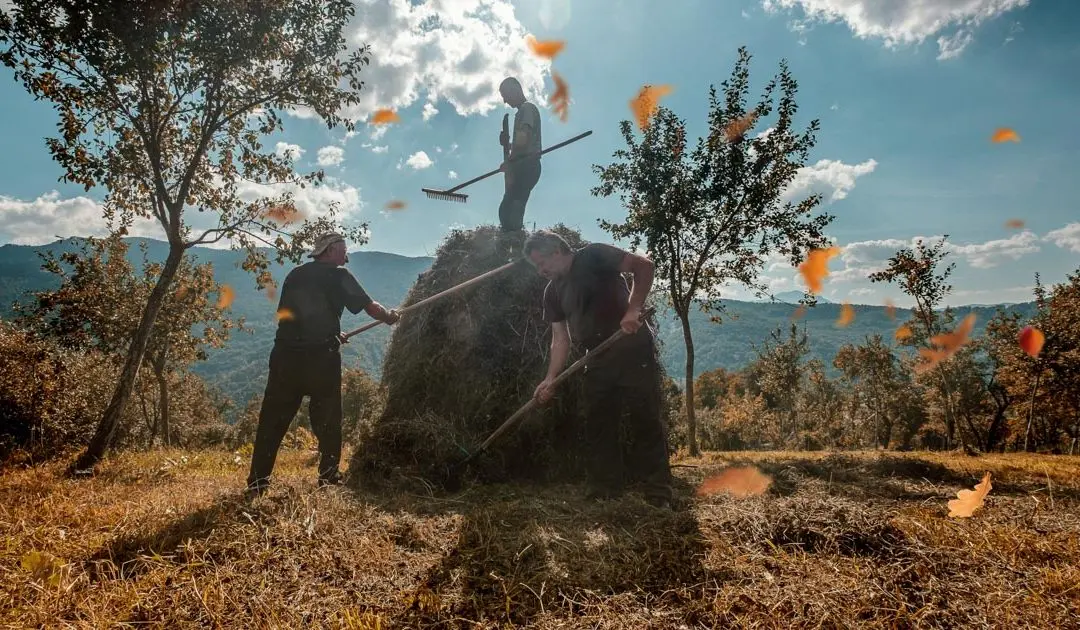
Moba is a tradition in which neighbours and friends gather to help one family with a demanding task — haymaking, building, harvesting. The host feeds all participants and offers rakija. This practice, which helped communities survive both wartime and peacetime hardships, is still occasionally observed in northern Montenegro today.
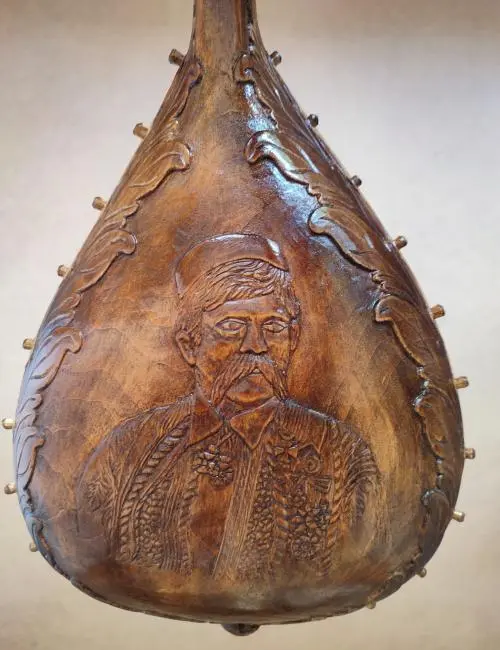
Katuns were for centuries centres of oral culture. To the accompaniment of the gusle — a single-stringed bowed instrument — epic songs about heroes and battles were sung. Many of those songs were composed on the katuns themselves. The boundaries of katun lands and ownership rights are still passed down orally to this day, rather than through written documents.
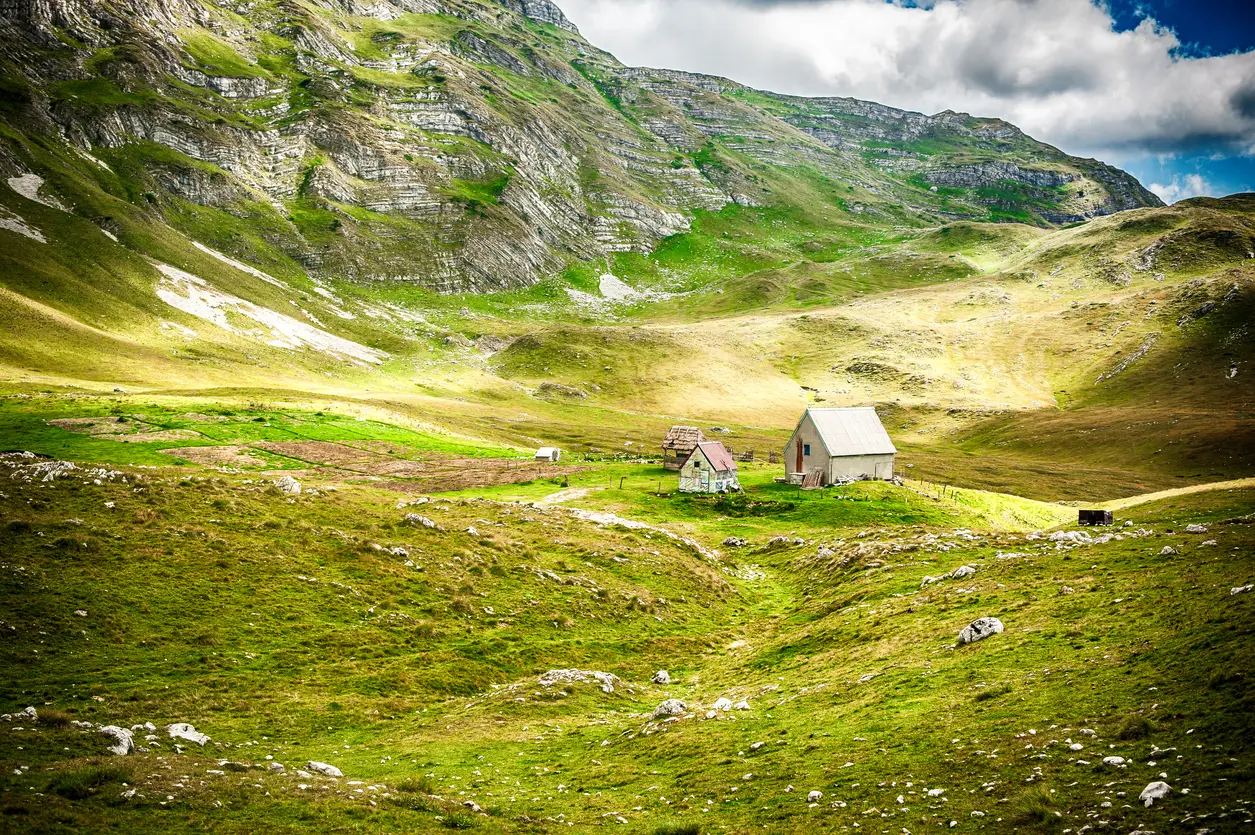
Seasonal settlements at 1,000+ metres — livestock, cheese and gusle since 1435
Every season, Montenegrin families set off on izdig with their livestock up to the mountains — a tradition that has continued uninterrupted since the Middle Ages and is still alive today on Durmitor, Komovi and Sinjajevina.
Contact the Regional Development Agency 'Bjelasica, Komovi i Prokletije' or the Meanderbug platform, which work with families who welcome guests on authentic working katuns. A visit makes sense between June and September. Always call ahead — katuns do not operate like hotels and most do not accept unannounced guests.
A real katun is a working household where a family genuinely lives and works with livestock during the summer. An eco-katun is tourist accommodation that uses katun architecture and food, but without the actual pastoral life. Eco-katuns offer more comfort (furnished rooms, a restaurant) but less authentic experience. Both are legitimate — it depends on what you are looking for.
Kačamak (a porridge of corn or wheat flour with cheese and kajmak), cicvara (melted cheese and kajmak with cornmeal), priganice (fried dough), homemade bread baked on a ciganak, beans, potatoes and mountain cheese. Meat (lamb on a spit) is prepared only for special occasions — celebrations or the end of haymaking. Everything is homemade; nothing is bought.
Eko-katun Štavna near Andrijevica (the starting point for Komovi), Eko-katun Reljina near Biogradska gora, and the katuns on Sinjajevina are accessible and well organised for visitors. For Durmitor, the katuns around Žabljak offer shorter excursions. All are reachable by car up to a certain point, then on foot.
Younger generations are increasingly choosing city life, and the number of active pastoral katuns is declining. At the same time, Montenegro launched a formal process in 2025 to protect the katun tradition and is preparing a nomination for the FAO's GIAHS list. The development of rural tourism gives new generations an economic reason to stay and continue the tradition.
July and August are the peak of the katun season — the livestock are up on the mountain, cheese is made daily, and families are in full activity. June and September are quieter and cooler, with fewer visitors. Outside that period (October–May) the katuns are empty — families return to their villages in the valleys.

Ask about Montenegro
Ask me about destinations, restaurants or activities.