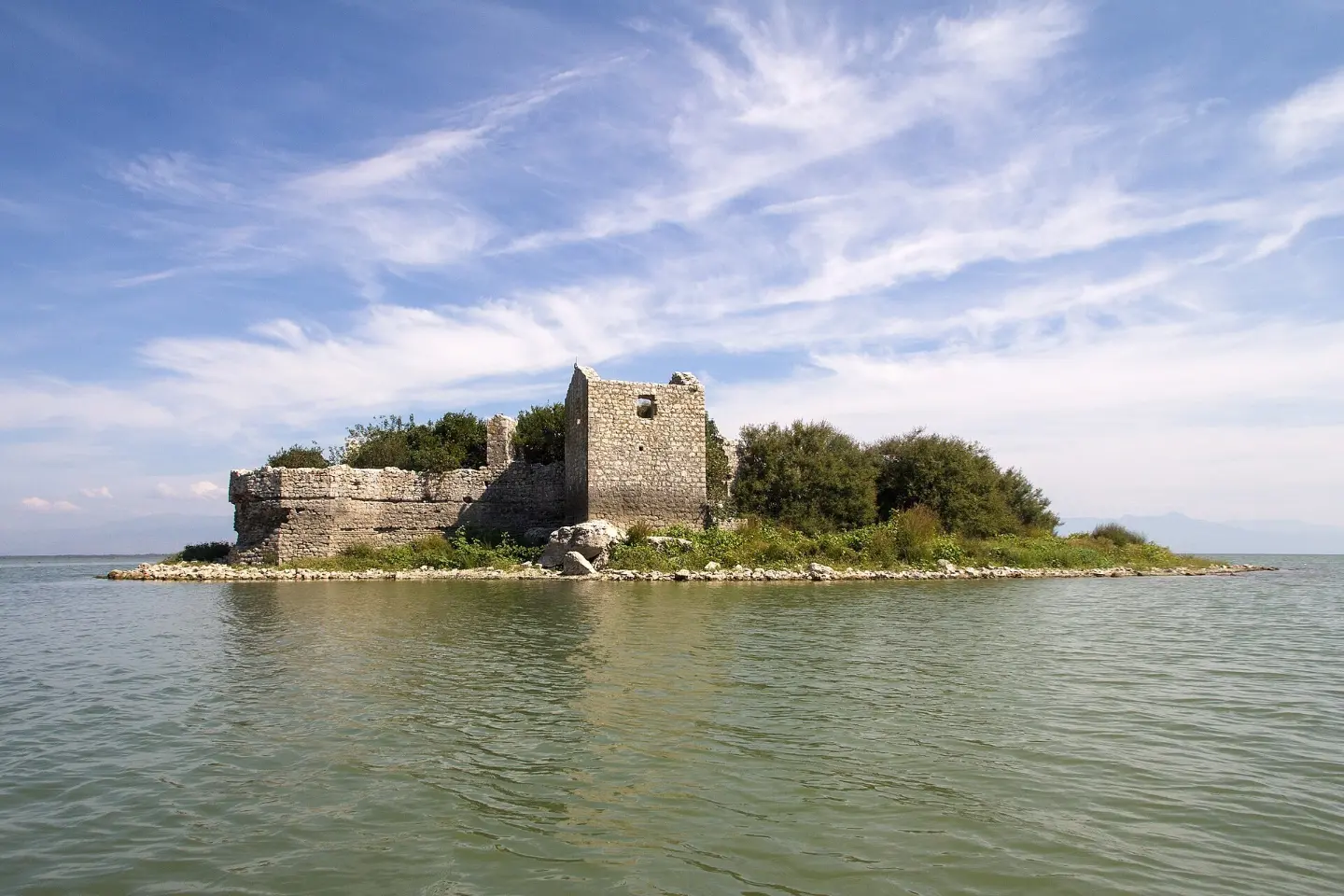
An 1843 Ottoman fortification turned prison — Montenegro's Alcatraz
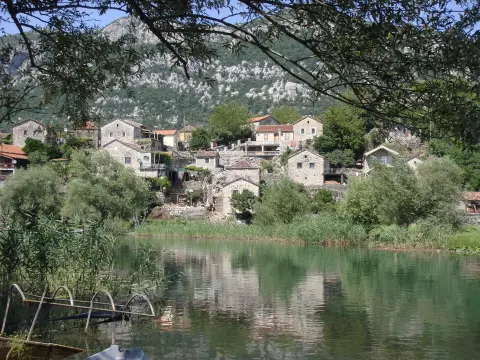
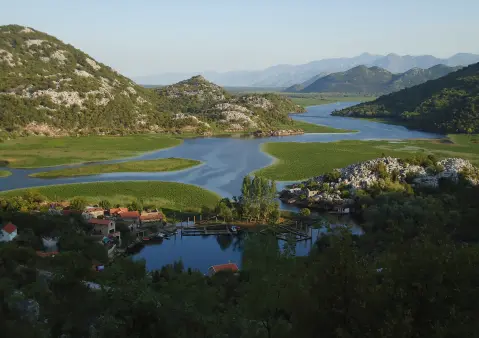
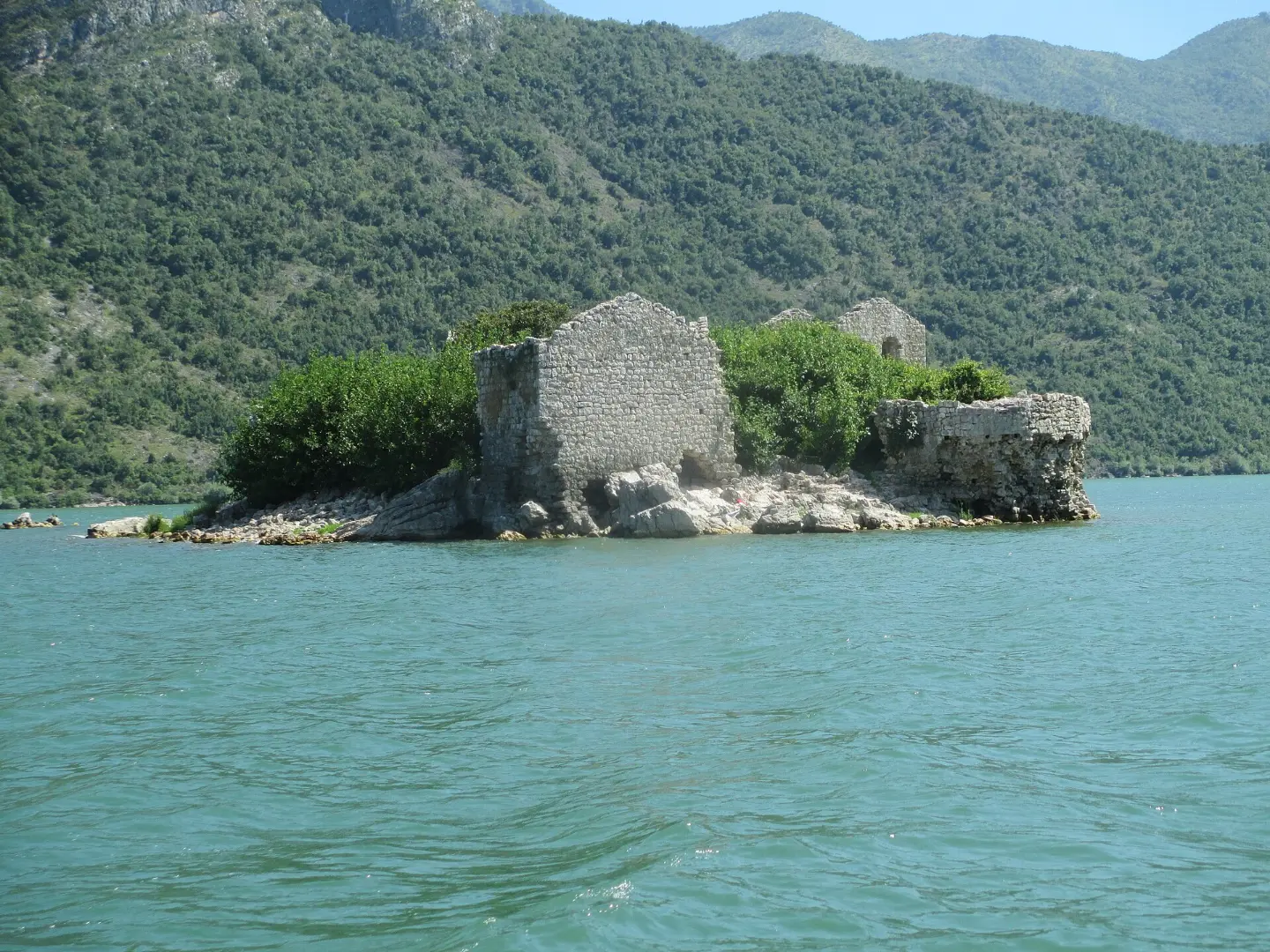
Grmožur Fortress is situated on a small rocky island in the northwestern part of Lake Skadar, near the village of Godinje.
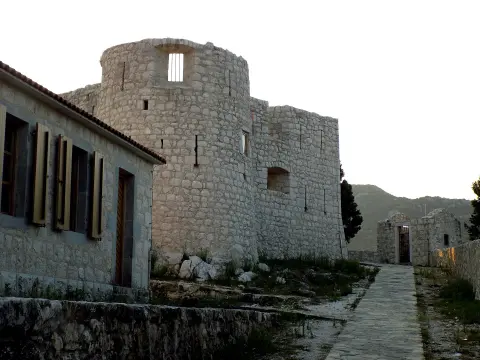
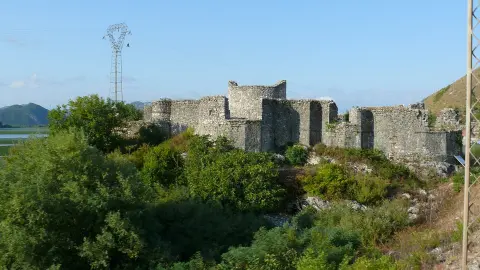
The Ottomans built it in 1843 as a defensive outpost against Montenegro, and Montenegrin troops liberated it on 24 January 1878. Prince Nikola then ordered the former military stronghold to be converted into a prison for the most dangerous criminals and political opponents, earning the site its nickname — Montenegro's Alcatraz. Today only the remains of the rubble-stone walls, covering approximately 430 square metres, are visible, and the island has become a habitat for rare birds, including the Dalmatian pelican.
Highlights
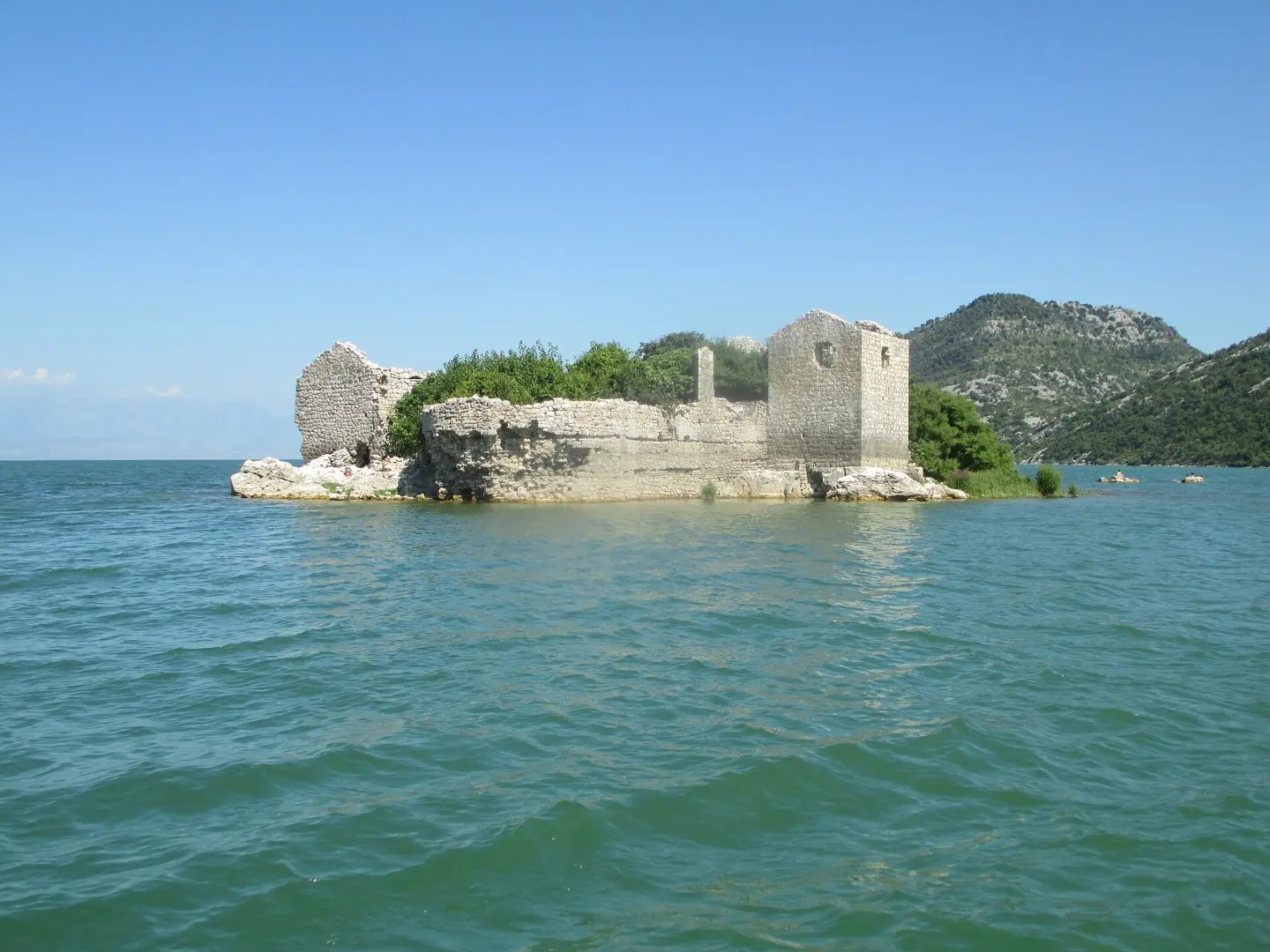
The fortress was built by the Ottomans in 1843 as a defensive outpost against Montenegro. The rubble-stone walls, 50 to 120 cm thick, still enclose an area of approximately 430 square metres. The fortification had two entrance gates defended by towers and a cross-wall that divided the interior into two sections. Montenegrin troops liberated the fortress on 24 January 1878, and it has never been restored since — only the original stone remains are visible.
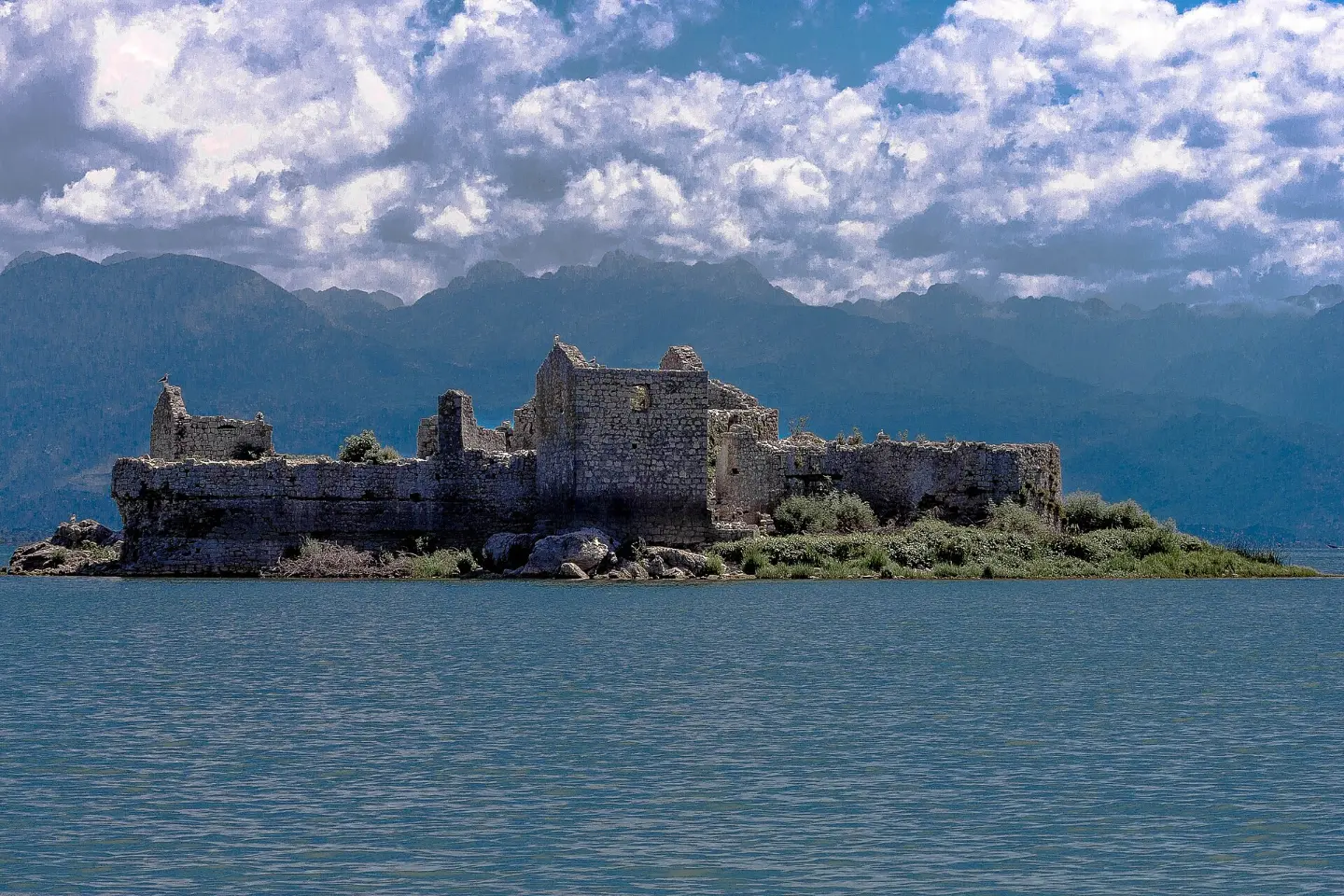
After the liberation in 1878, Prince Nikola Petrović ordered the Ottoman fort to be converted into a prison for the most dangerous criminals and political opponents. What made this prison unique was that only inmates who could not swim were sent here — the lake's waters were the sole barrier against escape, with no need for additional security systems. According to prison rules, any guard whose prisoner escaped had to serve out that prisoner's sentence. The prison remained active until 1905, when a devastating earthquake severely damaged the fortress.
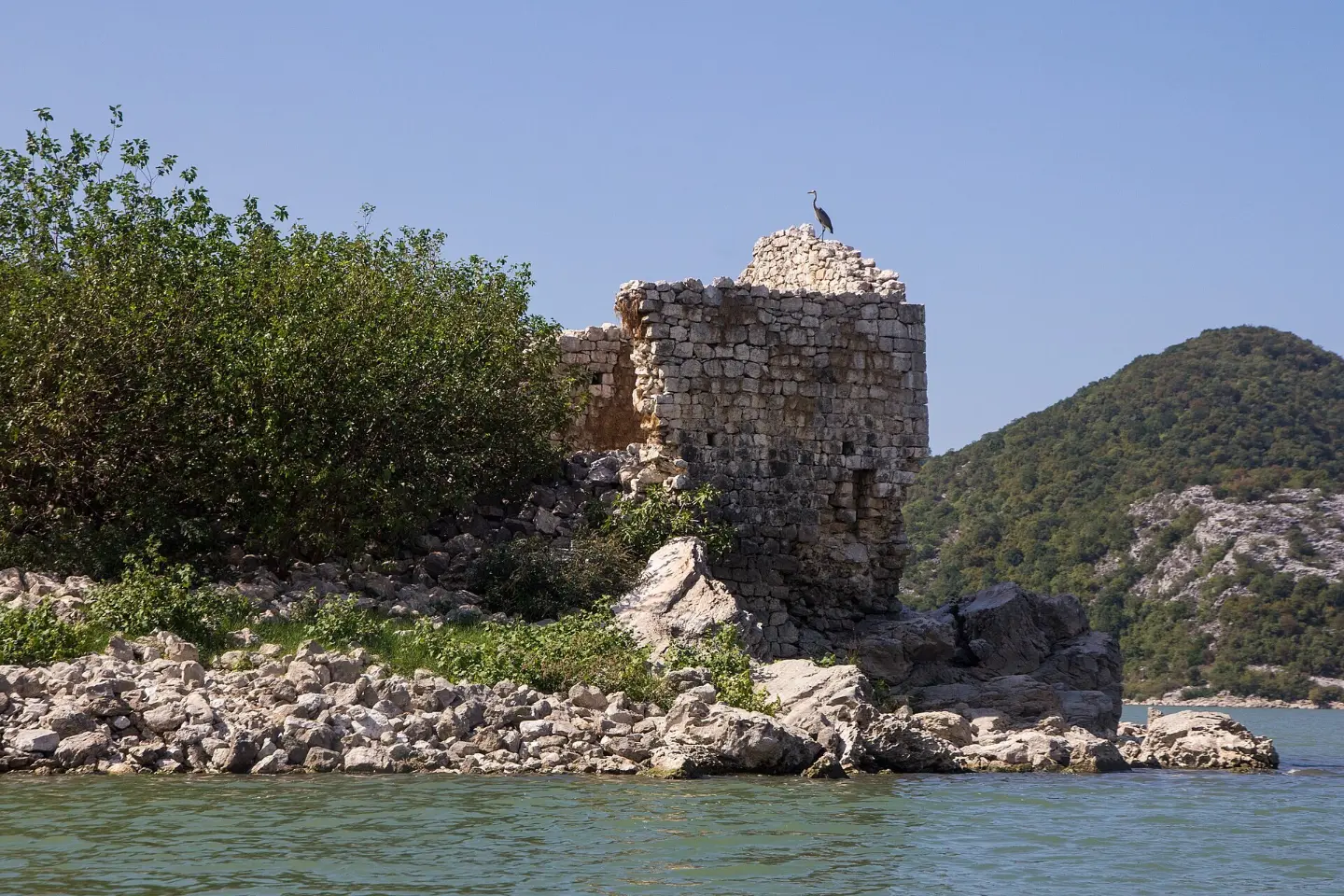
Today Grmožur is also known as the Island of Birds — the former prison has become one of the most important nesting sites on Lake Skadar. Cormorants, herons, seagulls, and the rare Dalmatian pelican — a protected species and symbol of Skadar Lake National Park — can be spotted on and around the island. The lake as a whole is home to 264 species of birds, some of which are endangered at a European level. The early morning hours are best for birdwatching — arriving by boat between 7 and 9 a.m. is recommended.
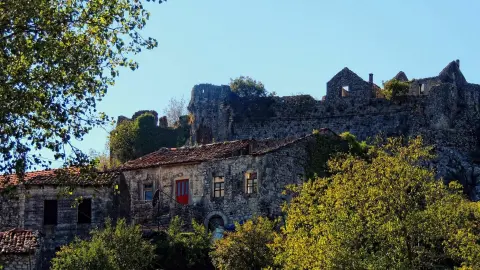
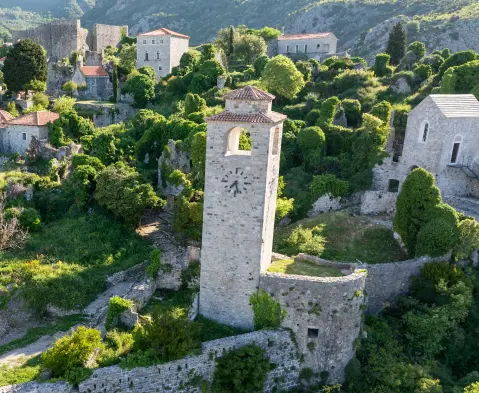
At the mouth of the Morača River into Lake Skadar lies Žabljak Crnojevića, the largest fortress-town on the lake, built in the 11th century by the Zetan princes of the Vojisavljević dynasty. In the 15th century it became the capital of the Crnojević dynasty, and ruler Ivan Crnojević fought battles against the Turks until 1479, when the fortress fell under Ottoman rule. Traces of ancient churches and mosques from that period are still visible within the walls. The ramparts offer one of the most spectacular panoramic views of the entire Lake Skadar.
Kom Monastery is one of the oldest Orthodox monasteries on Lake Skadar, founded in 1415. It is situated on an island in the lake and accessible exclusively by boat. Together with the monastery on Beška island — home to the Church of St. Archangel Michael and the Church of St. George — it forms part of the lake's rich cultural and historical heritage, which encompasses 18 historical monuments. Boat tours from Virpazar regularly include a visit to these monasteries alongside a trip to Grmožur.
What to do
The island is a nesting ground for cormorants, herons, and the Dalmatian pelican — bring binoculars.
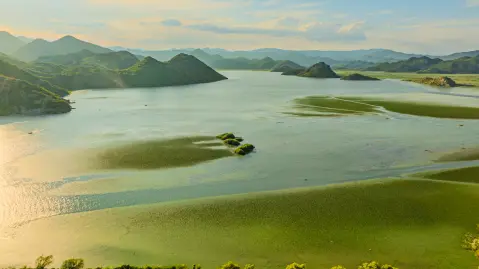
Cruise across Lake Skadar to Grmožur with panoramic views of the surrounding mountains and the lake's surface.
The Ottoman ruins surrounded by the lake offer exceptional motifs for photographers during the morning hours.
Tour the remains of the fortress: two entrance gates, defensive towers, and rubble-stone walls.
Hiking, walking and cycling routes that start here or pass nearby, with maps and GPX downloads.
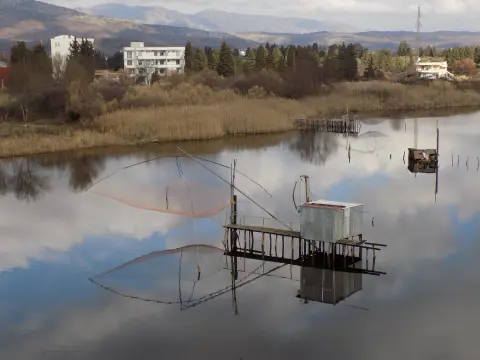
Trail TT5 takes you along almost 148 km, predominantly on asphalt, with a total ascent of 2604 m. It passes by Lake Skadar, historic fortresses, and landscapes that tell stories of water.
148 km2,604 m2–3 days
View trail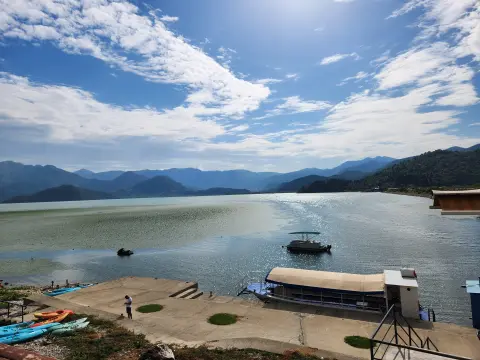
The 1.0 km trail leads from Velji vrh to the parking area by the lake, overcoming 282 m of descent. The terrain is a combination of a dirt forest trail and a rocky section, so good footwear and careful walking are needed.
1.0 km35–50 min
View trail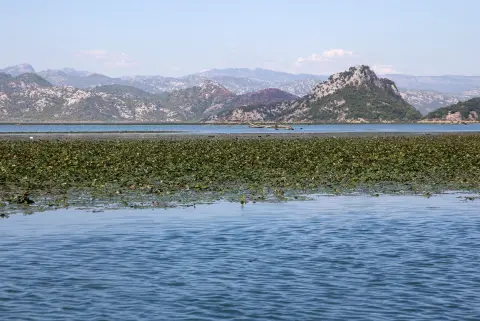
Short and demanding marked trail in Skadar Lake National Park. It is 1.2 km long, with no ascent and 284 m of descent, taking about 45 min of walking.
1.2 km40–55 min
View trail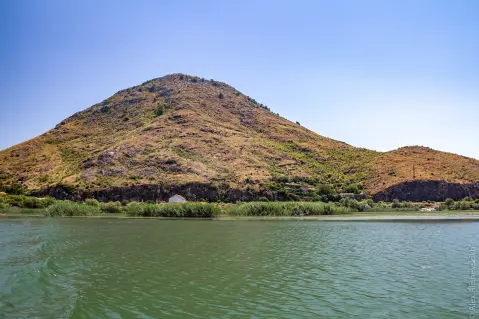
The 1.4 km trail leads from Mala Venecia to Velji vrh (303 m a.s.l.) through Skadar Lake National Park. An ascent of 276 m over a short distance makes it demanding, but the reward is panoramic views of the lake.
1.4 km276 m55–80 min
View trail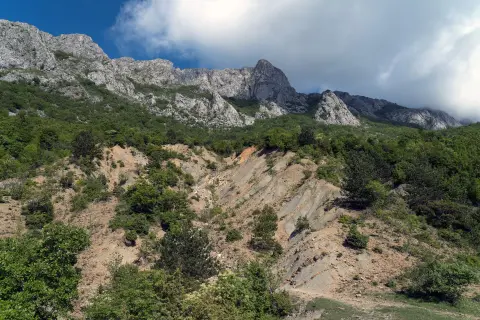
A one-way hiking trail from Baltina to Gornji Šestani, 10,6 km long with a total ascent of 555 m. Estimated walking time without breaks is 3 h 55 min, and the difficulty is demanding (SAC T2).
10.6 km555 m3½–4½ h
View trail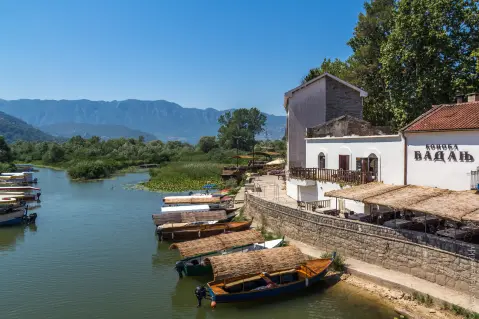
The Podgor – Virpazar hiking trail in Skadar Lake National Park: 11,4 km, ascent 62 m, descent 227 m, duration about 3 h 10 min. The trail is moderate and runs in one direction, with a viewpoint at 4,5 km.
11.4 km62 m2½–4 h
View trail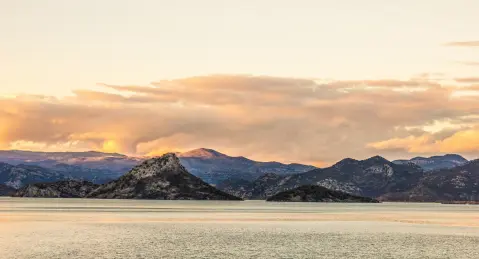
A circular cycling trail 15.1 km long in Skadar Lake National Park. Ridden on asphalt and concrete, with a total ascent of 107 m and a duration of about 55 minutes without breaks.
15.1 km107 m45–65 minLoop
View trail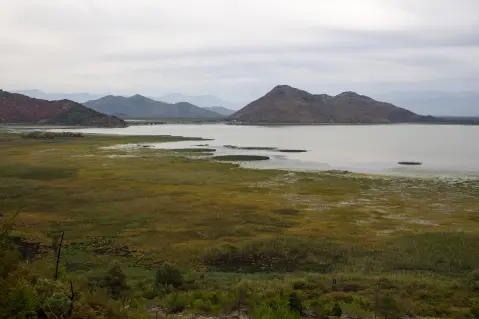
The circular cycling route Biking Trail NPSJ04, 20.0 km long, runs on asphalt/concrete through Skadarsko Jezero National Park. The ascent is 373 m, descent 369 m, and the ride without stops takes about 1 h 35 min; difficulty: easy.
20.0 km373 m1½–2 hLoop
View trailGallery
Plan Your Visit
Website
nparkovi.meAvailable during the tourist season (April–October), depending on the availability of boatmen from Virpazar
5 euros per person (ticket for Skadar Lake NP); children under 15 free; annual pass for all national parks 13.50 euros
Free parking available in Virpazar on the lake shore, from where boats to Grmožur depart
Not adapted for visitors with disabilities — access is exclusively by boat, and the island terrain is an uneven rocky surface with no paved paths
FAQ
Around here

Ask about Montenegro
Ask me about destinations, restaurants or activities.