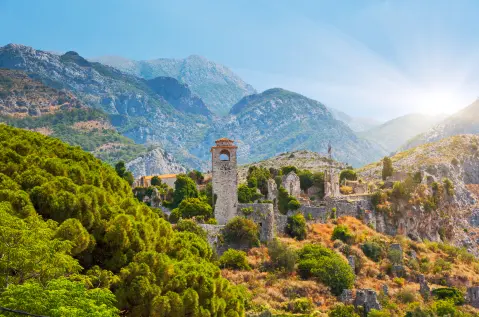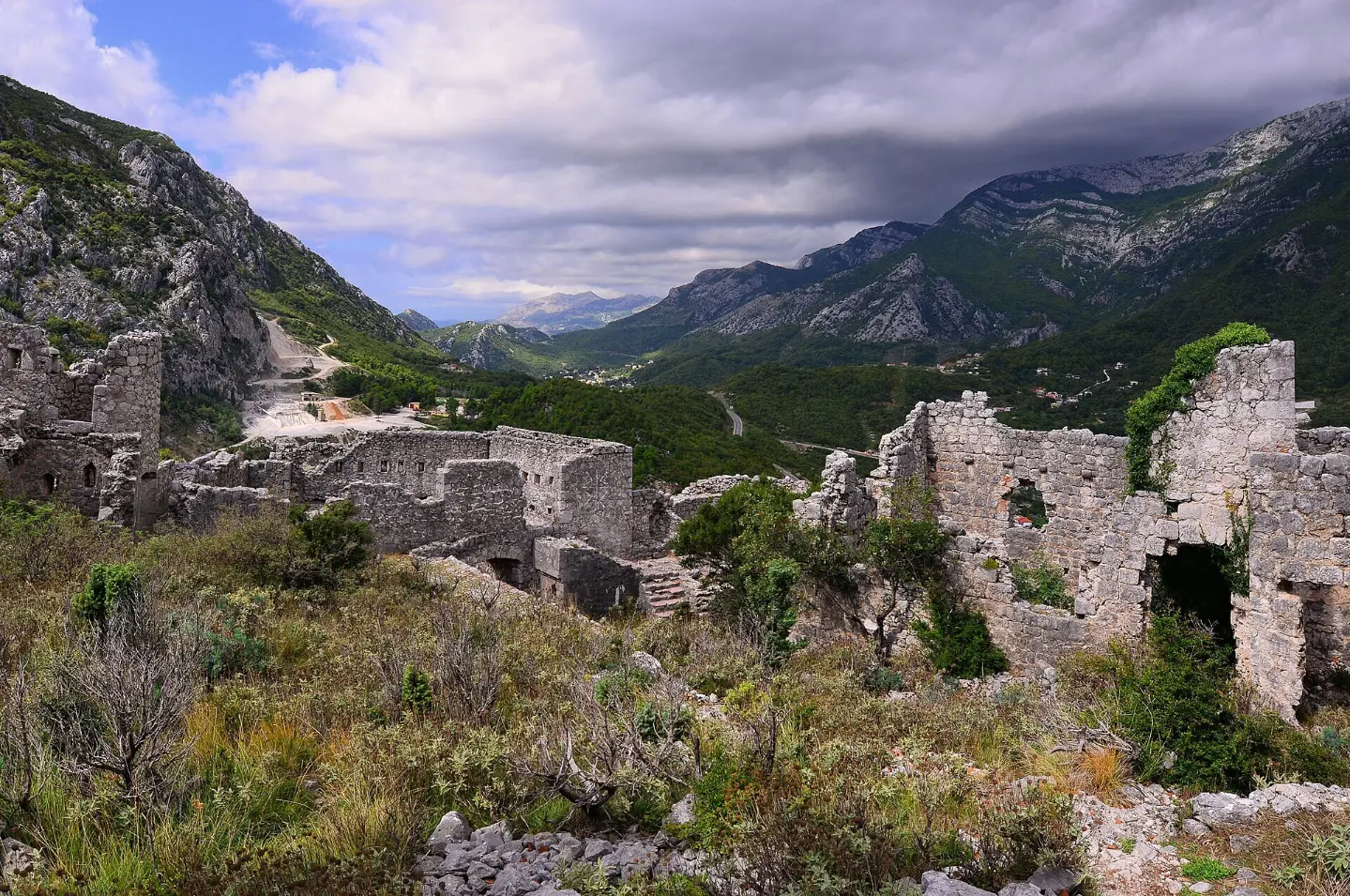
Venetian-Ottoman fortress at 231 m above Sutomore, first mentioned in 1542.
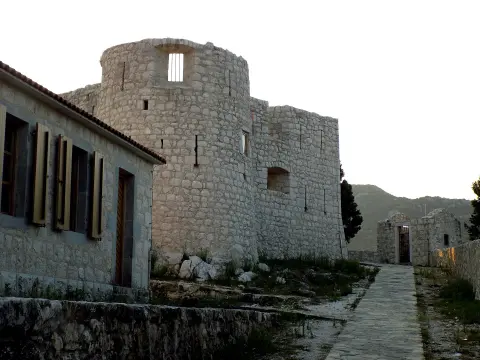
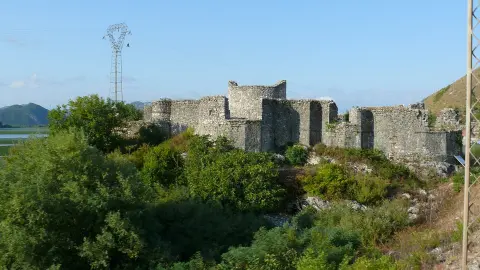
Haj-Nehaj Fortress is perched on a rocky hill 231 metres above sea level, approximately 2 km northwest of the centre of Sutomore. It was built by the Venetians in the 15th century, then expanded and reinforced by the Ottomans in the 16th century — remaining in Ottoman hands until 13 November 1877, when it was liberated by the Montenegrins. Within its high defensive walls, flanked by towers and loopholes, lie the remains of the Church of St. Dimitrije, which predates the fortification itself and dates to the late 13th or early 14th century. From the top of the fortress, a panoramic view unfolds over Spičansko polje, the cove of Maljevik, the rivieras of Sutomore and Bar, and the Adriatic Sea.
Location
Sutomore, Bar Municipality
Elevation
231 m
First Mentioned
1542
Ascent
~30 minutes
Capacity
up to 900 people
Category
Category II Tourist Monument
Highlights
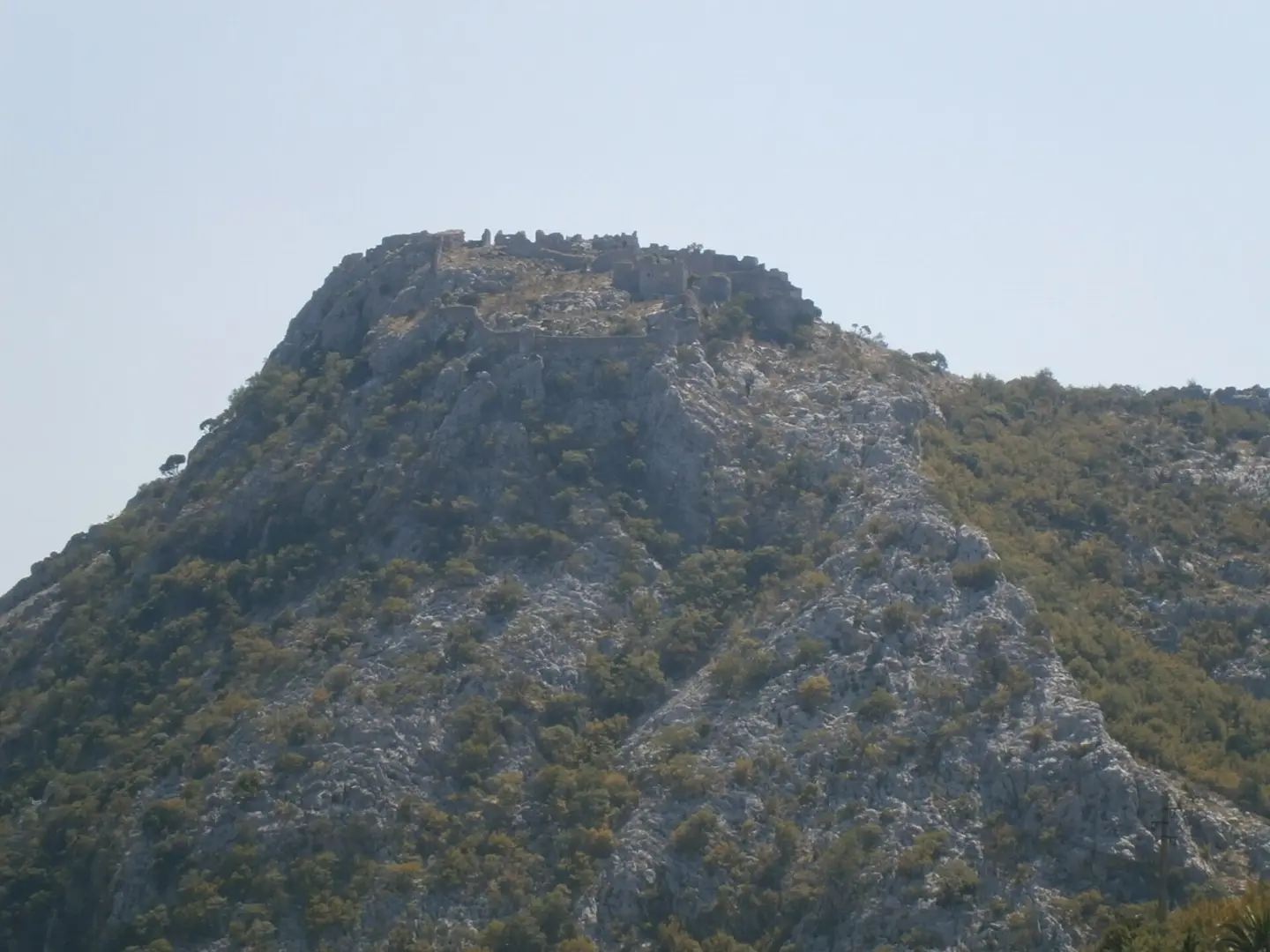
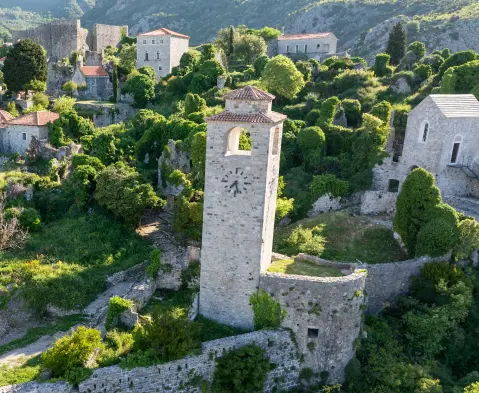
The fortress is surrounded on all sides by high defensive walls with round towers and a large number of loopholes — a feature characteristic of fortifications from the era of firearms. It was built by the Venetians in the 15th century, and expanded and reinforced by the Ottomans in the 16th century. The only accessible entrance is the western gate, which is relatively well preserved, while the other sides of the fortress are inaccessible due to the steep rocky terrain. Near the entrance, three phases of construction are visible, along with a later-added water cistern, testifying to the fortification's long period of use.
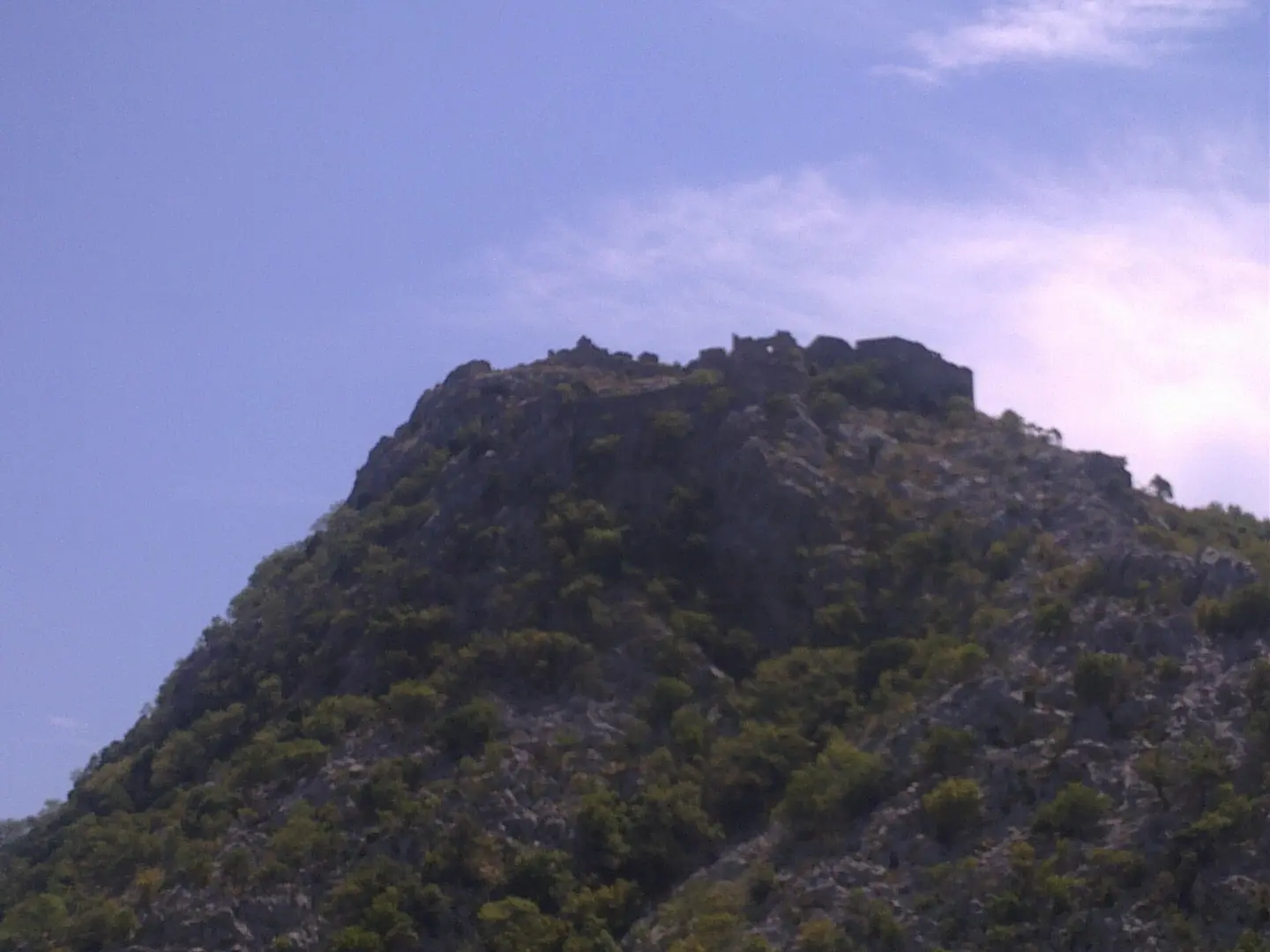
At the highest point within the walls lie the remains of a church dedicated to St. Dimitrije, which predates the fortification itself and is believed to date from the late 13th or early 14th century, from the Nemanjić period. The church was architecturally and culturally exceptional, as it featured two altars — one Orthodox and one Catholic, a rare symbol of coexistence between different Christian traditions in this region. Records indicate that as late as 1868, a cemetery for both faiths was located around the church. The outline of the church remains visible today, despite the ruined state of the rest of the fortress.
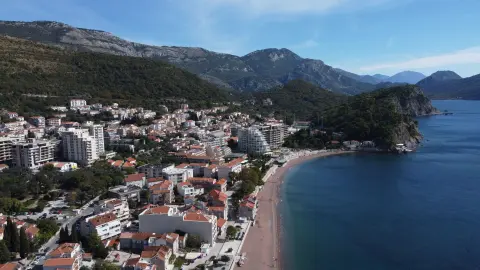
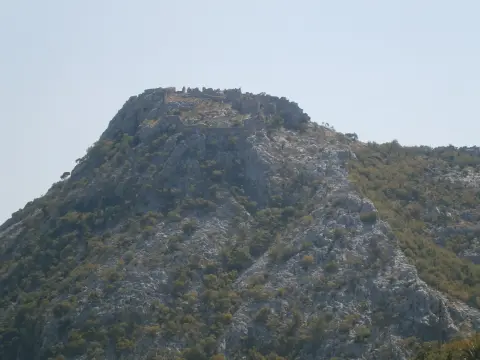
From the walls of Haj-Nehaj Fortress, one of the broadest panoramic views on the Bar coast unfolds. Visible are Spičansko polje, the cove of Maljevik, the rivieras of Sutomore and Bar, Mount Vrsuta, Lisinj, Golo brdo, the approach road to the Sozina tunnel, and the Adriatic Sea. From the main road, the fortress appears unassuming as the colour of its walls blends with the surrounding rocks, but its scale and strategic position only become apparent once you climb up. Across the field from this height, the smaller Ottoman fortress of Tabija from the 18th century, built by the Ottomans on the hill opposite, can also be seen.
Haj-Nehaj was held by three different rulers over a span of approximately three centuries. The Venetians built it as 'Fortezza de Spizi' — a fortification of strategic importance for controlling the valley and coastline between Bar and Paštrovići. The Ottomans seized it in 1571 and held it until the Montenegrin liberation on 13 November 1877. Following the Congress of Berlin, the fortress briefly passed to Austria-Hungary, which further developed its fortification facilities — including a cistern, soldiers' quarters, and a powder magazine. Since the departure of Austria-Hungary, the fortress has been abandoned and is gradually falling into disrepair, but it remains a Category II tourist monument.
What to do
Ascent along a 1.6 km trail through a quarry and woodland to the fortress, with an elevation gain of 119 m, taking approximately 30 minutes.
From the summit, photograph panoramas of Spičansko polje, the cove of Maljevik, Sutomore, Bar, and the Adriatic Sea.
Tour the interior of the fortification — walls, towers, loopholes, the cistern, and the remains of the Church of St. Dimitrije.
The rocky hill above the sea offers excellent conditions for observing birds of prey and marine species.
Hiking, walking and cycling routes that start here or pass nearby, with maps and GPX downloads.
0.9 km↑ 166 m35–50 min
5.9 km↑ 70 m2–2½ h
9.3 km↑ 366 m4–5½ h

15.1 km↑ 107 m45–65 min
Loop
17.0 km↑ 847 m6½–9 h
20.0 km↑ 373 m1½–2 h
Loop3.7 km↑ 20 m1½–2 h
4.0 km↑ 416 m1½–2½ h
Gallery
Plan Your Visit
Admission
Free entry
No restrictions — the fortress is open daily throughout the entire year (outdoor site with no guards)
Free informal parking at a roadside widening along the main road, immediately after the Haj-Nehaj tunnel (from the Petrovac side)
Not accessible for persons with disabilities — the trail is rocky, without markings, with an elevation difference of 119 m
FAQ
Around here

Ask about Montenegro
Ask me about destinations, restaurants or activities.