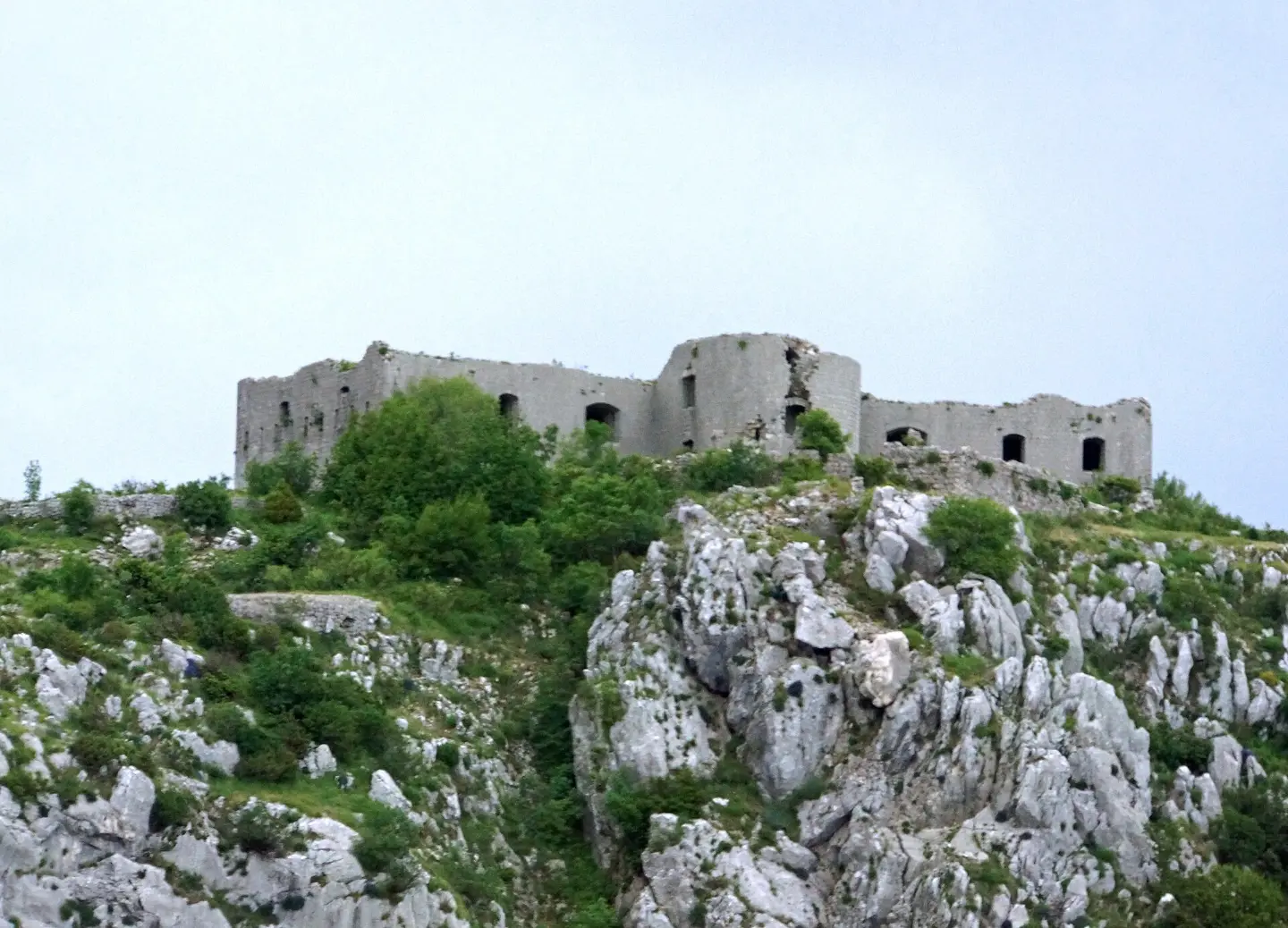
Austro-Hungarian fortress at 800m above the Budva Riviera
Kosmač Fortress is an Austro-Hungarian fortification built between 1841 and 1850 on a rocky hill above the village of Brajići, at an altitude of approximately 800 metres.
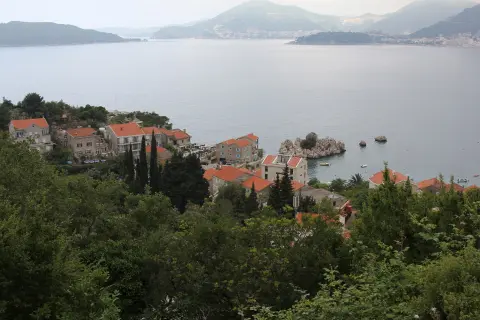
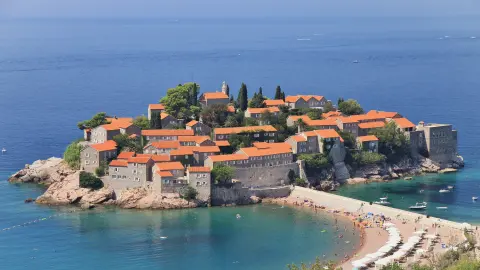
It was built by the Austrians along the border with Montenegro, serving as a control point and defensive complex with a three-storey barracks capable of housing 6 officers and 248 soldiers. The fortress ranks among the three most significant Austro-Hungarian fortifications in Montenegro and has been a protected immovable cultural monument since 1964. From its bastions, the view stretches across the entire Budva Riviera — from Sveti Stefan to Budva — making it equally valuable as a historical site and as a viewpoint.
Highlights
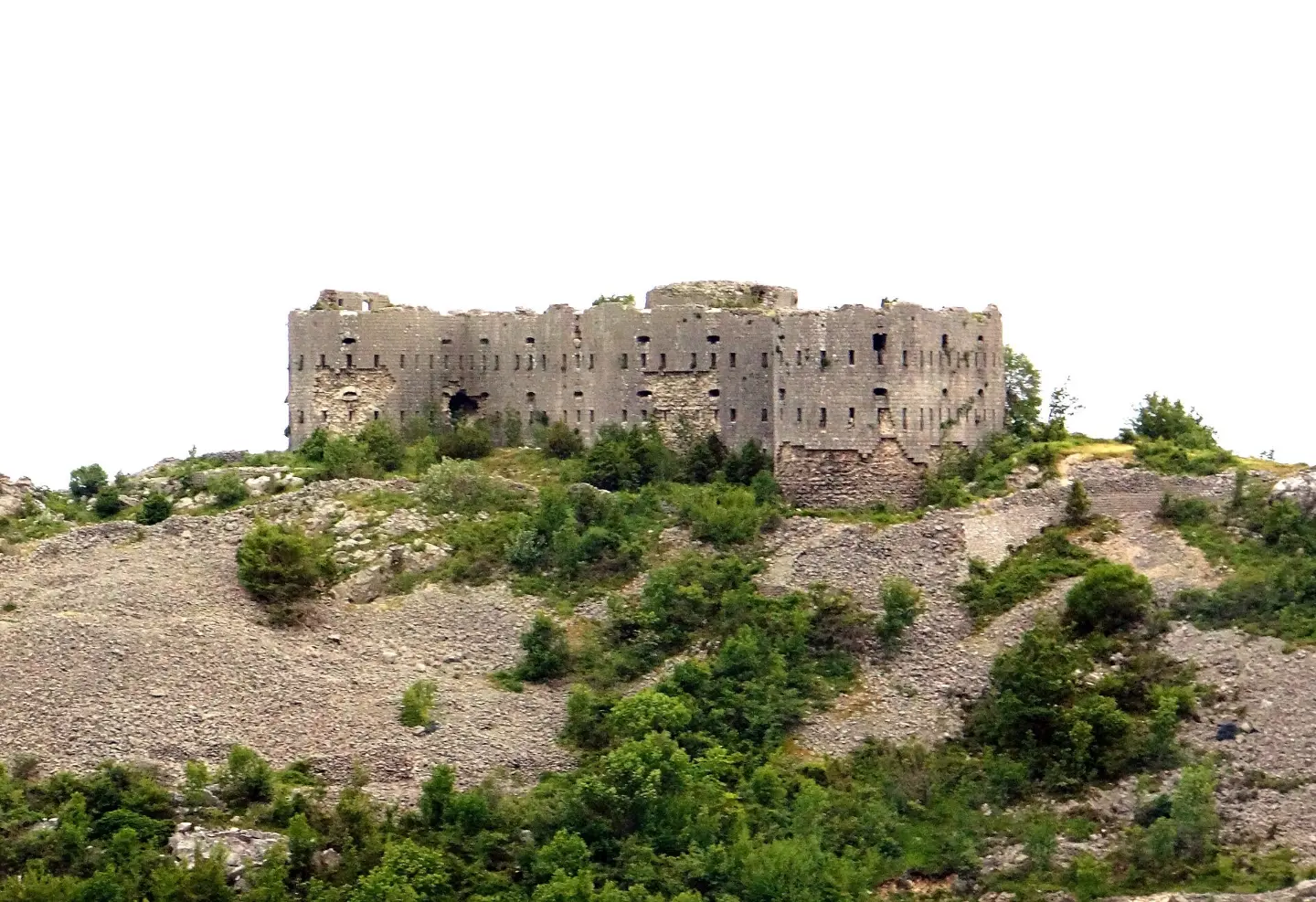
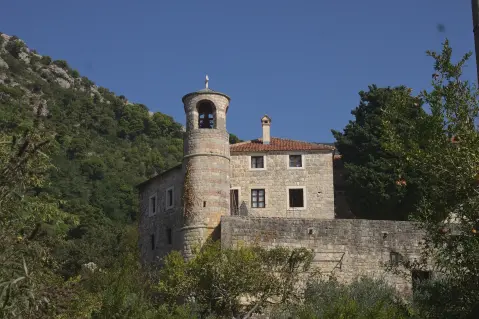
At the heart of Kosmač Fortress stands a three-storey defensive barracks built between 1841 and 1850, with additions completed by 1909 when it took on its current appearance. The complex consists of two symmetrical wings with two corner towers 10 metres in diameter and one central tower 14 metres in diameter, with a total area of 1,064 m². Rectangular openings are clearly visible on the walls — loopholes facing Cetinje unmistakably reveal which side the enemy was on. The construction system of finely dressed local limestone testifies to the craftsmanship of 19th-century Austro-Hungarian builders.
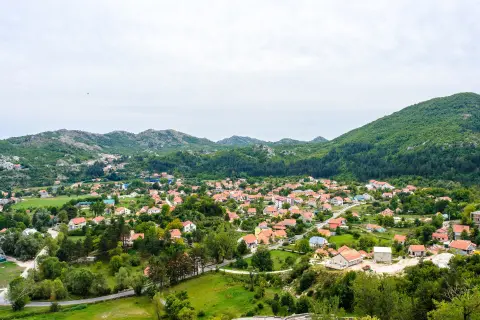
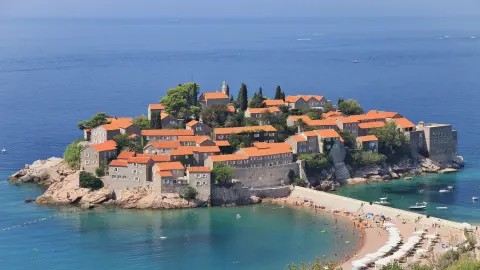
From the bastions of Kosmač Fortress at an altitude of 800 metres, one of the most impressive panoramic views on the Montenegrin coast unfolds. The entire Budva Riviera can be seen at once — from Sveti Stefan and Pržno in the south to Budva and Bečići to the northwest — along with the Adriatic Sea and the coastline. The main Adriatic Highway, surrounding settlements, and the mountain massif of Paštrovačka gora are also visible. The fortress stands on the boundary between Montenegro's coastal and inland zones, which makes this viewpoint particularly special — the sea and the hinterland are visible simultaneously.
Kosmač Fortress is one of the key material witnesses to the period when Montenegro was encircled between the Austro-Hungarian and Ottoman Empires. It was built along the border between Austria and Montenegro — with its loopholes deliberately facing Cetinje. As early as 1838, before the border had even been formally defined, the Austrians began construction, which provoked an uprising: Đorđije Petrović, a relative of Njegoš, led 500 Katunjani who seized Kosmač and forced the Austro-Hungarians to withdraw. Construction resumed only after the border demarcation of 1841. Emperor Franz Joseph I personally visited the fortress in 1875, and it was used by occupying forces in both World Wars. It has been protected as an immovable cultural monument since 22 August 1964.
Kosmač Fortress serves as the starting point for hiking towards Goli vrh — the second highest peak of Paštrovačka gora at 1,087 metres above sea level. From the base of the fortress, an unpaved track leads towards the plateau of Mrtvica (an elevation gain of approximately 322 metres), where a hunting lodge with information boards and a drinking water spring can be found. The trail is clearly visible and partly reinforced with stone from the Austro-Hungarian period. The entire section from the fortress to Goli vrh is suitable for more experienced hikers who wish to extend their time in this area.
What to do
A tour of the three-storey Austro-Hungarian barracks with towers and 19th-century loopholes.
From the bastions, photograph the entire Budva Riviera from Sveti Stefan to Budva.
From the fortress, an unpaved track continues towards the Mrtvica plateau and Goli vrh (1,087 m).
The main Budva–Cetinje road and side roads around Brajići are suitable for cyclists.
Hiking, walking and cycling routes that start here or pass nearby, with maps and GPX downloads.
15.9 km↑ 377 m4½–6 h
3.5 km55–80 min
6.6 km↑ 764 m3–4 h
8.8 km↑ 130 m2–3 h
4.2 km↑ 572 m2–3 h
1.1 km↑ 24 m15–25 min
0.9 km25–35 min
1.6 km↑ 204 m45–65 min
Gallery
Plan Your Visit
Free access throughout the year — the fortress is in ruins with no organized entrance fee or working hours
Free — open entry (the fortress has not been developed for tourism, entry at your own risk)
Parking on the widened gravel road at the foot of the hill (1–2 vehicles), or along the main road in Brajići (15 minutes on foot to the fortress)
Not adapted for people with disabilities — access exclusively on foot via a path with switchbacks, and the interior is in ruins
FAQ
Around here

Ask about Montenegro
Ask me about destinations, restaurants or activities.