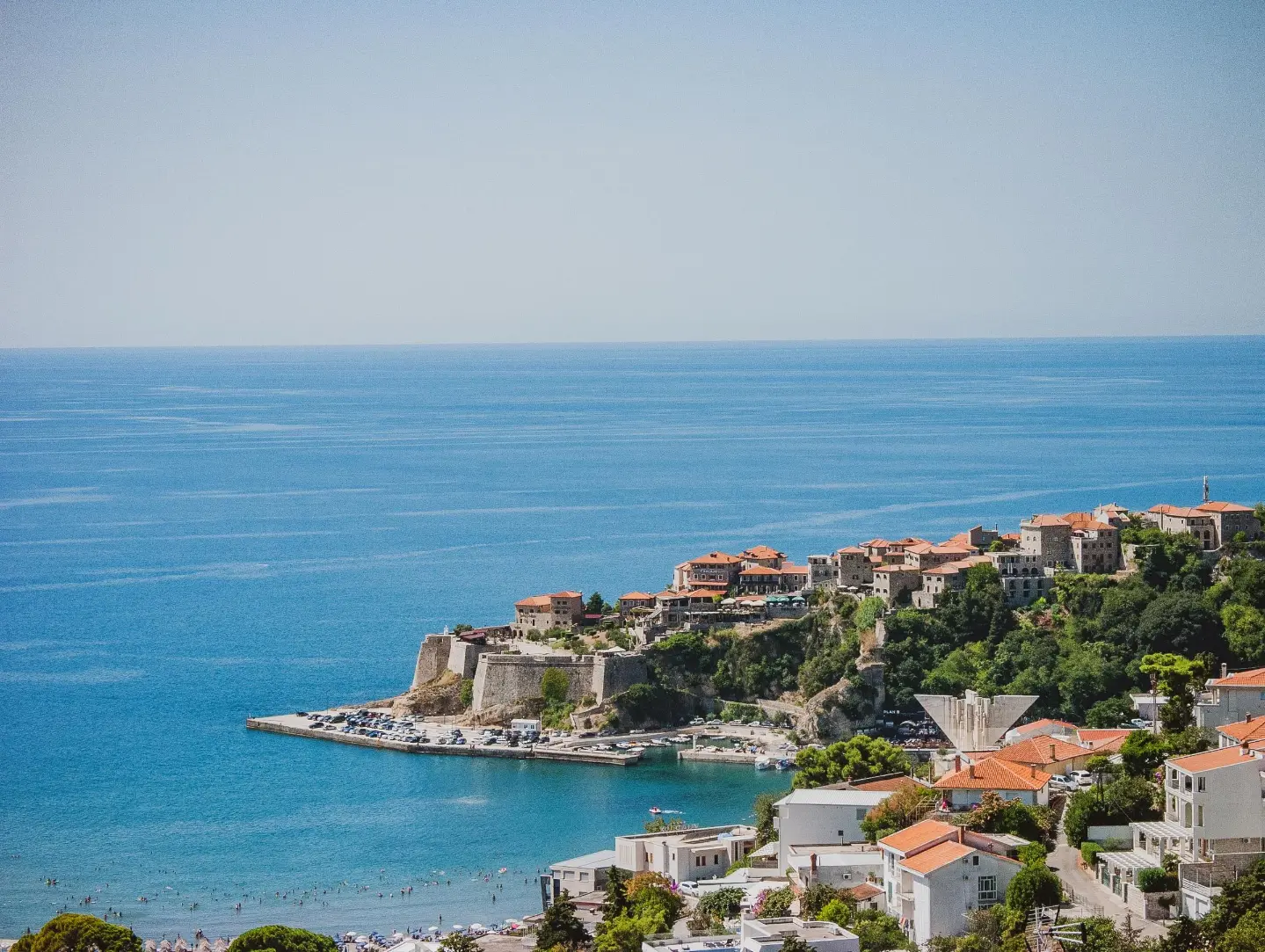
A fortress on a rocky headland with 2,500 years of history on the Adriatic
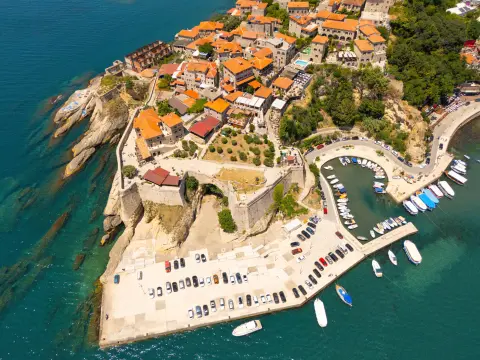
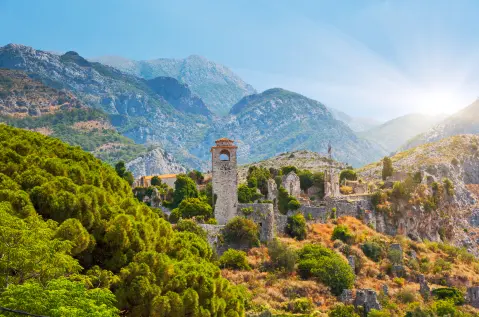
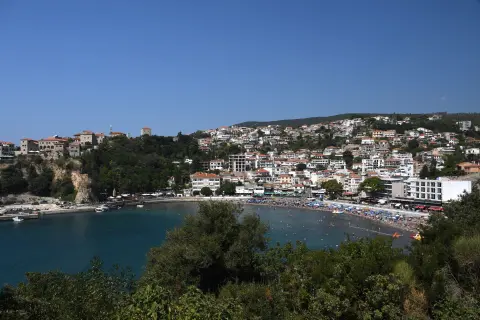
Ulcinj Old Town, also known as Kaljaja, rises on a rocky headland above the Adriatic Sea, preserving over 2,500 years of history within its walls.
Illyrians, Romans, Venetians, and Ottomans each left their mark in its architecture, streets, and legends. The highest plateau is dominated by the Balšić Tower — one of the most impressive examples of medieval architecture in Montenegro, with panoramic sea views on three sides. With its museum, mosques, Slave Square, and restaurants housed in stone buildings, the Old Town is not merely a historical monument but a living part of Ulcinj where past and present intertwine daily.
Highlights
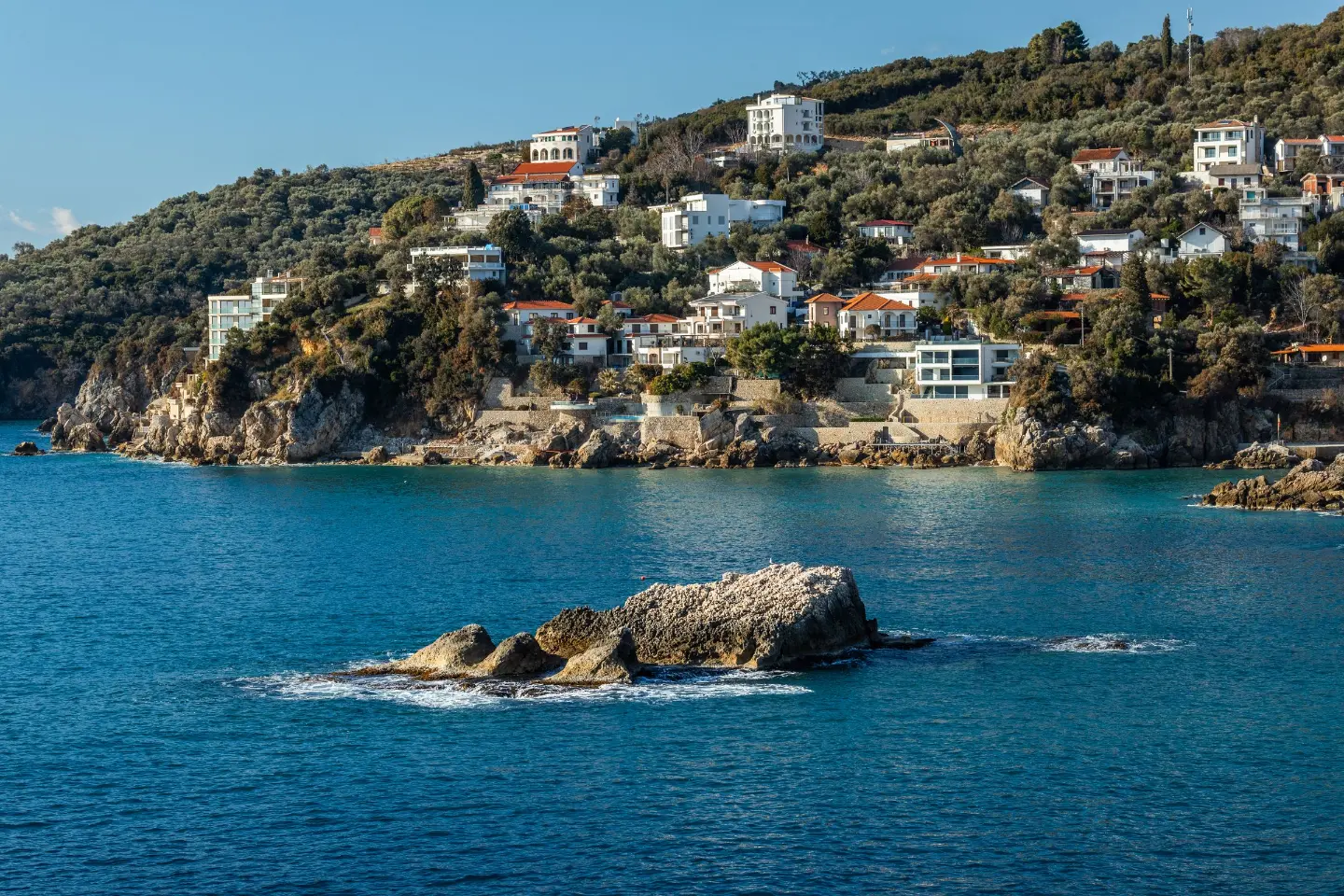
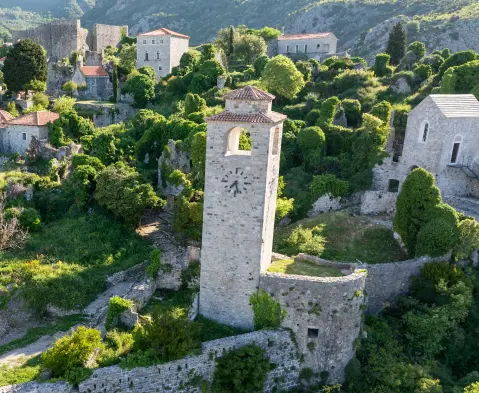
At the highest plateau of the Old Town rises the Balšić Tower, a fortress expanded and fortified in the 14th century by the noble Balšić family, who ruled Ulcinj during that period. The structure combines three eras of construction — medieval foundations, Ottoman additions (the third floor and domed vault on the ground floor), and Venetian architectural details. On three sides the tower offers an open view of the Adriatic Sea, making it one of the most impressive examples of medieval architecture in Montenegro. Today the space serves as a gallery and hosts literary evenings and cultural events during the summer season.
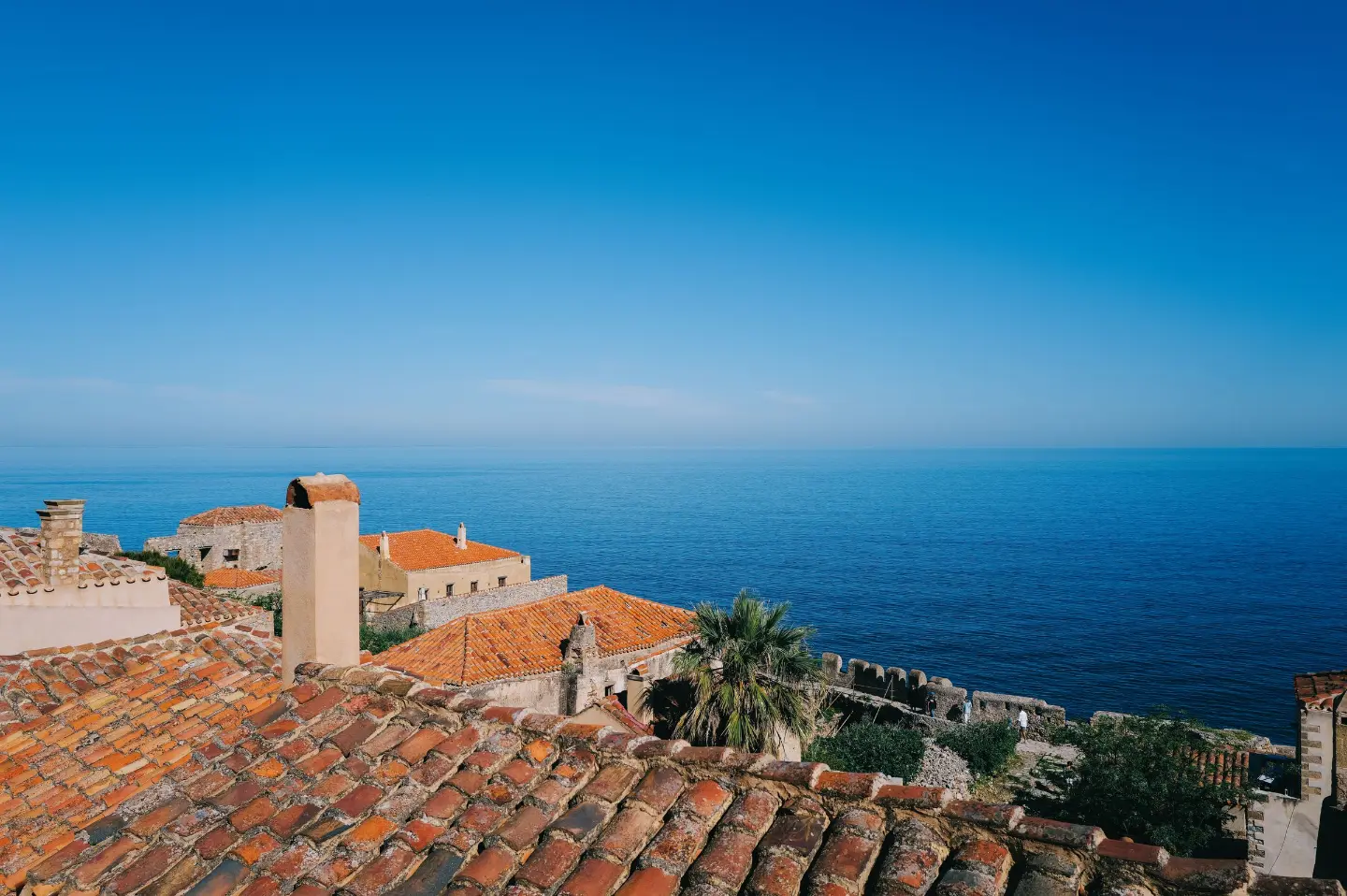
On the southern plateau of the Old Town stand the two historically most significant palaces. The Palace of Venice housed the former residence of the Venetian governor of Ulcinj — the building was used as a court for its beauty and functionality even through the later period of Ottoman rule. Nearby stands the Balšić Court, which served as the residential and administrative centre of the Balšić family during their rule at the end of the 14th and the beginning of the 15th century. Both buildings have today been converted into hospitality venues, where it is possible to have lunch or dinner in an authentic historical setting with sea views.
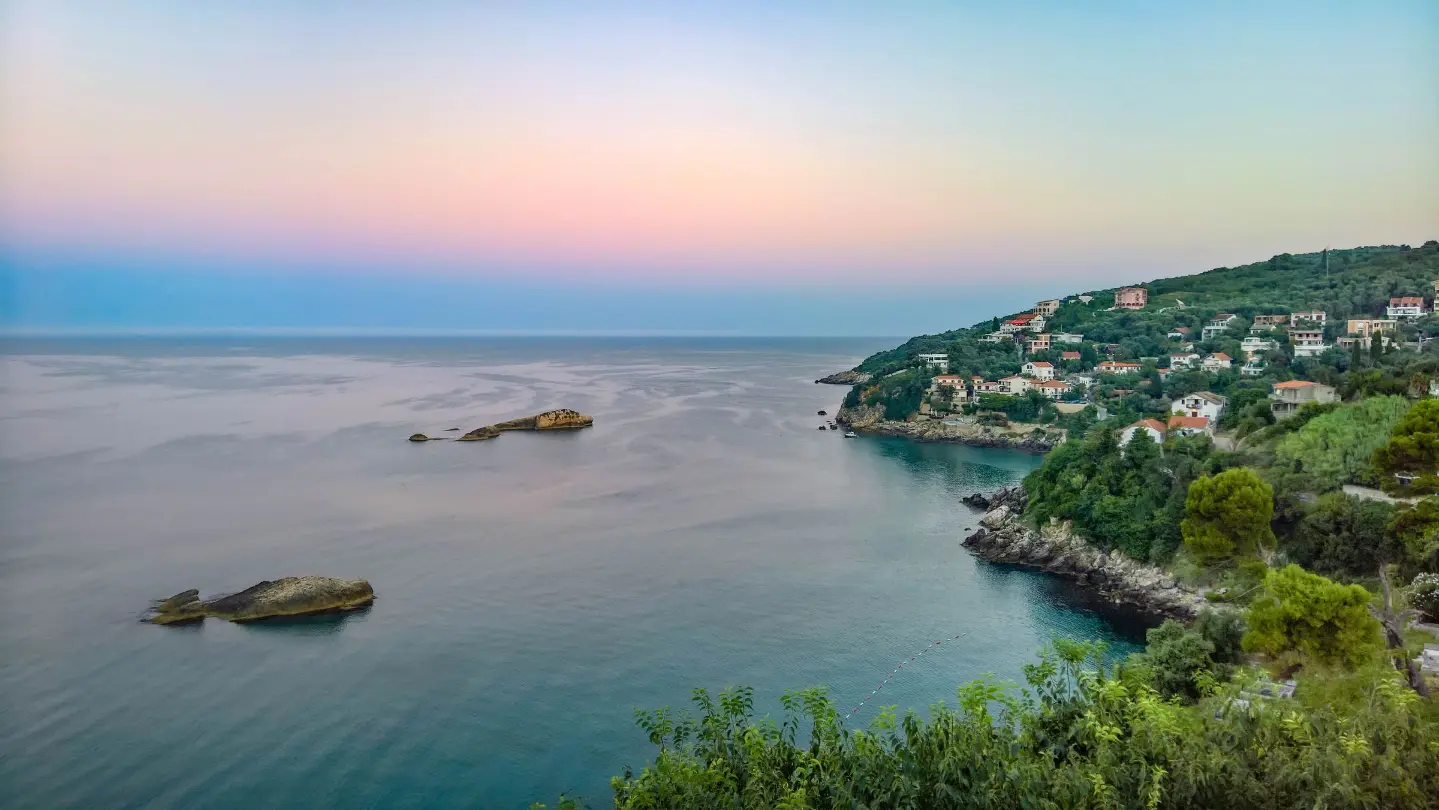
Within the walls of the Old Town, between the citadel and the entrance gates, lies the historic core with its most significant public spaces. The Slave Square (Trg robova) — named after the historical slave market that existed here when Ulcinj was a well-known pirate port — is surrounded by well-preserved arches and casemates. Adjacent to the square are Paša's Mosque and a church-mosque complex that bear witness to the long-standing Islamic and Christian presence in the city. The Museum of Archaeology and Ethnology, housed in the Venetian Palace near the main gate, holds artefacts spanning from the Illyrian period to the Ottoman 18th century, including ship items and manuscripts in several languages.
Directly below the stone fortress walls, on the southern side, stretches Mala plaža — a sandy beach approximately 350 metres long, sheltered by rocky cliffs that naturally separate it from the open sea. The beach is accessible within a few minutes' walk from the entrance gate and offers a natural combination of historical and seaside experience — from a sunlounger, the view extends to the centuries-old walls of Kaljaja above. Crystal-clear water and relative shelter make it suitable for families with children. It is ideal for a short swim as part of a longer tour of the Old Town.
The defensive walls encircling Ulcinj Old Town date in part from the Illyrian period — the so-called 'cyclopean walls' are attributed to Greek builders from the 4th–5th century BC who erected the original settlement. Over the centuries they were rebuilt by the Romans in the 6th century, and later by the Venetians who added characteristic bastions. Two historic gates — the western land gate and the eastern sea gate, both from the 6th century — still frame the entrance to the fortress today. The walls cover an area of 3 hectares and in certain places rise directly from the sea rocks, making the fortress visually recognisable from both land and sea.
What to do
Exploring the walls, gates, and plateaus of Kaljaja with views over the Adriatic Sea.
Capturing panoramic sea views, cobblestone streets, and ancient stone facades from different eras.
Try grilled sea bass, ćevapi with kajmak, and local olive oil at restaurants within the walls.
Attend literary evenings and art exhibitions at the Balšić Tower during the summer season.
A 350 m beach directly below the fortress walls, with soft sand and crystal-clear water.
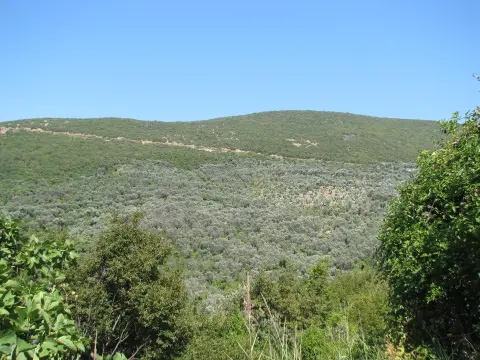
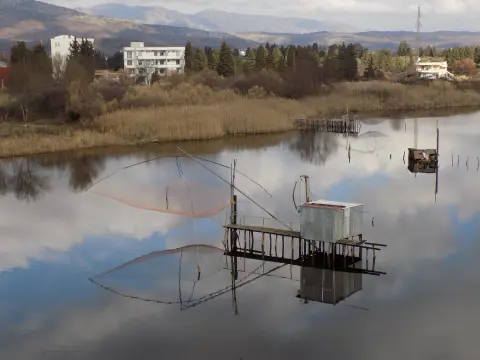
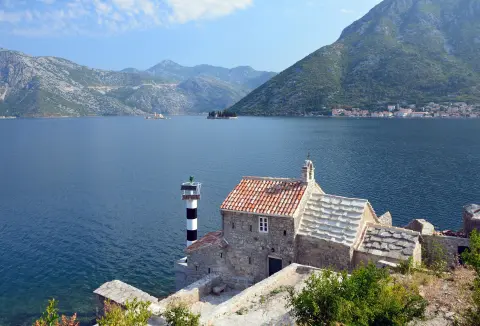
Hiking, walking and cycling routes that start here or pass nearby, with maps and GPX downloads.
2.2 km↑ 28 m35–50 min
4.6 km↑ 113 m1½–2 h
148 km↑ 2,604 m2–3 days
195 km↑ 3,259 m2–3 days
30.2 km↑ 1,491 m2–3 days
4.4 km1½–2 h
Gallery
Plan Your Visit
Website
ulcinj.travelThe Old Town is freely accessible throughout the year. The Museum of Archaeology and Ethnology operates seasonally, mainly 09:00–18:00 (summer); it is recommended to check on-site.
Entry to the Old Town is free. Museum of Archaeology and Ethnology: approximately 2–2.5 EUR for adults, children under 10 are free.
Paid parking below the walls of the Old Town (near Bulevar Teuta) during the tourist season June–September. Parking in the center of Ulcinj is paid throughout the entire urban area — early arrival is recommended.
The terrain inside the Old Town is uneven, cobblestoned and steep with numerous stairs — not suitable for wheelchairs or pushchairs. Access to the entrance gate is possible on foot via a gentle incline.
FAQ
Around here

Ask about Montenegro
Ask me about destinations, restaurants or activities.