Why Ostrog Monastery is not just another pilgrimage site
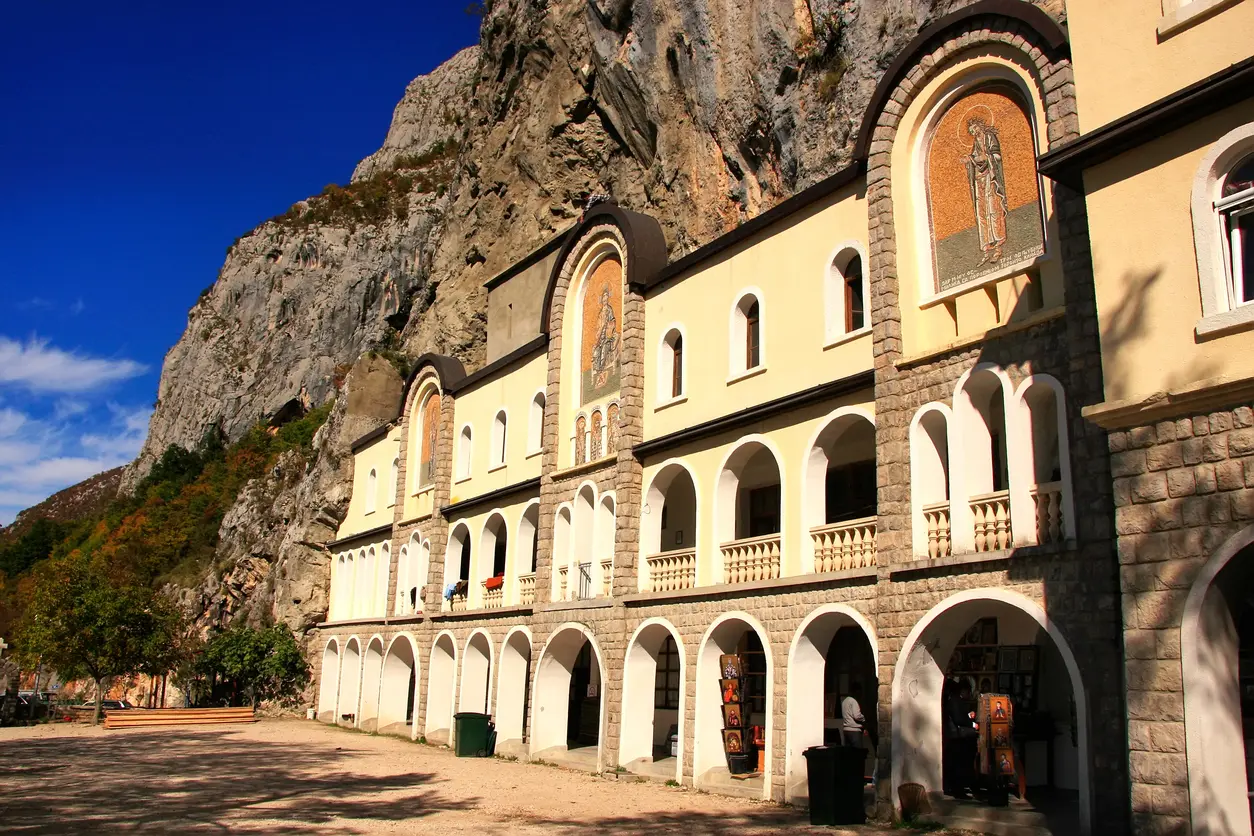
There are places that take your breath away because of the landscape. There are places that move you because of history. And then there is Ostrog Monastery — a place that hits you on both levels at once, and then something more. A white shrine glued to an almost vertical cliff of Ostroška Greda, at 900 meters above sea level above the fertile Bjelopavlići plain, it looks like it defies gravity. As if someone took an architectural blueprint and said: "No, that's not difficult enough. Let's put it in the rock."
Ostrog Monastery is the most important center of religious pilgrimage in Montenegro and ranks among the most visited monasteries in the entire Balkans. This is not just a phrase for tourists — it is estimated that more than 300,000 pilgrims and travelers visit the monastery in summer. Orthodox, Catholics, Muslims come. Believers and non-believers come. They come from Montenegro, Serbia, Russia, but also from far corners of the world. Everyone is looking for something: some for healing, others for peace, and still others simply want to understand why this place is so special.
This guide is written for all of you — whether you come as a pilgrim or as a curious traveler who wants to understand the spirit of this extraordinary place.
History: Who was Saint Basil of Ostrog and how the monastery was created
The monastery was built by Saint Basil of Ostrog in 1666 below Ostroška Greda. Basil was a metropolitan of Herzegovina, born in 1610, who after a turbulent church and political life found peace precisely in these inaccessible cliffs. Here he led an ascetic life until his death in 1671.
Seven years after his death, according to folk tradition, his body was found intact — incorrupt. That event marked a turning point: Basil was proclaimed a saint and miracle worker, and his relics became the center of devotion that continues to this day. The sarcophagus with the saint's relics has since been located in the Church of the Presentation of the Virgin in the Upper Monastery, which is set into a natural cave recess.
The monastery did not have a peaceful path through history. It survived fires and wars — at the beginning of the 20th century it suffered a great fire, but the two cave churches remained untouched. Restoration was completed between 1923 and 1926, and those two 17th-century churches today represent the authentic architectural and spiritual core of the entire complex.
It is also interesting that Saint Basil of Ostrog spent six years in the service of Dubočica Monastery in Pljevlja, before arriving at Ostrog — which shows how deeply his spiritual journey was interwoven with Montenegrin monastic life.
Did you know?
Ostrog Monastery is so deeply rooted in Montenegrin identity that many Montenegrins — even non-believers — swear "Ostroga mi..." when they promise something, just as they would swear on something most sacred.
What to visit: The Upper and Lower Monasteries
Lower Monastery — the starting point of the pilgrimage
Most visits begin at the Lower Monastery, located about 2 kilometers below the Upper Monastery. Here you will find the Church of the Holy Trinity from 1824, the konak and the seminary from 1742. The Church of the Holy Trinity is adorned with vivid frescoes worth viewing at leisure, while the konak is a place where pilgrims can spend the night.
Behind the Lower Monastery there is a natural spring with cold, clear water. Many visitors fill bottles and take water home — it is believed to have special properties. Regardless of religious beliefs, on a hot summer day that water is a welcome refreshment.
From the Lower Monastery the road branches: by car you can continue along a steep and narrow road (gradient up to 10%) to the parking lot in front of the Upper Monastery, or — which is the more authentic and recommended choice — walk the 3 km long trail that slowly leads you through a small forest to the top.
Heads-up
Tip for camper vans and larger vehicles
The narrow road from the Lower to the Upper Monastery (gradient 10%, very narrow) is not suitable for L and M category camper vehicles. Leave your vehicle at the Lower Monastery and continue on foot — it is the more authentic way to reach the Upper Monastery anyway.
Upper Monastery — the heart of Ostrog
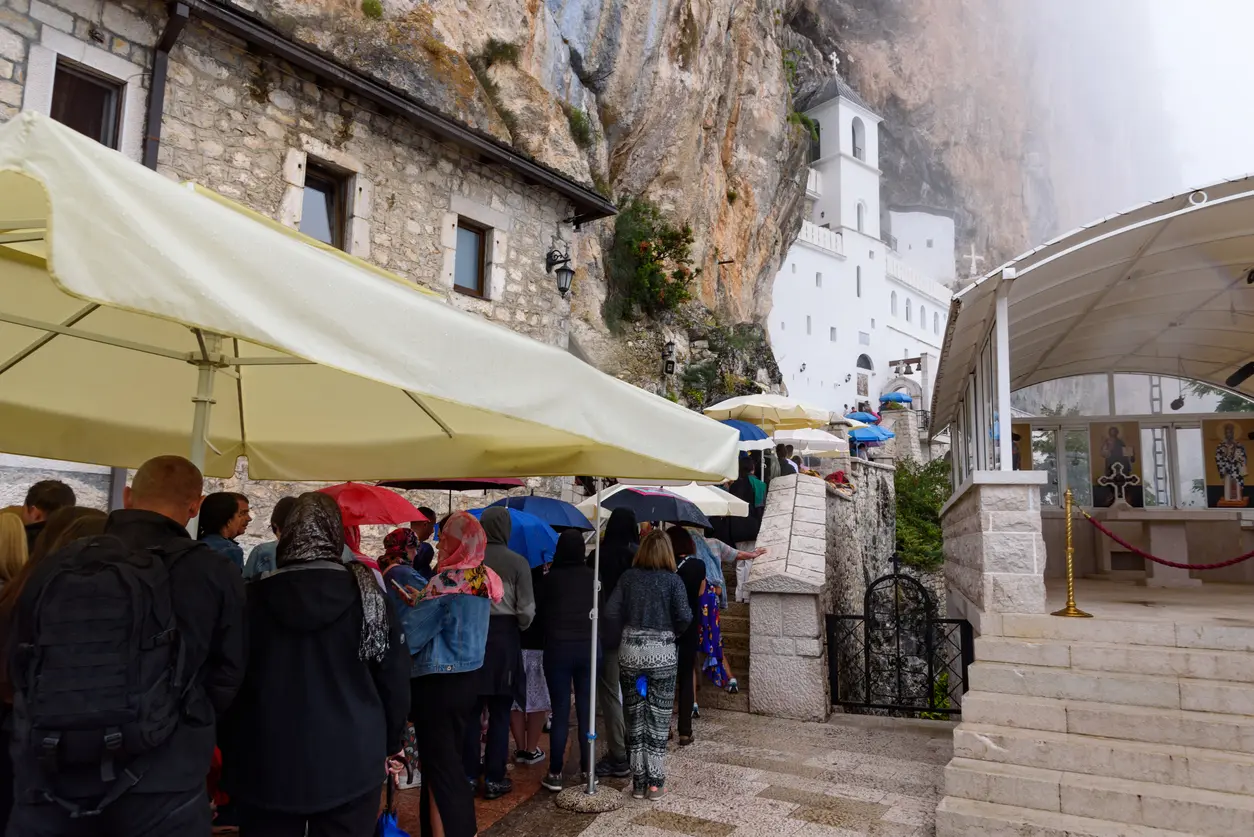
The Upper Monastery is the reason why millions of pilgrims come here. Two small churches — the Church of the Presentation of the Virgin and the Church of the Holy Cross — are carved directly into the cave cliff, like petrified verses inscribed into the very rock. The frescoes were painted on the rocky walls, and the relics of Saint Basil of Ostrog are kept in the Church of the Presentation.
In the Church of the Presentation of the Virgin, where the relics rest, the visitor line can be long — especially in summer and on religious holidays. Patience is essential. The atmosphere inside is unique: dim light, the scent of incense, quiet prayer. Even those who come without faith often describe this space as unusually peaceful and powerful.
Special attention is also drawn to the grapevine that grows out of the bare rock next to the place where Saint Basil passed away — without any soil. According to tradition, the fruits of this vine help with infertility. That is just one of the miracles attributed to Ostrog.
From the large terrace of the Upper Monastery there is an incredible view of the Zeta valley and the Bjelopavlići plain. If you arrive early in the morning, that sight — fog over the plain, sun rising behind the mountains — remains in your memory long after you return home.
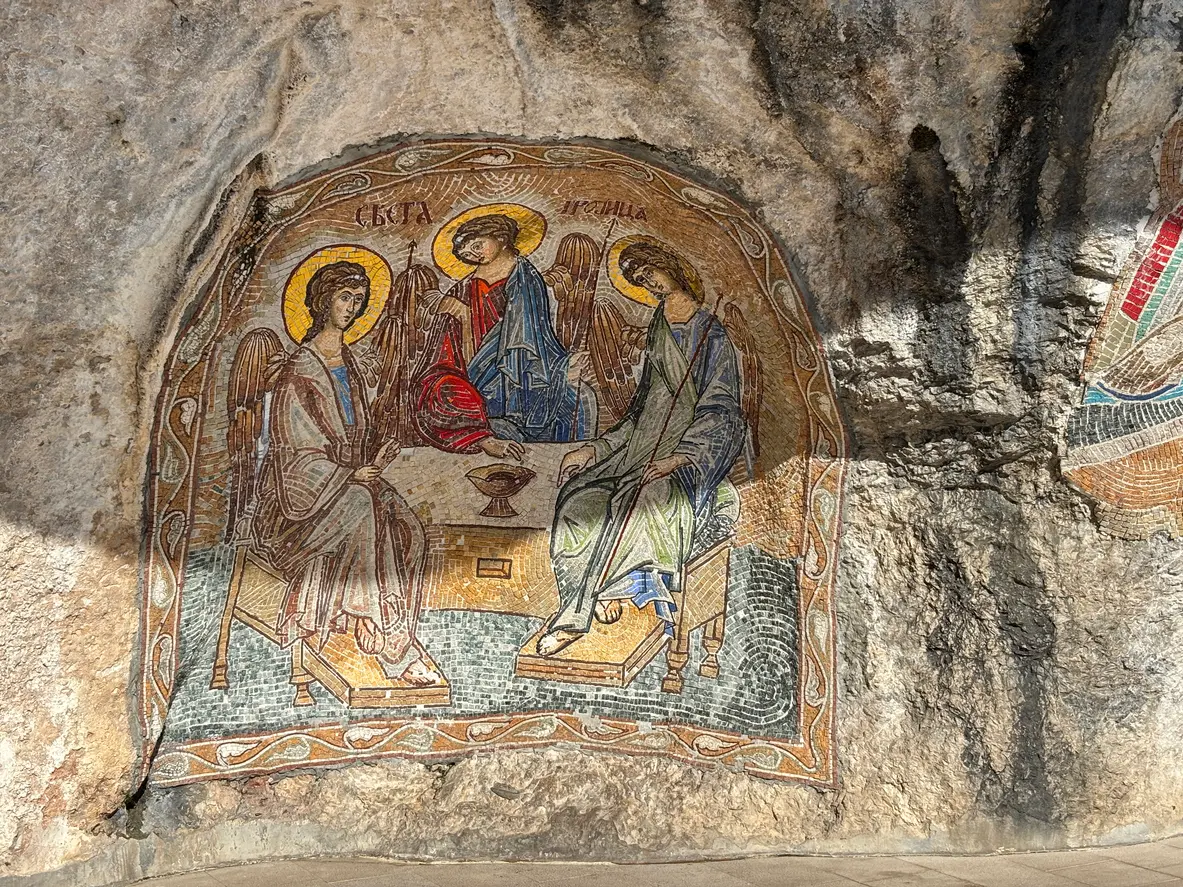
The poor and the rich come to Ostrog, to find healing for life and soul. It is a gathering place of Orthodox, Islamic and Catholic faiths — that is its true greatness.
How to get to Ostrog Monastery
By car — the most comfortable option
The monastery is located about 50 km from Podgorica and about 15 km from Nikšić. From Podgorica, the drive takes approximately 50 minutes to an hour. From Kotor, allow 2 to 2.5 hours of driving. From Budva the situation is similar — about 2 hours.
The recommended route is through Danilovgrad, via the E762 road. At the beginning of the 22nd kilometer from Podgorica, turn right into the center of Danilovgrad — it is worth a short stop to walk among the old facades. Then continue toward the monastery. The new wide road to the Lower Monastery climbs gently and offers views of the long Zeta valley.
Important note about the road: There is an older road that turns off the Podgorica–Nikšić main road about 19 km past Danilovgrad. That road is extremely narrow, steep and in poor condition — Lonely Planet describes it as "terrifying". Use the new road through Danilovgrad.
Money saver
Taxi from the turnoff in Bogetići
If you are not driving, you can take a bus on the Podgorica–Nikšić line and tell the driver to drop you off in Bogetići (just say "Ostrog"). From there taxi drivers wait for visitors — a return trip to the monastery costs around 20 EUR. Agree on the price and waiting time in advance.
By train — a cheap option for adventurers
Railways of Montenegro (ŽPCG) run five times a day from Podgorica to Dabovići station (Ostrog station), and the journey takes about 47–53 minutes. A ticket costs about 1.80 EUR. From Nikšić the journey is shorter — about 20 minutes.
However, from the station to the Lower Monastery there is about 90 minutes of uphill walking, and from the Lower to the Upper another 3 km. Allow a total of 5+ hours if you go by train and on foot. Taxis sometimes wait at the station, but you cannot always rely on that. Know the train schedule in advance — the train does not wait long at the station.
Organized tours — the most practical option for tourists
From Kotor, Budva, Tivat and Herceg Novi, organized group day tours are available that include a visit to Ostrog, often combined with Đurđevića Tara, Black Lake and Žabljak. Prices are usually between 20 and 40 EUR per person — which is excellent value considering how much you can see in one day. From Podgorica there are also shorter tours lasting about 3 hours.
Costs of the visit: What costs and what is free
Approximate prices for visiting Ostrog Monastery
EUR| Item · note | Price |
|---|---|
| Entry to the monasteryFree — donations are welcome | 0 € |
| Overnight in the konak (Lower Monastery)Per person in a shared hall; Upper konak free | 4 € |
| Taxi from Bogetići to the monastery (return)Agree on price and waiting in advance | ~20 |
| Train Podgorica–Ostrog station (return)Cheapest option; 90 min walk from the station | ~3.60 |
| Group tour from Kotor/BudvaIncludes transport and guide; often other attractions too | 20–40 € |
| Meal at Restaurant Koliba (Bogetići)Traditional Montenegrin cuisine — prosciutto, pies, sausages | 8–15 € |
When to visit: Seasonal guide
May and June are ideal for a visit. Nature is green, crowds are not yet at their peak, and the days are long enough to see everything. It is especially worth knowing that May 12 marks the feast of Saint Basil of Ostrog — that day attracts enormous masses of pilgrims from the entire region, which is in itself an extraordinary experience, but requires patience and early arrival.
July and August bring the largest crowds — summer is the time of traditional gatherings, when believers from all over the world come to Ostrog. The line to enter the Church of the Presentation can be an hour or more. If you come in summer, plan to arrive early in the morning (right at opening at 06:00) or late in the afternoon.
September is perhaps the most beautiful period — crowds decrease, the temperature is pleasant, and the light is perfect for photographing the surrounding mountains and the Zeta valley.
Winter brings fewer visitors, but also challenges: the monastery is at 900 meters above sea level, and the road can be slippery or closed. True pilgrims come in winter too, but tourists are advised to be cautious.
Tip
Arrive early — literally
The monastery opens at 06:00 from May to September. Arriving in the first morning hours means fewer crowds, cooler air and the chance to experience the monastery in almost meditative silence — before the tourist buses arrive.
Overnight stay: Stay in the monastery or nearby
Many pilgrims want to greet the sunrise from the terrace of the Upper Monastery — and that is an unforgettable experience. To achieve that, there are several overnight options.
Monastery konaks offer modest, shared accommodation. The Lower Monastery has 29 shared rooms (separate for men and women), and the price is about 4 EUR per person. The Upper konak is free. Places cannot be reserved — it is first come, first served. In summer capacities fill up quickly, so many pilgrims spend the night on the terrace on mats, with blankets that the monastery provides free of charge.
Hotel Sokoline is a more comfortable option in the immediate vicinity of the monastery — it offers rooms with panoramic views of the valley, homemade breakfast, free parking and Wi-Fi. It is also excellent for lunch or coffee with a view, even if you are not staying overnight.
Holiday Village Ostrog offers wooden bungalows 1.5–2 km from the monastery, and in the village of Povija (about 10 minutes by car) there are apartments with a terrace and mountain views.
Practical tips: Dress code, behavior and what to bring
Ostrog Monastery is an active sanctuary, not a museum. The rules are clear and should be respected.
Dress code: Shoulders and knees must be covered — for both men and women. Long trousers or a skirt and a shirt with sleeves are recommended. Women often wear a headscarf when entering church areas, which is not mandatory but is appreciated.
Footwear: Stable and closed footwear is recommended, especially because of the trails and stairs. Pilgrims who come on a vow often walk barefoot — that is their choice, but it is not recommended for tourists because the stairs and trails are rough.
Photography: Photography is not allowed inside the churches. Outside you can photograph freely. Respect this rule.
Behavior: Loud talking, eating and drinking inside church areas are not appropriate. The entrances to the cave sections are low — bow your head.
Donations: Entry is free. Candles can be bought at a symbolic price. Everyone receives oil and holy water as a gift from the monastery.
Good to know
What to bring with you
Bring water bottles (spring at the Lower Monastery), a light jacket (at 900 m it can be cool even in summer), comfortable footwear with non-slip soles, and cash in EUR for possible donations or taxi. There are no ATMs or shops at the monastery.
Where to eat near the monastery
There are no restaurants or cafés inside the monastery complex. Pilgrims who stay overnight in the konaks can get a meal in the monastery refectory. For everyone else, the Koliba restaurant in Bogetići, at the foot of the mountain, is recommended. It serves solid, traditional Montenegrin mountain food: prosciutto, baked beans, sausages, pies and soups. After several hours of walking on stairs, you deserve that meal.
Along the road to the monastery you also pass several smaller restaurants offering homemade food. Hotel Sokoline also has a restaurant with a panoramic view — excellent for coffee or lunch overlooking the Zeta valley.
What else to visit nearby: Combine your visit to Ostrog
Ostrog fits perfectly into a wider itinerary through central Montenegro. Here are a few suggestions for combining:
Danilovgrad — On the way to the monastery, it is worth a short stop in the center to walk among the old facades.
Nikšić — The second-largest city in Montenegro, just 15 km from the monastery. Ideal for lunch or an overnight stay.
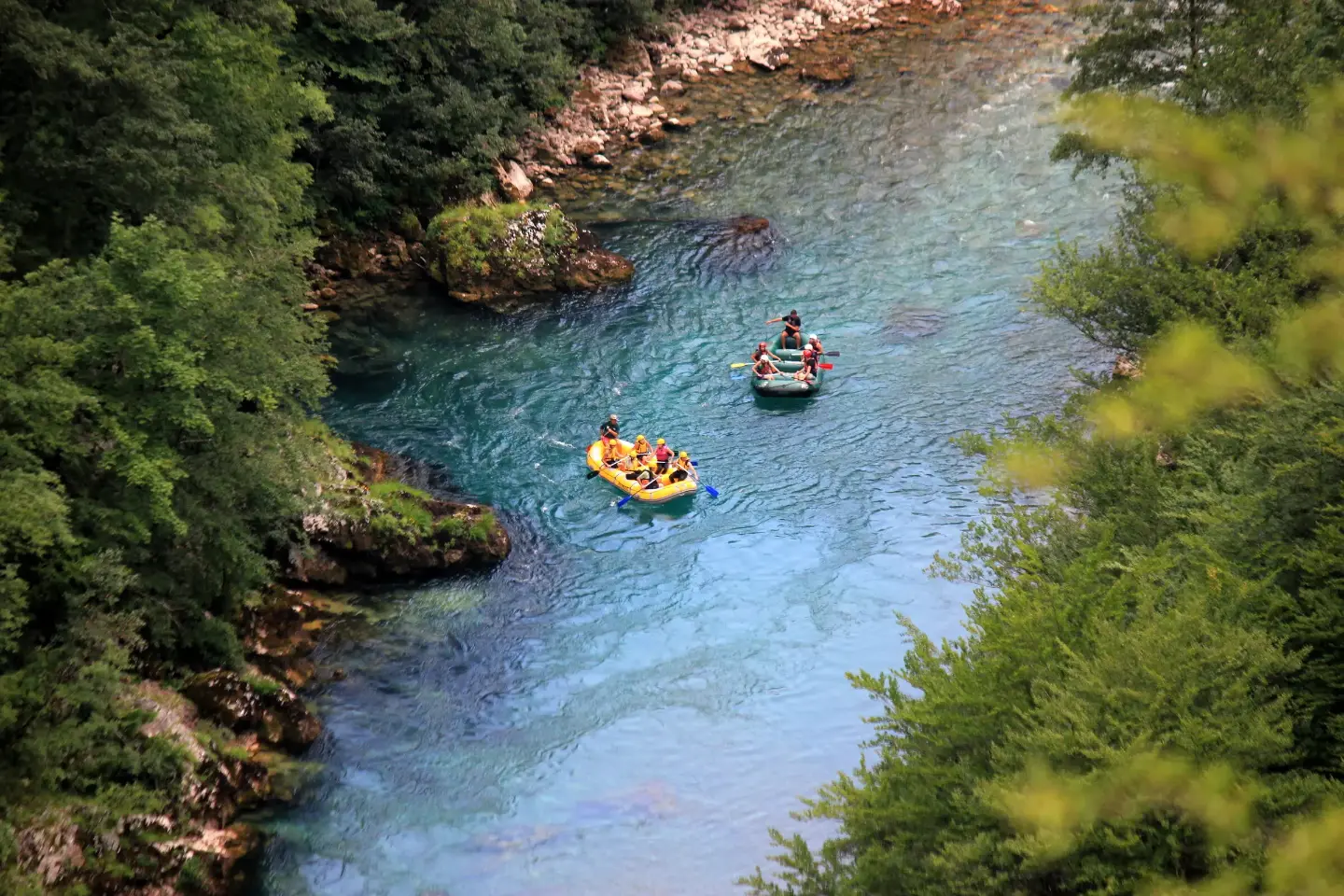
Durmitor and Žabljak — Many organized tours combine Ostrog with Black Lake, Đurđevića Tara and the Tara River Canyon — one of the deepest canyons in Europe. This is an excellent day-trip combination from Kotor or Budva.
Cetinje — The old royal capital with the Cetinje Monastery, which preserves some of the most important Christian relics, and the Palace of King Nikola.
Restaurant Koliba, Bogetići
Traditional Montenegrin restaurant at the foot of the mountain, right by the turnoff to Ostrog. Serves mountain dishes: prosciutto, pies, beans, sausages. Ideal for a meal before or after visiting the monastery.
Hotel Sokoline
Comfortable hotel in the immediate vicinity of the monastery with panoramic views over the Bjelopavlići plain. Free parking, homemade breakfast, Wi-Fi. Excellent for an overnight stay or coffee with a view.
Conclusion: Why Ostrog should be on every list for Montenegro
Ostrog Monastery is not a place you can describe with a photograph, although you will take dozens. Nor is it a place you can describe with statistics, although they are impressive — 900 meters of height, the year 1666 of founding, hundreds of thousands of visitors a year. Ostrog is an experience that is remembered not because of what you see, but because of what you feel when you stand on that terrace and look toward the Zeta valley.
Whether you come as a pilgrim or as a traveler exploring Montenegro, Ostrog will show you something that few places can: that faith, history and nature can be so intertwined that it is impossible to separate them. And that there are places where a person, no matter what, instinctively bows their head.
Key recommendations: Arrive early in the morning, wear appropriate clothing, fill water bottles at the spring by the Lower Monastery, walk the trail to the Upper instead of driving, and leave enough time to sit on the terrace and simply watch.
Plan your visit to Montenegro
Discover more destinations, guides and travel tips for Montenegro — from the coast of Boka Kotorska to the mountains of Durmitor.
Explore more destinations