By plane, road, rail or sea – every way into Montenegro, on one page.
Montenegro is small but well connected: two airports, a railway that ranks among Europe's most scenic and year-round coach lines. Pick your way in – the mountains and the Adriatic do the rest.
Choose how you get in – we will show you how it goes and the next thing worth booking.
TGD·TIV
Two international airports serve the country: Podgorica (TGD), the year-round hub beside the capital, and Tivat (TIV), right on the Bay of Kotor. Between them, they put every coastal town and mountain resort within a two-hour drive.
Airports guideInternational coaches run daily from Belgrade, Sarajevo, Dubrovnik and other regional hubs to Podgorica, Budva and Herceg Novi – an affordable, well-established network.
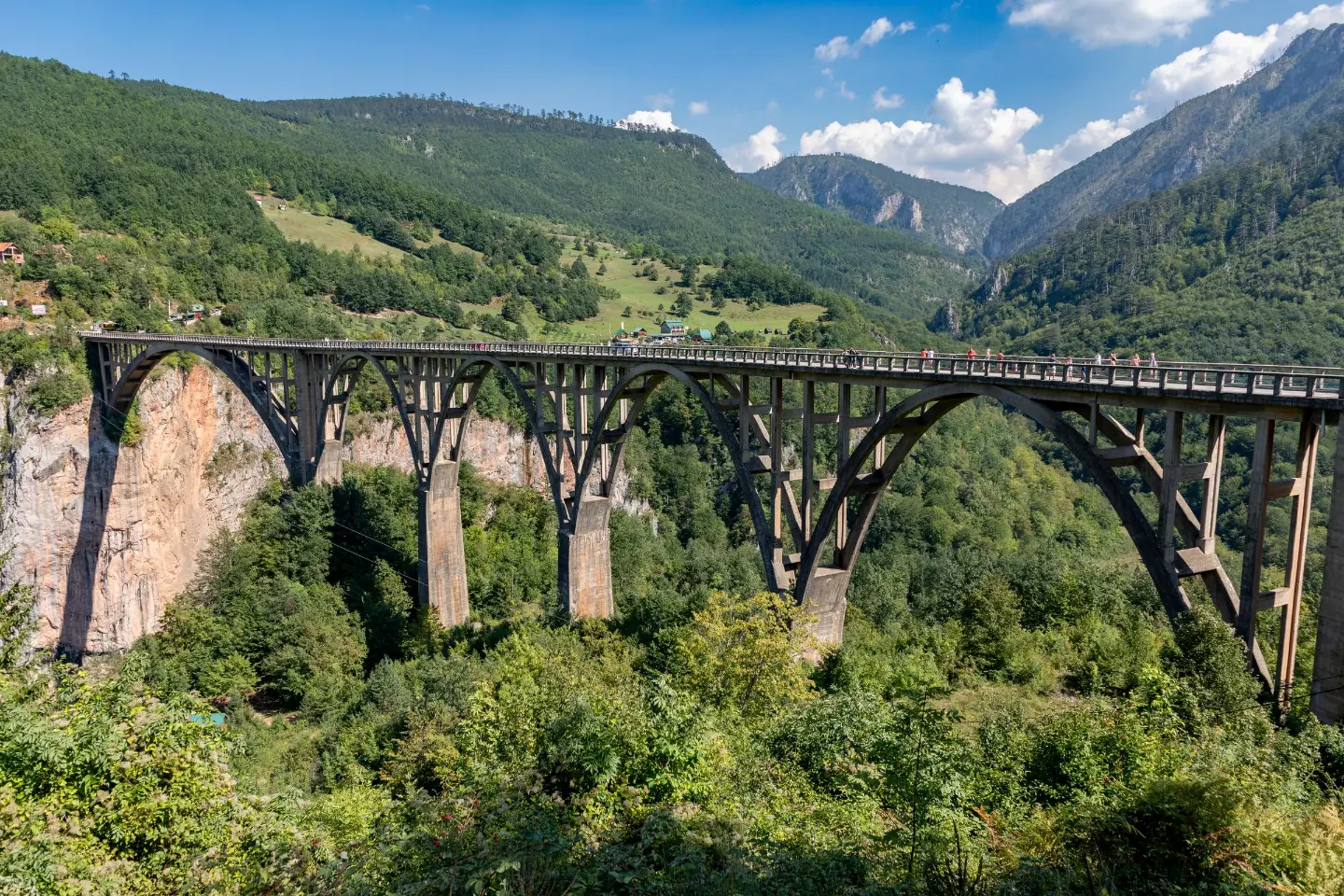
The Belgrade–Bar railway is one of Europe's most scenic lines: it crosses the Mala Rijeka viaduct, threads through some 254 tunnels and descends dramatically to the Adriatic at Bar.
There were no passenger ferries between Bar and Italy (Bari, Ancona) in 2026; the closest is Jadrolinija's seasonal Bari–Dubrovnik line, then the road via Debeli Brijeg. Kotor is one of the Adriatic's busiest cruise ports.
Good roads lead in from every neighbouring country, and border formalities are usually quick. Coming from Dubrovnik you enter at Debeli Brijeg near Herceg Novi – the busiest crossing on the coast.
In July and August expect real queues at Debeli Brijeg – cross early in the morning or late in the evening, or use the smaller inland crossings.
Main border crossings
For most visitors a valid passport – or an EU identity card – is all it takes: citizens of the EU, the UK, the US and many other countries stay visa-free for up to 90 days. From 1 November 2026 citizens of Russia, Belarus, Türkiye, China and Saudi Arabia need a visa (government decree of 23 July 2026). Rules depend on your nationality, so check the current list on the Ministry of Foreign Affairs website (gov.me/mvp) before you travel.

