Why visit Podgorica at all?
When most travellers think of Montenegro, images of the Bay of Kotor, Budva and rocky beaches immediately come to mind. Podgorica rarely enters that picture — and that is exactly why it is worth visiting. This is a city that lives for itself, not for tourists, and that authentic rhythm of everyday Montenegrin life is hard to find anywhere else in the country.
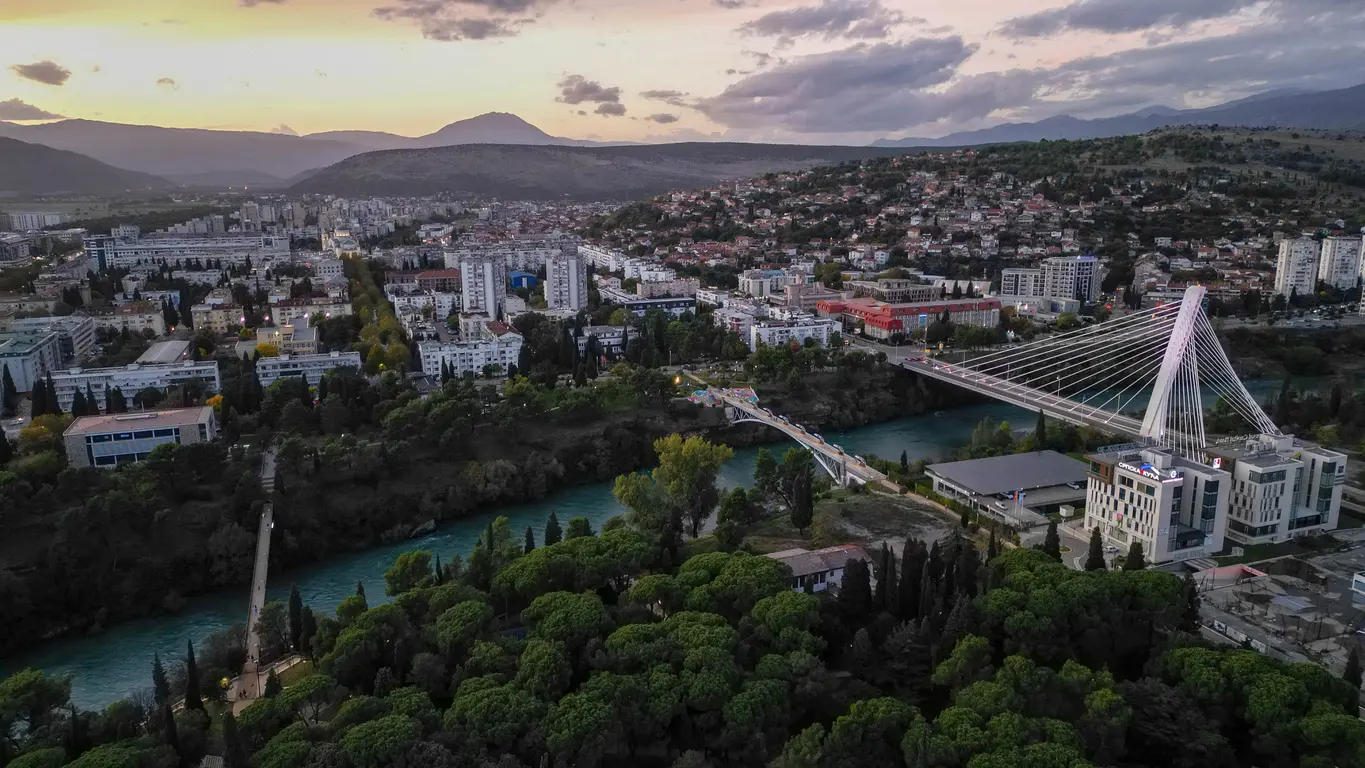
Situated in the northern part of the Zeta Plain, Podgorica is a city on the banks of the Morača River, where almost every attraction lies within just five kilometres of the centre. It is not a city where you will get lost among museums and restaurants every moment — but anyone who knows where to look will find layers of history, Ottoman architecture, Roman ruins, modernist concrete and a lively café culture, all in a single day.
Add to that the proximity of Lake Skadar (just 19 km as the crow flies), the Adriatic Sea (about 60 km by land) and an airport only 12 km away, and it is clear why Podgorica works as a perfect base for exploring all of Montenegro.
A short history: The city that survived everything
Podgorica is one of the oldest settlements in the Balkans. As early as the 5th century there was a Roman fortification here, and just 5 km north of the centre lie the ruins of the Roman city of Doclea (Duklja) — a site that has even been proposed for inscription on the UNESCO World Heritage list. Unfortunately, the site is still largely unprotected, but it is worth visiting.
Over the centuries the city has carried different names and been under different rulers — Ottomans, Venetians, Serbian despots. The Clock Tower in Stara varoš, one of the few Ottoman buildings that survived the Second World War, bears witness to that period. The bombing in the Second World War practically erased the historic core of the city, so Podgorica today carries that characteristic mixture of socialist architecture, brutalist concrete blocks and modern buildings.
Did you know?
During the socialist period, Podgorica carried the name Titograd (1944–1992), after Josip Broz Tito. The name Podgorica was restored after Montenegro declared independence.
What to visit in Podgorica
Stara varoš and the Clock Tower
A walk through the narrow streets of Stara varoš is an obligatory first step for every visitor. This quarter preserves the remnants of Ottoman urbanism — low houses, cobbled streets, mosques. The Clock Tower, 16 metres high, is one of the few Ottoman buildings that survived the destruction of war and still dominates the small square in the heart of Stara varoš. It is more than 300 years old and, yes, it does not always keep perfectly accurate time — but that is just part of its charm.
In the immediate vicinity is the Osmanagić Mosque, quiet and dignified, with a separate space for women on the upper floor. Stara varoš is at its most peaceful in the morning, when local café owners are just opening their gates and you can walk almost alone.
Tip
Tip for a morning walk
Visit Stara varoš between 8 and 10 in the morning. The quarter is almost empty then, the light is ideal for photography, and local cafés are just opening and serving local coffee at a price of 1–1.50 EUR.
The Bridge on the Ribnica and the confluence of the rivers
The old bridge on the Ribnica — locally known as the Bridge on the Ribnica — is one of the most photogenic places in the city. This Roman bridge crosses the Ribnica right at its confluence with the Morača, and the meeting of the two rivers next to the stone blocks of the old bridge offers a sight unlike anything else in the city. Below the bridge you can even swim in summer — the water is cold and clear, and local youth spend their afternoons there.
The confluence of the Ribnica and the Morača is the historic centre of Podgorica and a favourite outing spot for the people of Podgorica. Walk past King's Park and the monument to King Nikola, then descend to the riverbank — it is one of the most beautiful short walks in the city.
The Millennium Bridge and the Cathedral of the Resurrection of Christ
The Millennium Bridge, which spans the Morača in the new part of town, is a visual contrast to the Old Bridge — modern, lit up at night, with views over the river valley. Walk across it at dusk when the lights begin to come on. On the other side of the bridge you enter the New Town, where the Cathedral of the Resurrection of Christ stands, an Orthodox cathedral that took almost 20 years to build. Impressive inside and out — marble towers and intricate stone carvings make it one of the most significant church buildings in the Balkans erected in recent times.
Nearby is also the Royal Palace Podgorica, which you can see from outside, and Independence Square — the lively centre of the city surrounded by the National Library and the Al Gallery. At night the square fills with people, cafés stay open late, and concerts and cultural events are occasionally organised.
Dajbabe Monastery and Gorica Park
Dajbabe Monastery, dedicated to the Dormition of the Most Holy Mother of God, was built in 1897 inside a natural cave that was subsequently enlarged. The walls of the cave part of the monastery are covered with Christian frescoes painted by the founding monk, up until his death in 1941. The monastery is located on the edge of the city and is not always crowded with visitors — which makes it especially worth a visit.
Gorica Park, the largest park in Podgorica, is only a few hundred metres from the centre and offers walking trails with city views, an adventure park for children and a café. At the entrance to the park stands an old church believed to date from the 12th century — one of the oldest in Podgorica.
Good to know
For families with children
Gorica Park has an adventure park for children and well-maintained paths — ideal for a family outing. Entry to the park is free. The adventure park charges admission separately.
Plantaže Winery and the Šipčanik wine cellar
Few people know that Podgorica hides one of the most unusual wine attractions in Europe. Plantaže Winery owns the largest uninterrupted vineyard in Europe, located right next to the city. The visit includes a ride on a tourist train through the vineyard, a tour of the Šipčanik cellar and a wine tasting with expert guidance. Šipčanik is particularly interesting because it was originally a secret underground aircraft hangar, bombed in 1999, and later converted into a wine cellar that today stores around two million litres of wine.
Plantaže wine can be found in every restaurant in Montenegro, but tasting it directly in the cellar is a memorable experience. I recommend booking in advance.
In Montenegro, the most important thing is cheese. Everything else comes after.
Day trips from Podgorica
Lake Skadar — under 30 minutes
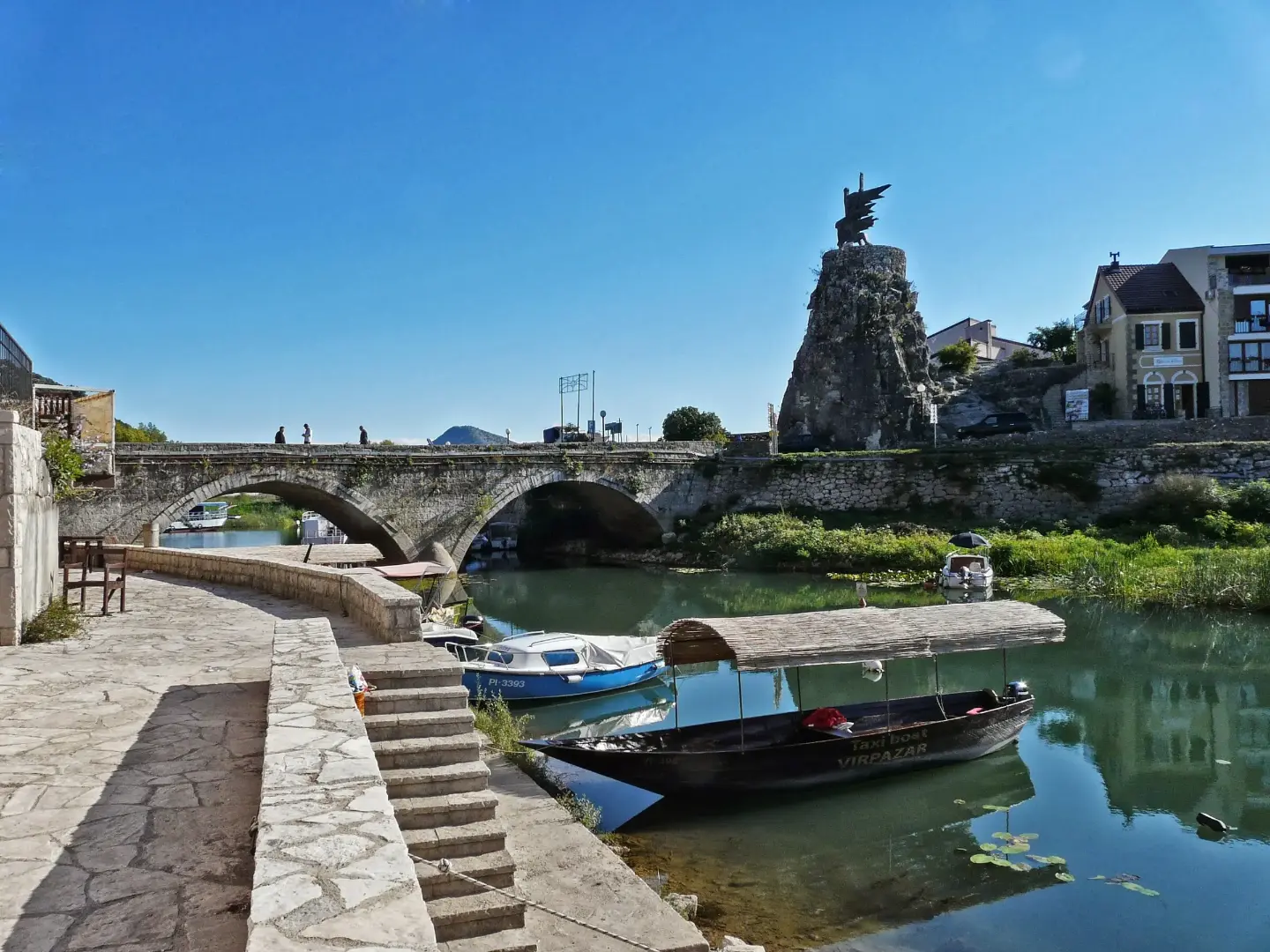
Lake Skadar, which stretches between Montenegro and Albania, is the largest lake in southern Europe and lies just 19 km as the crow flies from Podgorica — by road to Virpazar, the main gateway to the park, it takes under 30 minutes. The national park covers the entire Montenegrin shore of the lake, including villages, wetlands, hills and the ruins of old fortifications.
In Virpazar you can hire a boat to tour the lake, visit vineyards along the shore, or simply have lunch of freshly prepared fish in one of the local taverns. The lake is home to hundreds of bird species, and spring and autumn are ideal seasons for wildlife watching. This is without doubt the most worthwhile day trip from Podgorica.
Lake Skadar (Virpazar)
The largest lake in southern Europe, just ~25 km from Podgorica. Boats, wine, fish and incredible scenery. An ideal day trip.
Niagara Falls on the Cijevna River
Just a ten-minute drive from the centre of Podgorica, on the banks of the Cijevna River, there is a small waterfall that local residents have dubbed the 'Montenegrin Niagara'. The name is slightly pretentious, but the site itself is truly beautiful — a series of cascades in a stone canyon, with a restaurant right next to the water. A good option for a short outing without needing a car if you are comfortable with a taxi or have a rental car.
Where to eat in Podgorica
Podgorica is not the gastronomic capital of the region, but it has a solid restaurant offering for a city of its size. A cheaper meal in a local café or casual restaurant costs between 7 and 12 EUR, while multi-course meals in better restaurants range from 30 to 50 EUR per person. There are no international fast-food chains like McDonald's or KFC — which, honestly, is an advantage.
- Pod Volat — A legendary Podgorica restaurant, always full of locals. Known for generous portions and affordable prices. Ideal for trying Balkan grill: ćevapi, pljeskavice, roasted meat.
- Gostiona 1928 — Located in the centre, offering a contemporary interpretation of Montenegrin classics in an atmospherically decorated space with a terrace. Good wine list.
- Lupo di Mare — Seafood and Italian cuisine. Fresh fish, mixed seafood platter, seafood risotto.
- Masala Art — Indian cuisine in Podgorica, and an authentic one at that. Unexpected, but a very popular and highly praised place.
- Wine Bar Bucca — Fine dining, a curated wine list, a favourite among the diplomatic corps in the city.
- 21 MNE Urban Bistro — Modern atmosphere, local ingredients, popular for lunch and dinner. Recommended are the goat cheese salad and octopus carpaccio.
For quick and cheap food, look for local bakeries (burek, cheese pie, croissants) or Balkan grill in somun — a meal costing around 3 EUR and, without exaggeration, one of the most satisfying bites you can find in the city.
Approximate prices in Podgorica
EUR| Item · note | Price |
|---|---|
| Coffee (espresso/cappuccino)In a local café | 1–1.50 € |
| Burek or pie from a bakeryBreakfast or a quick snack | 1.50–2.50 € |
| Grill in somun (Balkan burger)Street food, excellent | 2.50–4 € |
| Lunch in a local restaurantDish + drink | 7–12 € |
| Dinner in a better restaurantPer person, with wine | 20–40 € |
| Local wine (bottle in a restaurant)Plantaže, Vranac or Krstač | 8–15 € |
| Taxi from the airport to the centreDistance ~12 km | 10–15 € |
| Overnight stay (mid-range hotel)Hilton, CentreVille, Hemera | 50–90 € |
Good to know
A note on tipping
Tipping in Podgorica is not obligatory, but it is appreciated. Leave a few euros on the total bill if you are satisfied with the service. The bill is brought by items — each round separately — and the final total is made at the end.
Where to stay
Podgorica offers a solid selection of accommodation for all budgets. Here are three recommendations covering different categories:
- Hilton Podgorica — A luxury hotel in the very centre of the city, with a pool and spa centre. An excellent location for walking to the main attractions. The price per night starts from around 100 EUR upwards.
- CentreVille Hotel and Experiences — A boutique hotel with character, positioned as one of the most elegant in the city. Popular among business travellers and couples.
- Hotel Hemera — A modern hotel in the centre, with its own restaurant that is itself popular among locals. Good value for money.
For travellers on a smaller budget, there are several hostels and private accommodation options in the centre. I recommend booking.com or contacting the accommodation directly, as prices vary by season.
How to get there and get around the city
By plane
Podgorica Airport (TGD) is the only international airport directly serving the capital and is located just 12 km from the centre. Airlines that regularly operate at this airport are Air Montenegro, Air Serbia, Turkish Airlines and Austrian Airways, and during the summer numerous charter airlines as well. The second airport in Montenegro is Tivat (TIV), 81 km from Podgorica — practical if you are coming to the Montenegrin coast, but less convenient for visiting the capital. Dubrovnik Airport (DBV) in Croatia is 153 km away and can be an option if you are travelling from western Europe with better connections.
Money saver
Airport to the centre
A taxi from Podgorica Airport to the city centre costs between 10 and 15 EUR and takes about 15 minutes. There is also a bus line to the airport. There is no Uber, but there are local taxi apps.
Getting around the city
Podgorica is a small city — almost all the main attractions are within a 5 km radius of the centre, which means that walking is a realistic option for most visitors. City buses exist and tickets are bought in cash directly on the bus. Taxis cannot easily be hailed on the street — it is better to use a taxi stand in front of the main square or to call a taxi via an app. I recommend renting a car if you plan day trips to Lake Skadar, Virpazar or the mountains.
Bokeška Street, the pedestrian zone behind the main square, is the central gathering place — cafés there are open from morning until late at night, and locals come to see and be seen. The right place for the Montenegrin ritual of morning coffee.
Practical tips before you set off
Cash in euros
Many smaller cafés and local restaurants do not accept cards. Always have some cash on hand.
Comfortable walking shoes
Stara varoš has cobbled streets that can be slippery — avoid heels and thin soles.
Local SIM card
A tourist SIM card costs around 15 EUR and is available at the One shop opposite the main square. Recommended for navigation and taxi apps.
Sun protection (in summer)
Podgorica is one of the hottest cities in Europe in summer — temperatures regularly exceed 35°C. Sunscreen, a hat and water are essential.
A light scarf or shawl
For visiting Dajbabe Monastery or the Cathedral, women need to cover their shoulders and knees.
Heads-up
Warning: Summer heat
July and August in Podgorica can be extremely hot — the city is known as one of the hottest in Europe. If you cannot stand the heat, plan your visit in May, June, September or October when temperatures are more pleasant and there are fewer tourists.
Planning a visit to Montenegro?
Browse our guides for Lake Skadar, Kotor, Budva and the mountainous areas of Montenegro — all in one place.
Explore more guides