Who can enter without a visa
Among others, citizens of all EU countries, the UK, the US, Canada, Australia, Japan, Ukraine, Israel and Albania enter Montenegro without a visa. You can stay visa-free for up to 90 days in any 180-day period. The full list of countries is in the Decree on the Visa Regime on the government website (gov.me).
Citizens of EU countries, Switzerland, Norway, Iceland, Liechtenstein, Andorra, Monaco, San Marino and the Vatican, as well as Serbia, Bosnia and Herzegovina, North Macedonia, Albania and Kosovo, can enter with just an ID card for up to 30 days. With a passport the same citizens can stay up to 90 days. Your passport must have been issued within the last ten years and be valid for at least three months after your planned departure from Montenegro.
Changes from 1 November 2026
On 23 July 2026 the government amended the Decree on the Visa Regime to align it with EU visa policy. From 1 November 2026 a visa is required for citizens of Russia, Belarus, Turkey and Saudi Arabia, who until 31 October could stay visa-free for up to 30 days. For citizens of China, the exemption for organised tour groups and official passports ends; individual Chinese tourists already needed a visa. Visa-free entry for Azerbaijan ended in January and for Qatar in April 2026.
Visa applications are submitted at a Montenegrin embassy or consulate or at VFS Global centres, which already operate in Russia, Turkey, Azerbaijan, the UAE, India, Bangladesh and Kyrgyzstan, with centres announced in China, Belarus, Saudi Arabia and other countries. The fee for a short-stay (C) visa at a consulate is €35, and VFS adds its own service charge. An e-visa has been announced but has no date.
Entering with a Schengen, US or UK visa
Anyone holding a valid visa or residence permit of a Schengen country, the US, the UK, Ireland, Canada, Australia, Japan or New Zealand can enter without a Montenegrin visa and stay up to 30 days, but not beyond the validity of that visa or permit. This rule still applies after 1 November 2026, so also to citizens of Russia, Turkey and China.
Children
Children need their own passport or, for citizens of the countries listed above, an ID card. If a child travels alone, with one parent or with another adult, bring certified consent from the parents who are not travelling. Check the exact form of consent with a Montenegrin embassy before you travel.
EES and ETIAS
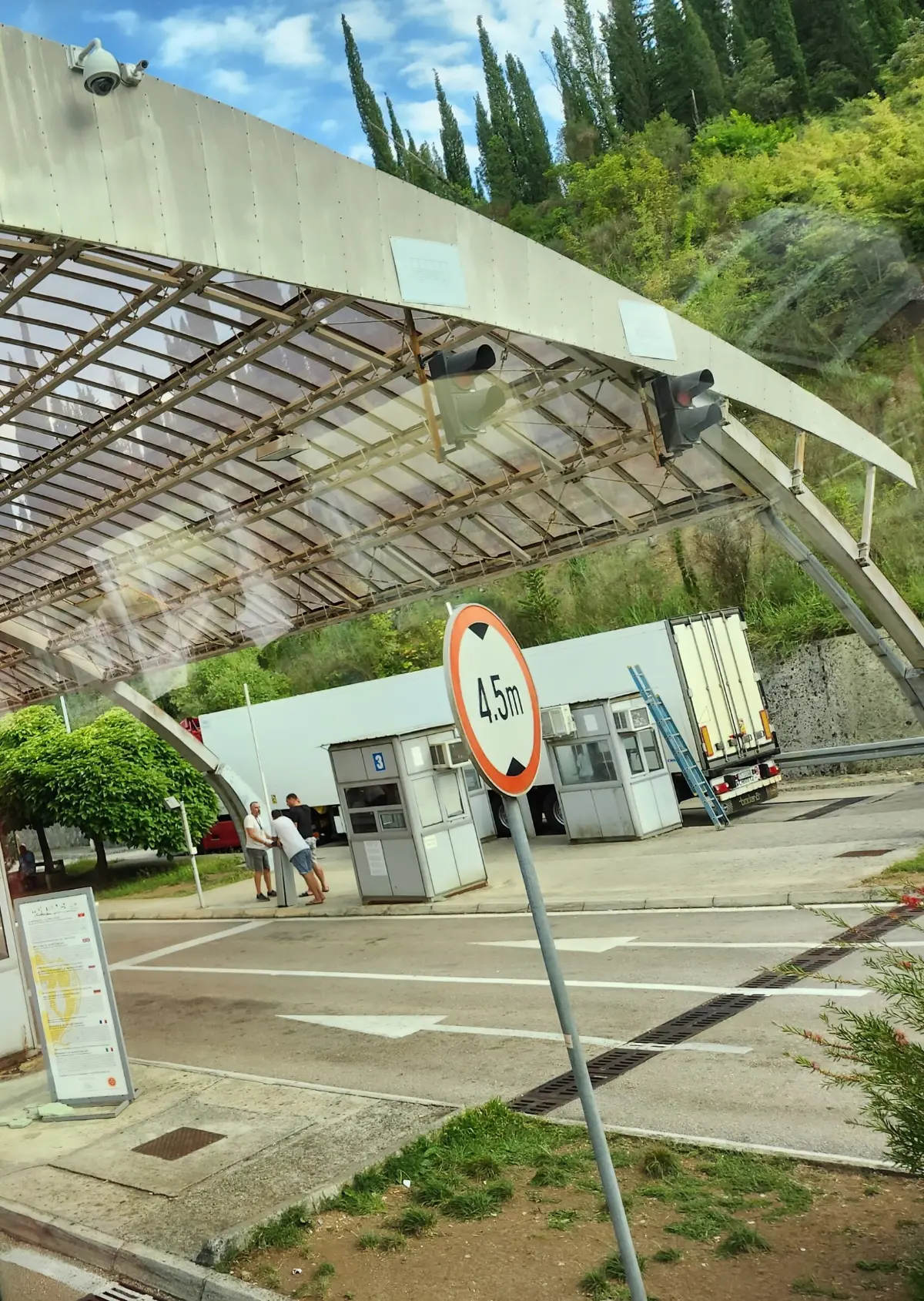
Montenegro is not in the Schengen area, and neither the EES nor ETIAS applies at its border. Croatia is, though: when a non-EU traveller enters Croatia, for example on a day trip to Dubrovnik via the Debeli Brijeg–Karasovići crossing or at Dubrovnik airport, they go through the EES. The system has been fully operational since 10 April 2026; fingerprints and a photo are taken on the first entry, so expect longer waits at the border. ETIAS, the electronic authorisation for visa-free travellers, is not running yet: it will cost €20 and be valid for three years, and the EU will announce the start date on travel-europe.europa.eu.
Registering your stay within 24 hours
Every foreigner must be registered with the police within 24 hours of arriving at a place of stay, and again in every place where they stay longer than 24 hours. Hotels, campsites and registered private hosts register their guests themselves within 12 hours, which is why they ask for your passport or ID card on arrival. If you stay with friends, your host registers you. If you are not staying with anyone, register yourself at the local tourist organisation or the police; registration through the tourist organisation is free. Keep the registration slip (often called the white card). The fine for an unregistered foreigner is €60–600.
Tourist tax
Each municipality sets its own tourist tax, and the law allows €0.10 to €1 per person per night. In 2026 it is €1 in Kotor, Tivat, Herceg Novi and Ulcinj, up to €1 in Budva and €0.60 in Nikšić; for other municipalities, check with the local tourist organisation. Children under 12 pay nothing, young people aged 12 to 18 pay half, and anyone staying more than 30 days in a row is exempt. The tax is collected by your accommodation together with the price and should be shown separately on the bill. In October 2026 a proposal to raise the range to €1–3 was sent to parliament, but it has not been adopted.
Customs, pets and drones
Customs: cash of €10,000 or more must be declared. You can bring in goods worth up to €300 by land, or €430 by air or sea (€150 for children under 15), free of duty and VAT. Travellers over 17 can bring 200 cigarettes when arriving by air and 40 by other transport, plus 1 litre of spirits or 2 litres of drinks up to 22%, as well as 4 litres of wine and 2 litres of beer.
Pets: dogs and cats (up to five animals) need a microchip, a pet passport or veterinary certificate and a rabies vaccination given at 12 weeks of age or older and at least 21 days before travel. Coming from a country not on the EU list (Annex II of Regulation (EU) 577/2013), a rabies antibody test is also required.
Drones: drones over 249 g, or any drone with a camera, are registered with the Civil Aviation Agency at dron.caa.me. You may fly up to 120 m; flying in the Podgorica and Tivat airport zones without approval, or over crowds without the Agency's authorisation, is not allowed. The rules for non-EU operators and for bringing a drone into the country are not clearly published, so contact the Agency (caa.me) before you travel.