

3 monasteries · ~40 km

From Đurđevi Stupovi (1213) and Morača (1252) to Ostrog in the cliff and the island monasteries of Lake Skadar
For centuries Montenegro's monasteries were also schools, scriptoria and treasuries. The oldest are in the north: Đurđevi Stupovi near Berane from 1213 and Morača from 1252, with frescoes from the 13th and 16th centuries. Piva Monastery was built between 1573 and 1586, and Ostrog took shape in the 17th century in the Ostroška greda cliff, at about 900 metres. Cetinje Monastery in its present form dates from 1701–1704, and on the coast there are Savina in Herceg Novi and Reževići near Petrovac. Most monasteries are still living communities of monks or nuns.
At a glance

Danilovgrad · 17th century
An Orthodox monastery carved into the near-vertical cliff face of Ostroška greda at 900 m above sea level, between Danilovgrad and Nikšić.
Read more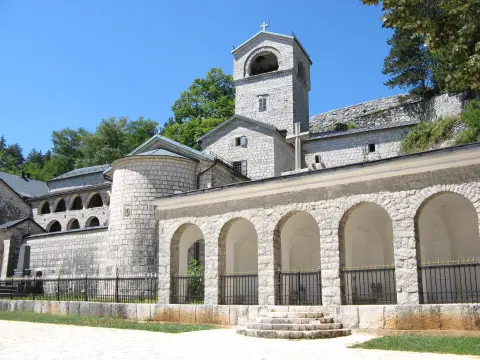
Cetinje · 15th century
Cetinje Monastery, founded in 1484, safeguards the most important Christian relics and stands as a symbol of Montenegrin spirituality and freedom.
Read more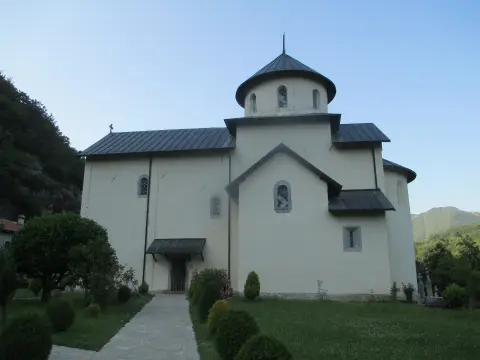
Kolašin · 13th century
Monastery from 1252 on the right bank of the Morača River, with frescoes from the 13th and 16th centuries and the tomb of its founder, Prince Stefan.
Read more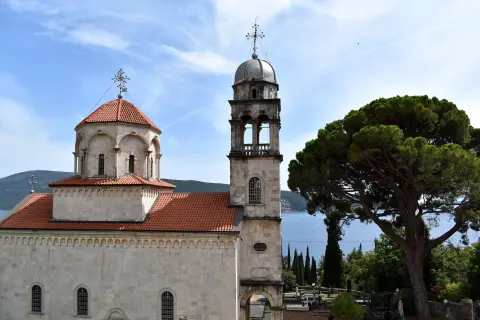
Herceg Novi · 17th century
Manastir Savina in Herceg Novi preserves three churches, a rich treasury, and the miraculous icon of the Virgin of Savina.
Read moreHerceg Novi · Budva · Petrovac
Manastir Savina in Herceg Novi preserves three churches, a rich treasury, and the miraculous icon of the Virgin of Savina.
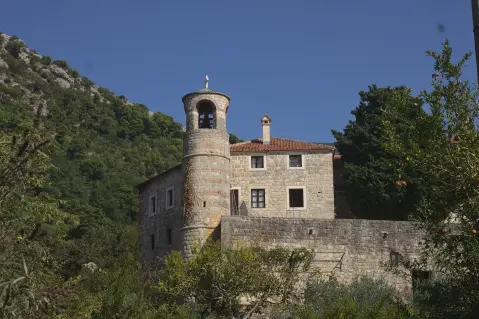
Active male monastery with two churches, Njegoš’s terrace and a rich history.
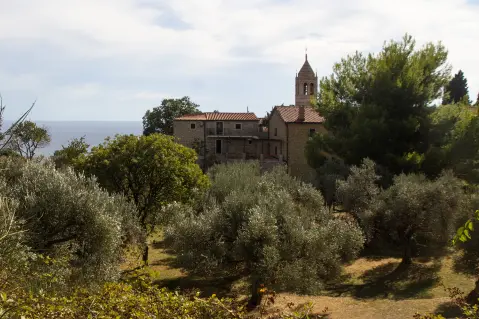
Reževići Monastery, an old Orthodox monastery in Paštrovići, preserves three churches and relics of the Kyiv Pechersk martyrs.
Danilovgrad · Cetinje · Podgorica
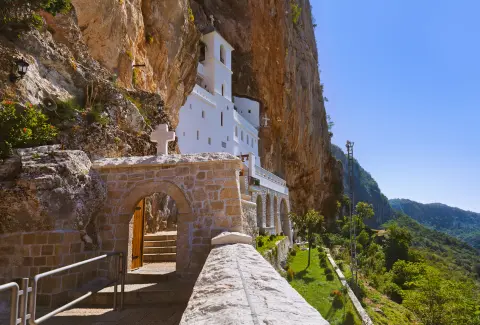
An Orthodox monastery carved into the near-vertical cliff face of Ostroška greda at 900 m above sea level, between Danilovgrad and Nikšić.
Cetinje Monastery, founded in 1484, safeguards the most important Christian relics and stands as a symbol of Montenegrin spirituality and freedom.
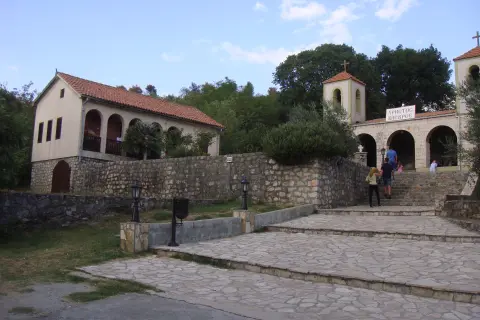
Monastery with a church in a natural cave, founded in 1897 on Dajbabska Gora above the Zeta Plain.
Kolašin · Plužine · Berane · Pljevlja
Monastery from 1252 on the right bank of the Morača River, with frescoes from the 13th and 16th centuries and the tomb of its founder, Prince Stefan.
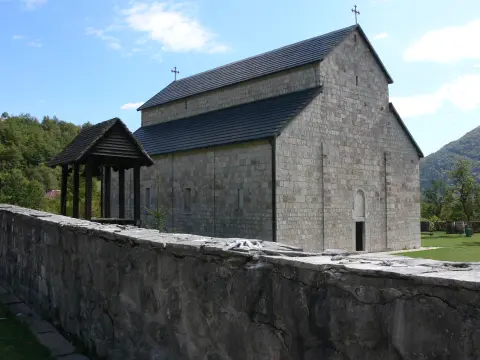
Monastery with the Church of the Dormition of the Most Holy Theotokos, around 1,260 m² of frescoes and a rich treasury, moved stone by stone.
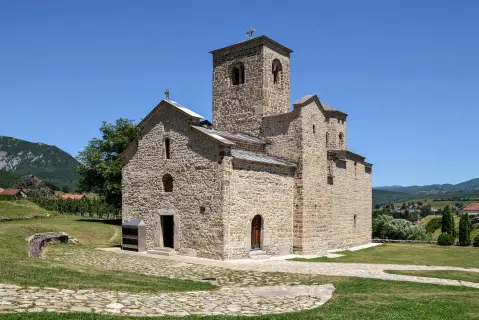
Đurđevi Stupovi Monastery is an endowment of Stefan Prvoslav from 1213, situated on a hill above the Lim River, about 2 km from the centre of Berane.
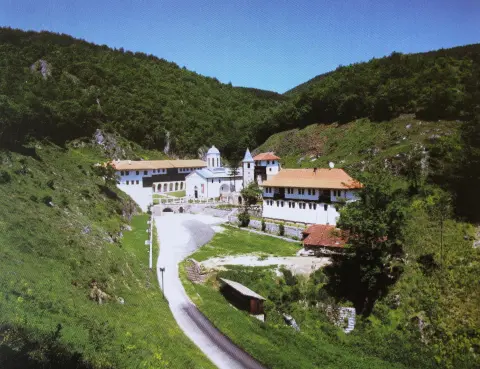
Monastery on a terrace above the Breznica stream, about 2 km from the centre of Pljevlja, known for its frescoes of 1592–1595, its scriptorium and its rich treasury.
Monasteries that sit close together – link them into a day trip.
3 monasteries · ~40 km
3 monasteries · ~60 km
4 monasteries · ~160 km
Always wear clothing that covers your shoulders and knees. Women should have a headscarf for inside the church. Inappropriate attire may result in being refused entry to the monastery.
Arrive early in the morning or late in the afternoon to avoid crowds, especially in summer. Weekdays out of season are most suitable for a peaceful visit – in the more visited monasteries, such as Ostrog, the difference is significant.
Manastir Ostrog is approximately 50 km from Podgorica, with a drive of 50–60 minutes. The road to the Upper Monastery is narrow and winding. The walking path from the Lower to the Upper Monastery is around 3 km long and takes 25–40 minutes.
Monasteries are living communities of monks and nuns. In the church do not eat or drink, speak quietly and do not enter areas closed to visitors. Do not take anything out of the monastery – not a stone nor a flower. Approach with respect, regardless of religious affiliation.
Entrance to monasteries is usually free, and voluntary donations and candles are welcome. Pilgrims traditionally bring oil, wine, coffee and sugar as gifts for the monks; according to old custom, woolen socks are also brought to Ostrog for Saint Basil of Ostrog.
On monastery feast days and major holidays, many believers come – check the date of the feast day of the monastery you are visiting. The greatest holiday is Saint Basil of Ostrog on May 12; for that day, reserve accommodation well in advance.
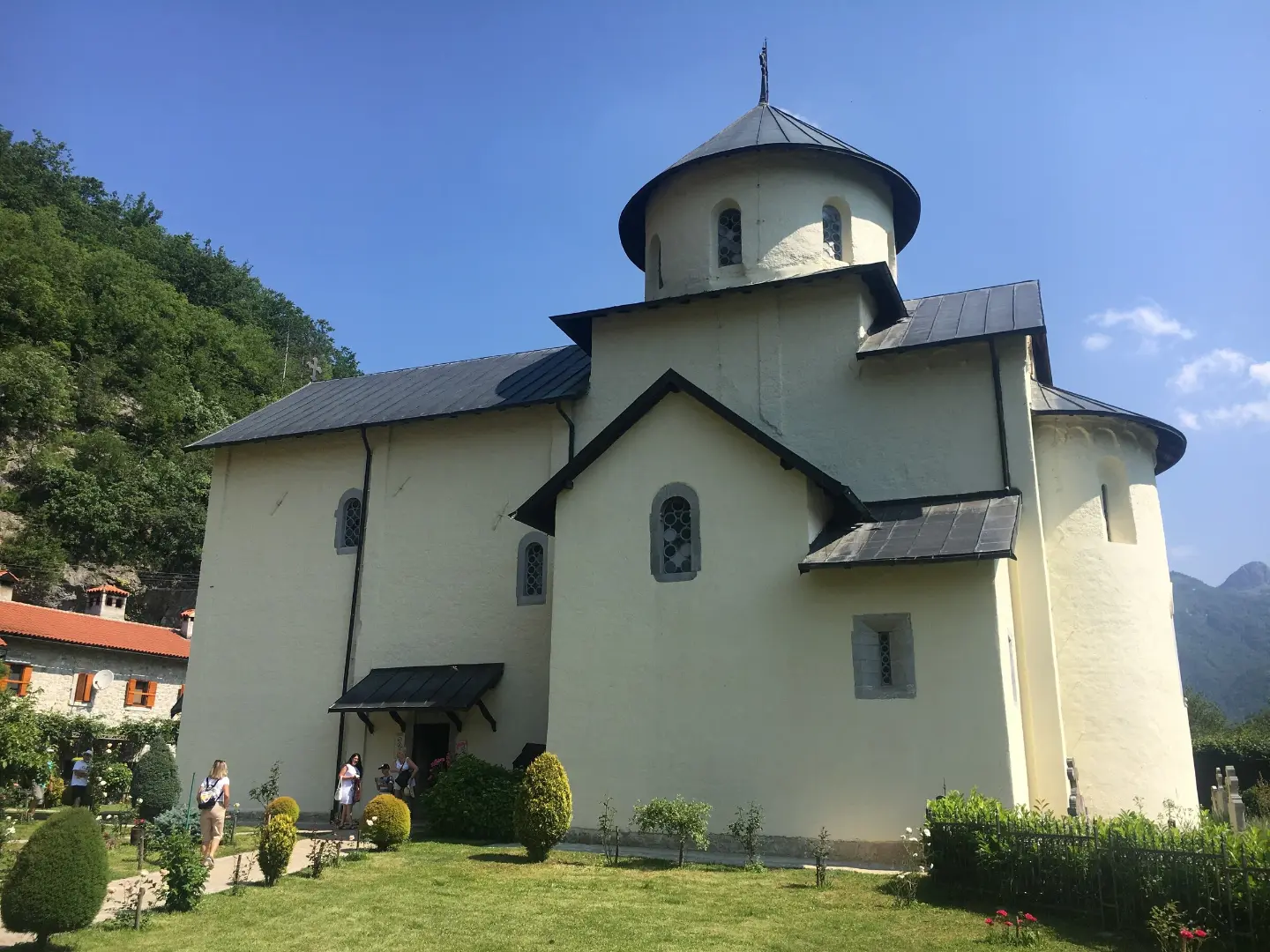
From the Morača canyon to the Ostroška greda cliff
Monasteries in canyons, on the islands of Lake Skadar and above the sea, some of them more than eight centuries old.
Dozens, from the Bay of Kotor to the Lim valley, and the number varies by source because some survive only as churches or ruins. This page highlights the ones that are easiest to visit.
Ostrog Monastery, in the Ostroška greda cliff at about 900 metres between Danilovgrad and Nikšić. It is the most visited pilgrimage site in the country; both Christians and Muslims come here.
Spring (April–June) and autumn (September–October), when it is warm and less crowded. On the feast of St Basil of Ostrog, 12 May, Ostrog draws the most pilgrims.
Clothing should cover shoulders and knees. Women are advised to wear a headscarf in church. Nothing is taken from a monastery, not even a stone or a flower.
Some monasteries, such as Ostrog, have guest quarters for pilgrims, but places are limited. On major feast days many pilgrims spend the night on the terrace in front of the monastery.
Among the oldest are Đurđevi Stupovi near Berane, founded by Stefan Prvoslav in 1213, and Morača, built in 1252 by Prince Stefan, son of Vukan Nemanjić.