3 min read
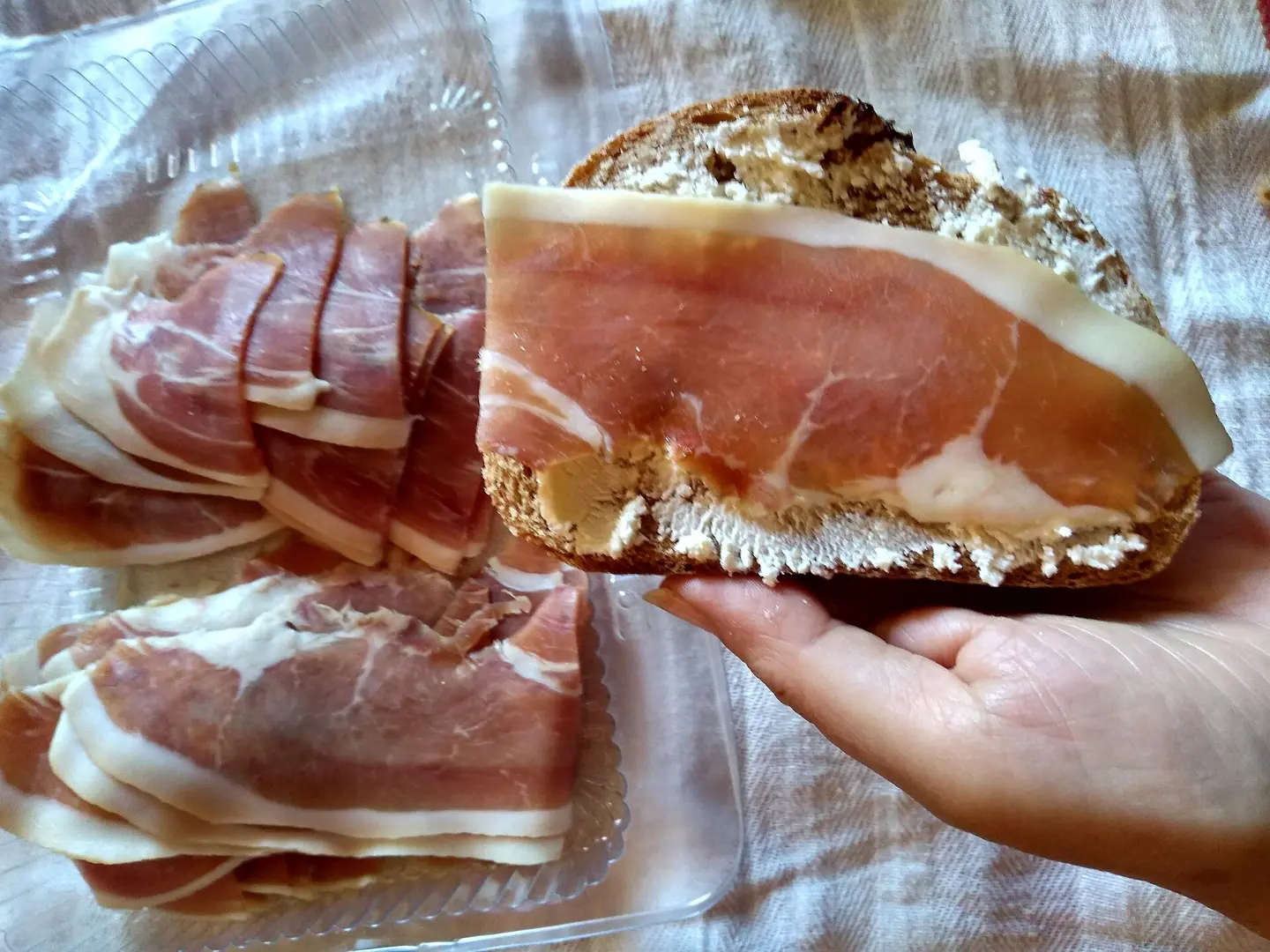
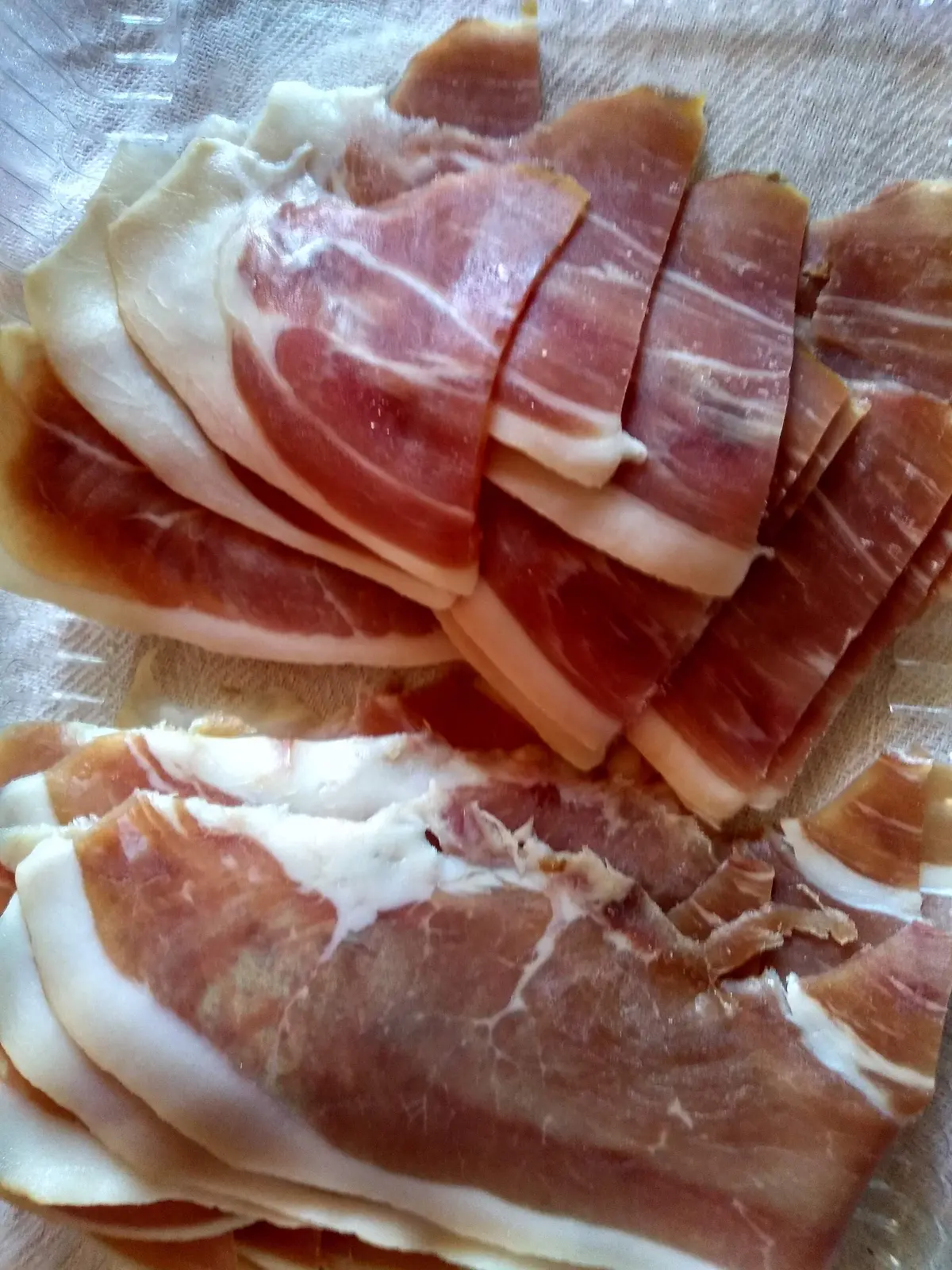
Njeguški pršut is the ham that made a village famous. In the hamlets of Njeguši, high on the slopes of Lovćen, legs of pork are salted with sea salt, pressed, lightly smoked over beech and hung in the mountain wind for the best part of a year. It was the first Montenegrin food protected by law, and the best place to eat it is still the village where it's made.
A village between the sea and the mountain
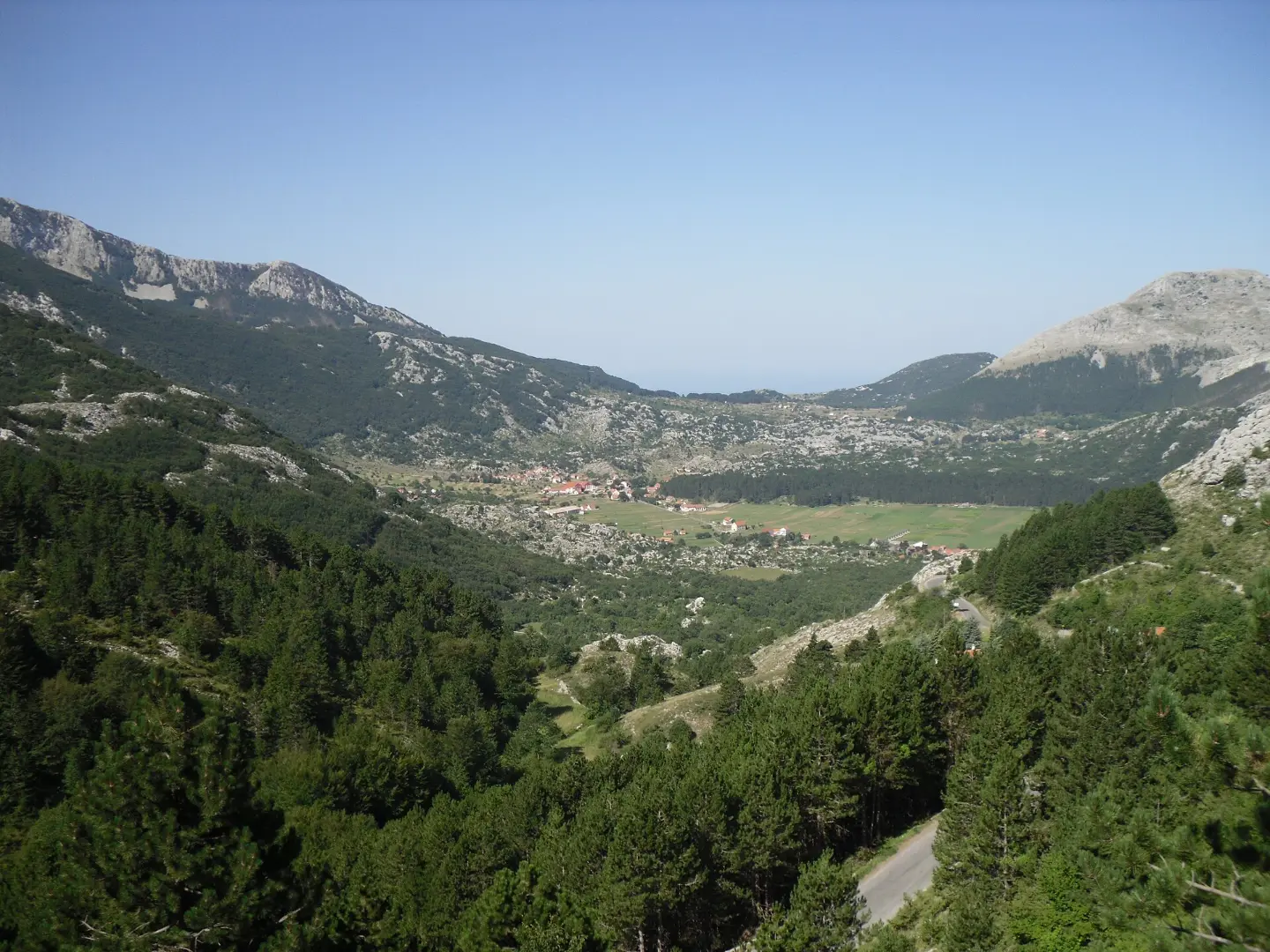
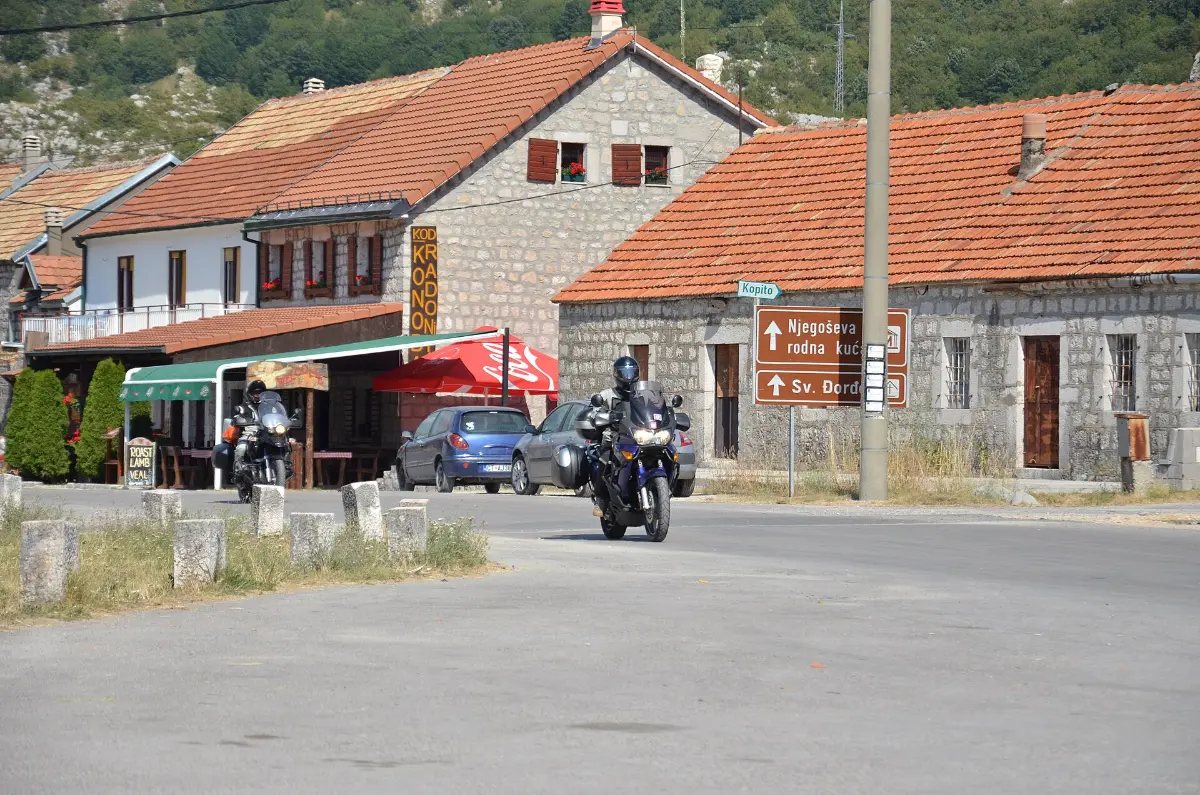
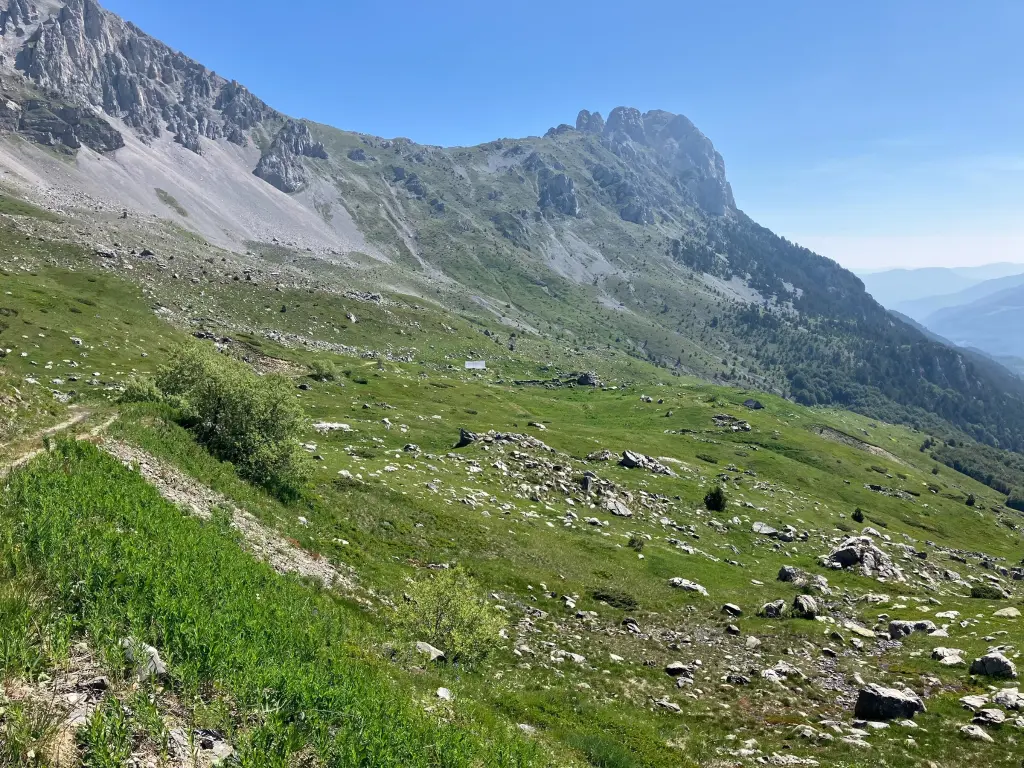
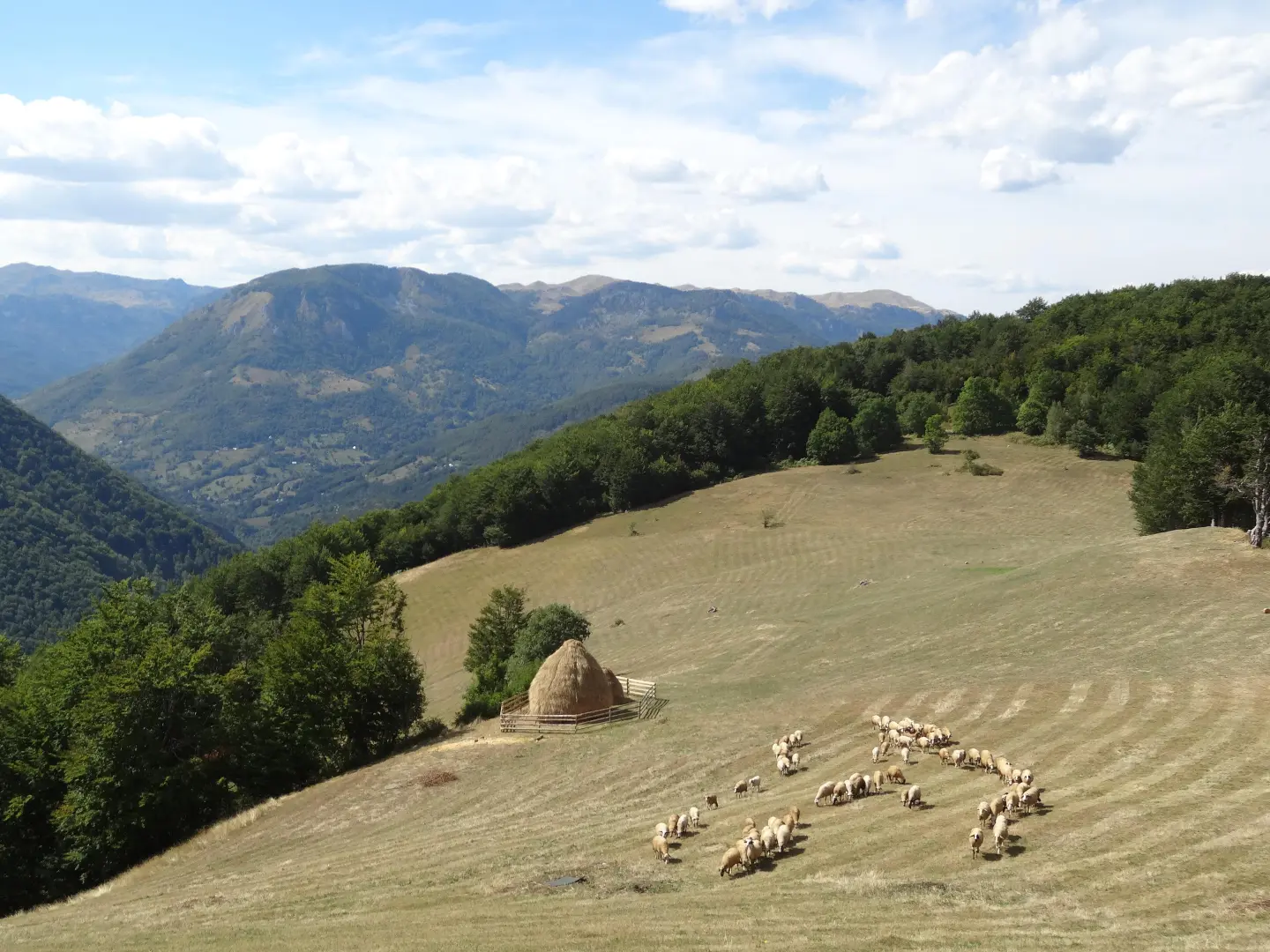
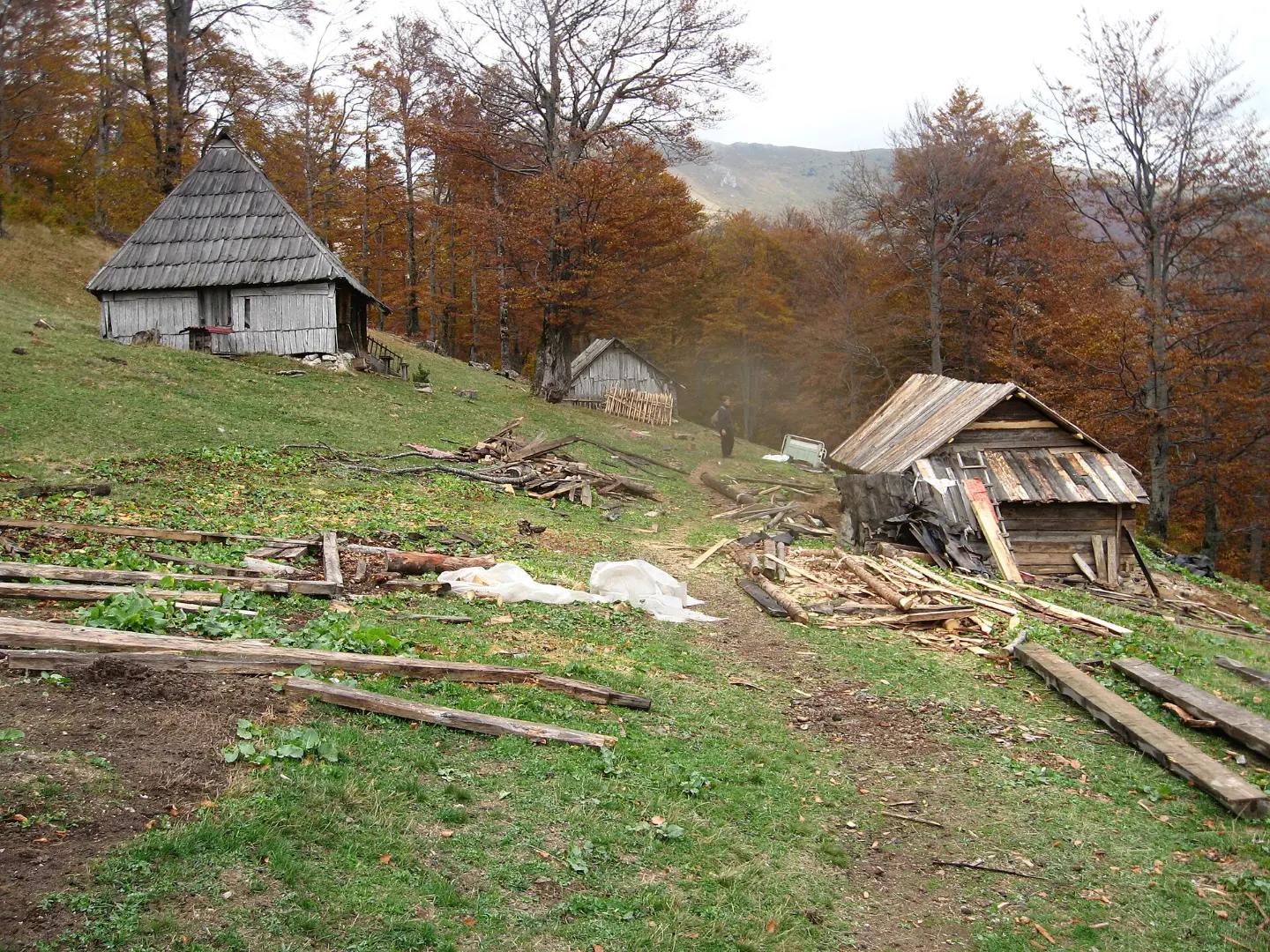
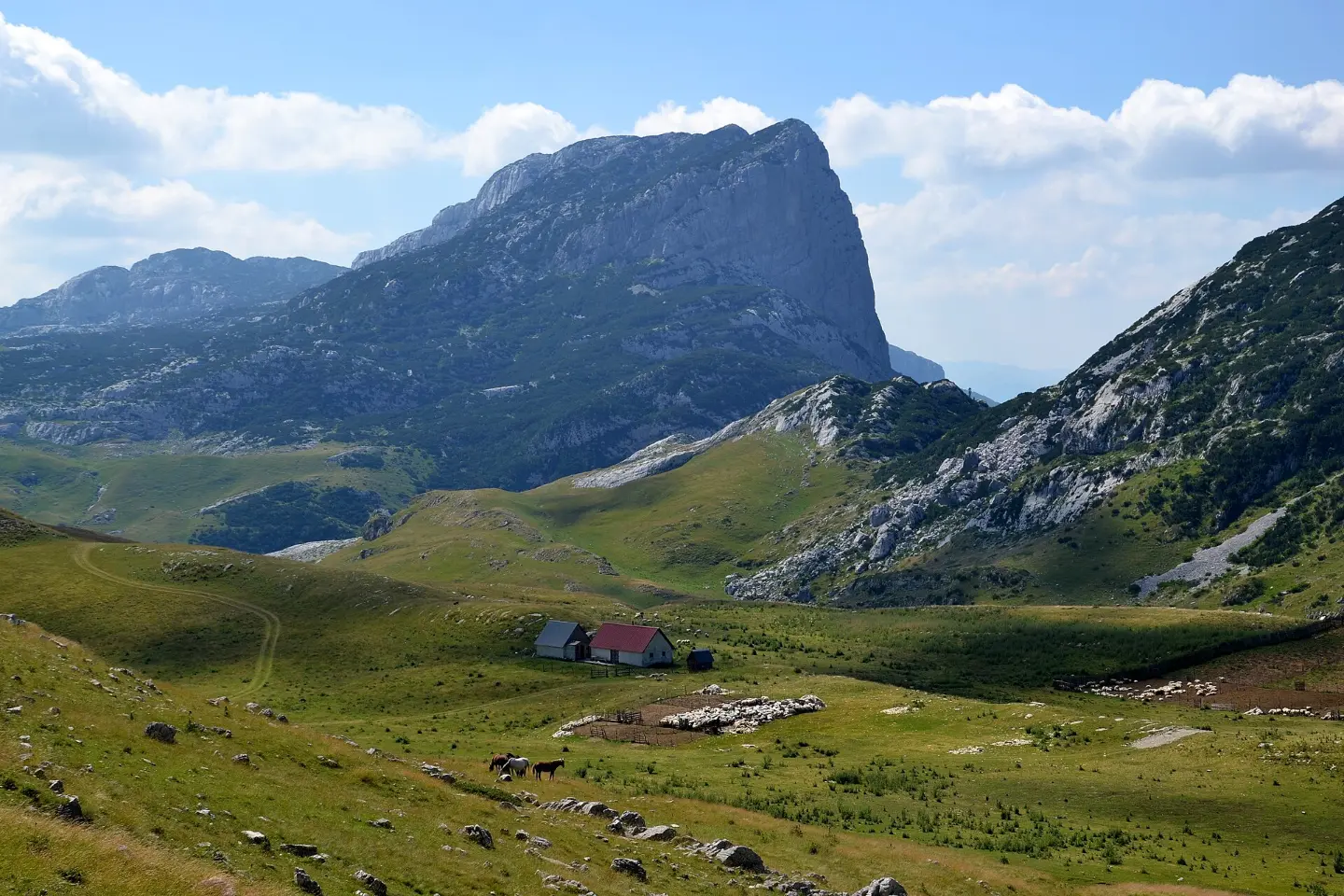
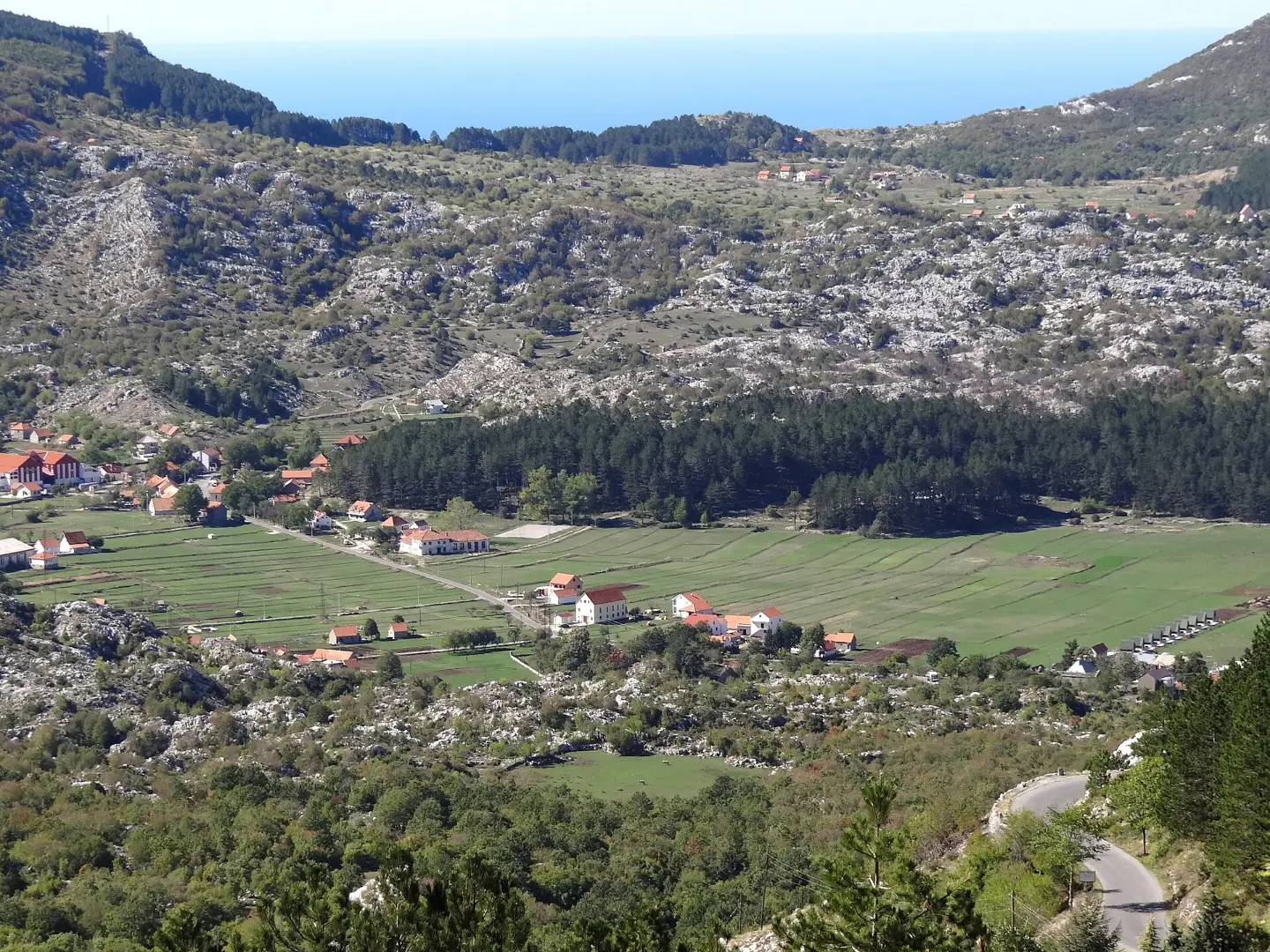
Njeguši lies in a karst field on the slopes of Lovćen, inside the national park, on the old road that climbed from Kotor to Cetinje. It is the home village of the Petrović-Njegoš dynasty. The name on the ham covers a cluster of hamlets: Dugi Do, Erakovići, Raičevići, Kopito, Vrba, Mali and Veliki Zalazi, Žanjevo Do, Mirac and Majstori, between 600 and 1,200 metres above sea level.
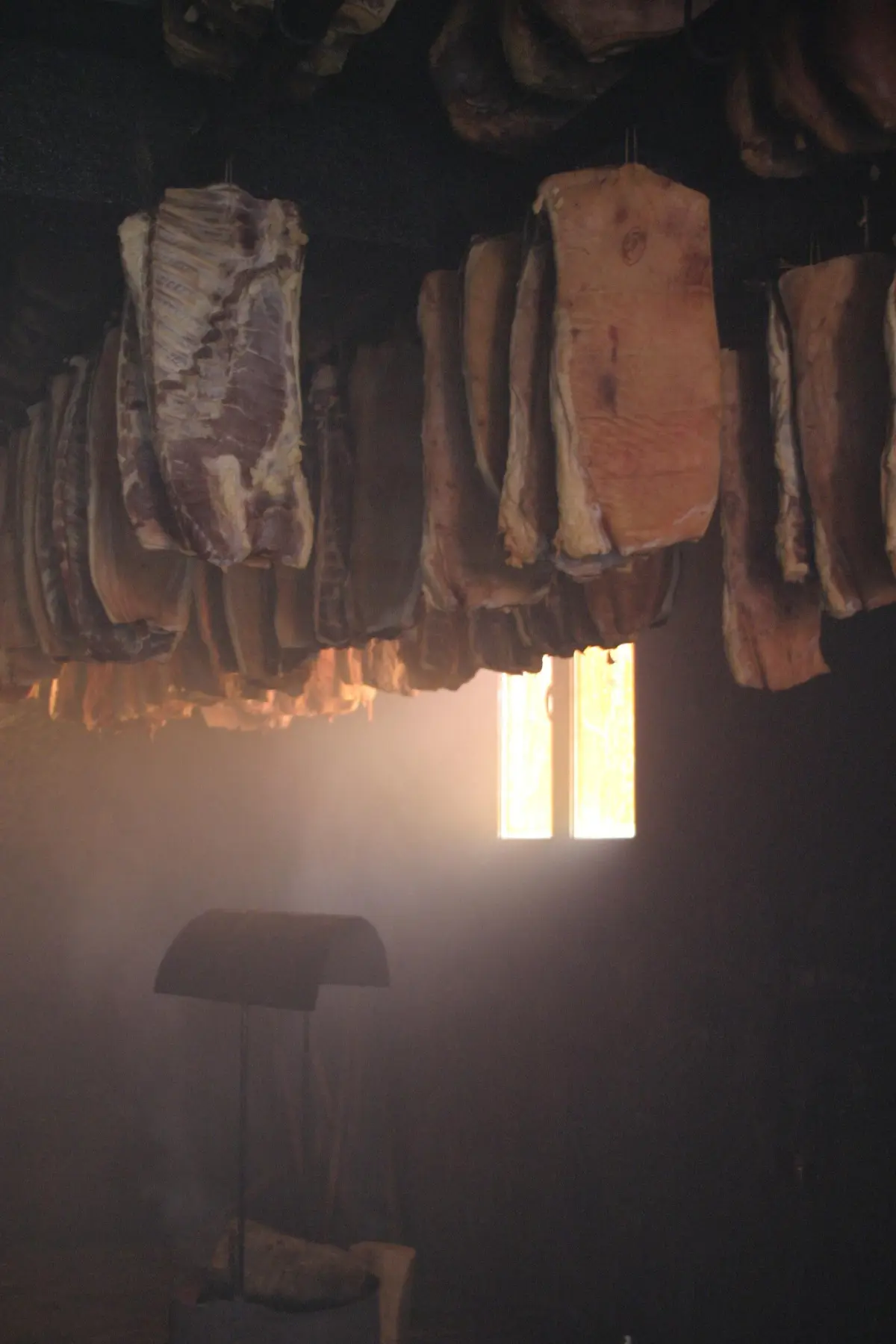
What makes the place right for ham is its air. In autumn and winter cold northerly winds blow across the field, and in spring and summer warmer southerly and easterly winds come up from the sea. Producers credit the flavour to that meeting of sea air and mountain air, and to the beech wood they burn in their smokehouses.
A year from leg to plate
The work follows the calendar. Fresh legs are taken in only between 15 November and 15 February, the coldest months. Each one is rubbed with sea salt and left for about three weeks, then pressed for about three weeks more, which squeezes out moisture and gives the ham its flat shape.
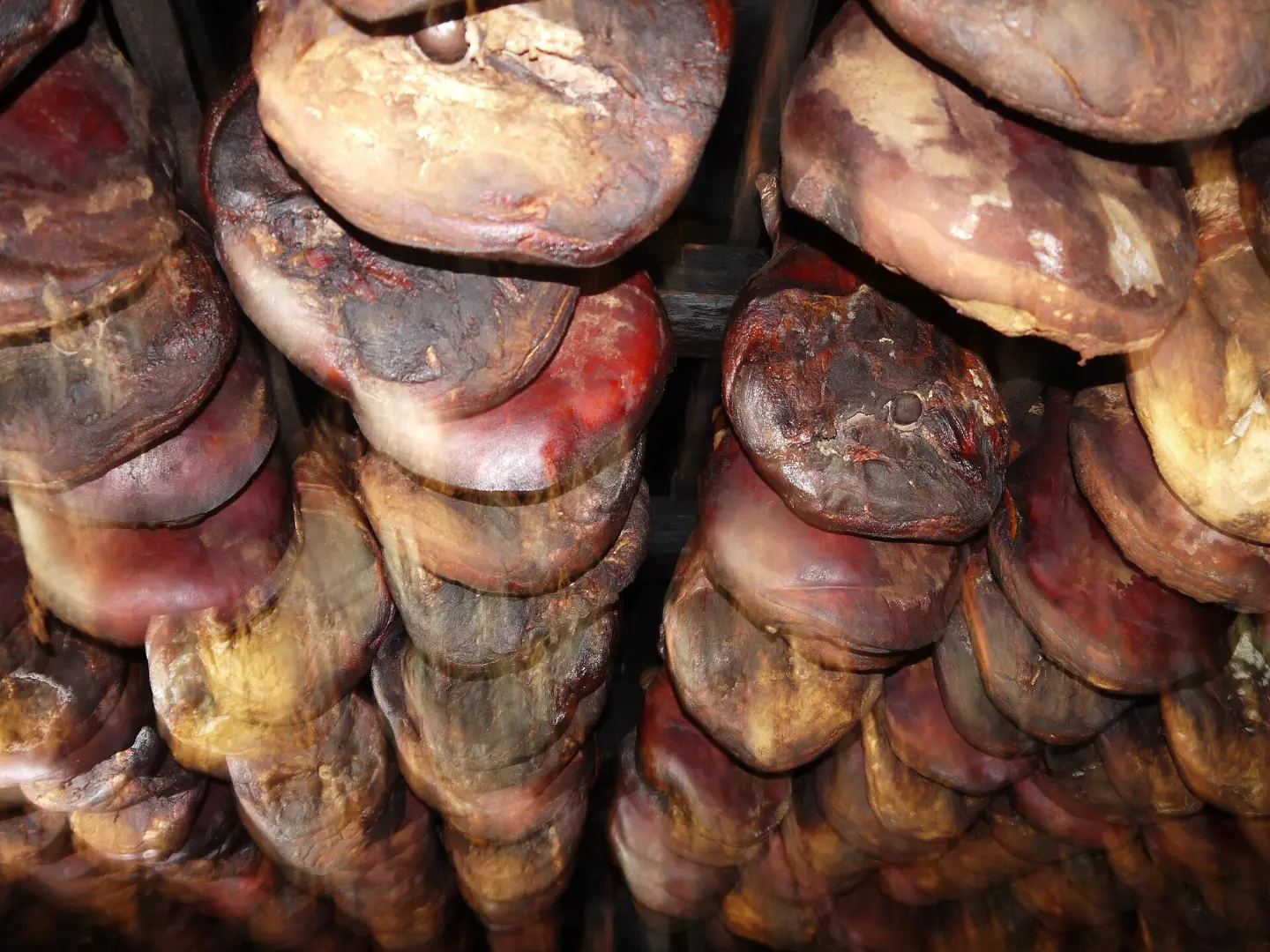
After pressing, the hams are lightly smoked over beech and hung to dry in the cool mountain wind for about three months. Then comes a long, slow maturing: the rules require at least nine months in all, and most hams take closer to a year. A raw leg of about 11 kg ends up as a finished ham of at least 6 kg, which is part of why good pršut is never cheap.
A protected name
Njeguški pršut was the first Montenegrin product protected by law. Its geographical origin was first protected in 2003, by the intellectual property office of what was then Serbia and Montenegro, and in 2016 it became the first food registered under Montenegro's own quality scheme, as a geographical indication. The rules, drawn up by the Njeguši producers' association, prescribe sea salt, slow-burning dry beech wood and at least nine months of drying and maturing. Only ham made in the Njeguši villages may carry the name, and production there is documented since at least 1838.
A second protected name, Crnogorski pršut (Montenegrin pršut), covers ham made elsewhere in the country, so the two are not the same thing. Montenegro is not in the EU, so this is protection under Montenegrin law, not an EU label.
How to eat it, and where
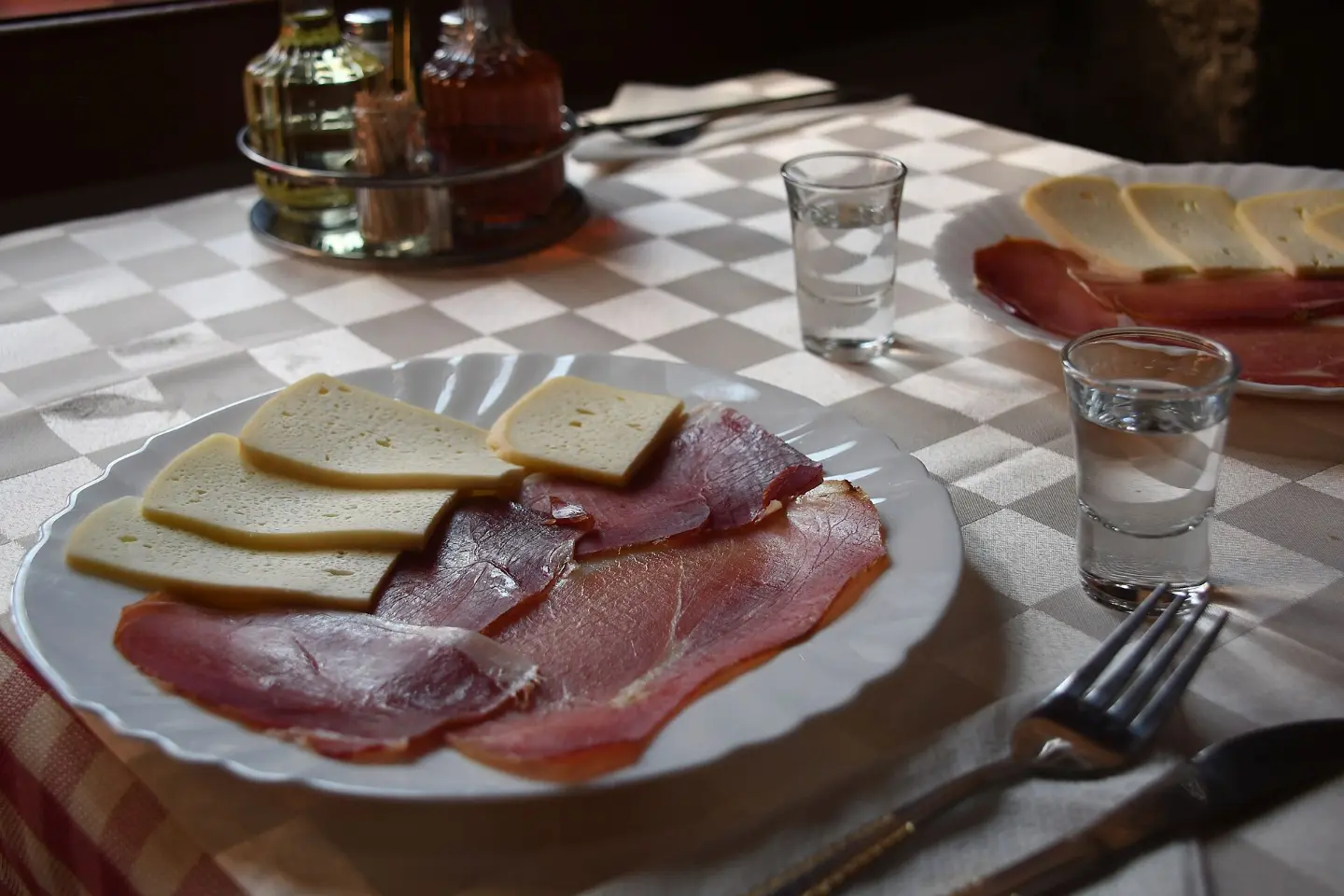
In Njeguši the ham comes to the table with the village's other speciality, Njeguški sir, a cheese kept in oil. The national tourist board also lists Njeguši sausage among the smoked meats of the Lovćen area. At the Bogdanović household in the hamlet of Kopit, a family that has made pršut and cheese for decades, breakfast is homemade fritters with cheese and ham.
The oldest place to try it is Kod Pera na Bukovicu, a tavern in the hamlet of Bukovica licensed in 1881, where guests can visit the old drying room with a glass of grape rakija. Other konobas in the village serve pršut and cheese at the source, which makes Njeguši an easy stop on the old road between Kotor and Cetinje. In recent years Cetinje has held an international ham fair in September, and Njeguši a village feast with free tastings, Njeguška trpeza, in October.