Travel to Montenegro
Cetinje, the old royal capital: a walk from the palace to the legations
Free audio guide

Cetinje, the old royal capitalA walk from the palace to the legations

Free self-guided audio walk through Cetinje, no app needed

  • Free · no app needed
  • 3 languagesME · EN · ES
  • Easy walk
walk
70 min
route
⁨2.4 km⁩
stops
12
of audio
15 min
Overview

A walking audio tour of Montenegro's old royal capital: King Nikola's Palace, Ćipur where Ivan Crnojević founded the town, Cetinje Monastery, the relief map of Montenegro, Njegoš's Biljarda, Government House, the Vlach Church with its fence of rifle barrels and the former legations of the European powers. Twelve stops, about two and a half kilometres in a loop.

How it works

  1. Press play at the first stop

    Nothing to install. Headphones are best; the lock screen and headphone buttons work too.

  2. Walk at your own pace

    Each stop ends with directions to the next one. Tap the next stop when you get there.

  3. Or let GPS guide you

    Choose “Guide me (GPS)” when you start: each stop begins when you arrive – while this page is open on screen.

Route

The walk on the map

The tour starts at Court Square, in front of King Nikola's Palace. Tap a number to play that stop.

Stop by stop

12 stops on the way

Listen, or read the full narration of every stop below.

Before you start

Welcome

Welcome to Cetinje, the old royal capital of Montenegro. This is the Travel to Montenegro audio guide. The walk has twelve stops, it is about two and a half kilometres in a loop, and it takes about an hour and a quarter without going into the museums. It starts here, on Court Square, and it ends here too. If you came on our audio drive from Kotor over Lovćen, this walk is its final part. Leave the car in one of the car parks around the centre. Some of them charge a fee. When you reach a stop, the story starts by itself. If it doesn't, tap the stop on the map. Cars use some of the streets, so keep one ear free. Cetinje Monastery is free to enter, but shoulders and knees must be covered. The National Museum of Montenegro sells one combined ticket for all its museums.
  1. King Nikola's Palace1
    Stop 11:09

    King Nikola's Palace

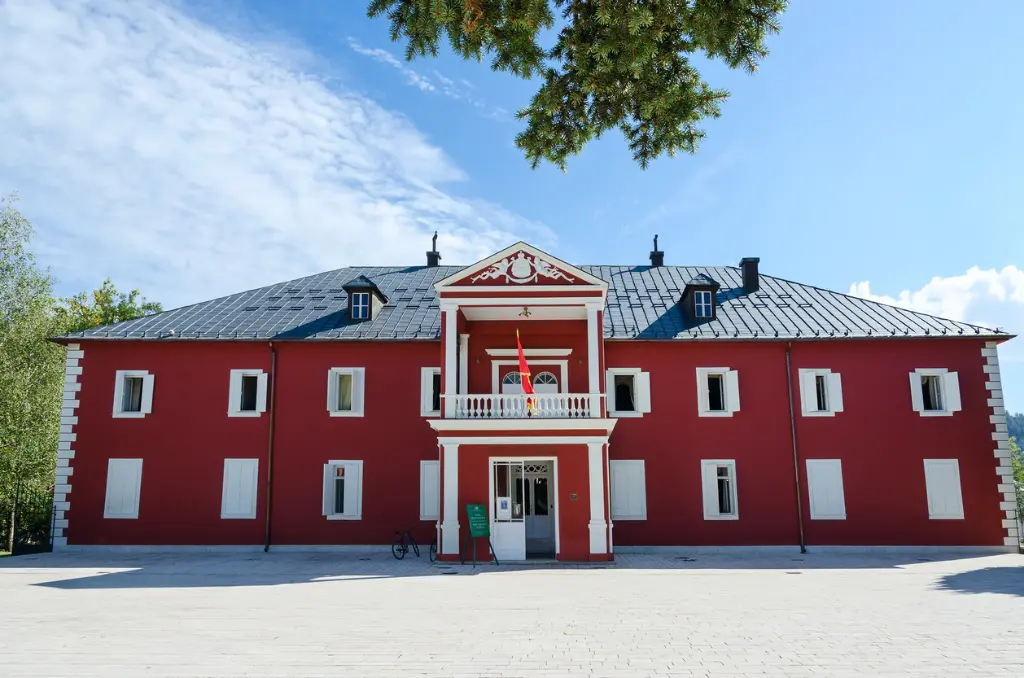
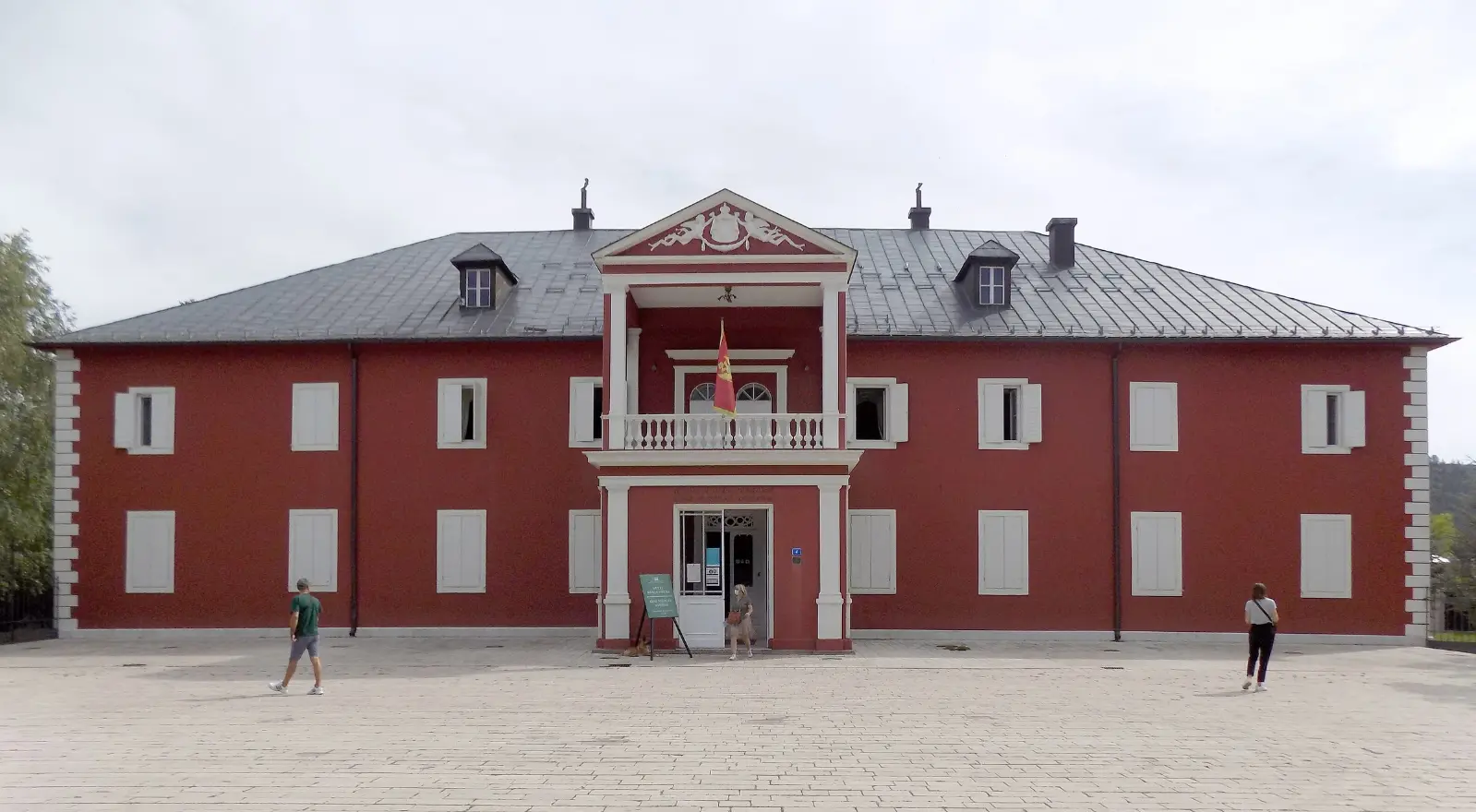
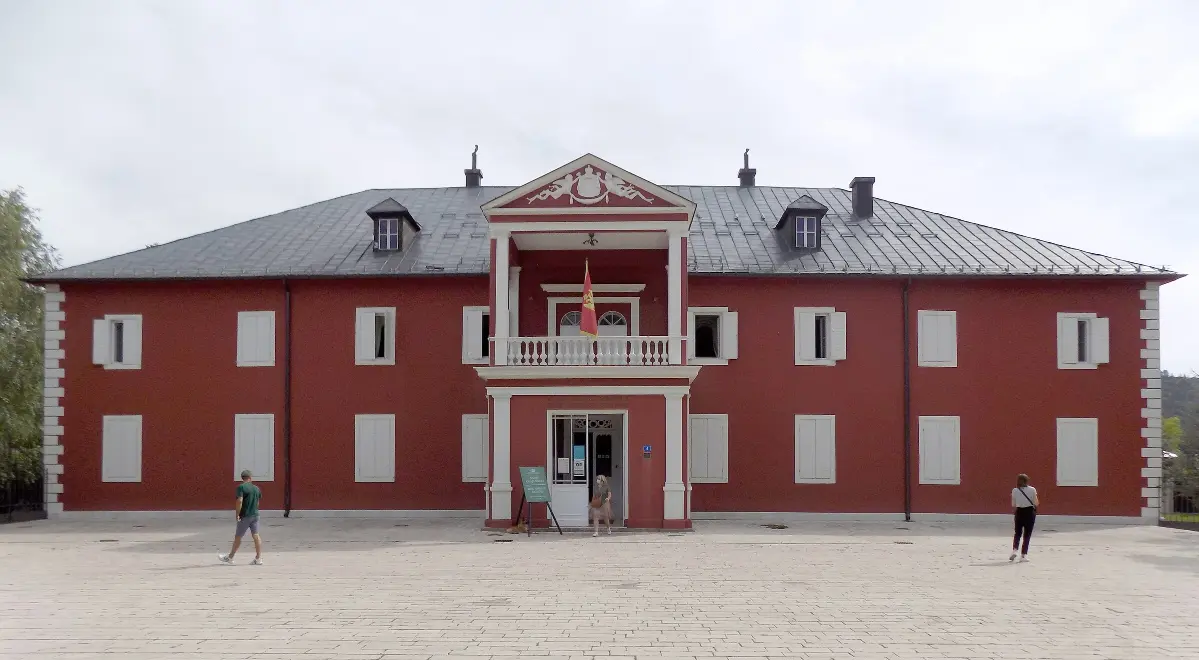
    You are standing on Court Square. The red building with a balcony above the entrance is King Nikola's Palace. It was built between eighteen sixty-three and eighteen sixty-seven, at first for Princess Darinka, the widow of Prince Danilo. When Darinka left Montenegro, Prince Nikola and his family moved in from the Biljarda. People called the new building simply the Palac. Nikola ruled for fifty-eight years, first as prince and, from nineteen ten, as king. The palace was renovated for the proclamation of the kingdom. The daughters of Nikola and Queen Milena married into the courts of Europe. Jelena became Queen of Italy, Milica and Anastasija married Russian grand dukes, and Zorka married Petar Karađorđević, later King of Serbia. That is why Nikola was called the father-in-law of Europe. The palace has been a museum since nineteen twenty-six. On the ground floor are the royal and diplomatic salons, portraits of European relatives, weapons, flags and decorations. The family rooms are upstairs.

    On to the next stop (⁨100 m⁩): Walk round the palace on its right-hand side and carry on to the small stone church with a bell tower on the green plateau behind it. That's about two hundred metres.

  2. The Court Church on Ćipur2
    Stop 21:07

    The Court Church on Ćipur

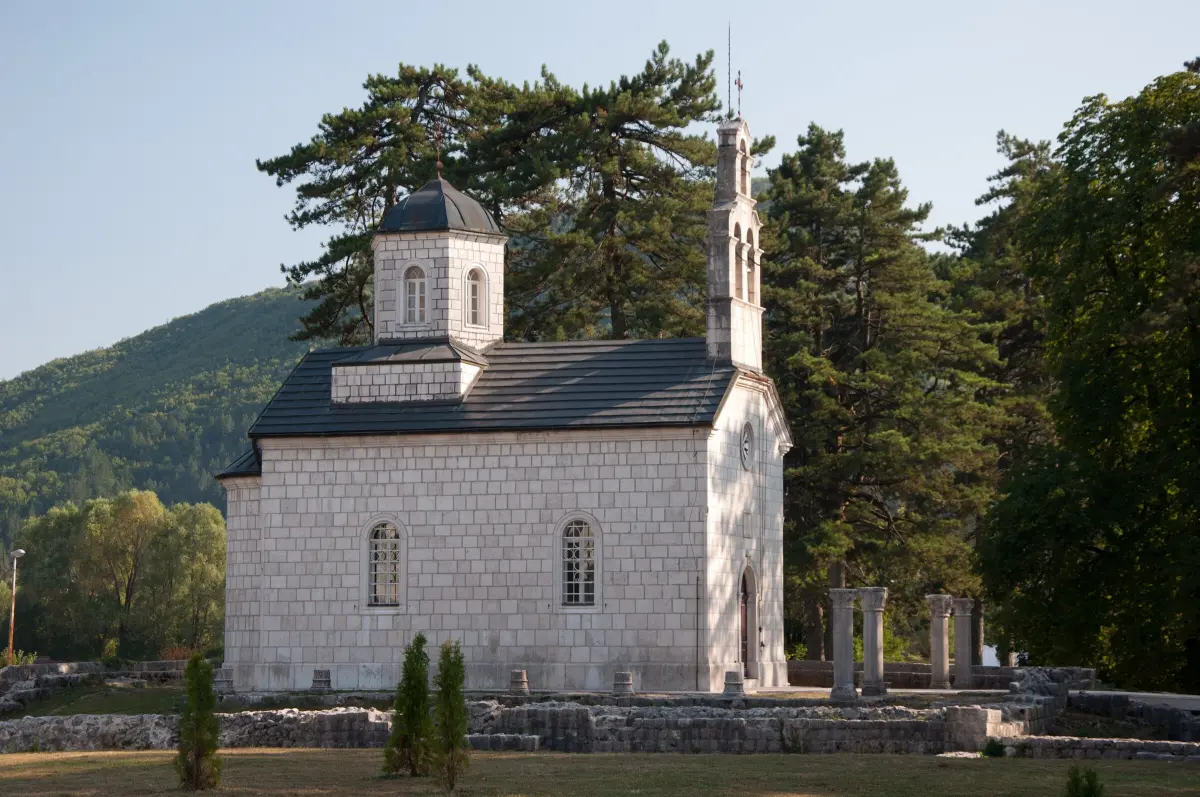
    This green plateau is called Ćipur, and this is where the history of Cetinje begins. Ivan Crnojević, the lord of Zeta, retreated before the Ottomans from Obod, near today's Rijeka Crnojevića, into this sheltered valley below Lovćen. In fourteen eighty-two he built a court here, and two years later a monastery dedicated to the Virgin. That monastery was destroyed in sixteen ninety-two. The Venetians who held it blew it up as they withdrew. You can see the remains of its foundations around the church. King Nikola built the church in front of you in eighteen ninety, on the site of the old monastery. It holds the graves of Ivan Crnojević, King Nikola, Queen Milena and two of their daughters, Ksenija and Vjera. The king and queen died in exile and were buried in San Remo, in Italy. On the first of October, nineteen eighty-nine, their remains were brought back here. The church is often closed. If it is open, the marble tombs of the king and queen are right by the entrance.

    On to the next stop (⁨130 m⁩): Cross the plateau to the west, to the monastery below the rocky hill. It's about a hundred and fifty metres. Cover your shoulders and knees before you go in.

  3. Cetinje Monastery3
    Stop 31:17

    Cetinje Monastery

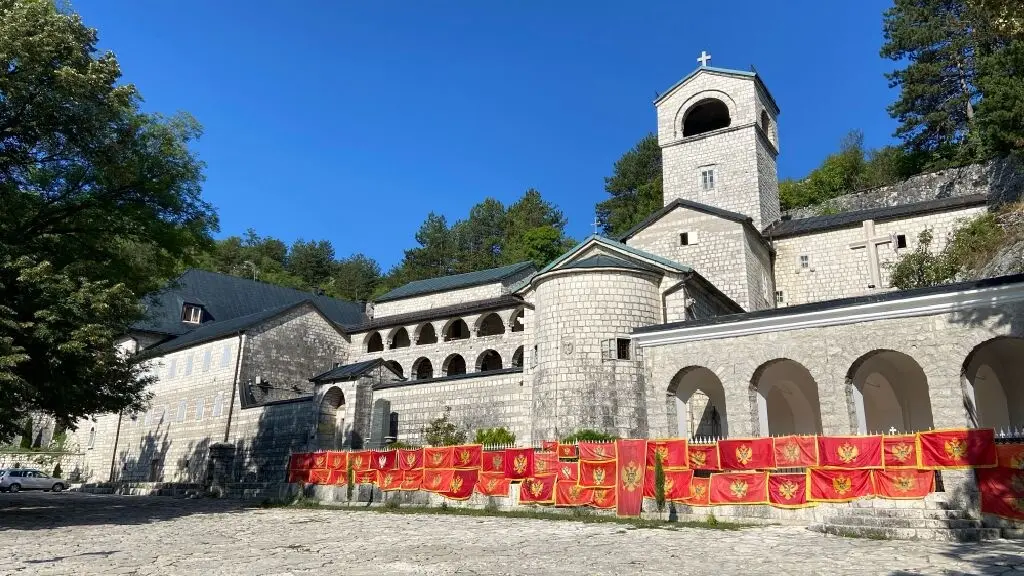
    In front of you is Cetinje Monastery, the seat of the Metropolitanate of Montenegro and the Littoral. After the old monastery on Ćipur was destroyed, Bishop Danilo Petrović built a new one here, on the site of Ivan Crnojević's former court, between seventeen-oh-one and seventeen-oh-four. This one was not spared either. It was damaged in Ottoman attacks in seventeen fourteen and in seventeen eighty-five, and each time it was rebuilt. It has looked the way it does now since nineteen twenty-seven. The monastery keeps the right hand of Saint John the Baptist, a fragment of the Holy Cross and the relics of Saint Peter of Cetinje, a bishop and statesman of the late eighteenth and early nineteenth centuries. The church also holds the grave of Prince Danilo. Entry is free. Shoulders and knees must be covered, and if you have nothing to cover them with, a wrap is usually handed out at the entrance. No photography inside, and please keep your voice down. Above the monastery rises the rocky hill of Orlov Krš, with the mausoleum of Bishop Danilo. The path to the top takes about twenty minutes.

    On to the next stop (⁨30 m⁩): Head back towards the long stone building with towers at its corners. That is the Biljarda. The pavilion with the relief map is in its courtyard, on the side facing the monastery, about fifty metres from here.

  4. The relief map of Montenegro4
    Stop 41:06

    The relief map of Montenegro

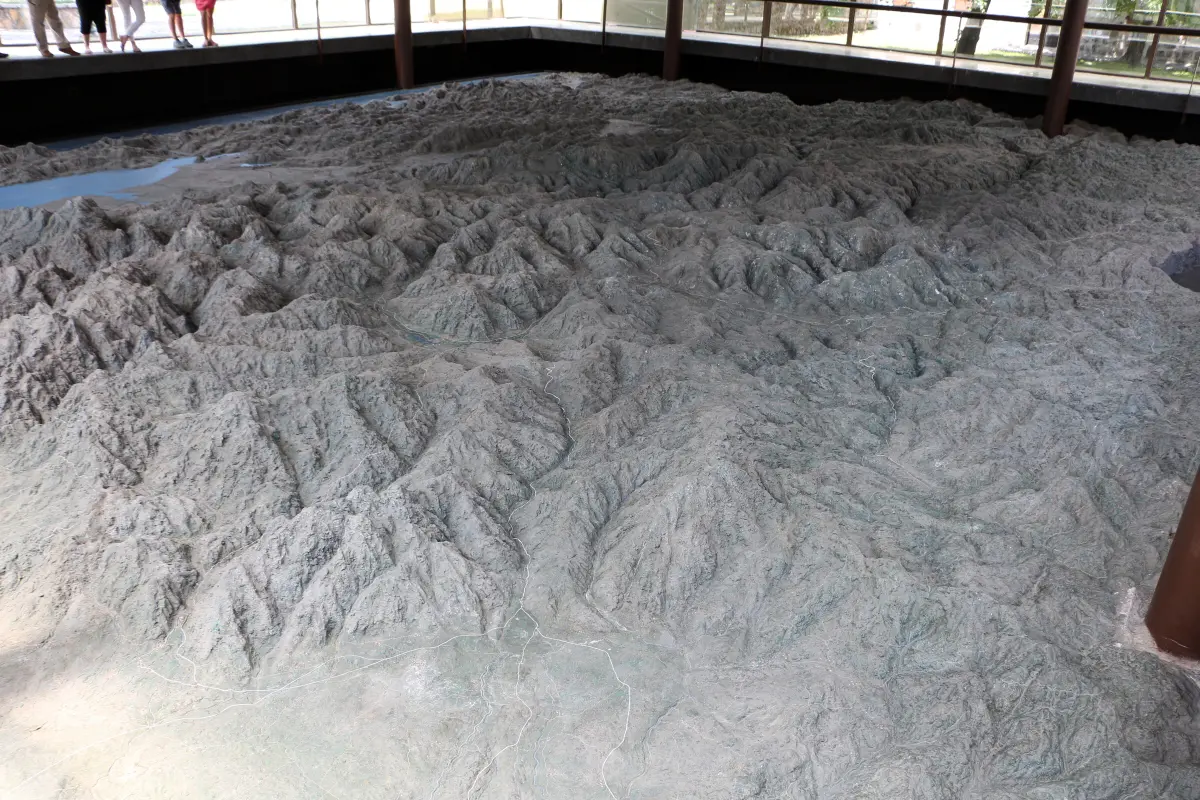
    This pavilion holds a relief map of Montenegro, made in nineteen seventeen, during the Austro-Hungarian occupation in the First World War. The occupiers wanted a better overview of the mountain country they held. The map is made of concrete cast on a stone base, following precise Austrian topographic maps. The scale is one to ten thousand, and it covers about two hundred and fifty-six square metres. It also shows parts of the neighbouring countries. It was made by Austro-Hungarian officers and specialists, captured Italian officers, painters and cartographers, and the Montenegrin sculptor Marko Brežanin. If you go in, first find the Bay of Kotor, then the mountain above it. That is Lovćen. The old road from Kotor climbs its slopes through the hairpin bends and over Njeguši to this valley. From above you can see clearly how well Cetinje was hidden, both from the sea and from the plain. There is a fee for the pavilion, and the Biljarda ticket also covers the relief map.

    On to the next stop (⁨90 m⁩): Walk round the eastern end of the Biljarda to the round tower on the corner facing Court Square. That's about a hundred metres.

  5. The Biljarda, Njegoš's residence5
    Stop 51:16

    The Biljarda, Njegoš's residence

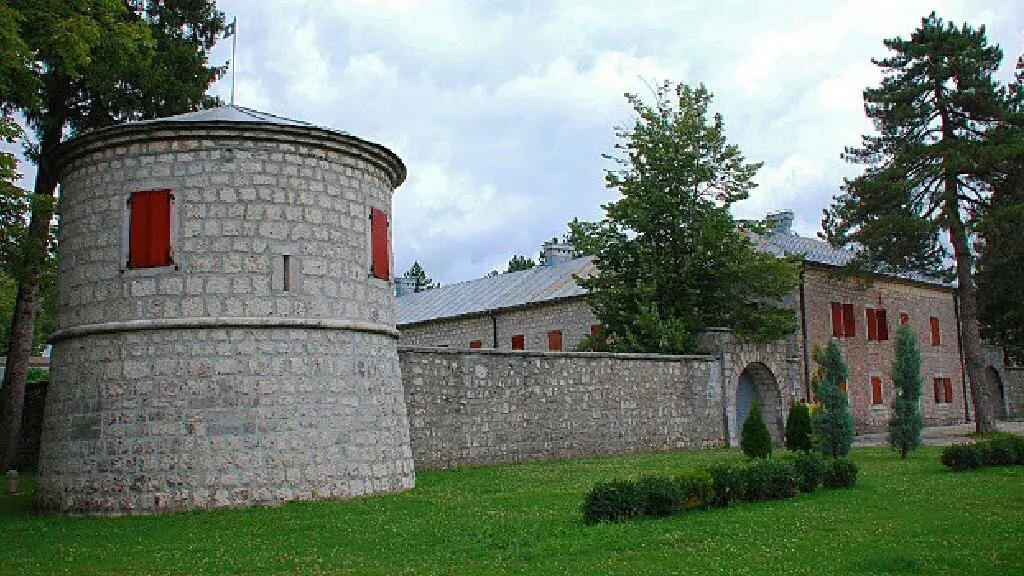
    This long stone building with towers at its corners is the Biljarda. It was built in eighteen thirty-eight, to a design by the Russian Yakov Ozeretskovsky, for Petar the Second Petrović Njegoš, prince-bishop, ruler and poet. The old monastery had become too small for him, so he moved himself and the institutions of the state here. The building is about seventy-two metres long and has twenty-five rooms. The Senate met here, and so did the perjanici, Njegoš's guard. It is named after billiards, Njegoš's favourite game, and the billiard table can still be seen in the museum. Njegoš died in eighteen fifty-one, not yet thirty-eight years old. His best-known work, the epic poem The Mountain Wreath, was published in eighteen forty-seven. The museum keeps his library, manuscripts and personal belongings. Later, ministries and schools worked in the Biljarda. Today it is the Njegoš Museum, part of the National Museum of Montenegro. Njegoš himself is buried at the top of Lovćen, in the mausoleum on Jezerski Vrh.

    On to the next stop (⁨170 m⁩): Walk north along Novice Cerovića Street, about a hundred and eighty metres, to the large yellow building with a clock on its front.

  6. Government House and the National Museum6
    Stop 61:15

    Government House and the National Museum

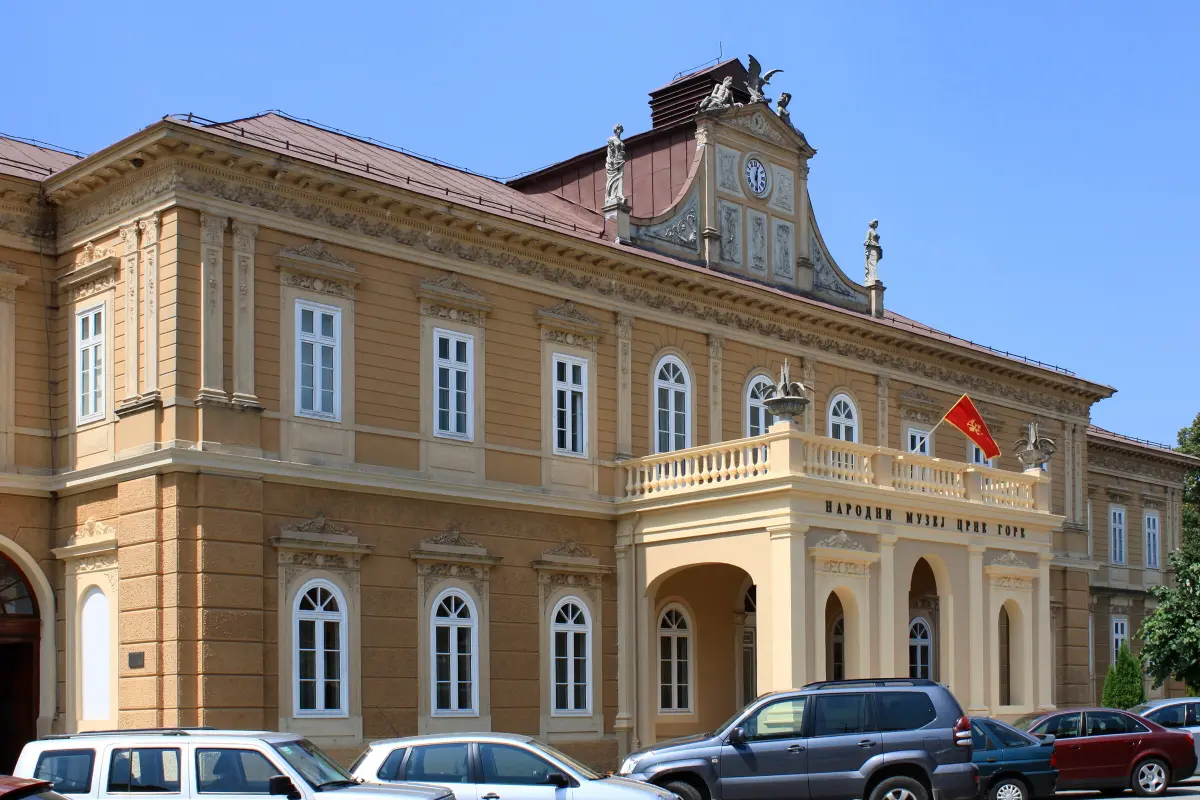
    The large yellow building with the clock is Government House. It was completed in nineteen ten, the year Montenegro was proclaimed a kingdom. It was designed by the Italian architect Corradini. Measuring sixty-six by fifty-two metres, with an inner courtyard, it was then the largest building in Montenegro. The government and parliament worked here, and so did the post and telegraph office, a printing house and even a temporary theatre. Today it is the headquarters of the National Museum of Montenegro, with the History Museum and the Art Museum. In the Art Museum, in a room called the Blue Chapel, is the icon of Our Lady of Philermos. It belonged to the Knights of Saint John, who carried it from Rhodes to Malta. Later it was in Russia, and it came to Belgrade by way of Denmark. During the Second World War it was hidden at Ostrog Monastery, and it has been in the National Museum since nineteen seventy-eight. You can buy the combined ticket for all the museums at the ticket desk of any of them.

    On to the next stop (⁨180 m⁩): Carry on north along Novice Cerovića Street to where it meets Njegoševa Street. The house covered in colourful ceramic tiles, on the corner, is the former French Legation. That's about a hundred and eighty metres.

  7. The former French Legation7
    Stop 71:11

    The former French Legation

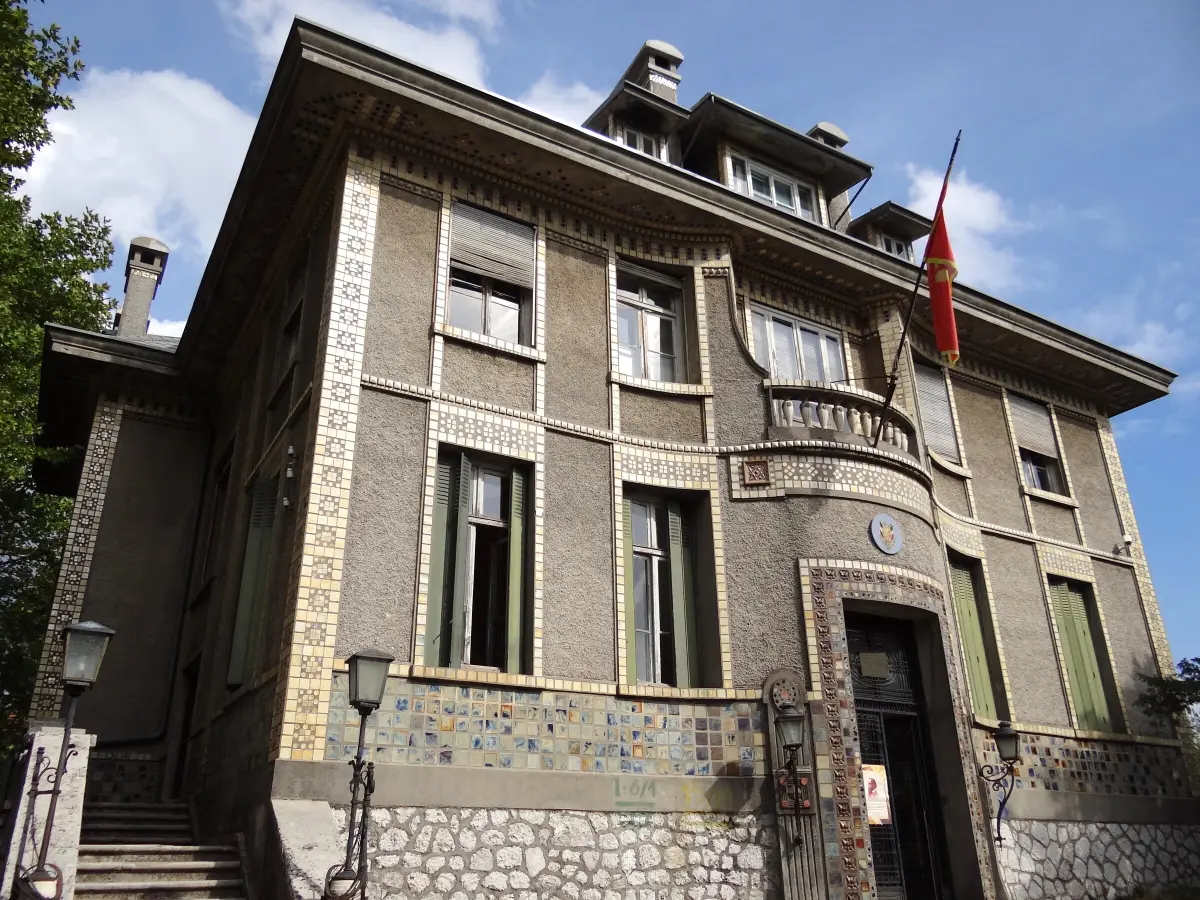
    In front of you is the former French Legation, and this is where the story of Cetinje as a town of diplomats begins. At the Congress of Berlin, in eighteen seventy-eight, the great powers recognised Montenegro's independence. After that, legations came to the small capital. Austria-Hungary got its building in eighteen ninety-nine, Russia in nineteen-oh-three, Italy and France in nineteen ten, and Britain in nineteen twelve. Turkey, Bulgaria, Serbia, Greece, Germany, Belgium and the United States had missions in rented houses. So the small capital hosted more than ten diplomatic missions. The French building stands out from all of them. Look at the front: wavy lines, ceramic tiles in several colours, decoration around the balconies and chimneys. This is Art Nouveau, and it is its first appearance in the architecture of Montenegro. You will see the Russian and British legations later on this walk. The Austro-Hungarian one is further to the north-west, and the Italian one is on the Boulevard of Montenegrin Heroes.

    On to the next stop (⁨100 m⁩): Turn right into Jovana Tomaševića Street and follow it for about a hundred metres, to the small stone church behind an iron fence.

  8. The Vlach Church8
    Stop 80:58

    The Vlach Church

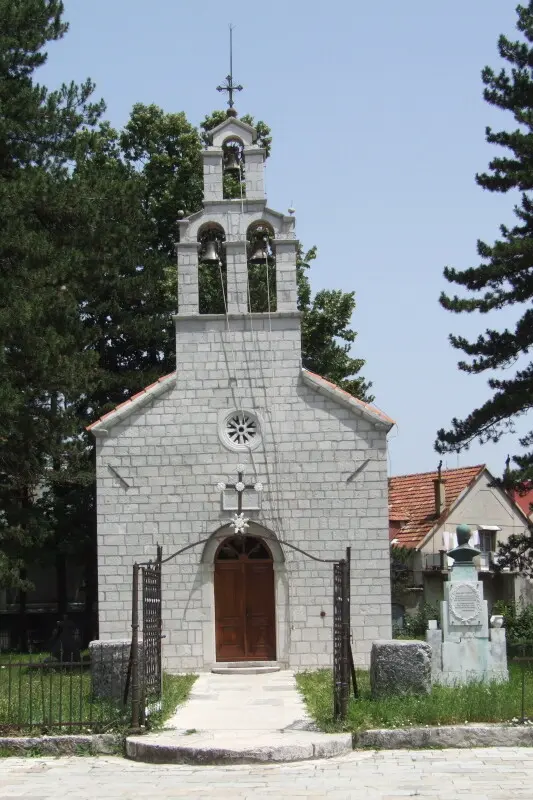
    This is the Vlach Church, the oldest church in Cetinje. The inscription above the door says that the people of Donji Kraj first built it in fourteen fifty, more than thirty years before Ivan Crnojević came to Cetinje. It has been rebuilt three times, and it has had its present form since eighteen sixty-four. Now look at the fence. Every bar in it is the barrel of a rifle. There are more than fifteen hundred of them, taken by Montenegrins from Ottoman soldiers at a battle in eighteen fifty-eight and in the wars of eighteen seventy-six to seventy-eight. The fence was put up in eighteen ninety-seven. The barrels are topped with metal spikes shaped like spearheads. In this church, in eighteen sixty, Prince Nikola married Milena Vukotić. The churchyard also holds two stećci, medieval tombstones, the remains of an old graveyard.

    On to the next stop (⁨180 m⁩): Head back towards the centre. Take the narrow Skadarska lane out to Njegoševa Street, turn left and stop after about a hundred metres.

  9. Njegoševa Street9
    Stop 91:18

    Njegoševa Street

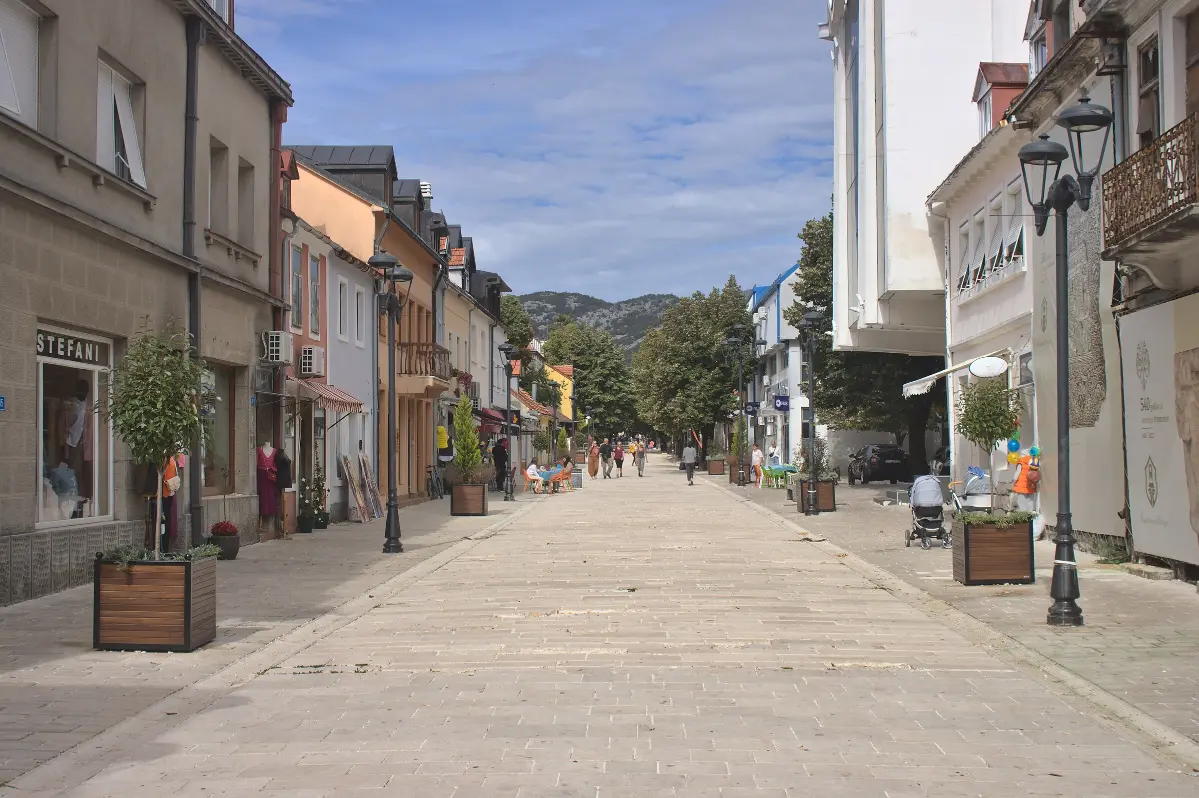
    You are walking along Njegoševa Street, the main street of Cetinje, now pedestrian. It runs from the French Legation to the Blue Palace, through the whole old centre. When Cetinje became the capital of a recognised state, the town began to grow fast. The first urban plan of the capital was drawn up by the architect Josip Slade from Trogir, who also designed the Austro-Hungarian Legation. The town got a theatre at that time too. In eighteen eighty-three a theatre society was founded within the Cetinje Reading Room, although the town had no theatre building. A year later the society started building what is now called the Zetski Dom. The Royal Theatre Zetski Dom is the oldest theatre institution in Montenegro, and you will pass it on the way to the next stop. Cetinje is not the capital city today. That is Podgorica. But Cetinje has the official status of Old Royal Capital, and the President of Montenegro has a residence in the Blue Palace, at the end of this street.

    On to the next stop (⁨280 m⁩): Carry on down Njegoševa Street for about a hundred and thirty metres, then turn left into Vladike Petra Prvog Street. Pass the Zetski Dom, turn right at the junction, then left into Vojvode Batrića Street. The pink palace behind the iron gates is the Russian Legation. In all, about four hundred metres.

  10. The former Russian Legation10
    Stop 100:58

    The former Russian Legation

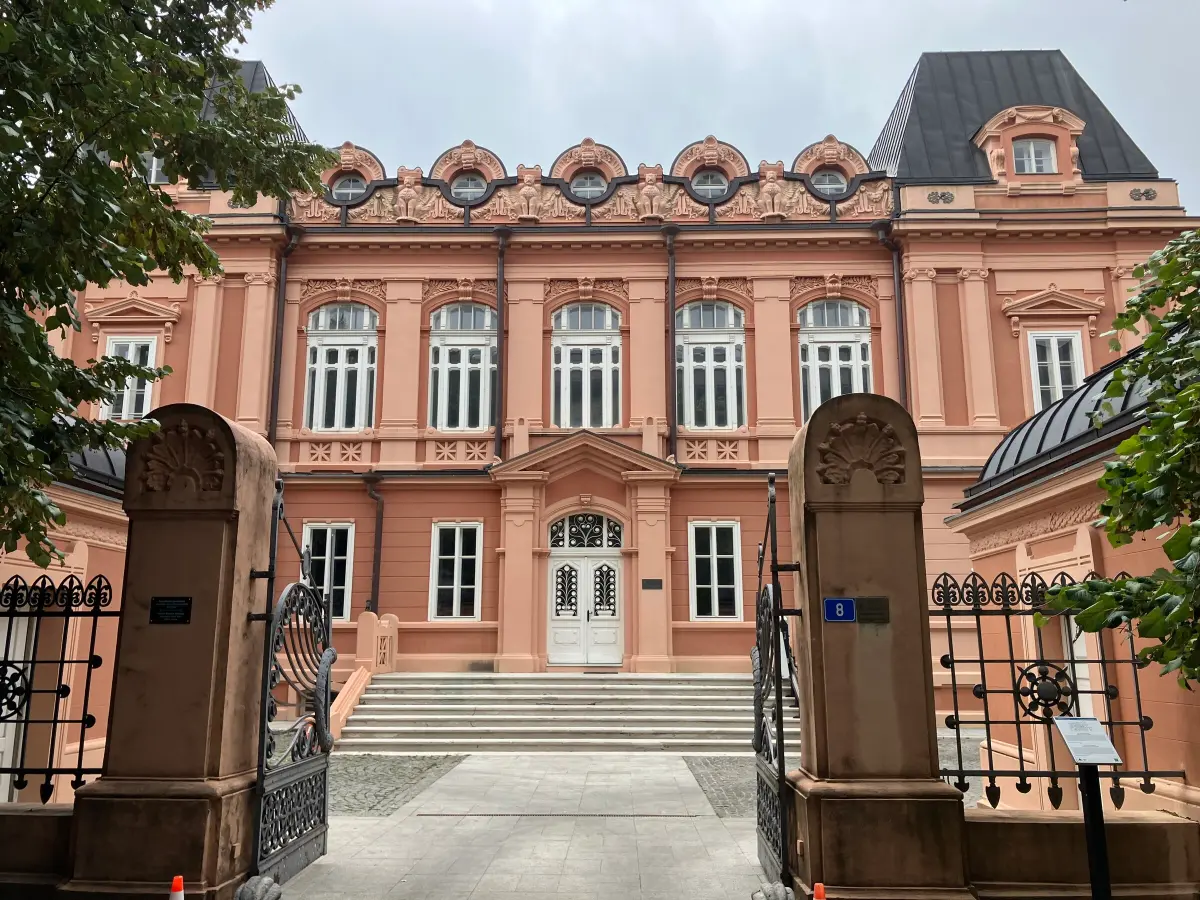
    This grand building is the former Russian Legation. The foundation stone was laid in nineteen hundred, and the building was finished and moved into in nineteen-oh-three. It was designed by the Italian architect Corradini, who later built Government House. The style is late Baroque with Renaissance elements, and the plot, between the town park and this street, covers about three and a half thousand square metres. At that time Russia was a close ally of Montenegro. Think back to the fence of rifle barrels at the Vlach Church. It went up a year after Russia, in eighteen ninety-six, gave Montenegro thirty thousand rifles. The old captured barrels could then become a fence. After the First World War the building housed a teacher training college, and later part of a hospital, flats and an art academy.

    On to the next stop (⁨140 m⁩): Go back along Vojvode Batrića Street to Njegoševa Street, about two hundred metres, and turn right. The red house with white windows, on your right, is the British Legation.

  11. The former British Legation11
    Stop 111:00

    The former British Legation

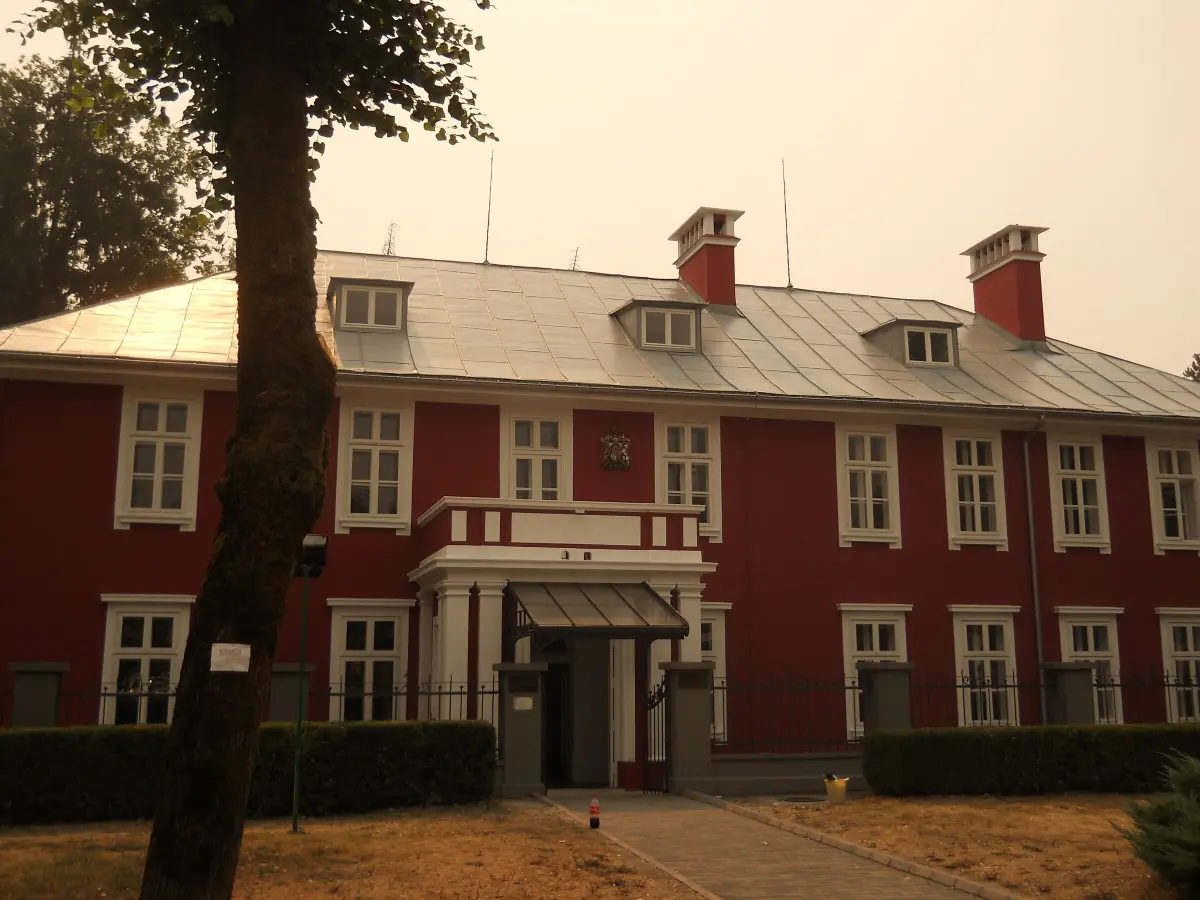
    The red house with white windows is the former British Legation. There is a plaque on the wall: British Legation, eighteen seventy-nine to nineteen sixteen. So British diplomats were in Cetinje for almost forty years, but in this building for only four. It was built in nineteen twelve, to a design by the English architect Harty, as an English country house, of the kind then being built in England's garden cities. The year nineteen sixteen marks the end of the royal capital. Early that year the Austro-Hungarian army occupied Montenegro, King Nikola went into exile and the legations left Cetinje. The king never came back. After the war Montenegro became part of the Kingdom of Serbs, Croats and Slovenes. Between the two world wars this house was the residence of the governor of the Zeta Banovina. Today it is the Music Academy of the University of Montenegro.

    On to the next stop (⁨100 m⁩): Carry on along Njegoševa Street for another hundred metres or so. The blue and white palace behind the fence, on your right, is the Blue Palace.

  12. The Blue Palace12
    Stop 120:44

    The Blue Palace

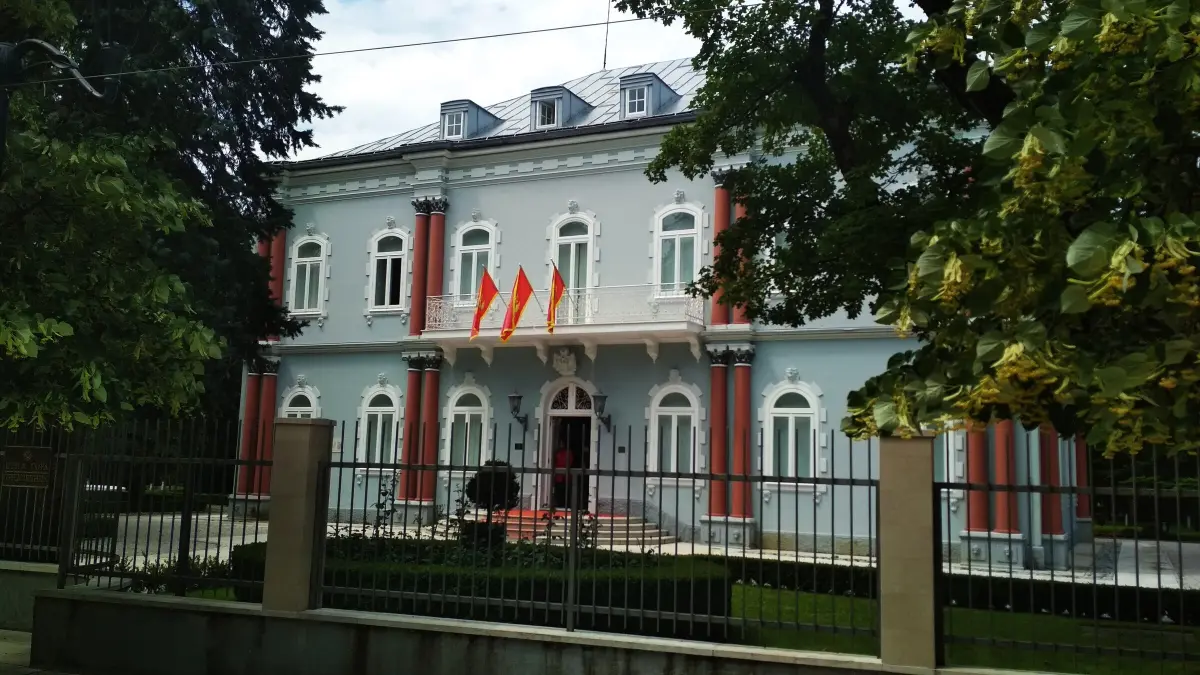
    In front of you is the Blue Palace. It was built at the end of the nineteenth century for Crown Prince Danilo, King Nikola's son. Verses by Prince Nikola were carved into its foundation stone. Danilo lived here until nineteen sixteen. Look at the front: blue and white walls, and pilasters of red stone with gilded capitals. Between the two world wars the palace housed the grammar school, and later a gallery and a museum. Today it is a residence of the President of Montenegro. It is not open as a museum, but you can see it well through the fence. This is the last stop of our walk. Court Square, where you started, is about three hundred metres away. Go back along Njegoševa Street and turn left onto the square at the end.

At the end

Farewell

This is where our walk through the old capital ends. You have seen King Nikola's Palace, Ćipur where Ivan Crnojević founded the town, the monastery, the relief map of the country, Njegoš's Biljarda, Government House, the oldest church and the legations that made Cetinje a town of diplomats. If you have more time, climb Orlov Krš above the monastery, about twenty minutes on foot, or go into one of the museums. The combined ticket also covers Njegoš's Mausoleum on Lovćen. If you came here on our audio drive Kotor, Lovćen, Cetinje, you have now heard the whole story, from the sea to the capital. If you haven't heard it yet, you will find it among the audio guides on our website, together with our pages on Cetinje, Lovćen and the museums of Montenegro. Thank you for walking with us.

Good to know

Before you set off

Every word as text

The full narration of each stop is on this page and in the player, with the spoken sentence highlighted – for noisy streets and for deaf and hard-of-hearing visitors.

Works with the screen locked

Once you have pressed play, the narration keeps going with the screen off; use the lock-screen or headphone buttons for pause and next.

Your location stays on your phone

Location mode is optional and works only while this page is on screen. We never receive or store where you are.

Works offline

Download the tour before you go and it plays without mobile data.

Practical notes

Start and finish: Court Square (Dvorski trg), in front of King Nikola's Palace (King Nikola Museum). Length: about 2.5 km loop, 12 stops; 60–75 min with listening, without going into museums. Allow half a day with museums. Best time: morning, before the tour groups from the coast. The museums open daily from 15 April to 15 November, 9 am–5 pm; winter hours are shorter, check narodnimuzej.me. Cetinje lies at about 670 m, so it is cooler than the coast and rain is more frequent. Accessibility: - The route is flat. Njegoševa Street is pedestrian; other streets carry traffic and in places have no pavement. - Ćipur is a grassy plateau with gravel paths; the monastery and museums have thresholds and steps. Tickets (National Museum of Montenegro, price list on narodnimuzej.me, checked 9 Oct 2026): - Combined ticket for all museums and Njegoš's Mausoleum on Lovćen: €20 adults, €10 pupils and students. - Single museums: King Nikola Museum €8, Njegoš Museum Biljarda with the relief map €5, History and Art Museums (Government House) €5, Ethnographic Museum €4. Children under 12 free. - Cetinje Monastery: free; shoulders and knees covered; no photography inside. Parking: public car parks around the centre, some of them paid. Related: the audio drive Kotor – Lovćen – Cetinje ends here.

Audio guides

More audio guides

Narration: AI-generated voice from our editors' scripts · Map © OpenStreetMap contributors, OpenFreeMap. Map data and sources →

Zora

Your Montenegro travel guide

Hi, I'm Zora

Ask me about places, beaches, food, events or a trip plan — in any language.