Travel to Montenegro
Stari Bar: a walk from the town gate to the citadel and the aqueduct
Free audio guide

Stari BarA walk from the town gate to the citadel and the aqueduct

Free self-guided audio walk through Old Bar, no app needed

  • Free · no app needed
  • 4 languagesME · EN · ES · FR
  • Moderate
walk
70 min
route
⁨1.3 km⁩
stops
11
of audio
13 min
Overview

A walking audio tour of Stari Bar, the old town of Bar below Mount Rumija: the Omerbašić Mosque, the town gate, the Archbishop's Palace, the clock tower, the foundations of Saint George's Cathedral, the citadel, the aqueduct, the monastery of Saint Nicholas, the Turkish bath and the old bazaar. Ten stops, about an hour, with an optional stop at the Old Olive Tree in Mirovica.

How it works

  1. Press play at the first stop

    Nothing to install. Headphones are best; the lock screen and headphone buttons work too.

  2. Walk at your own pace

    Each stop ends with directions to the next one. Tap the next stop when you get there.

  3. Or let GPS guide you

    Choose “Guide me (GPS)” when you start: each stop begins when you arrive – while this page is open on screen.

Route

The walk on the map

The tour starts at Omerbašić Mosque, in front of the Old Town entrance. Tap a number to play that stop.

Stop by stop

11 stops on the way

Listen, or read the full narration of every stop below.

Before you start

Welcome

Welcome to Stari Bar, the old town of Bar. This is the Travel to Montenegro audio guide to the walled town below Mount Rumija. The walk starts here, at the Omerbašić Mosque, a few steps from the town gate. There are ten stops, plus an optional one at the Old Olive Tree in Mirovica. Allow about an hour for the fortress. When you reach a stop, the story starts by itself. If it doesn't, tap the stop on the map. You need a ticket to enter the fortress; it is sold at the entrance. Inside, the paths are stone and earth, steep and uneven in places, and there are mostly no railings above the walls and cliffs. Wear good shoes, and in summer bring water and a hat, because there is little shade. Let's go.
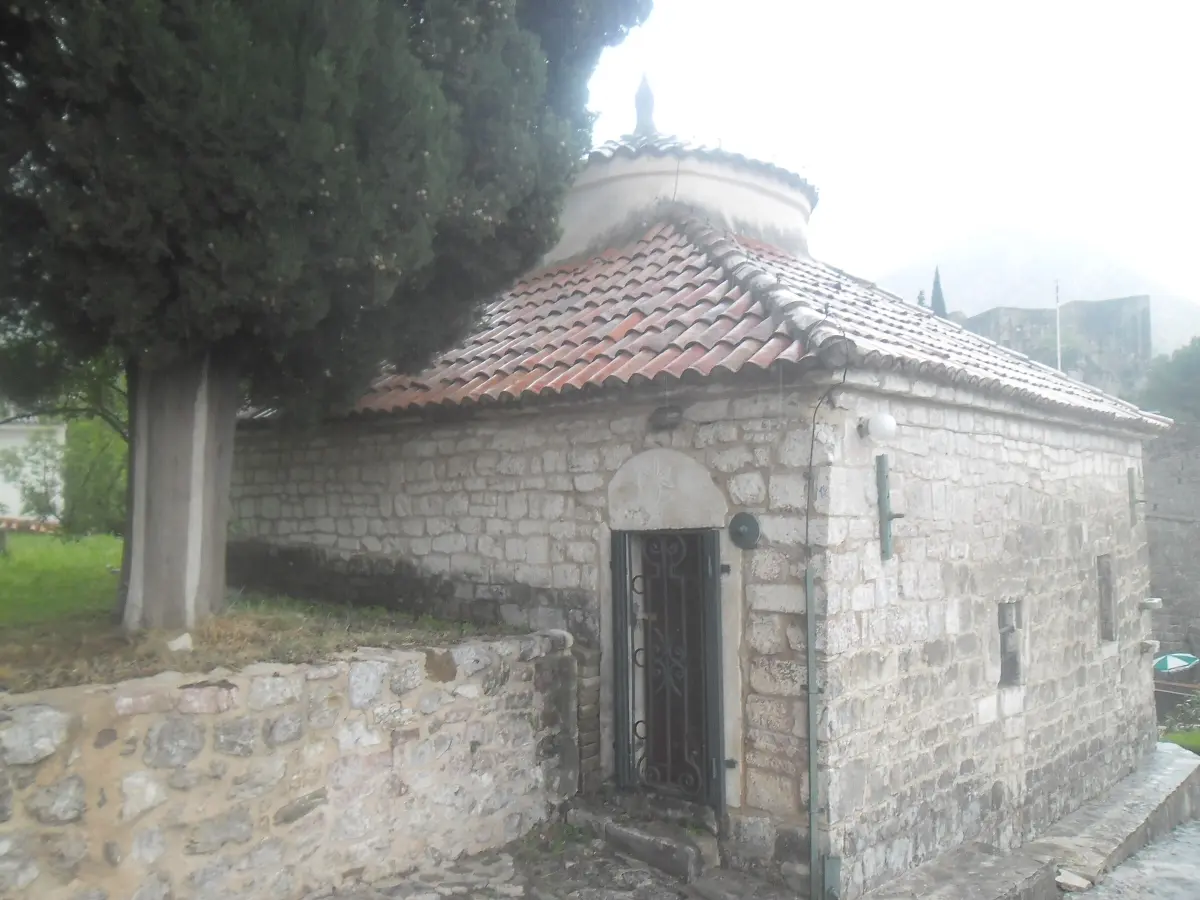
  1. Omerbašić Mosque1
    Stop 11:00

    Omerbašić Mosque

    In front of you is the Omerbašić Mosque. It was built in sixteen sixty-two, outside the town walls, in the neighbourhood that grew up below the fortress. It was founded by Omer-baša, a merchant and nobleman of Bar, together with his two sons. The mosque is simple, with a rectangular plan, and the minaret is built against the south-west wall. A local story says that Omer-baša was coming back to town one evening and could not reach the gate before the evening prayer. He vowed to build a mosque on the spot where the prayer found him. In the same courtyard is the tomb of Hasan-dede, the dervish Hasan, from sixteen twelve. It is half a century older than the mosque. Inside is a grave under a green cover, and a dervish cap said to be about three and a half centuries old. The mosque is a protected cultural monument, and it is still a place of worship. If you go in, respect prayer times and dress modestly.

    On to the next stop (⁨50 m⁩): Now walk to the stone gate in the walls, about forty metres away.

  2. The main town gate2
    Stop 20:56

    The main town gate

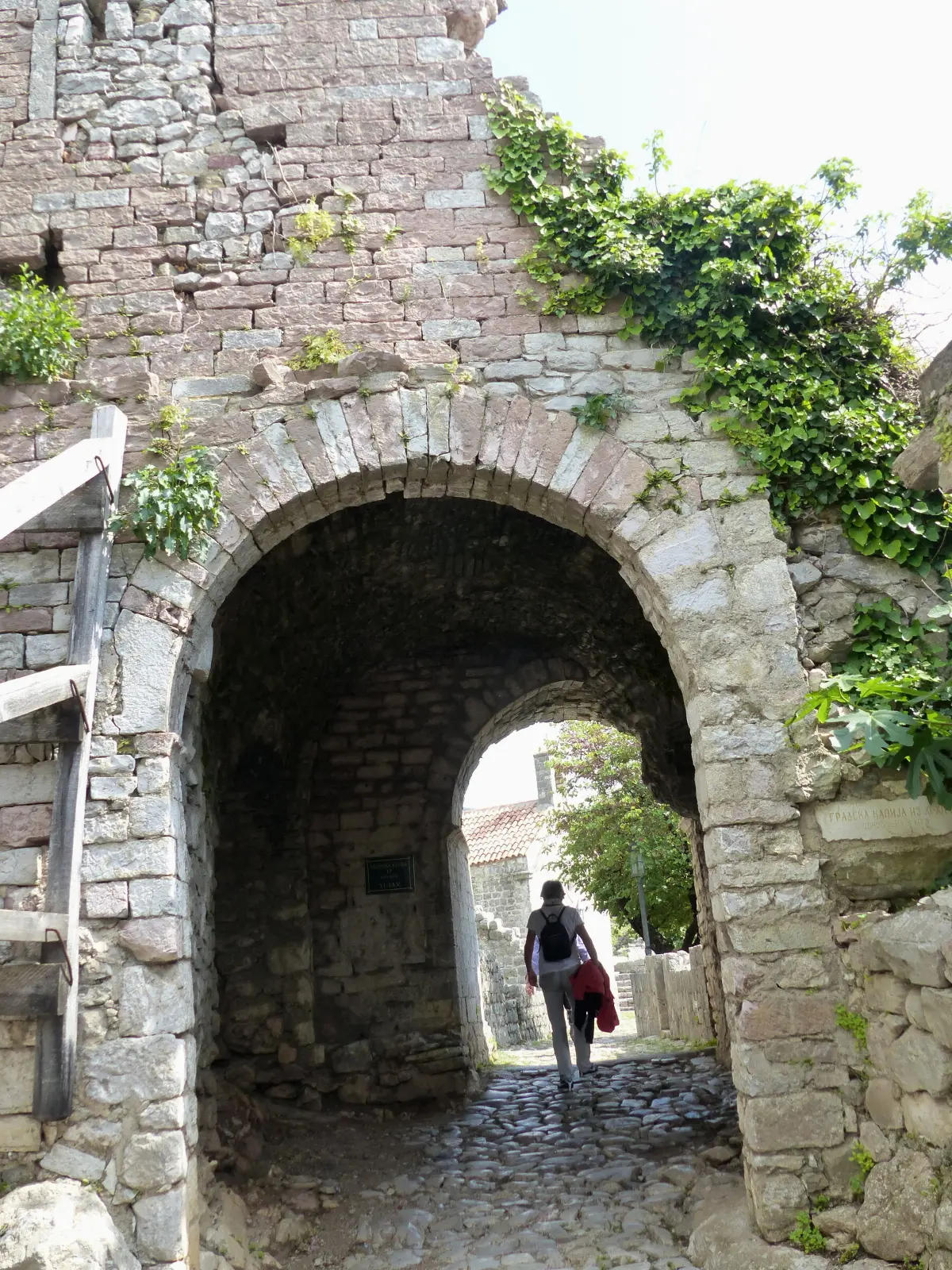
    This is the main gate of Stari Bar. The town stands on a rock protected by cliffs on the east and south sides. That is why the walls are strongest here, on the north-west, the only side from which the town could be approached. Most of the walls you see were built by the Venetians in the sixteenth century. Venice ruled Bar from the middle of the fifteenth century until fifteen seventy-one, when the Ottomans took the town. At the entrance, look for the relief of the winged lion of Saint Mark, the emblem of Venice. Behind the gate is the old customs house. Today it is a visitor centre, where you can see six buildings of Stari Bar in augmented reality. Inside the walls is an archaeological site of about four and a half hectares, with the remains of more than two hundred and fifty buildings: churches, palaces, houses and olive mills.

    On to the next stop (⁨90 m⁩): Go through the gate, turn right and follow the path along the western walls for about eighty metres, to a stone building with a red roof.

  3. The Archbishop's Palace3
    Stop 30:54

    The Archbishop's Palace

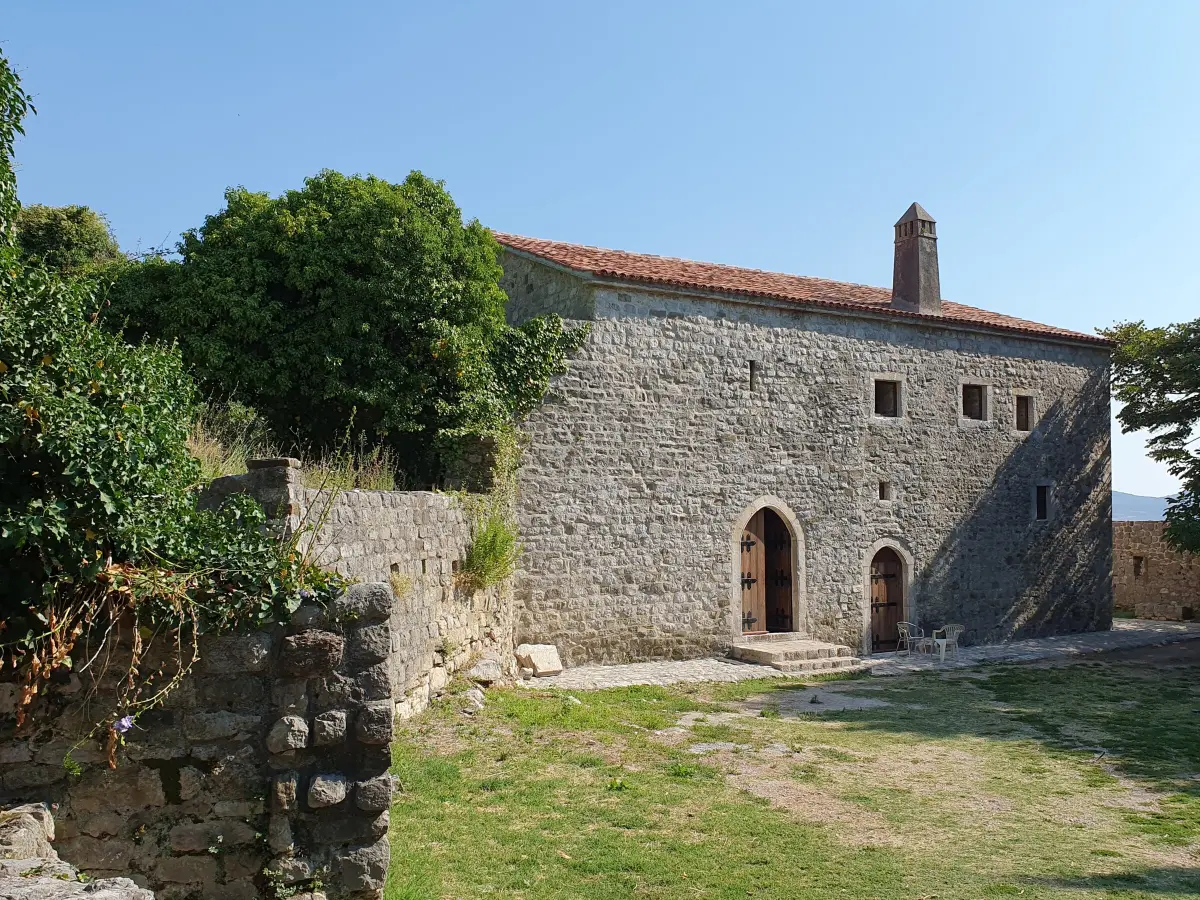
    In front of you is the Archbishop's Palace, one of the few restored buildings inside the walls. Today it houses the archaeological collection of the town of Bar. The name recalls the time when Bar was a church centre. In ten eighty-nine Bar became the seat of an archbishop. By then the town was already old. The first people to live on this rock were Illyrians. Written sources mention Bar in the ninth century, under the name Antibari. In ten forty-two, at the battle of Bar, Prince Vojislav of Duklja defeated a Byzantine army. That victory opened the way to an independent Duklja, and his son Mihailo was crowned king in ten seventy-seven. Later Bar was ruled by the Nemanjić dynasty, then by Venice, then by the Ottomans, and from eighteen seventy-eight by Montenegro. Each of them left a mark in the stone around you.

    On to the next stop (⁨120 m⁩): Continue south along the path for about a hundred and thirty metres, to a tall stone tower with a clock.

  4. The clock tower and Saint Catherine's Church4
    Stop 41:07

    The clock tower and Saint Catherine's Church

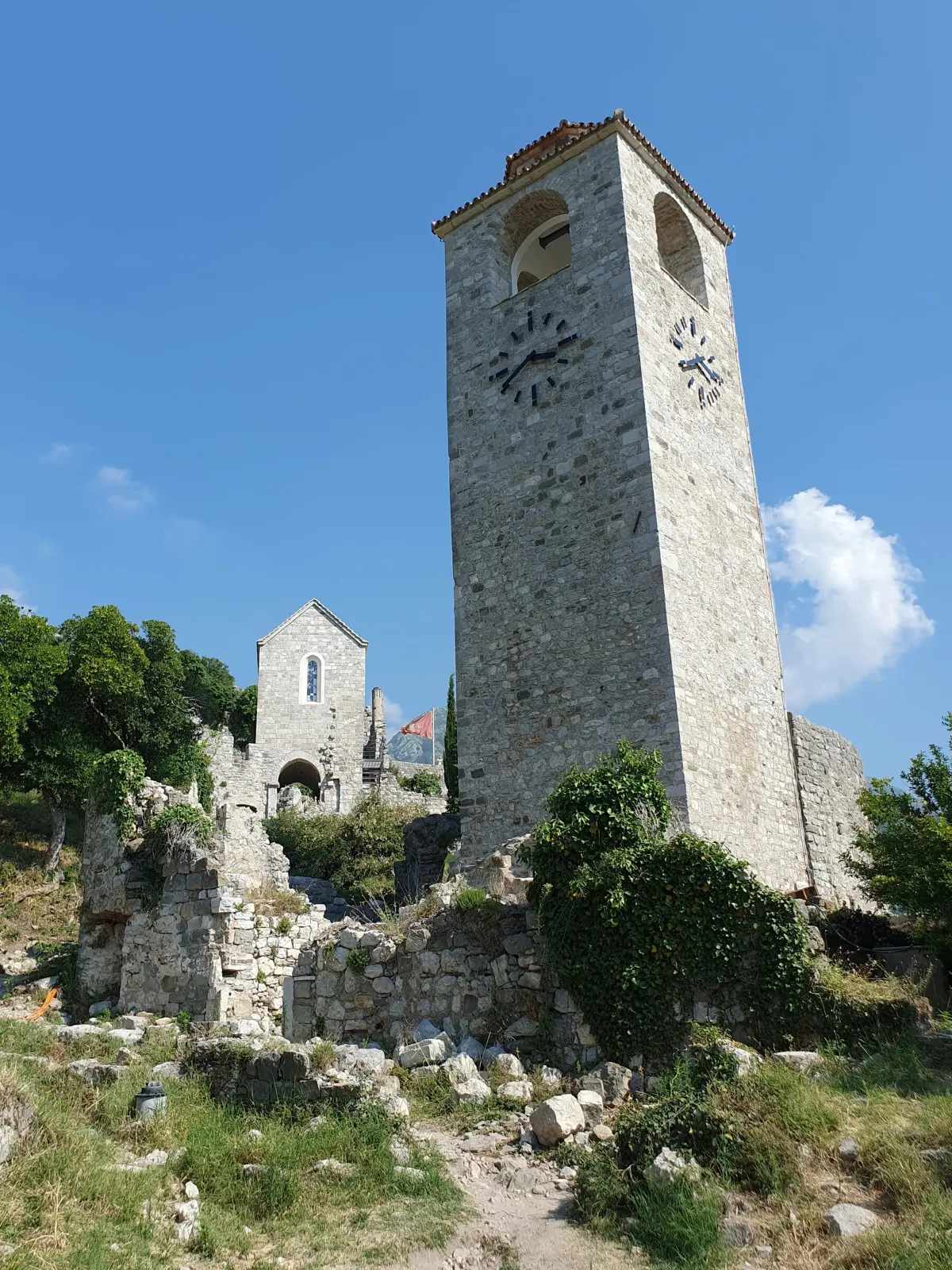
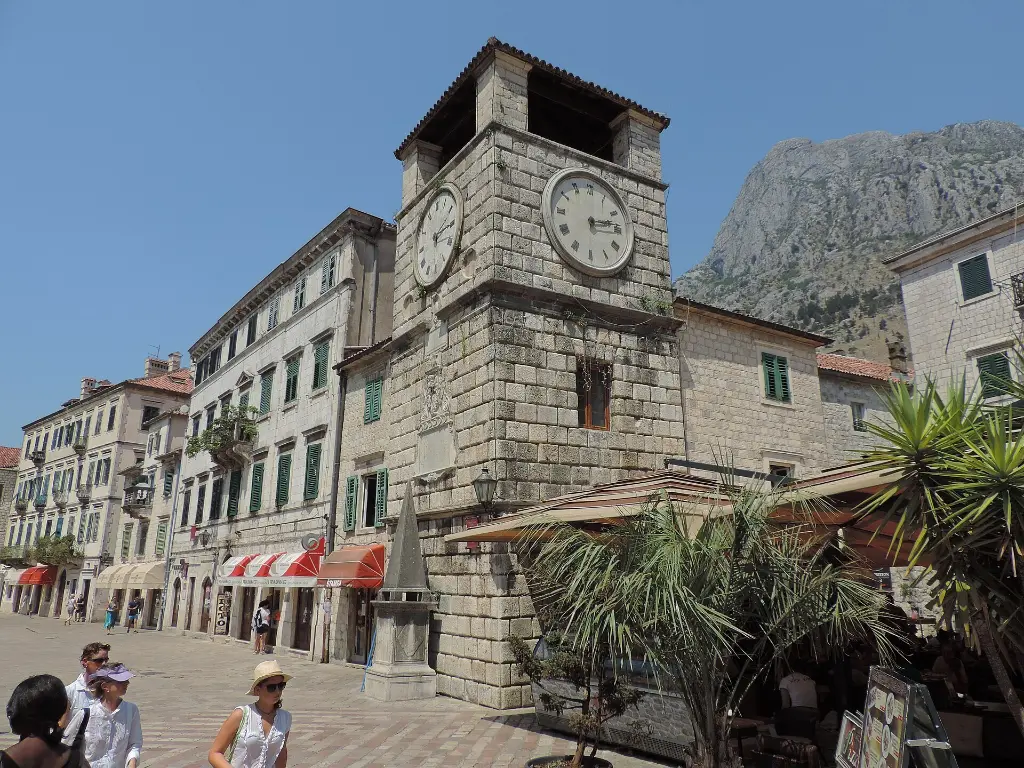
    This is the clock tower, the sahat-kula. According to the Bar tourist board, a tower stood here before the Ottoman conquest. In seventeen fifty-three it was rebuilt and took on its oriental look. The clock kept time for a town that was then Ottoman, with mosques, a bathhouse and a bazaar. The clock mechanism is still looked after by the Bar Cultural Centre, which manages the Old Town. About thirty metres east of the tower are the remains of Saint Catherine's Church, from the fourteenth century. It is one of two medieval churches in Stari Bar that have been conserved and restored. The other is the church of Saint Veneranda, which now holds a photo exhibition. Look at the mountains above the town. That is Rumija. From a spring below it, about three kilometres away, water was carried into the town by an aqueduct, which you will see later. Like almost all of Stari Bar, this part of town was badly damaged in the earthquake of the fifteenth of April, nineteen seventy-nine.

    On to the next stop (⁨70 m⁩): Walk east along the path, past Saint Catherine's Church, for about eighty metres, to a level area with the low foundations of a large church.

  5. Saint George's Cathedral5
    Stop 51:03

    Saint George's Cathedral

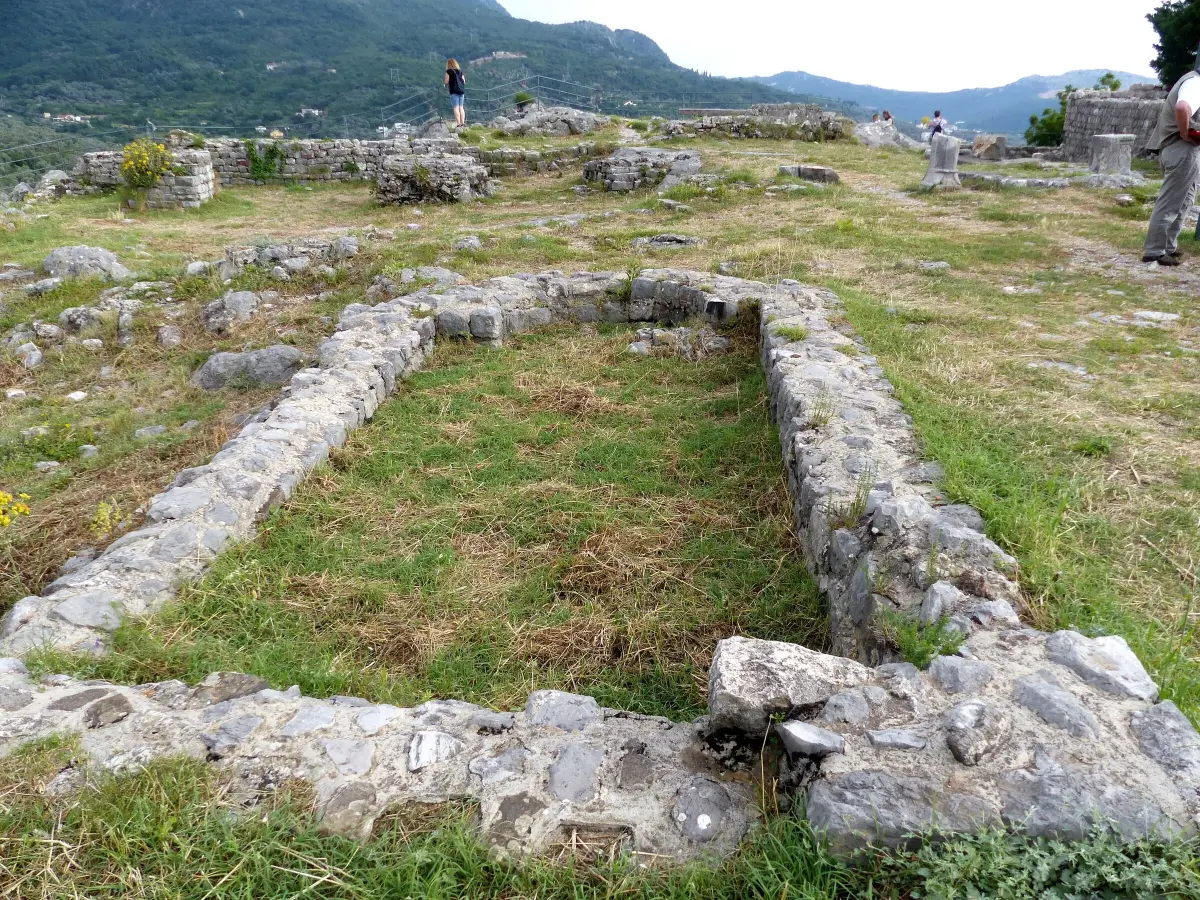
    On this level ground stood the cathedral of Saint George, the patron saint of Bar. It was the town's main church, built at the end of the twelfth century on the foundations of an older church of Saint Theodore. When the Ottomans took Bar, the cathedral was not pulled down. In sixteen forty-nine it became the mosque of Sultan Ahmed. So the same building served two faiths for centuries. The end came after Montenegro captured the town. The new authorities stored gunpowder in the former cathedral and mosque. In eighteen eighty-one lightning struck the store. The explosion destroyed the building and many houses around it, and people were killed. Only the foundations you see are left of the cathedral. It was not the last disaster. In nineteen twelve ammunition exploded in the town, and the earthquake of nineteen seventy-nine brought down much of what was left. That is why Stari Bar is a town of ruins today.

    On to the next stop (⁨130 m⁩): Now take the path north, towards the highest part of the fortress. In about two hundred metres you will reach the citadel, in the north-east corner of the town. The path is steep in places.

  6. The citadel6
    Stop 61:08

    The citadel

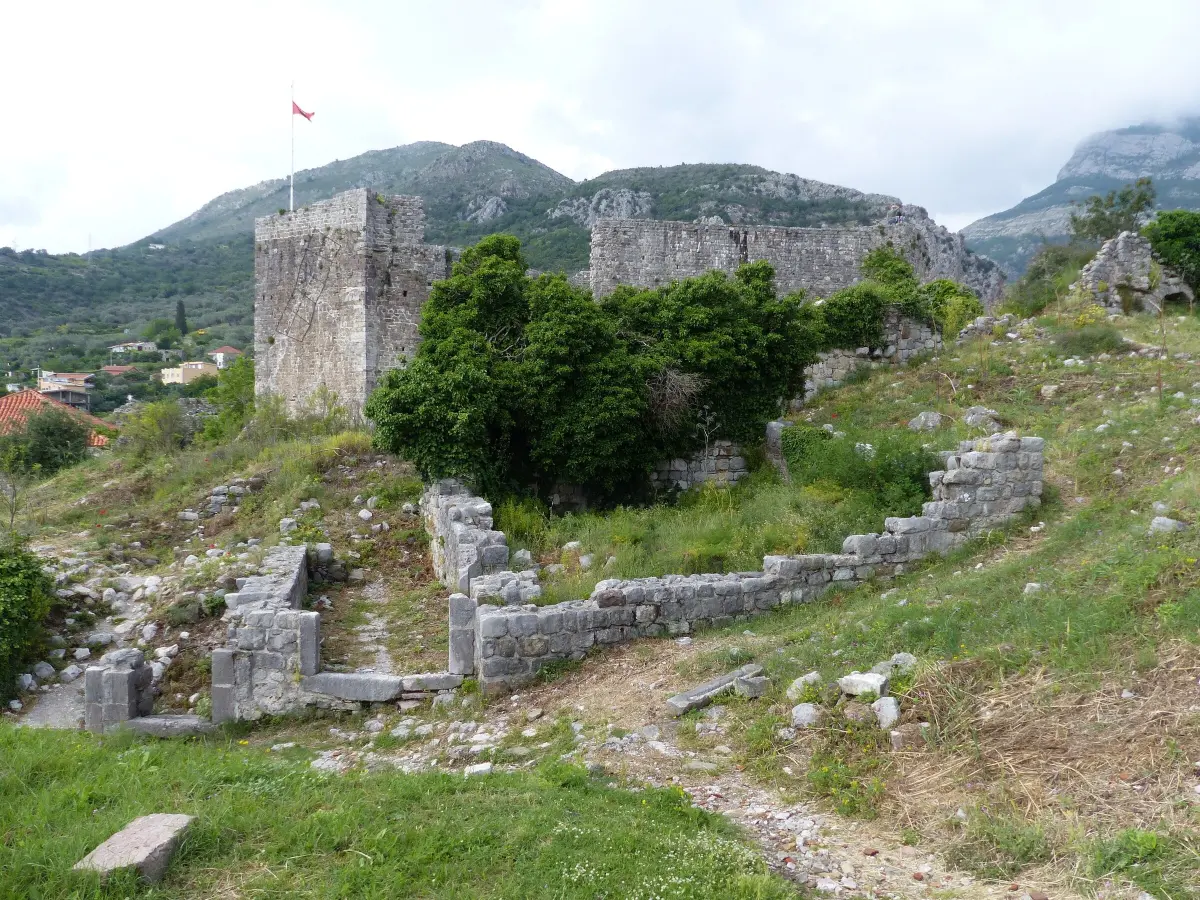
    This is the citadel, the highest and best defended part of Stari Bar. It was a fortress within the fortress, the last refuge if an enemy broke through the town walls. The oldest walls of the citadel date from the tenth century, and most of its defences were built in the early fifteenth. The citadel had its own water cistern. It was rebuilt in the Ottoman period, and a gunpowder store was added next to it. This is also where the long Ottoman rule ended. In November eighteen seventy-seven a Montenegrin army under Mašo Vrbica laid siege to the town. The Ottoman garrison was commanded by Ibrahim Bey. The town was shelled for weeks, but the garrison would not surrender. It gave up only in early January eighteen seventy-eight, when it ran out of water. You will hear how at the next stop. That same year, at the Congress of Berlin, Bar was awarded to Montenegro. From the citadel you can see the plain of Bar, the new town and the sea to the west. Don't climb on the walls; there are no railings.

    On to the next stop (⁨50 m⁩): Go down the path towards the northern walls, about fifty metres, to a spot where you can see a stone bridge with arches across the valley.

  7. View of the aqueduct7
    Stop 71:00

    View of the aqueduct

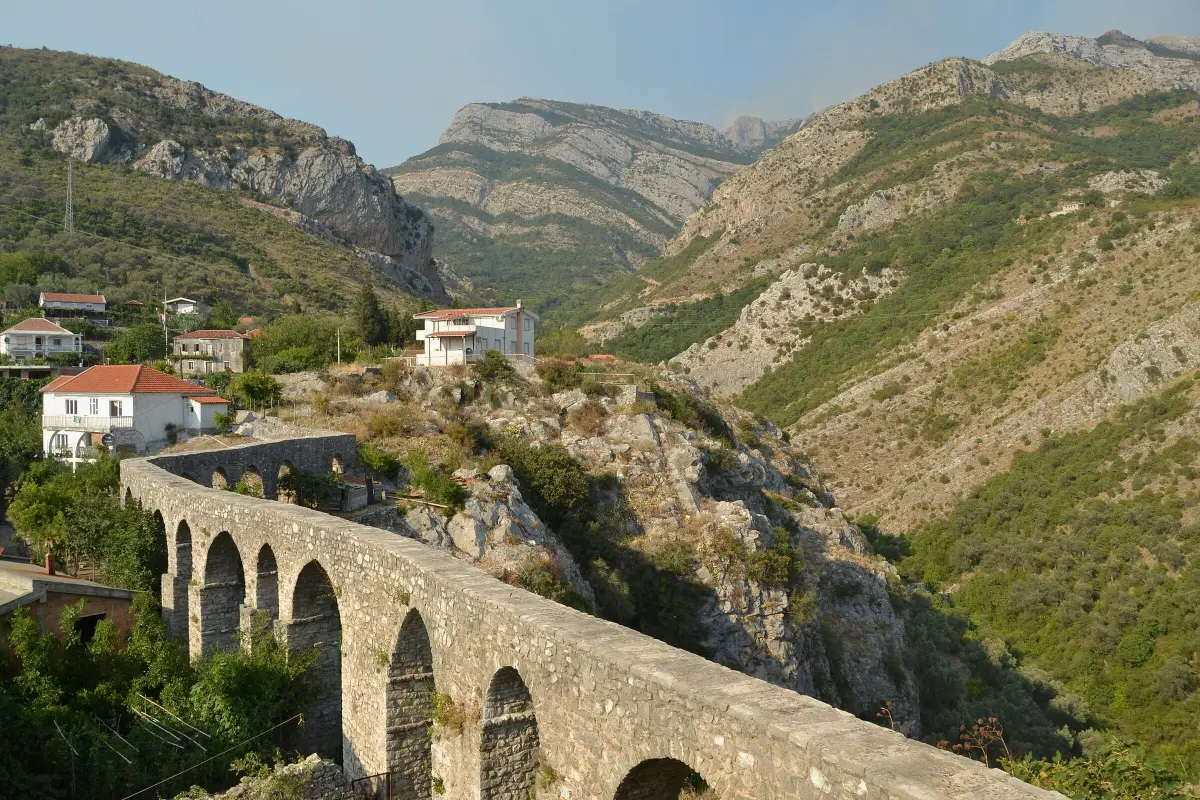
    Below the northern walls, across the valley, you can see the aqueduct. It is a stone water bridge with seventeen arches of different widths. It was built in the Ottoman period, at the end of the sixteenth or the start of the seventeenth century; sources disagree on the exact date. Water came from a spring about three kilometres away. It ran along the top of the bridge, through clay pipes joined one to another. For a town on a rock, this water supply was a matter of survival. The Montenegrins knew that too. On the fifth of January, eighteen seventy-eight, they blew up the aqueduct with two hundred and twenty-five kilograms of explosives and cut off the town's water. Within a few days the garrison surrendered. In the earthquake of nineteen seventy-nine the aqueduct collapsed completely. It was later rebuilt, so today you can see it crossing the valley again. It is the only surviving aqueduct in Montenegro.

    On to the next stop (⁨50 m⁩): Continue along the walls to the west, about fifty metres, to tall ruins with arches.

  8. The monastery of Saint Nicholas8
    Stop 81:04

    The monastery of Saint Nicholas

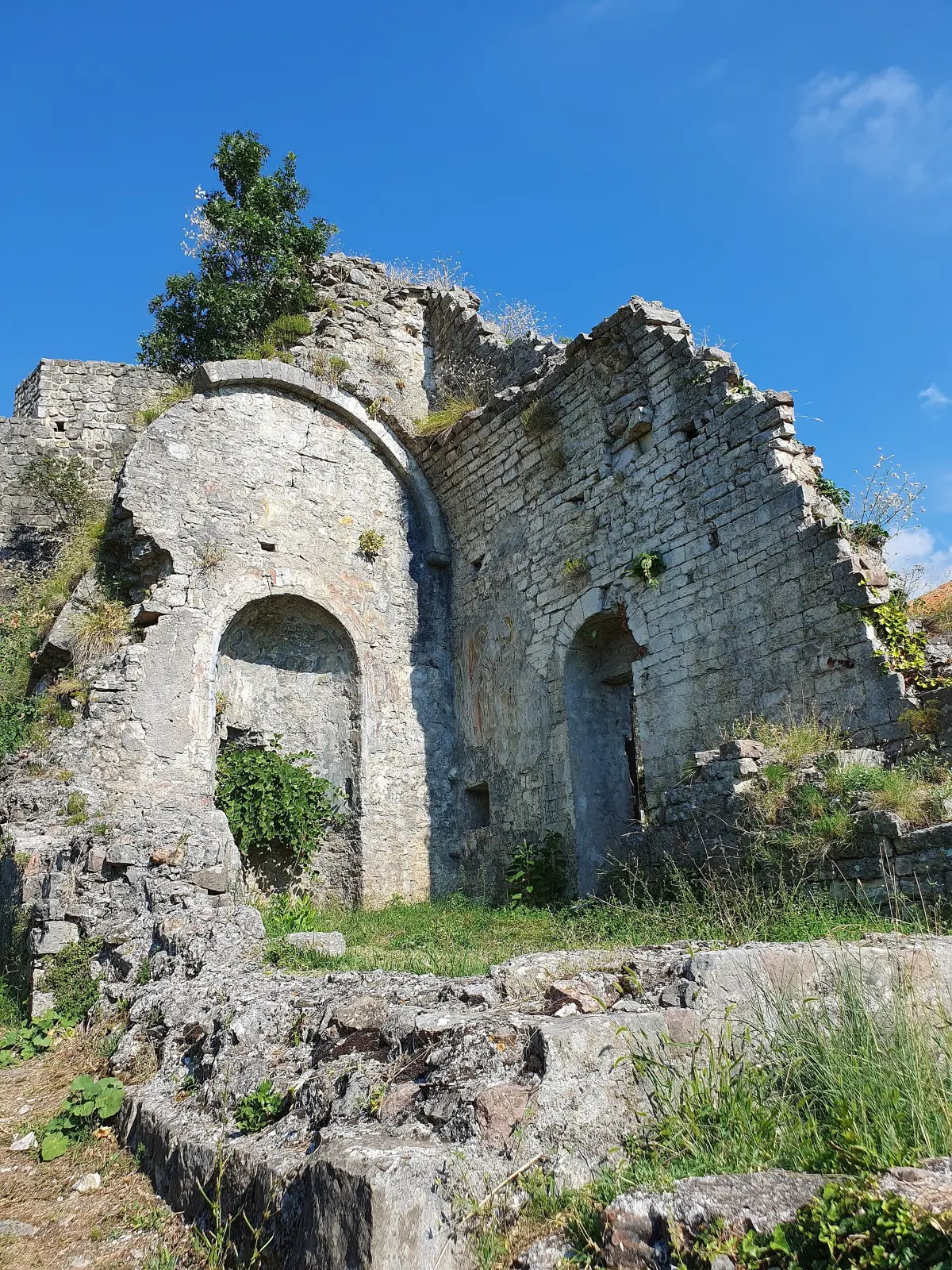
    These tall walls and arches are what is left of the Franciscan monastery of Saint Nicholas, built at the end of the thirteenth century. Older descriptions of the town link it to Queen Jelena, the wife of the Serbian king Uroš the First. Look closely at the church walls. Fragments of medieval frescoes with figures of saints have survived on them. After the Ottoman conquest the church was turned into a mosque. Like Saint George's Cathedral, it too was destroyed by gunpowder, but later. In nineteen twelve an ammunition explosion destroyed the mosque. After eighteen seventy-eight people left the town inside the walls, so here the old layers were never covered by new ones. Romanesque, Gothic and Ottoman buildings stand side by side. Nearby is the old gunpowder store, now a lapidarium. It displays more than six hundred and fifty carved stone fragments from the buildings of Stari Bar, from the fifth to the nineteenth century.

    On to the next stop (⁨80 m⁩): From here take the path south, about eighty metres, to the building of the Turkish bath, the hammam.

  9. Ruins inside the walls of Stari Bar9
    Stop 90:59

    The Turkish bath

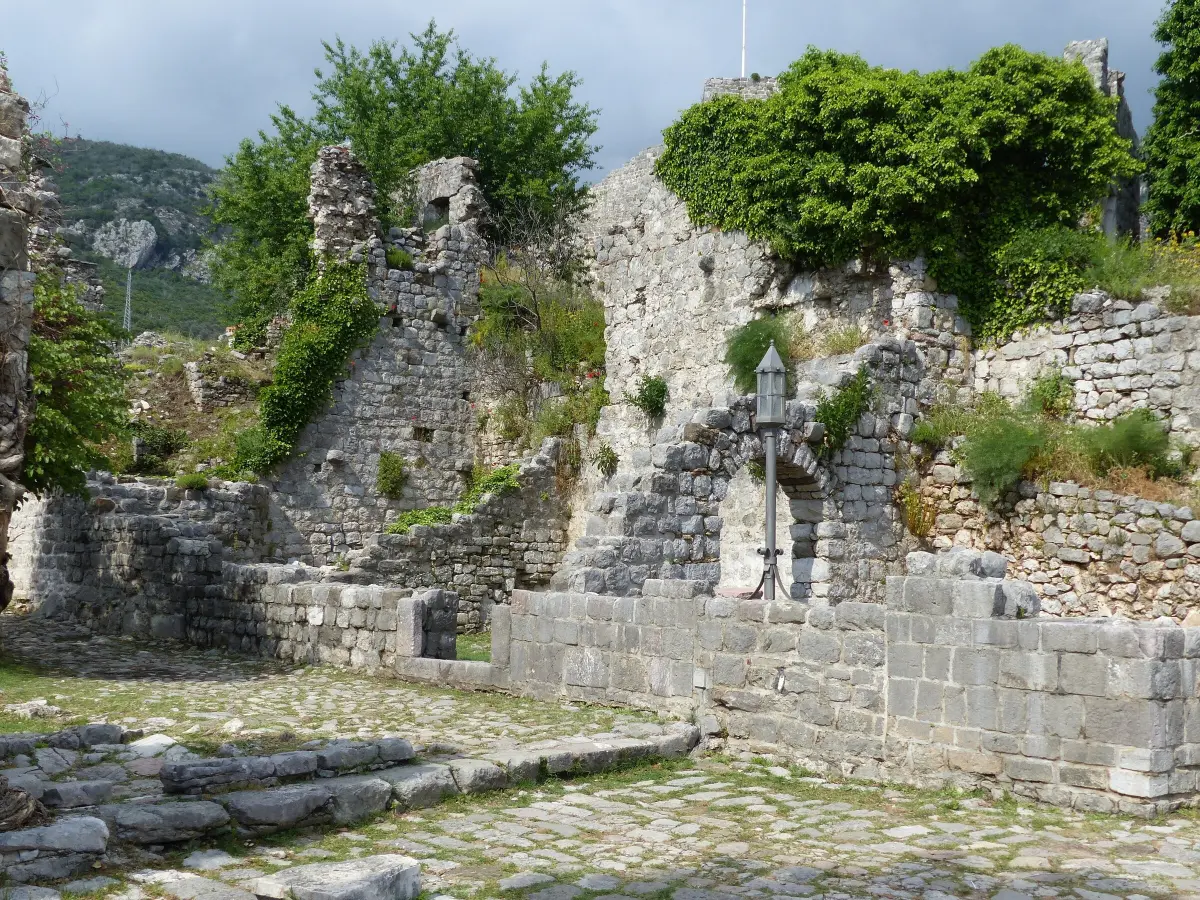
    This is the hammam, a Turkish bath from the Ottoman period. The building has an irregular rectangular plan and several rooms. A dome covers the central square room. Small openings in the dome and in the vaults let in light and air. In Ottoman towns the hammam was not only a place to wash, but also a place to meet and talk. The building has been restored and is open to visitors. Look around you and imagine how crowded this space once was. In Venetian times, according to descriptions of the town, there were about thirty palaces inside the walls, sixteen churches and monasteries, and several hundred houses. Today more and more people come to see this town of ruins. From January to the twentieth of September, twenty twenty-six, Stari Bar had more than one hundred and forty-seven thousand visitors.

    On to the next stop (⁨170 m⁩): Go back north along the path to the gate you came in by, about a hundred metres, and leave the fortress. Outside the gate, turn left down the stone street lined with shops.

  10. The old bazaar10
    Stop 101:07

    The old bazaar

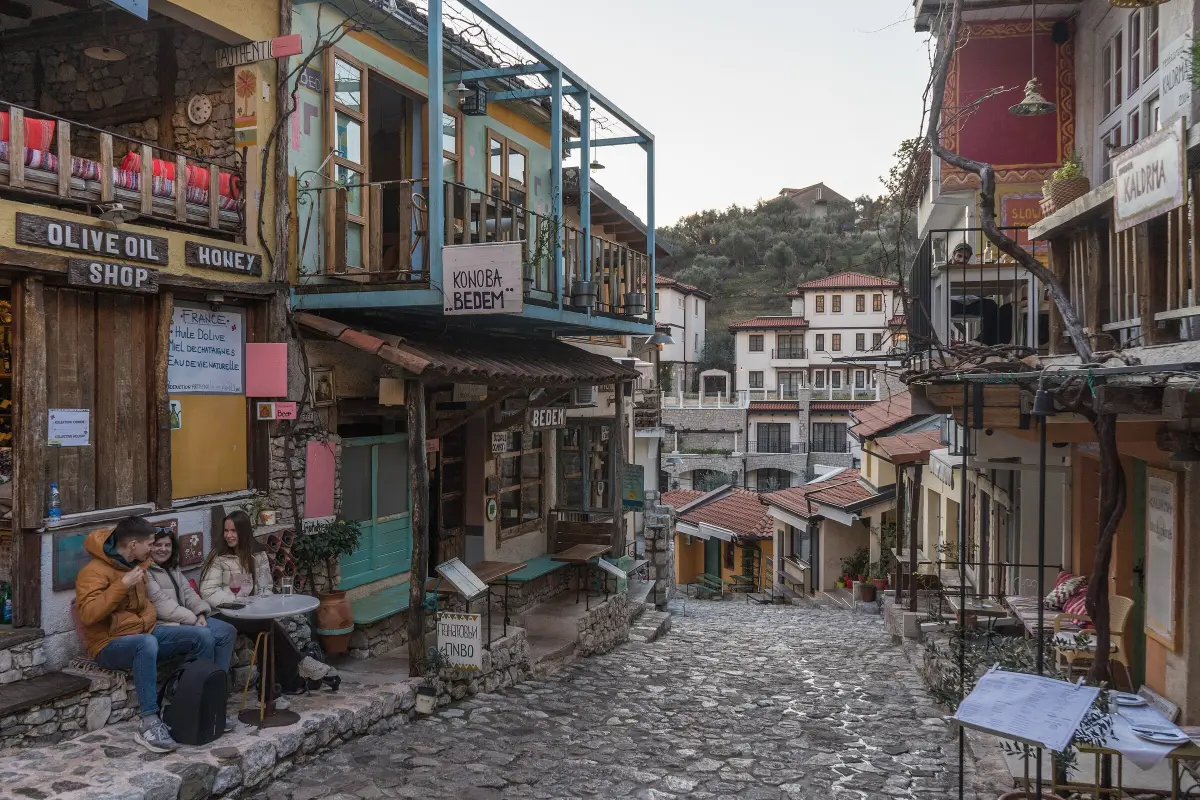
    This steep stone street is the old bazaar of Stari Bar, the čaršija. It grew up in Ottoman times below the town walls, and it took the shape you see today in the eighteenth and nineteenth centuries. It is a protected cultural monument. After the town fell and the great explosions, life never returned inside the walls. It carried on here, below them. The new town grew on the coast, by the port. The settlement by the harbour was named New Bar in nineteen oh eight, and since then this area has been called Stari Bar, Old Bar. Today the bazaar has craft shops, cafés and shops selling olive oil, honey and souvenirs. Every November it hosts Maslinijada, a fair of olives and olive oil. In summer the Bar Summer Festival, Barski ljetopis, also holds events in the Old Town. If you still have time, there is one optional stop left: the Old Olive Tree in Mirovica, about two kilometres from here.

    On to the next stop (⁨1.5 km⁩): The easiest way to the Old Olive Tree is by taxi, a few minutes' drive. On foot it is about twenty-five minutes downhill, partly along a busy road. The tree is in Mirovica, by the main road to Ulcinj.

  11. The Old Olive Tree in Mirovica11
    Stop 110:54Optional

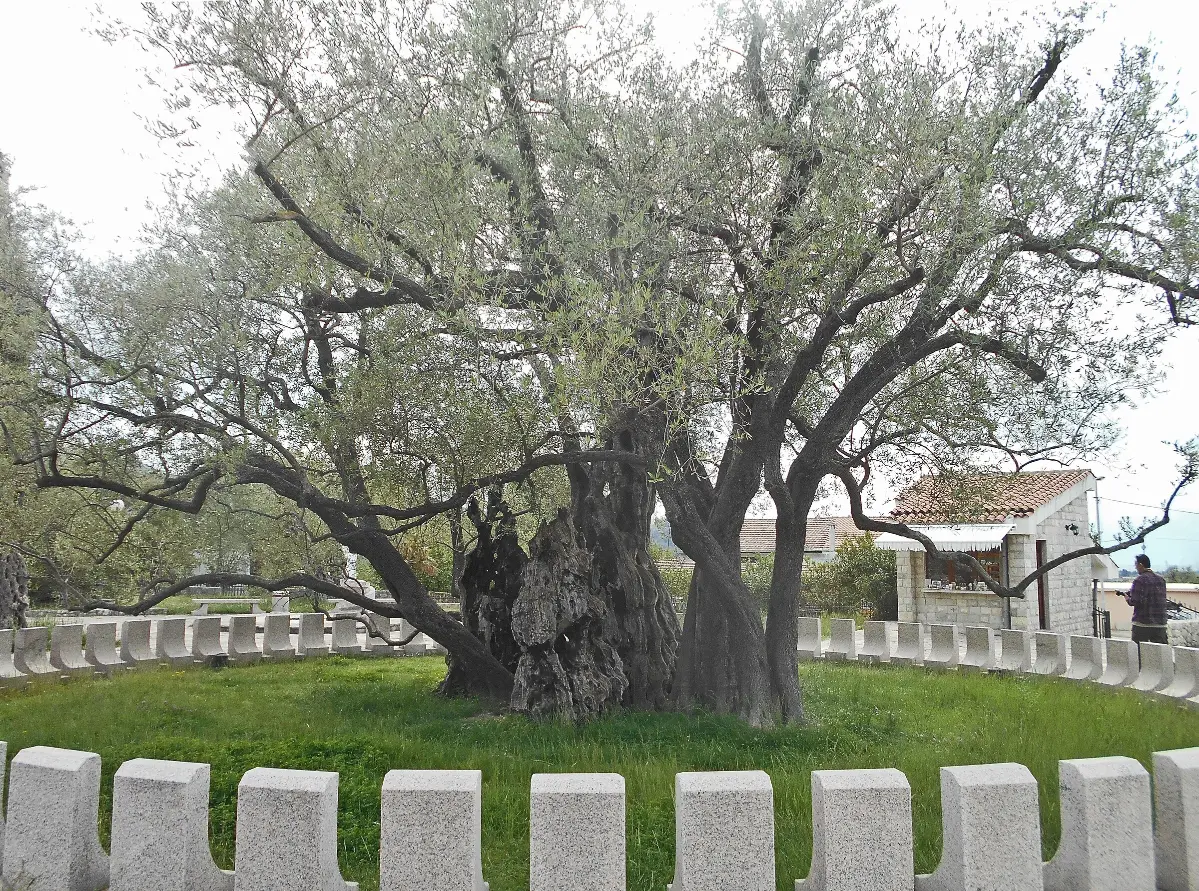
    The Old Olive Tree in Mirovica

    This is the Old Olive Tree in Mirovica, the symbol of Bar. The municipality of Bar says it is more than two thousand two hundred years old. An analysis of samples from olive trees around Bar, made by the Faculty of Forestry of Istanbul University, put its age at about two thousand two hundred and forty years. That is an estimate, not an exact date, but it is certainly one of the oldest trees in this part of Europe. The tree is of the local žutica variety and still bears fruit. It was protected by law as a natural monument in nineteen sixty-three. Local tradition says that Mirovica takes its name from the word for peace: feuding families came to make peace under this tree. The Bar area has lived from olives for centuries. More than one hundred thousand olive trees grow here today. Every November the tree hosts the Meetings under the Old Olive Tree, a festival of children's creativity held since nineteen eighty-seven.

At the end

Farewell

This is where our walk through Stari Bar ends. Thank you for walking with us. On our website, the Stari Bar page has practical information and the hiking trails that lead from here towards Mount Rumija. The Bar page covers the rest of the town, from the port to King Nikola's palace on the seafront. If you'd like to see more old towns, take a look at our guide to the old towns of Montenegro, from Kotor to Ulcinj. We also have an audio guide for Kotor. Have a good trip.

Good to know

Before you set off

Every word as text

The full narration of each stop is on this page and in the player, with the spoken sentence highlighted – for noisy streets and for deaf and hard-of-hearing visitors.

Works with the screen locked

Once you have pressed play, the narration keeps going with the screen off; use the lock-screen or headphone buttons for pause and next.

Your location stays on your phone

Location mode is optional and works only while this page is on screen. We never receive or store where you are.

Works offline

Download the tour before you go and it plays without mobile data.

Practical notes

Start: the Omerbašić Mosque, about forty metres in front of the main gate of the Old Town. Length: about 1.3 km through the fortress and back down to the bazaar, 60–75 min with listening. Optional stop, the Old Olive Tree in Mirovica: about 1.7 km downhill on foot (about 25 min) or a few minutes by taxi. Best time: morning or late afternoon; in summer there is little shade inside the walls. Spring and autumn are the most pleasant. On days when cruise ships call at Bar there are more visitors and traffic on the way up. Accessibility: - Paths in the fortress are stone and earth, uneven, with steps and steep sections; not suitable for wheelchairs or pushchairs. - The bazaar is a steep cobbled street. - There are mostly no railings above the walls and cliffs; keep children close. Tickets: Old Town of Bar – five euros for adults, one euro for children aged six to fourteen, younger children free; residents of Bar municipality free with photo ID (Kulturni centar Bar; price in force since 2024, confirmed in December 2025). The Old Olive Tree has a separate ticket. Summer opening hours are 8:00 to 20:00 (Kulturni centar Bar, 2026); shorter out of season. Check prices and hours at the entrance. Parking: there are few spaces near the entrance; in summer come early or take a taxi.

Audio guides

More audio guides

Narration: AI-generated voice from our editors' scripts · Map © OpenStreetMap contributors, OpenFreeMap. Map data and sources →

Zora

Your Montenegro travel guide

Hi, I'm Zora

Ask me about places, beaches, food, events or a trip plan — in any language.