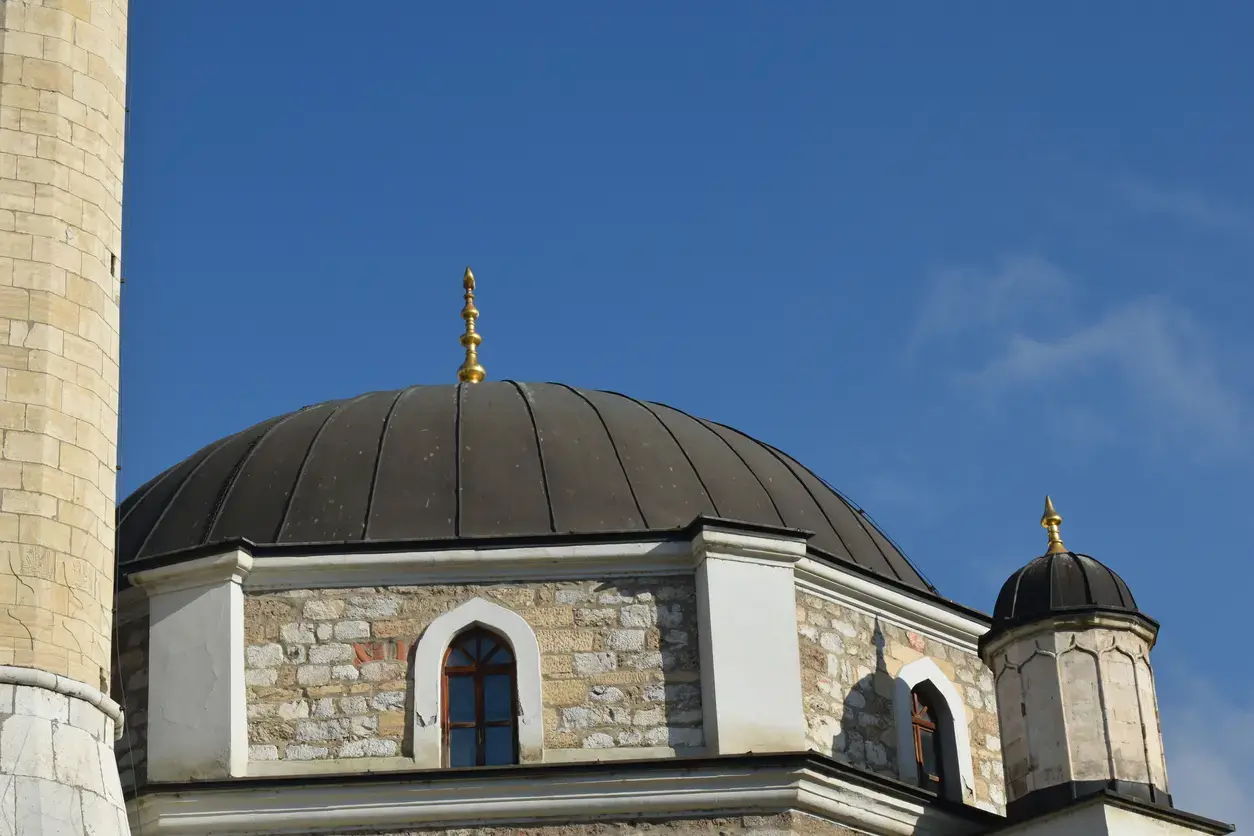
A gem of Islamic architecture in the Balkans
The Husein-pasha Mosque is located in the very centre of Pljevlja, in the old Čaršija.
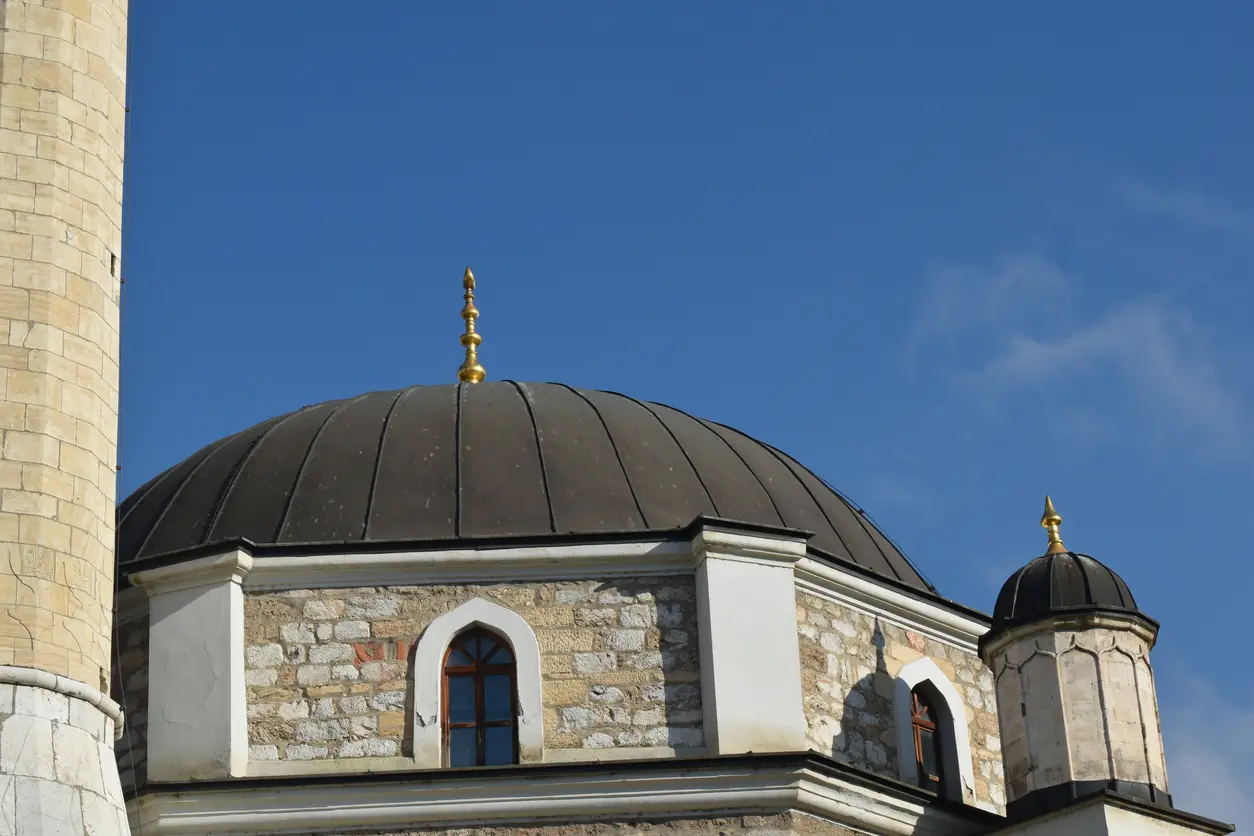
It was built in 1569 as an endowment of Husein-pasha Boljanić, an imperial vizier born in nearby Boljanići. It was designed by the master builder Hajrudin, who also built the famous Old Bridge in Mostar. Its monumental 42-metre minaret, domes of Alexandria marble, and a rich interior with floral ornaments rank it among the finest Islamic sacral monuments in the Balkans. The mosque houses a 16th-century Qur'an decorated with gilding and an Egyptian carpet over 400 years old.
Highlights
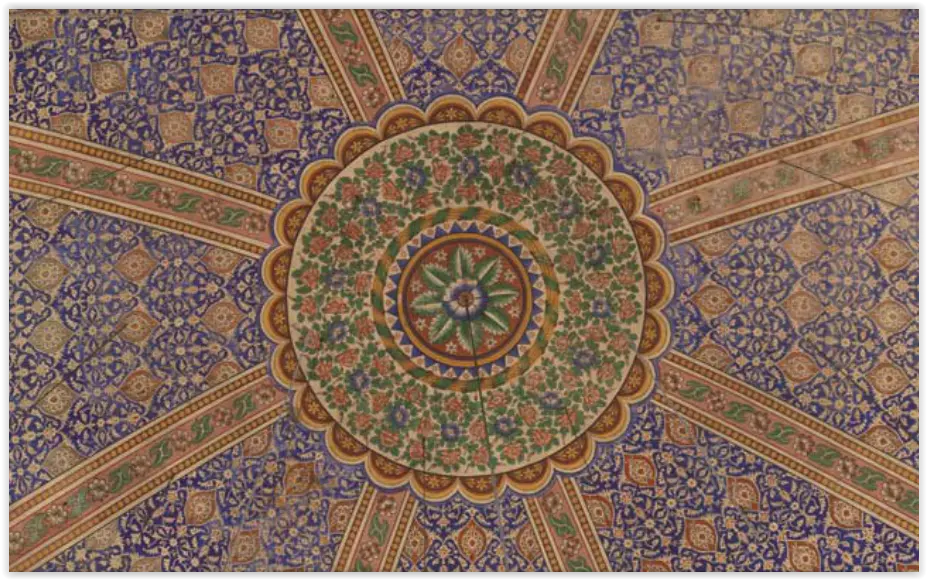
The walls are painted with floral ornaments and Qur'anic inscriptions, among the finest examples of Islamic art in the Balkans. The mosque houses a 16th-century Qur'an written in Arabic script and decorated with gilded miniatures. There is also an Egyptian carpet over 400 years old, as well as several valuable old books and manuscripts. This interior is a true museum of Islamic calligraphy and applied art.
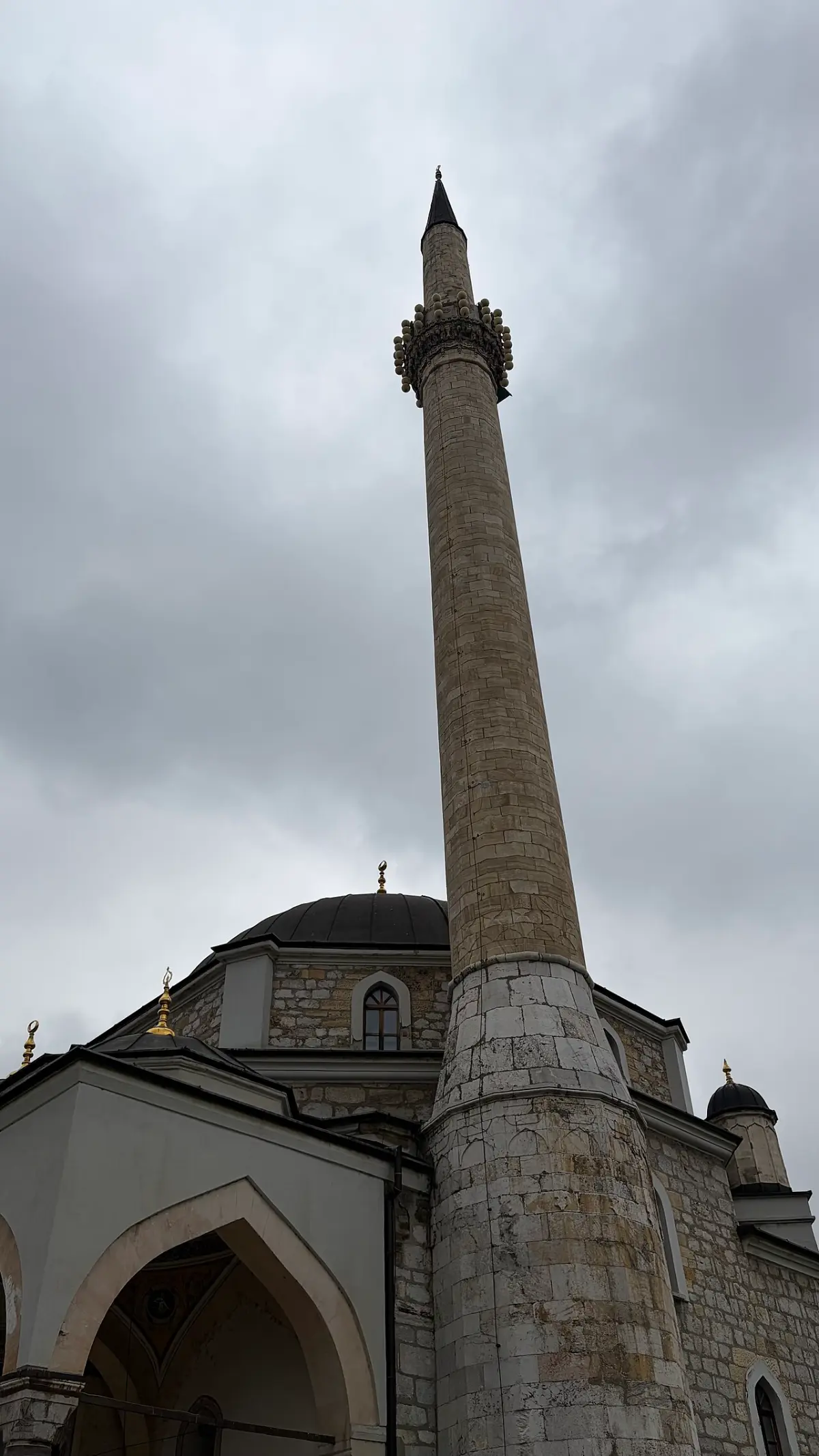
The slender minaret, 42 metres high, dominates the centre of Pljevlja and is one of the most recognisable architectural landmarks of the town. It was built together with several domes, for which marble from Alexandria was brought. Its harmonious proportions and exquisitely carved decorations make it a masterpiece of refined harmony and originality.
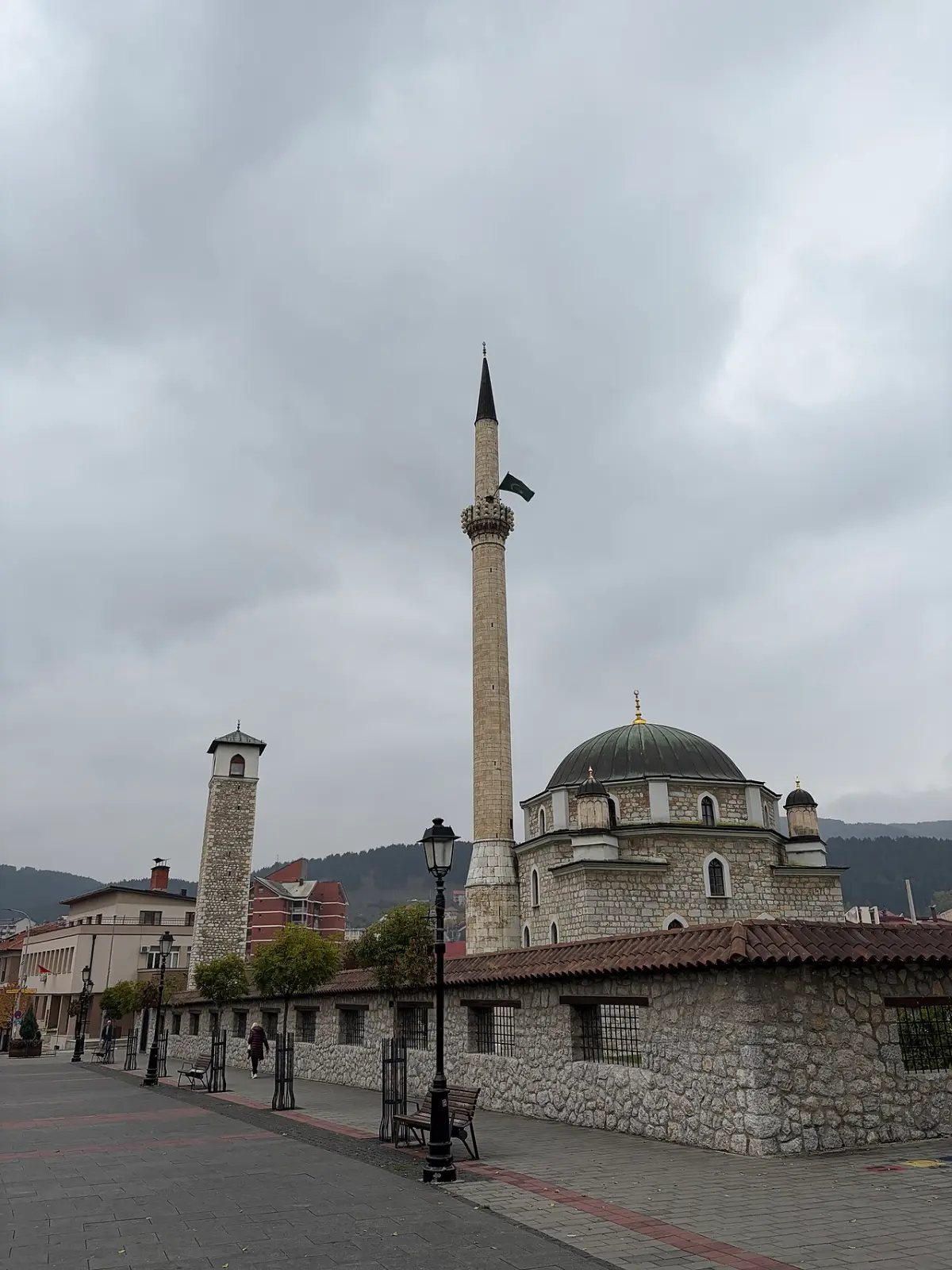
Next to the mosque stands a 25-metre clock tower, one of the largest in the Balkans. The tower is part of the Husein-pasha Mosque complex and contributes to the distinctive visual identity of the old part of Pljevlja. Its clock and architecture bear witness to the Ottoman period and the importance of this area.
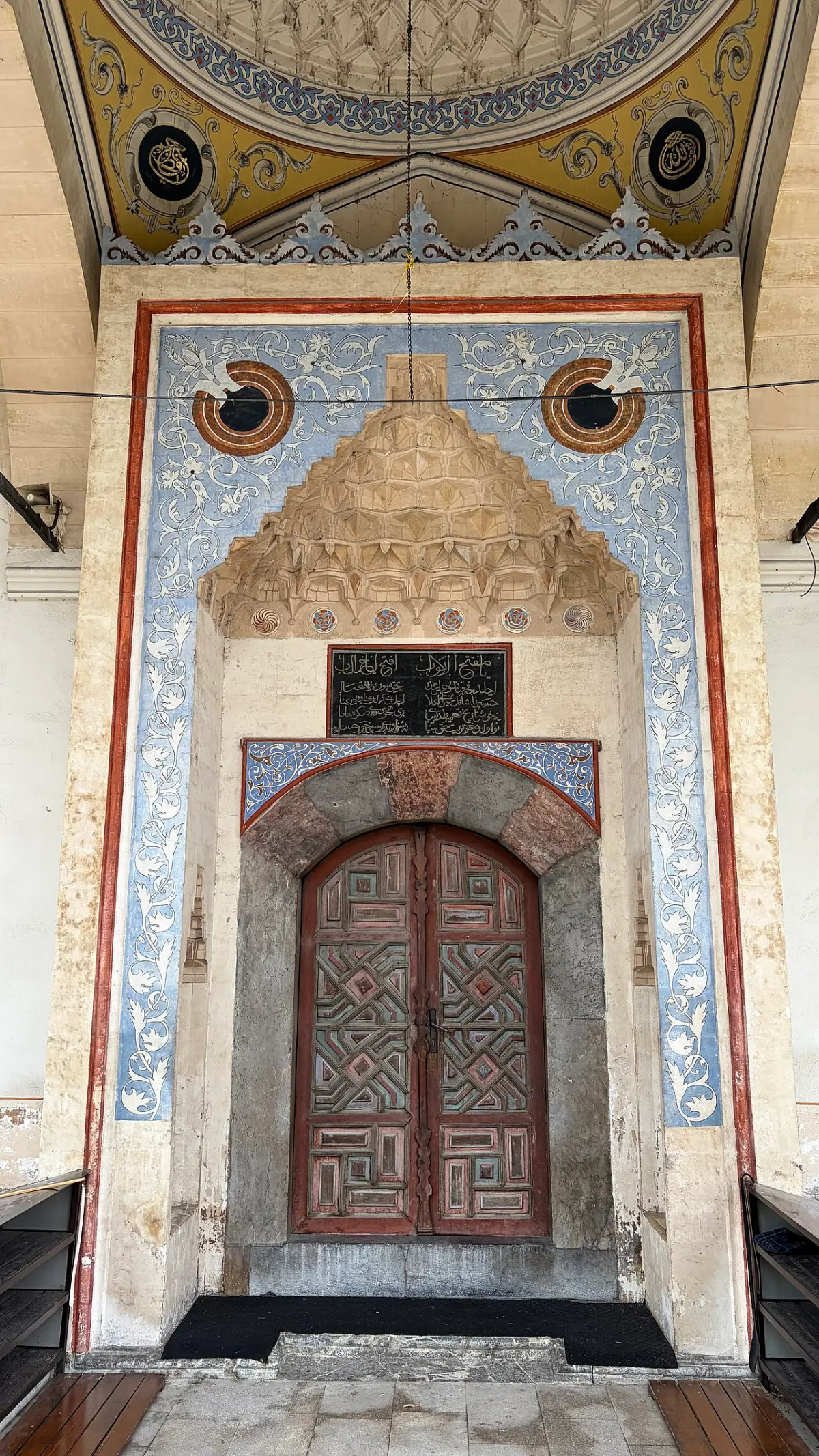
Beside the mosque is a finely crafted fountain, which was used for the ritual washing of worshippers. It is a characteristic element of Islamic architecture and part of the mosque courtyard. Today it is a popular spot for photos and a short break during a visit.
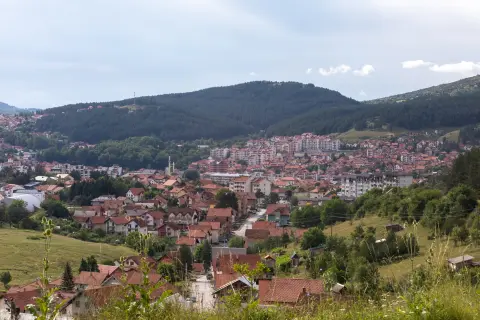
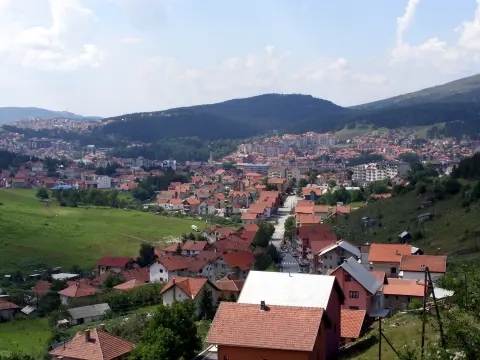
The main street in Pljevlja is still called Čaršija, a reminder of the Ottoman era. It is home to public institutions, shops, and cafés, and it is where the public, business, and social life of the town takes place. Walking along Čaršija means experiencing the authentic spirit of an old oriental town, just as it once was.
What to do
Admire the façades, the domes of Alexandria marble, and the 42-metre-high minaret.
Capture the floral ornaments and Qur'anic inscriptions, among the finest in the Balkans.
Discover the story of Husein-pasha Boljanić and the master builder Hajrudin, who built the bridge in Mostar.
Stroll through the old trading quarter of the town, which preserves the spirit of Ottoman architecture.
With respectful conduct, you can attend prayer and experience the spiritual atmosphere.
Hiking, walking and cycling routes that start here or pass nearby, with maps and GPX downloads.
Biking Trail PV01 is a predominantly asphalt bicycle route 50,9 km long, with 1081 m of elevation gain. It is ridden in one direction through the surroundings of Pljevlja, passing springs, a shelter and viewpoints.
50.9 km1,081 m3½–5 h
View trail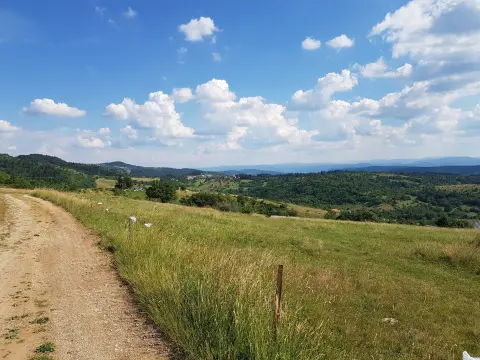
Cycling trail PV02 is 19.2 km long and runs one-way from Pljevlja. It has 770 m of ascent, 280 m of descent, a mostly asphalt surface and moderate difficulty, with a spring located at 13.9 km.
19.2 km770 m2–2½ h
View trailThe one-way bicycle trail PV09 near Pljevlja is 37,0 km long, with 1617 m of ascent and 607 m of descent. The surface is 68 % asphalt/concrete and 32 % gravel, and the difficulty is moderate.
37.0 km1,617 m5–7 h
View trailBiking Trail PV10 is a 36.9 km long, predominantly asphalt, one-way bike trail. It starts about 3 km from Pljevlja, has a 757 m climb, a 305 m descent and the Javor Spring at 28.5 km.
36.9 km757 m2½–3½ h
View trailAn easy one-way cycling trail 8.0 km long, with 119 m of ascent. It is ridden on asphalt and macadam at an altitude of 1220–1304 m, with an estimated duration of 45 min without breaks.
8.0 km119 m40–55 min
View trailBiking Trail PV07 is 13.9 km long and mostly descends through the surroundings of Pljevlja. The surface is 70% gravel and 30% asphalt/concrete, and the ride without stops takes about 1 h 15 min.
13.9 km160 m65–90 min
View trailBiking Trail PV05 is an easy one-way cycling trail, 14.5 km long. It has 529 m of ascent and a predominantly asphalt surface, and the nearest town is Pljevlja.
14.5 km529 m1½–2 h
View trailBiking Trail PV03 is an easy cycling trail 15.6 km long. The mixed surface (71% asphalt/concrete, 29% gravel road) passes by Kozičko brdo and near the Ćehotina Meanders Viewpoint.
15.6 km402 m1½–2 h
View trailPlan Your Visit
Admission
Entry is free.
Website
pljevlja.travelNo official published data; it is recommended to visit outside prayer times, usually from 08:00 to 18:00. For details, contact the Islamic Community in Pljevlja.
Free parking near the centre, but access to the Čaršija pedestrian zone is restricted.
The mosque is not adapted for people with disabilities due to steps at the entrance and narrow passages inside the building.
FAQ
Around here