Travel to Montenegro
Winter in Montenegro
December – February

Winter in Montenegro

Ski slopes in the north, a mild and quiet coast – December to February

Overview

From December to February the coast is mild and quiet – around 12–14 °C by day, with the sea at 13–15 °C – while the mountains of the north become ski country. Come for New Year on the town squares, skiing on Bjelasica and Durmitor, the Mimosa Festival in Herceg Novi and Kotor's St Tryphon feast; expect rain on the coast and snow that varies a lot from one winter to the next.

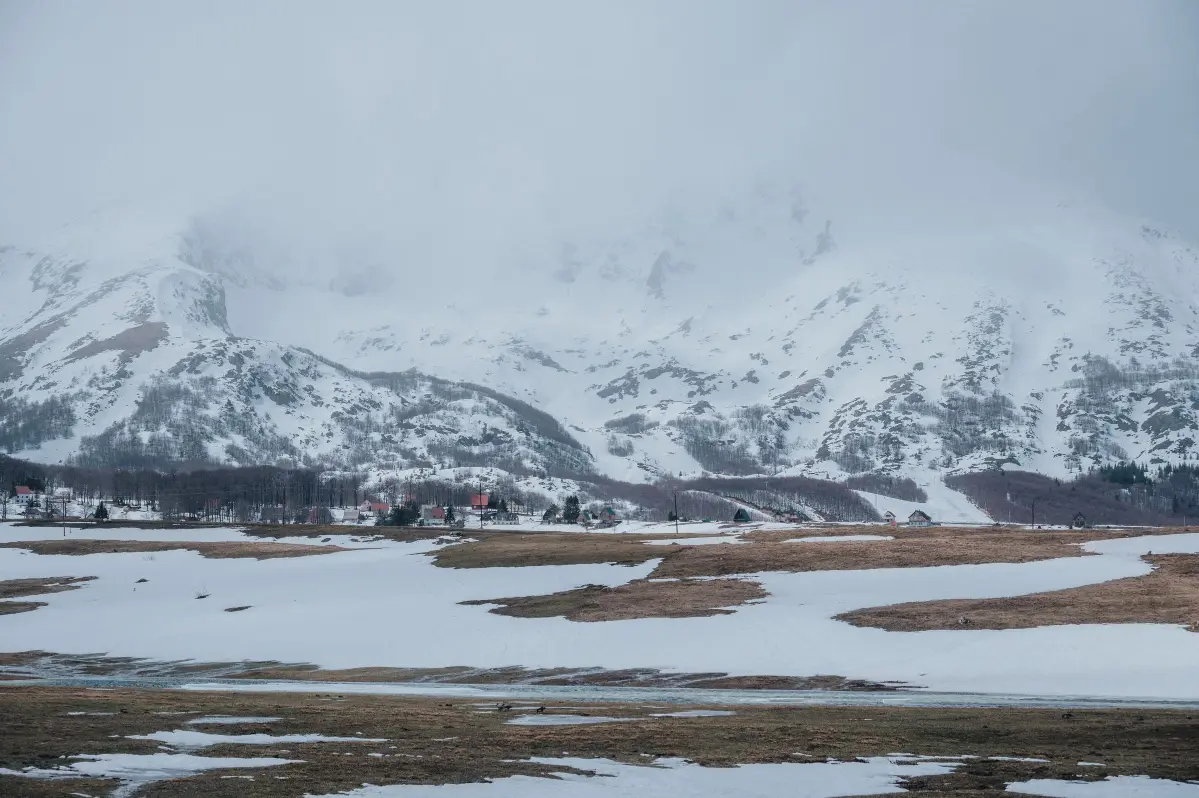
Winter splits Montenegro in two. On the coast it is the quietest time of year: in January 2026 hotels across the country counted about 87% fewer guests than in August, days reach 12–14 °C and the towns belong to the people who live there. In the north the season runs the other way – in January Kolašin's hotels had more guests than in August, as skiers head for Bjelasica and Durmitor.

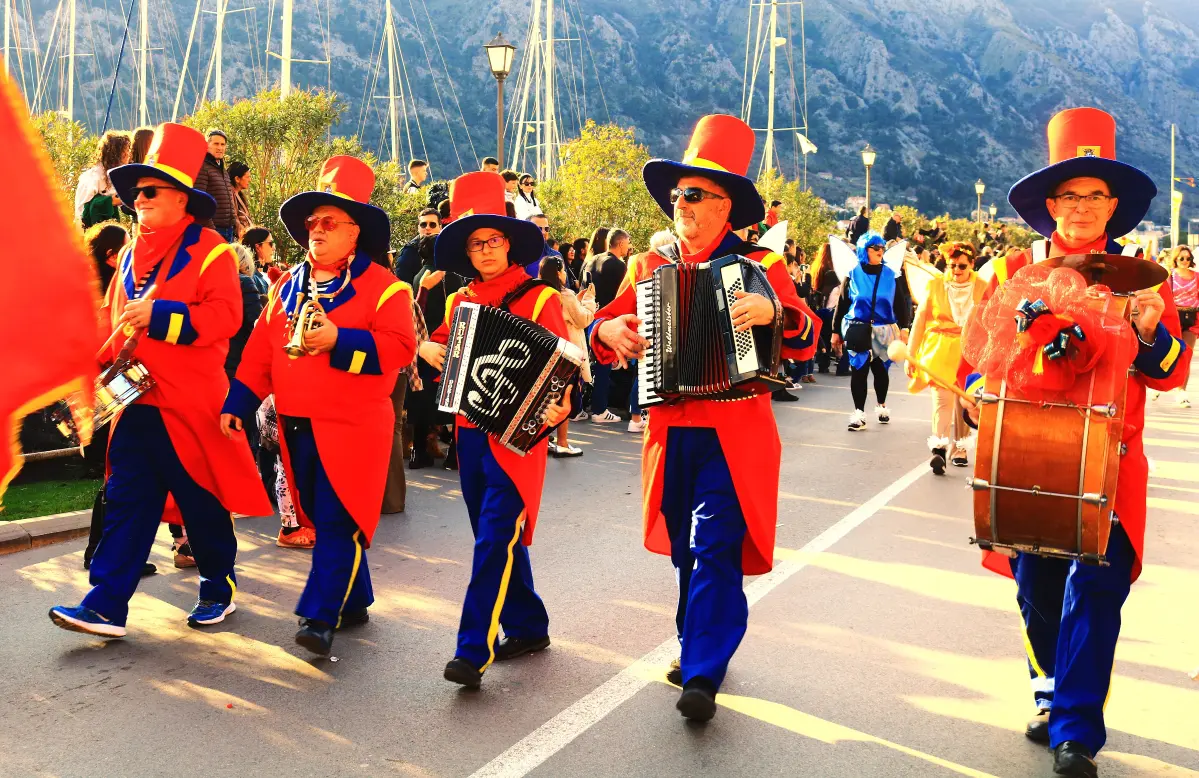
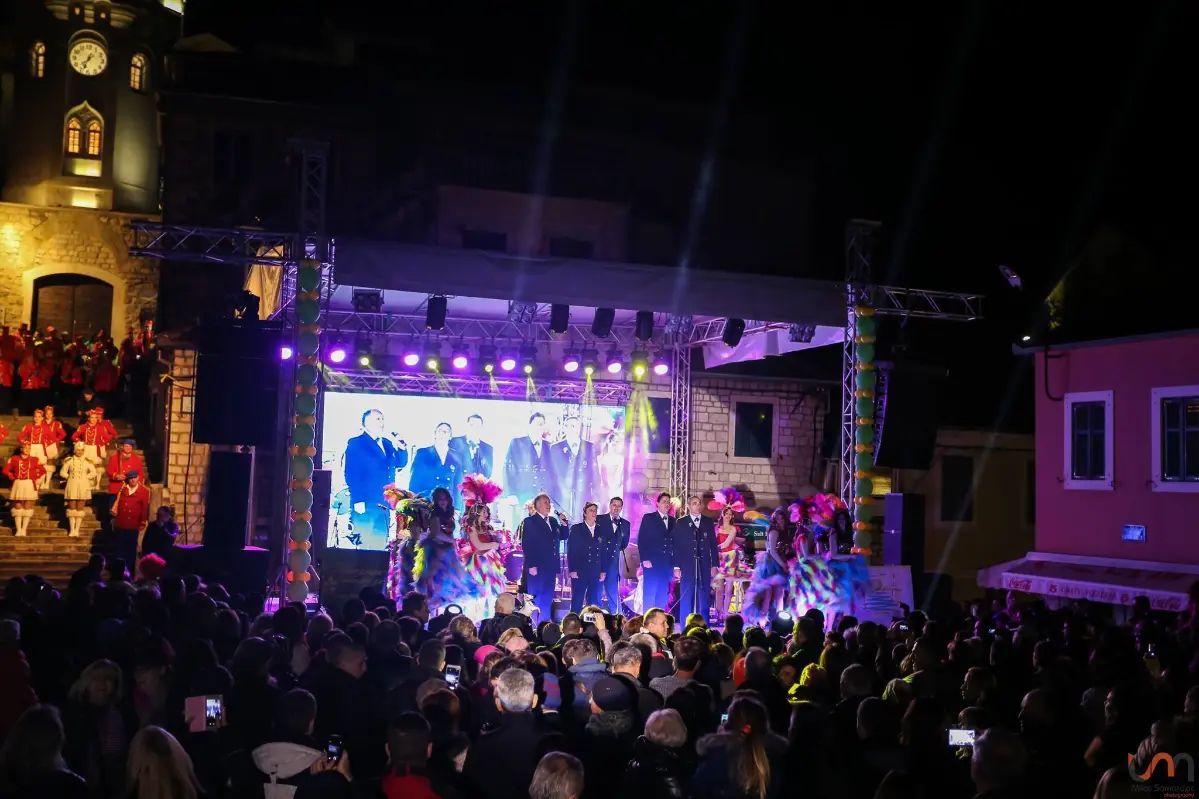
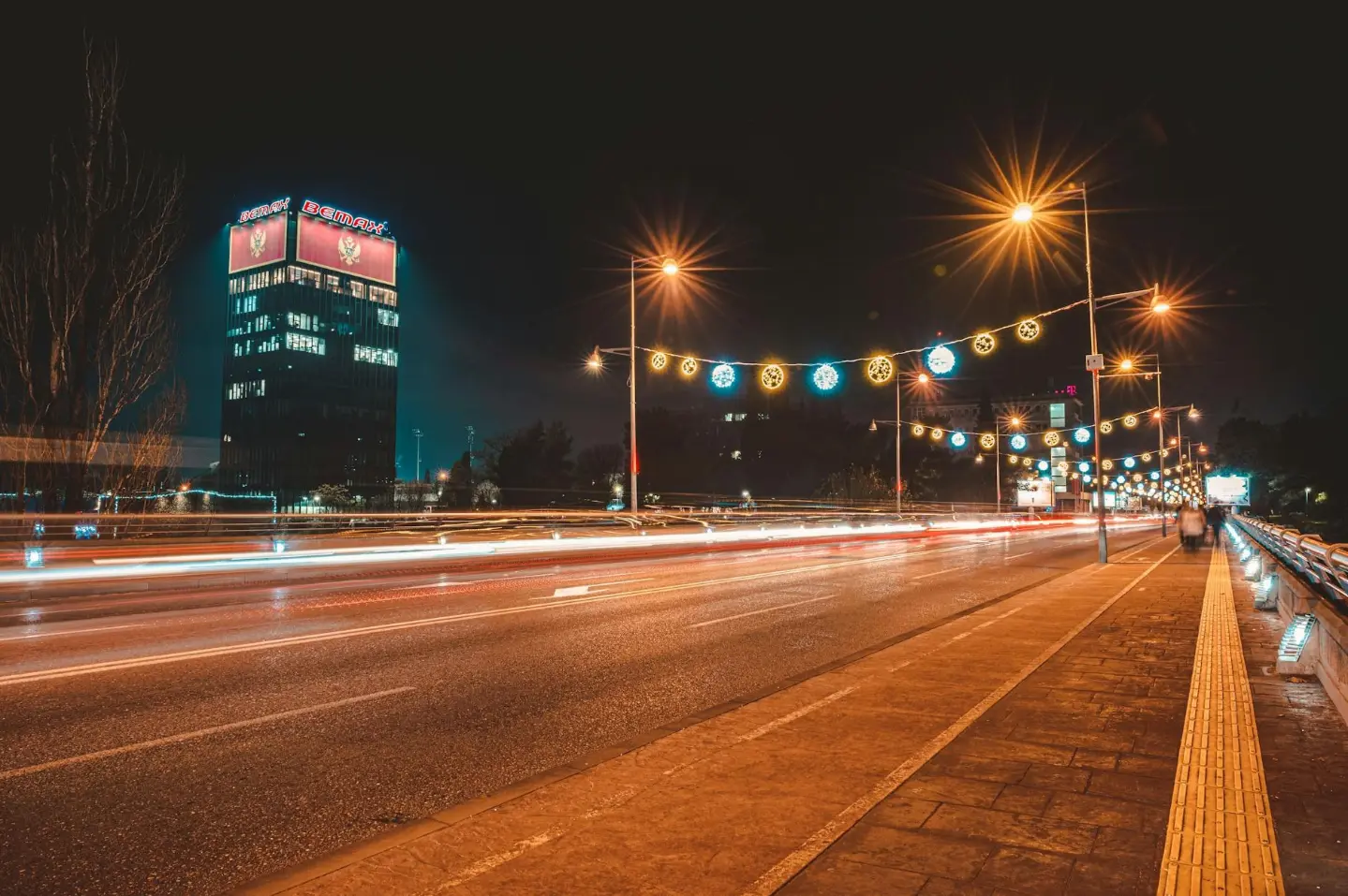
The calendar is full: New Year concerts on the squares of Budva, Kotor and Podgorica, Orthodox Christmas on 7 January, then St Tryphon's feast and the carnival in Kotor and the Mimosa Festival in Herceg Novi in February.

Plan around two things. Snow is not guaranteed – none of the resorts makes artificial snow, and in 2023/24 Kolašin 1600 and Savin Kuk did not open at all. And the coast is wet, with rain on about 14 days a month in Kotor in December and January.
Month by month

Month by month

How the season changes from one month to the next, with average temperatures on the coast and in the mountains.

December

Festive lights, rain and the first snow

Kotor
14° / 8°
Sea
15°
Žabljak
2° / -4°
Rainy days
14
Festive lights, rain and the first snow

The coast stays green and mild, around 14 °C by day, but December is one of the wettest months, with rain on about 14 days in Kotor. Kotor Winter Fest, Podgorica's New Year market on Independence Square and the concerts outside Budva's Old Town fill the second half of the month. The ski resorts aim to open in mid-December, though in 2025 Kolašin 1600 started its season without snow.

Best for
New Year in the towns, city breaks, birds on Skadar Lake
Crowds
very low (hotel guests −85% vs August)

January

Peak ski season

Kotor
12° / 6°
Sea
14°
Žabljak
0° / -7°
Rainy days
14
Peak ski season

The coldest month, with average highs around 0 °C in Žabljak and 12 °C on the coast, and the best chance of snow in the mountains. It is Kolašin's busiest month – in January 2026 the town's hotels had more guests than in August. Orthodox Christmas falls on 7 January; on Christmas Eve the badnjak, a young oak branch, is blessed in front of churches, and Orthodox New Year follows on the night of 13 January.

Best for
skiing, snowshoeing, Orthodox Christmas
Crowds
lowest on the coast (hotel guests −87% vs August); Kolašin busier than in August

February

Mimosa, carnival and St Tryphon

Kotor
13° / 7°
Sea
13°
Žabljak
2° / -5°
Rainy days
9
Mimosa, carnival and St Tryphon

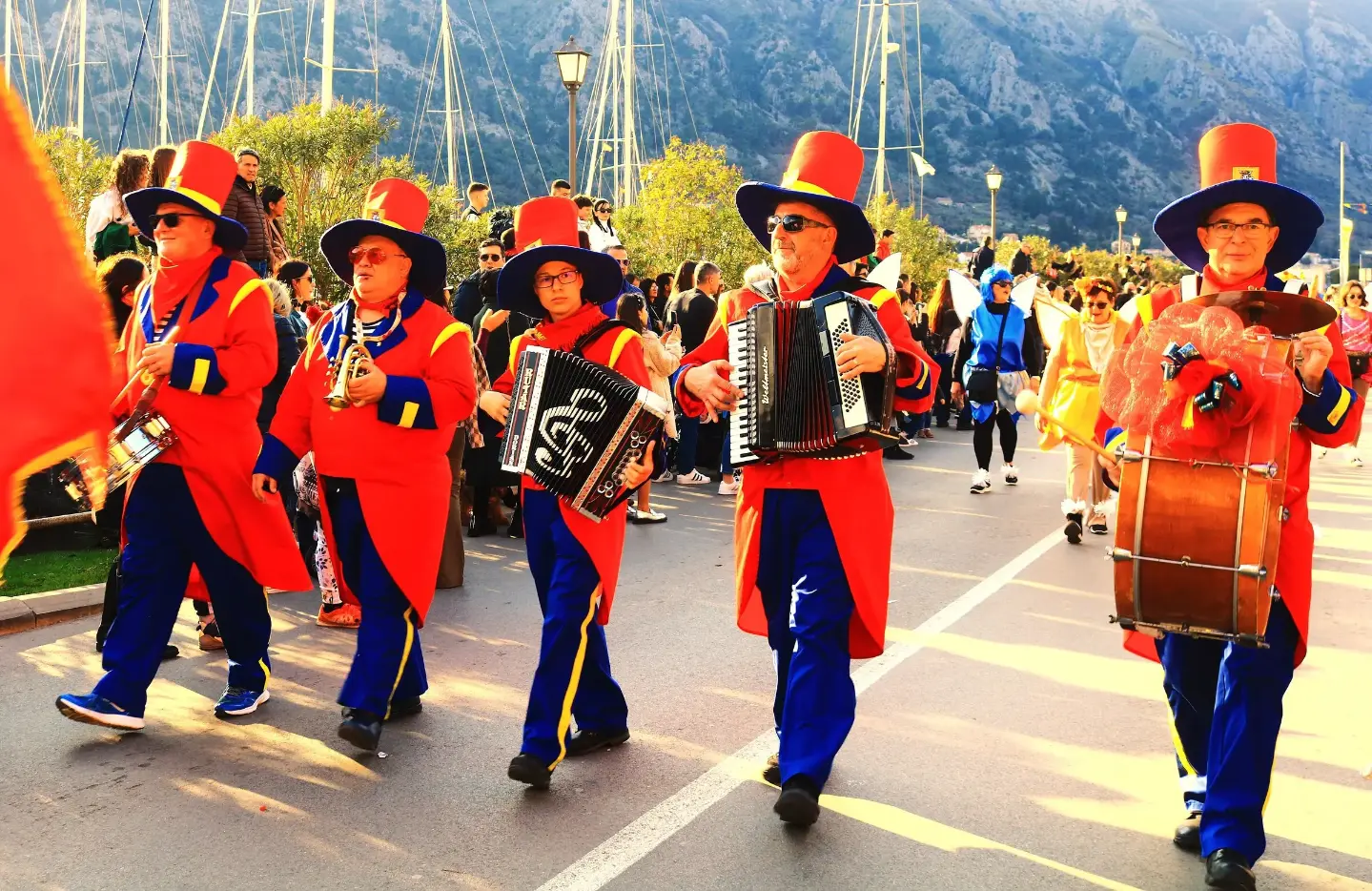
Mimosa turns the Herceg Novi Riviera yellow, and the Mimosa Festival runs for about two weeks – in 2026 from 13 to 28 February. Kotor honours its patron St Tryphon on 3 February and holds its winter carnival later in the month; the 2026 procession was postponed by a week because of bad weather. In the mountains it is still ski season: in 2026 Kolašin 1600 kept skiing into April.

Best for
festivals on the coast, skiing, the first spring days
Crowds
very low (hotel guests −83% vs August)
Experiences

Signature experiences

Skiing on Bjelasica and Durmitor

Skiing on Bjelasica and Durmitor

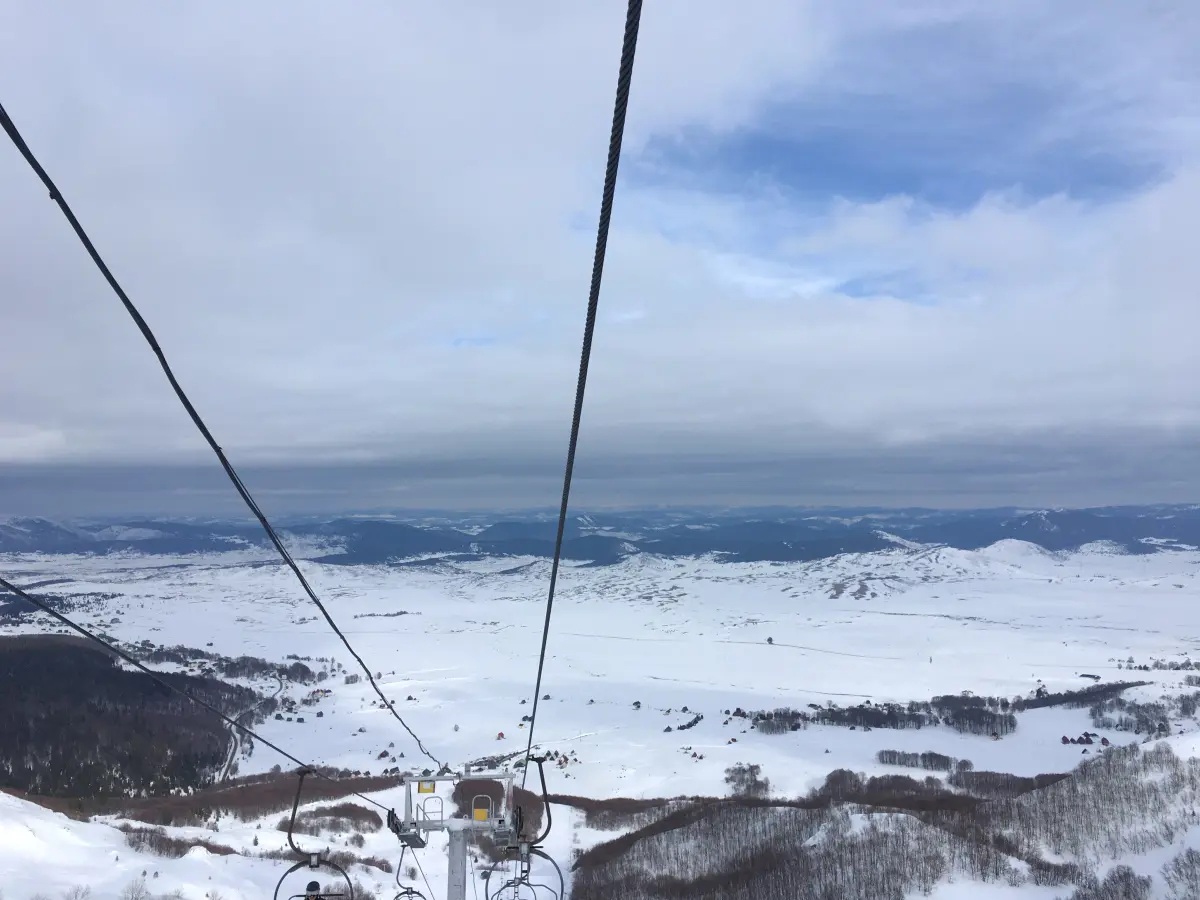
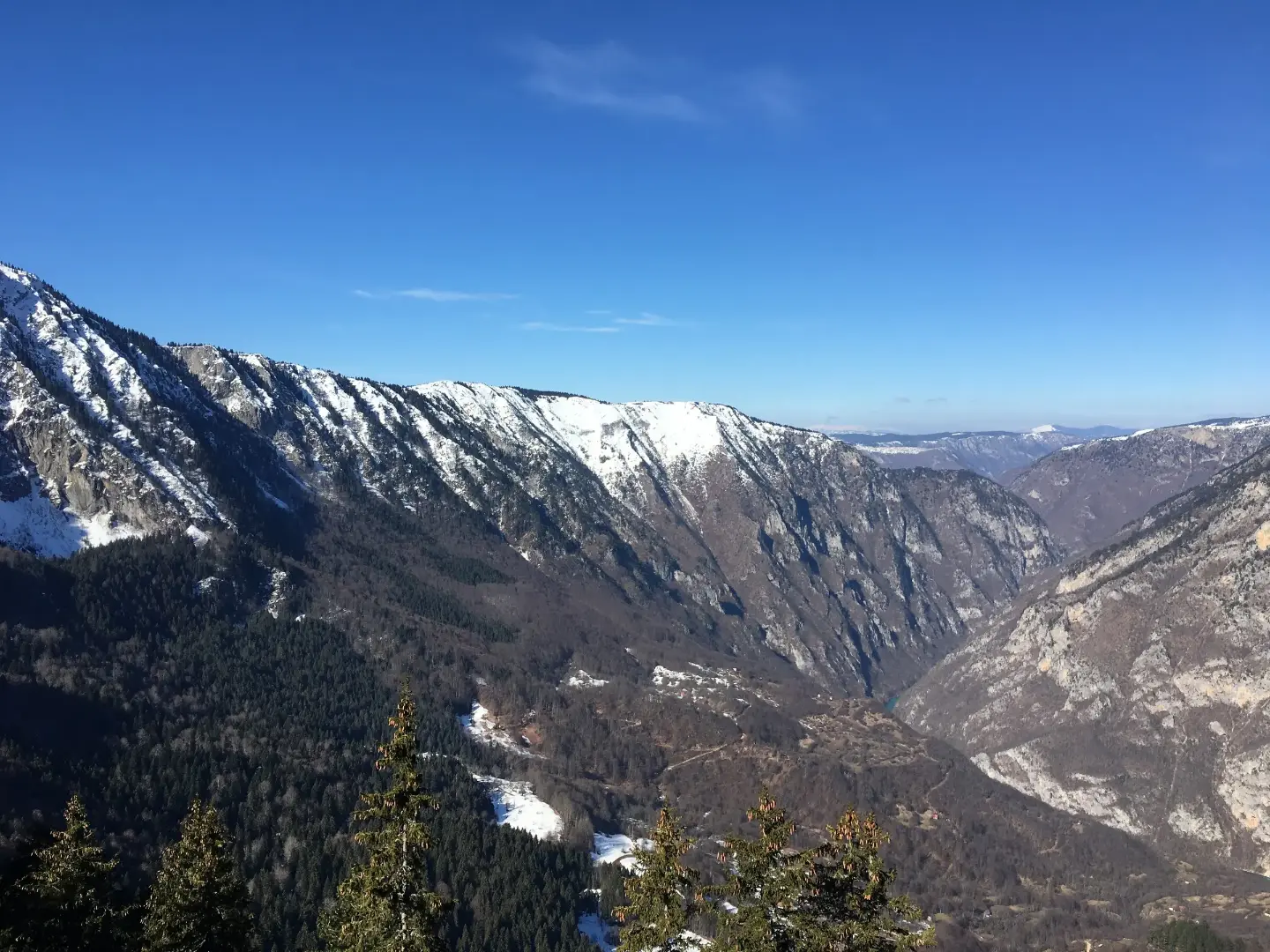
Kolašin 1600, operated by the state-owned company Ski Resorts of Montenegro, has a six-seater lift up to 2,035 m and about 21 km of slopes, and right next to it is the private Kolašin 1450. In the 2025/26 season, an adult day pass cost €25 at Kolašin 1600 and €15 at Kolašin 1450. Savin kuk above Žabljak has 4.6 km of slopes and lifts up to 2,213 m. Neither ski resort has artificial snowmaking, so conditions depend on the winter.

Read more
New Year on the town squares

New Year on the town squares

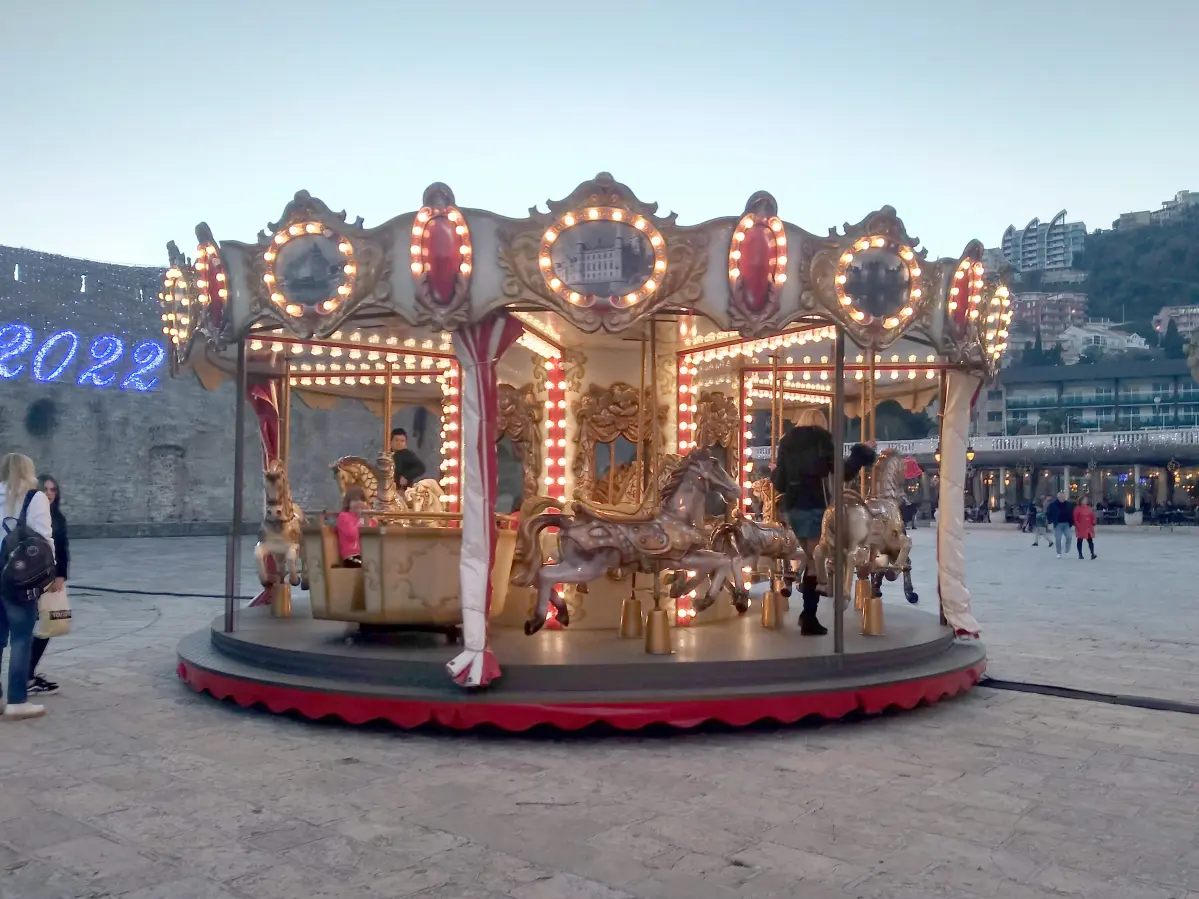
Montenegro sees in the New Year outdoors. Budva has held a public celebration on the square outside its Old Town for more than two decades, with several nights of free concerts; Kotor Winter Fest ran from late November to the end of January in 2025/26, and Podgorica holds its New Year market on Independence Square. Christmas comes twice: Catholics celebrate on 25 December, Orthodox believers on 7 January.

Read more
St Tryphon's feast in Kotor

St Tryphon's feast in Kotor

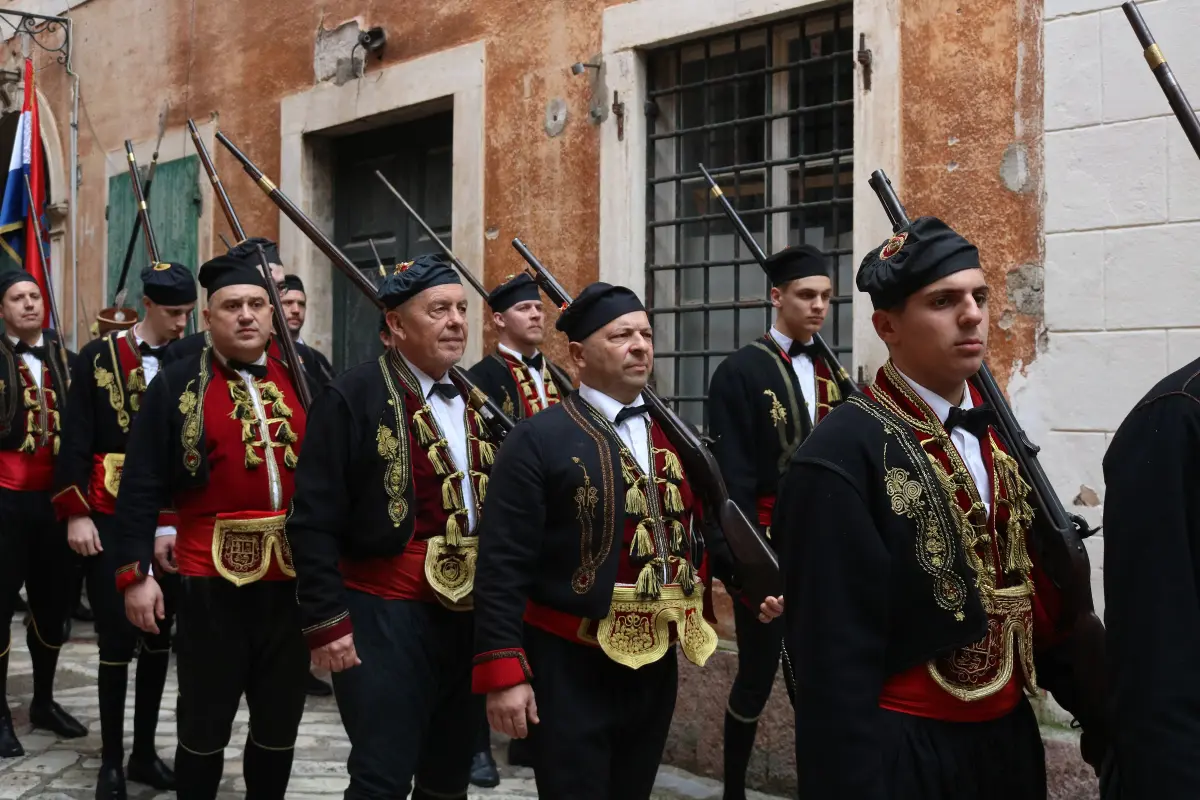
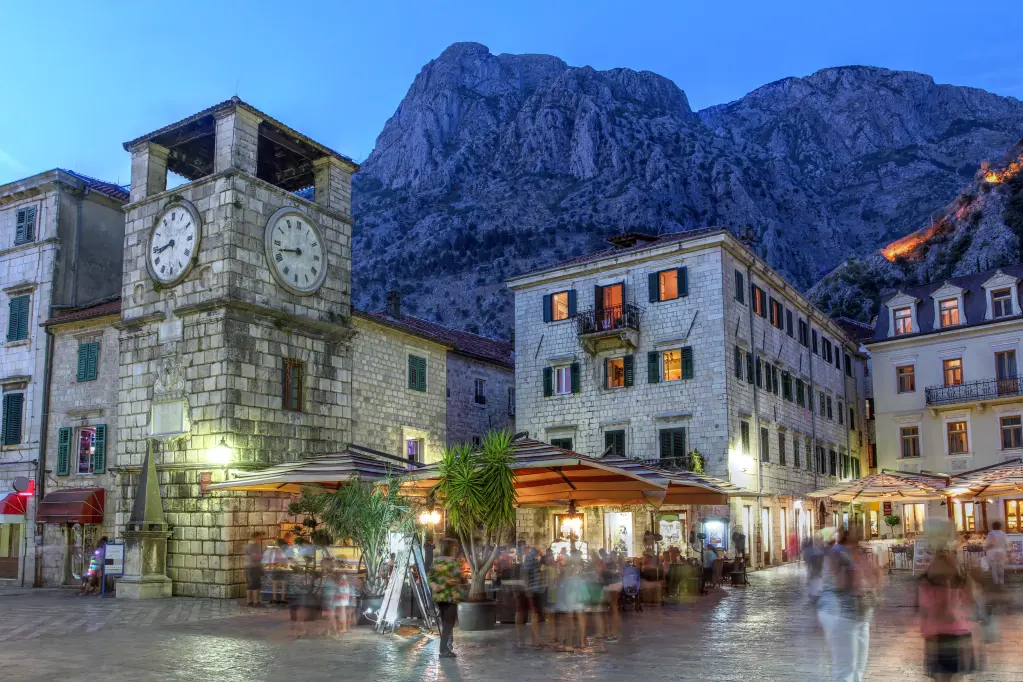
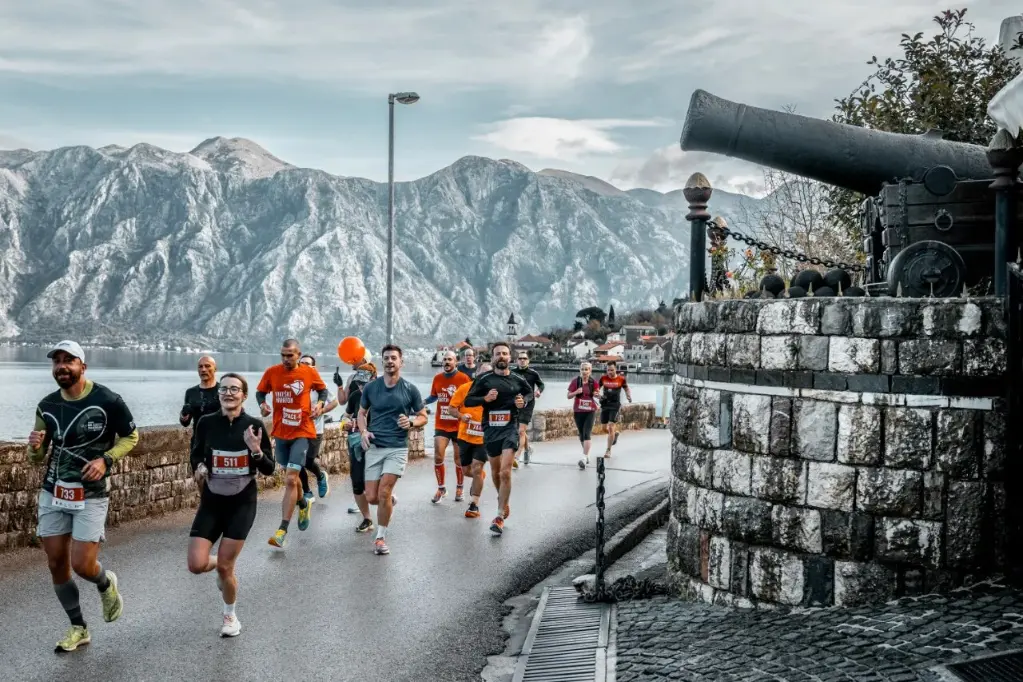
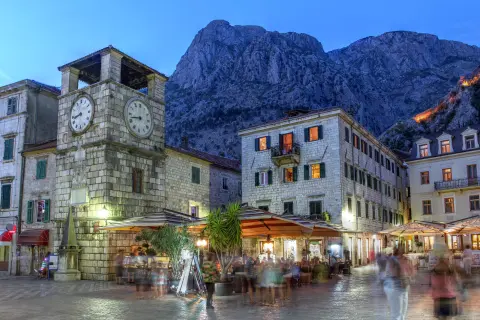
Kotor's patron saint is honoured on 3 February, at the end of festivities that UNESCO dates from 13 January. On the following Sunday the Boka Navy dances its kolo in the Old Town before a procession carries St Tryphon's relics through the Old Town – in 2026 this was on 8 February. Later in the month the town holds its winter carnival.

Read more
The Mimosa Festival in Herceg Novi

The Mimosa Festival in Herceg Novi

Held since 1969, it is one of the longest-running festivals in the region. For about two weeks in February Herceg Novi has concerts, masked balls, carnival parades and a fish-and-wine feast along Kumbor, Đenović and Baošići that the tourist board says draws around 20,000 guests. The 2026 edition, the 57th, ran from 13 to 28 February.

Read more
Pelicans on Skadar Lake

Pelicans on Skadar Lake

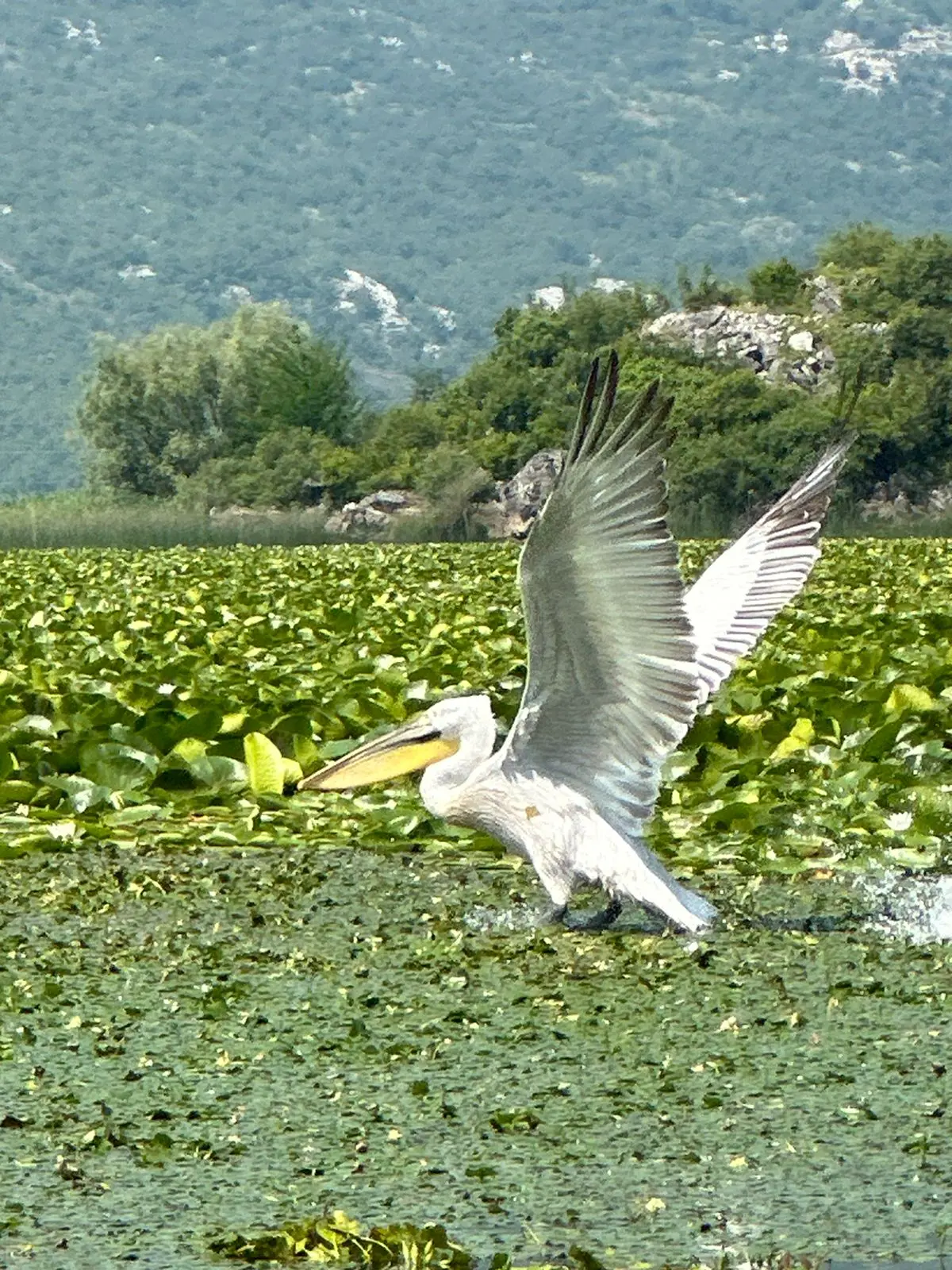
The Dalmatian pelicans of Skadar Lake start nesting at the beginning of December, according to BirdLife; in January 2025 the national park counted 49 pelicans preparing nests. The winter waterbird census has been carried out in the park since 1991. Keep your distance from nesting islands; park entry is €5 a day.

Read more
Snowshoes and the frozen Black Lake

Snowshoes and the frozen Black Lake

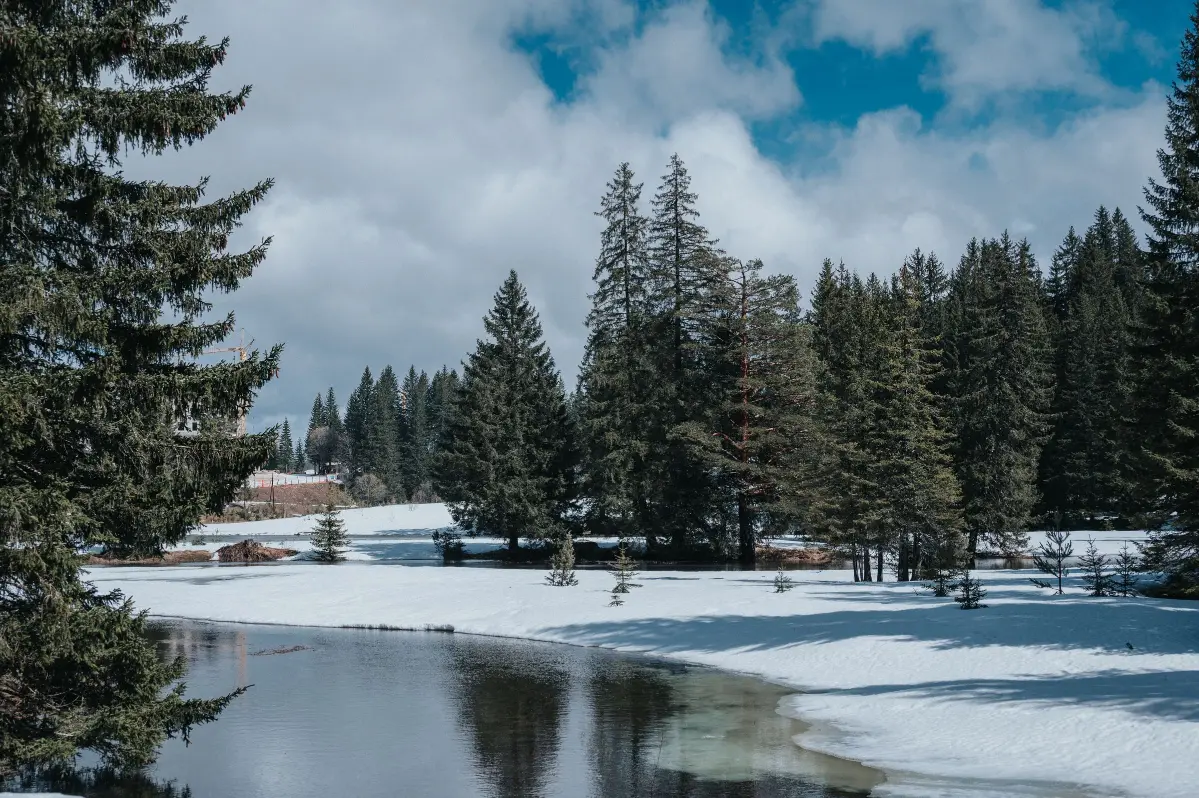
The Black Lake below Međed, 3 km from Žabljak, is frozen for about 70 days a year. The national parks rent snowshoes for €4 a day in Durmitor, Biogradska gora and Lovćen, and walks to the lake start from Žabljak, at 1,456 m the highest town in the Balkans.

Read more
Where to go

Where to go

Žabljak and Savin Kuk

Durmitor, north

Žabljak and Savin Kuk

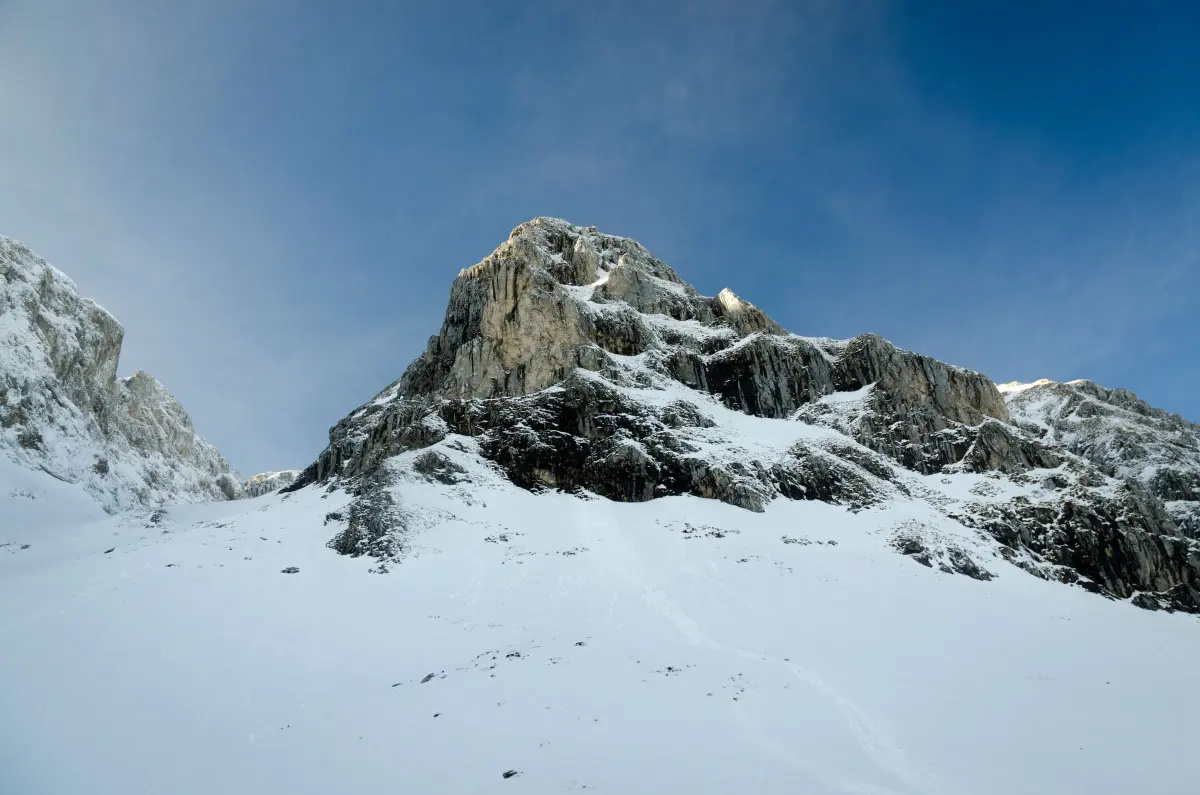
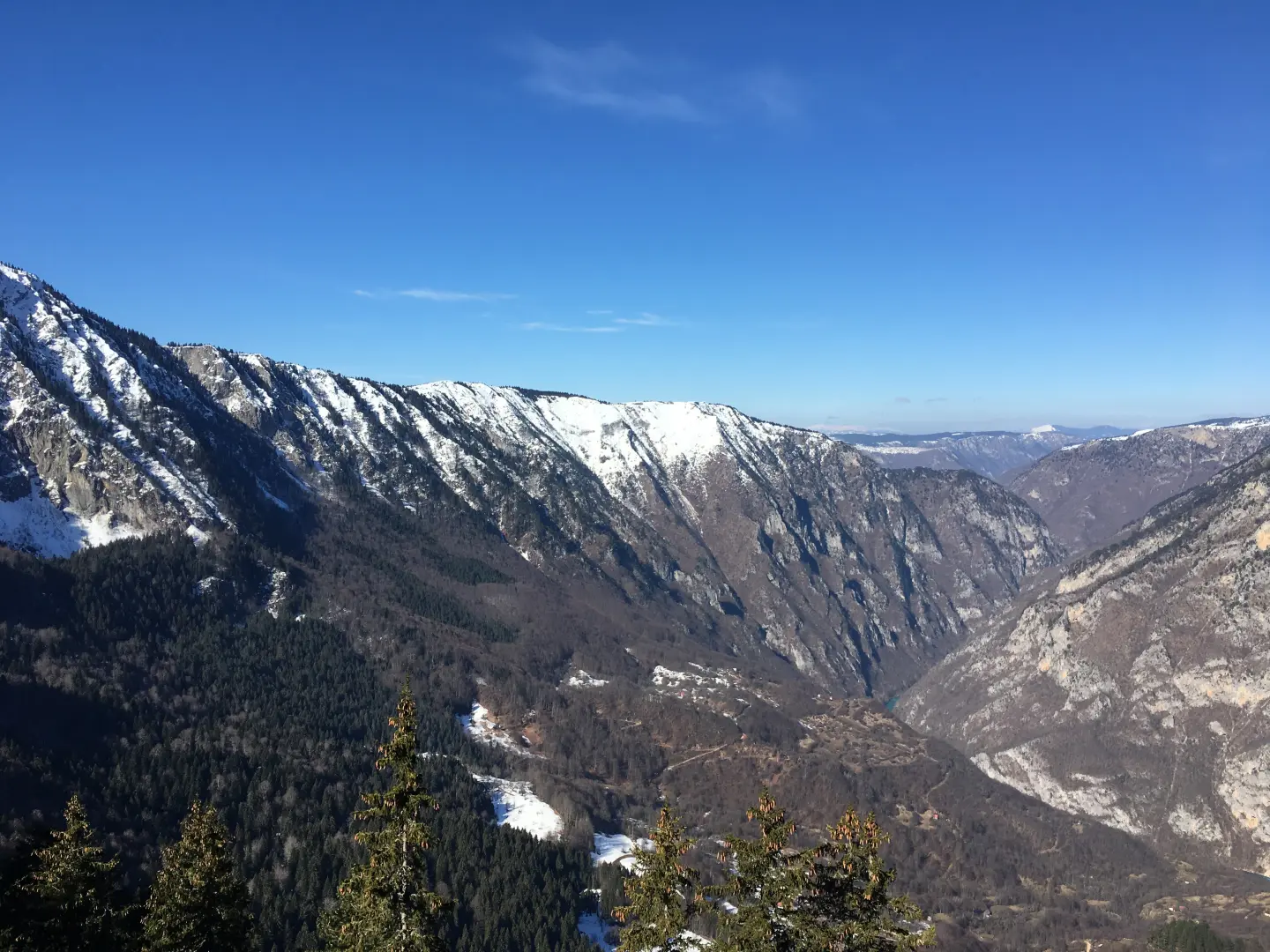
The highest town in the Balkans, at 1,456 m, with the Savin Kuk ski area about 3 km away: 4.6 km of runs, lifts up to 2,213 m and a floodlit lift for night skiing. Walks lead to the frozen Black Lake; Durmitor park entry is €5 a day.

Read more
Kolašin and Bjelasica

Kolašin, north

Kolašin and Bjelasica

Montenegro's main ski town, 12 km below Kolašin 1600 and close to Kolašin 1450. From Podgorica take the motorway to Mateševo or the train – five a day in the 2026 timetable, about 1 h 20 min.

Read more
Kotor

Bay of Kotor

Kotor

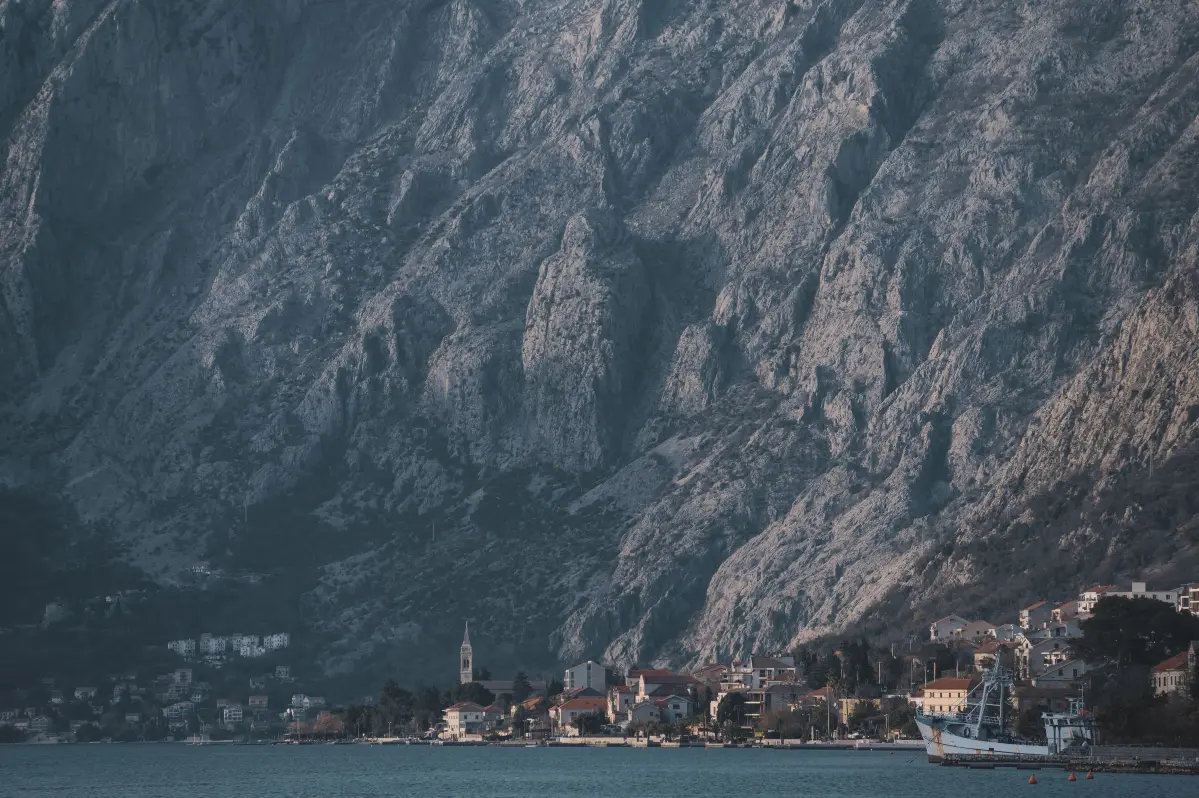
Winter is the quiet season in the Old Town: in January 2026 Kotor's hotels had about 6% of their August guests. Kotor Winter Fest in December and January, St Tryphon's feast on 3 February and the carnival later in the month.

Read more
Herceg Novi

Bay of Kotor, west

Herceg Novi

The town of mimosa. The Mimosa Festival fills February with concerts, parades and a fish-and-wine feast along the riviera; in February 2026 hotel arrivals were three times higher than in January.

Read more
Budva

Budva Riviera

Budva

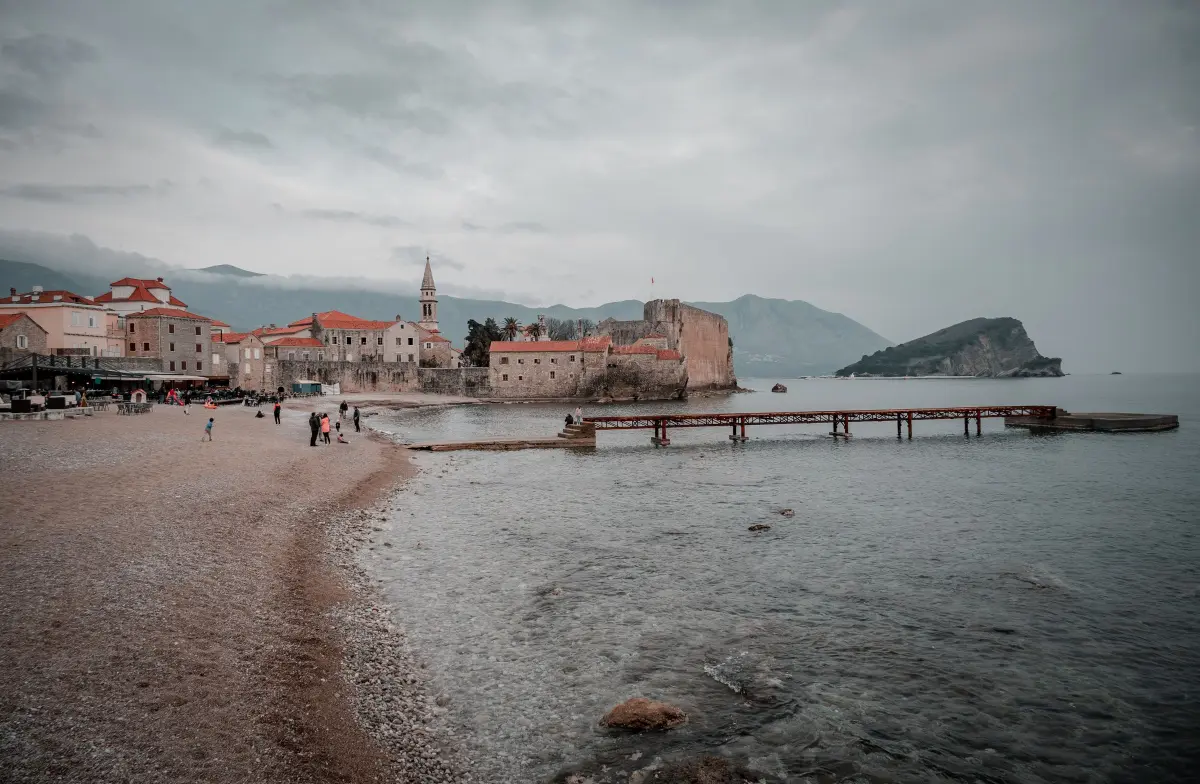
The biggest New Year's Eve on the coast, with free concerts on the square outside the Old Town. The town keeps going all winter – its hotels still counted about 9,000 to 11,500 guests a month in winter 2025/26.

Read more
Skadar Lake and Virpazar

Virpazar, Crmnica

Skadar Lake and Virpazar

Wintering waterbirds and nesting Dalmatian pelicans on the largest lake in the Balkans, whose surface varies between 370 and 530 km². Virpazar hosts the Wine and Bleak Festival at the turn of February and March.

Read more
Lovćen and Njeguši

Cetinje, Njeguši

Lovćen and Njeguši

Snow on the mountain above the Bay of Kotor, snowshoes for hire (€4 a day) and a €3 park ticket. Njeguši is the home of Njeguški pršut: under its protected-origin rules, the meat is only taken in between 15 November and 15 February.

Read more
Where to stay

Where to stay this winter

Winter means Kolašin and Žabljak for the snow, and the coast for mild days.

Weather

Weather by month

Long-term averages for the Bay of Kotor, the southern coast and the Durmitor mountains.

Kotor

Bay of Kotor
  • DecemberHigh 14°Low 8°
    Sea 15°Rainy days 14
  • JanuaryHigh 12°Low 6°
    Sea 14°Rainy days 14
  • FebruaryHigh 13°Low 7°
    Sea 13°Rainy days 9
Full climate guide for Kotor

Ulcinj

South coast
  • DecemberHigh 13°Low 7°
    Sea 15°Rainy days 13
  • JanuaryHigh 11°Low 5°
    Sea 14°Rainy days 14
  • FebruaryHigh 13°Low 6°
    Sea 13°Rainy days 10
Full climate guide for Ulcinj

Žabljak

Mountains
  • DecemberHigh 2°Low -4°
    Rainy days 16
  • JanuaryHigh 0°Low -7°
    Rainy days 17
  • FebruaryHigh 2°Low -5°
    Rainy days 12
Full climate guide for Žabljak

Averages based on 2021–2024 data (open-meteo). Sea temperatures are typical Adriatic values along the Montenegrin coast.

Photo gallery
Winter in Montenegro

Winter in Montenegro

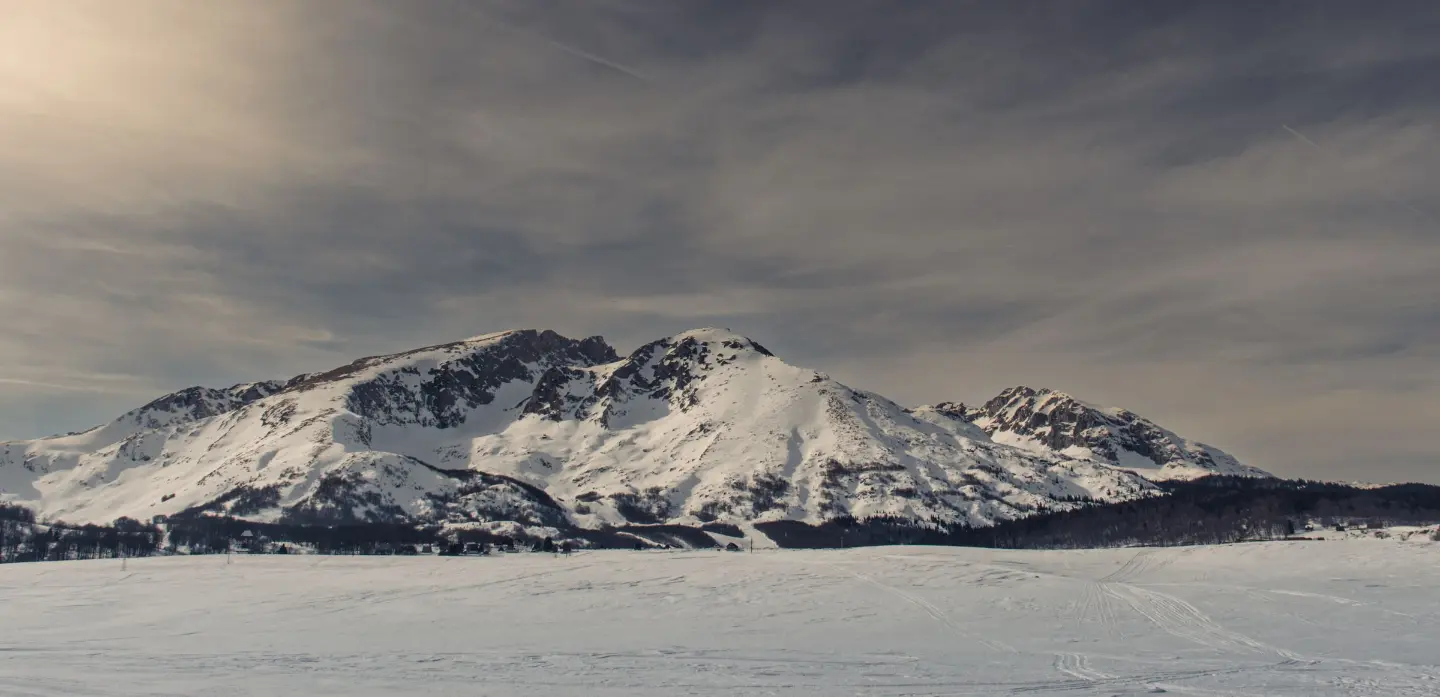
Snow in the north, mimosa on the coast

Three months when Bjelasica and Durmitor fill with skiers, the Bay of Kotor goes quiet and Herceg Novi turns yellow with mimosa.

Good to know

Good to know

Winter tyres and mountain roads

By law winter equipment is compulsory from 15 November to 30 March and on snow or ice at any time, and the interior ministry's order adds winter tyres whatever the weather on listed roads (in 2025/26 from 15 November to 1 April) – in 2023/24 the list included the motorway to Mateševo, the roads to Njeguši and Lovćen, the Sedlo road and the access roads to the ski areas. Minimum tread is 4 mm and studded tyres are banned. The Durmitor Ring over Sedlo stays closed by snow until late May or June; road conditions: AMSCG, 19807.

Flights and trains

In winter 2025/26 Podgorica had flights to 17 destinations in 13 countries, while Tivat kept only four routes (Belgrade, Istanbul, Tel Aviv and Yerevan). Since 30 March 2026 Wizz Air has had a base in Podgorica, so check this winter's routes at montenegroairports.com. The night train from Bar to Belgrade leaves at 20:10 in the 2026 timetable, and trains from Podgorica reach Kolašin in about 1 h 20 min.

Ski passes and snow

Day passes in 2025/26: €25 adults / €16.50 children at Kolašin 1600, €15 / €12 at Kolašin 1450 and €16 / €10 at Savin Kuk. There is no artificial snow, so check skijalista.me before you travel. The K7 chairlift linking Kolašin 1600 and 1450 was out of service all of 2025/26.

Ferry and cable car

The Kamenari–Lepetane ferry operates year-round – on the winter schedule every 20 minutes from 6 a.m. to midnight, and hourly at night; a car pays €5 (price list at trajekt.me), and €5 at the ticket office. The Kotor–Lovćen cable car closed for the winter in early November in both 2024 and 2025.

Short days

Sunset in Kotor is at 16:15 on 1 December, 16:24 on 1 January and 17:00 on 1 February, and the mountains around the bay block the sun even earlier. Start mountain walks early; clocks go forward on 28 March 2027.

What to pack

A waterproof jacket and umbrella for the coast, where it rains on about 14 days in December and January. For the mountains bring thermal layers, gloves and a hat: average highs in Žabljak are 0–2 °C and nights average −4 to −7 °C.
National park fees

Day tickets are €5 for Durmitor and Skadar Lake, €4 for Biogradska gora and €3 for Lovćen; an annual pass for all five national parks costs €13.50 in 2026.

FAQ

Frequently asked questions

Not every year. The season usually starts in mid-December and is best in January and February, but none of the resorts makes artificial snow. In 2023/24 Kolašin 1600 and Savin Kuk did not open at all, while in 2025/26 Kolašin 1600 had 77 ski days and ran into April.

In 2025/26 an adult day pass cost €25 at Kolašin 1600 (children €16.50), €15 at Kolašin 1450 (children €12) and €16 at Savin Kuk (children €10). Prices for 2026/27 had not been published at the time of writing.

By car on the motorway from Podgorica to Mateševo, opened in 2022; the operator puts the drive to the ski area at about half an hour from Podgorica. By train there are five departures a day in the 2026 timetable, taking about 1 h 20 min; the station is in town, 12 km from Kolašin 1600.

Yes, if you like quiet: in January 2026 Kotor's hotels had about 6% of their August guests. The Old Town has a festive programme around New Year, St Tryphon's feast on 3 February and the carnival in February. The Kotor–Lovćen cable car does not run in winter.

In February. The 2026 edition ran from 13 to 28 February; the 2027 dates had not been announced at the time of writing, so check with the Herceg Novi tourist board.

Only if you are hardy: the sea averages about 15 °C in December and 13–14 °C in January and February.

No. The road over the Sedlo pass is closed by snow and usually reopens only in late May or June. Žabljak itself is reached via Šavnik or via the Đurđevića Tara bridge – both on the list of roads where winter tyres are required whatever the weather.

Twice: Catholics celebrate on 25 December and Orthodox believers on 7 January, with the badnjak blessed on Christmas Eve, 6 January. 1 and 2 January are public holidays, and 6–8 January are days off for Orthodox believers.

Guides & articles

Guides & articles