Travel to Montenegro
Buća Summer Residence
Summer residence and museum

Buća Summer Residence

A fortified summer residence of Kotor nobility in the center of Tivat – today a museum and gallery

Overview

The Buća Summer Residence, also known as the Buća-Luković complex, is the most monumental and best-preserved summer residence of Kotor nobility in Tivat.

Since the Middle Ages, Kotor noble families built summer residences surrounded by vineyards and gardens along the shores of the Bay of Tivat, and the Buća family built a fortified estate here.

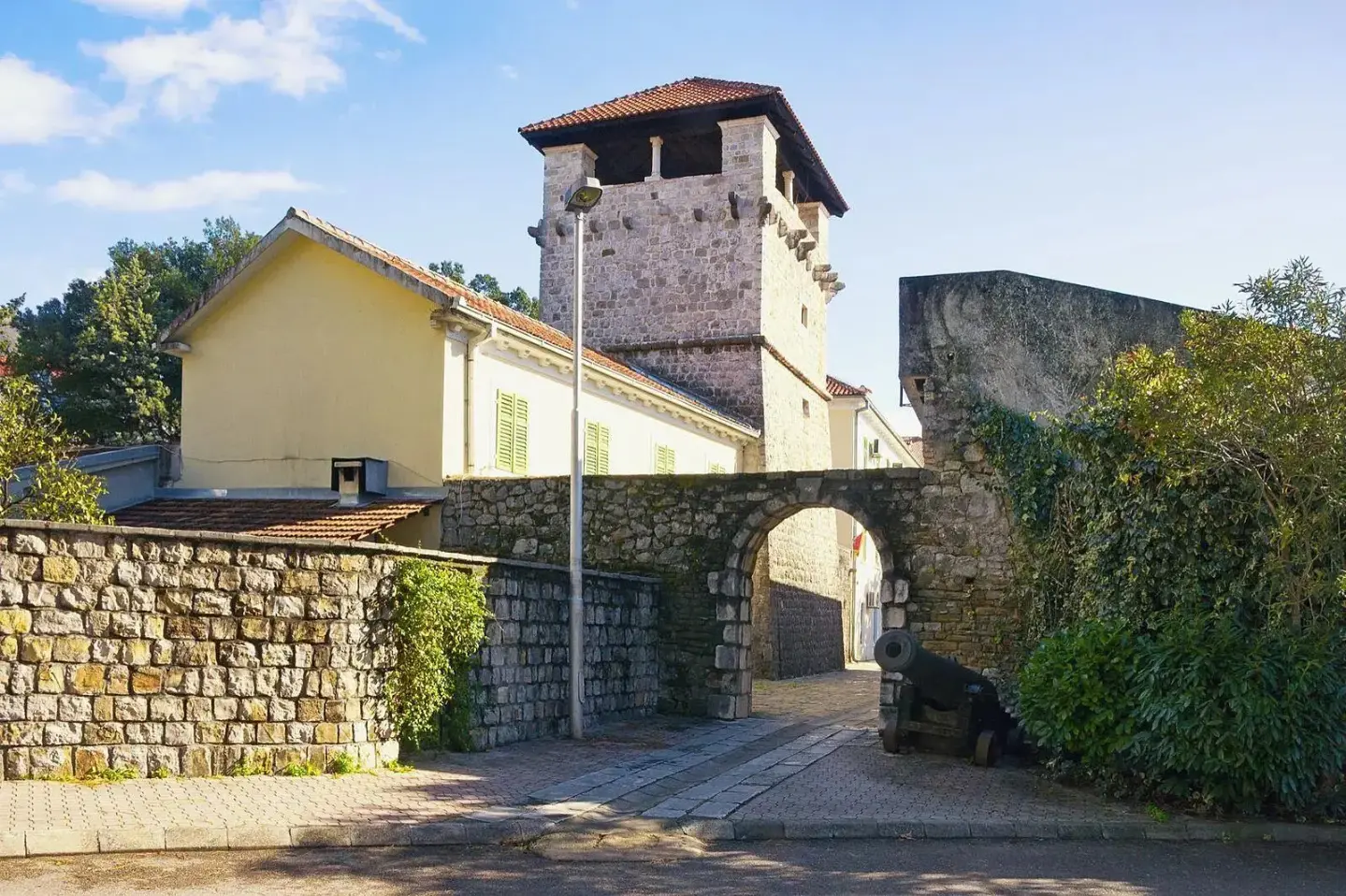
The residence was built in the 15th century, in several phases – which is why Renaissance, late Gothic and Baroque intertwine in it. According to the publication “Sakralna baština Tivta”, it was built by the Kotor nobleman Mihailo Petrov Buća; some sources place its origin as early as the 14th century. The complex is enclosed by a stone wall and consisted of a defensive tower with a monumental entrance gate, a residential house, an economic building and the Chapel of St. Michael in the courtyard, along with a vineyard and a large garden. A stone path with 130 decorative stone pillars led to the sea.

The Buća family produced a series of renowned merchants, financiers, diplomats and theologians in the 14th and 15th centuries. The most famous is Nikola Buća, protovestijar (finance manager) of King Stefan Dečanski and Emperor Dušan. The residence later passed into the hands of the Luković seafaring family from Prčanj (sources cite different years), after whom the complex bears its double name. In 1888, the Luković heirs ceded part of the estate for the construction of the Austro-Hungarian naval Arsenal, from which today's Tivat grew.

In the mid-20th century, on the site of the stone path to the sea, a summer stage was built in the center of the garden. Today, the complex is a protected cultural monument and the seat of the PI Museum and Gallery Tivat: the “Ethnographic Heritage of Tivat” collection is housed in the former economic building, and art, ethnological, archaeological and documentary exhibitions alternate in the tower and gallery space.

  • Tivat
  • Boka Kotorska
  • Cultural heritage
  • Museum
  • Gallery
  • Middle Ages
Highlights

Discover Buća Summer Residence

Tower from 1548

Tower from 1548

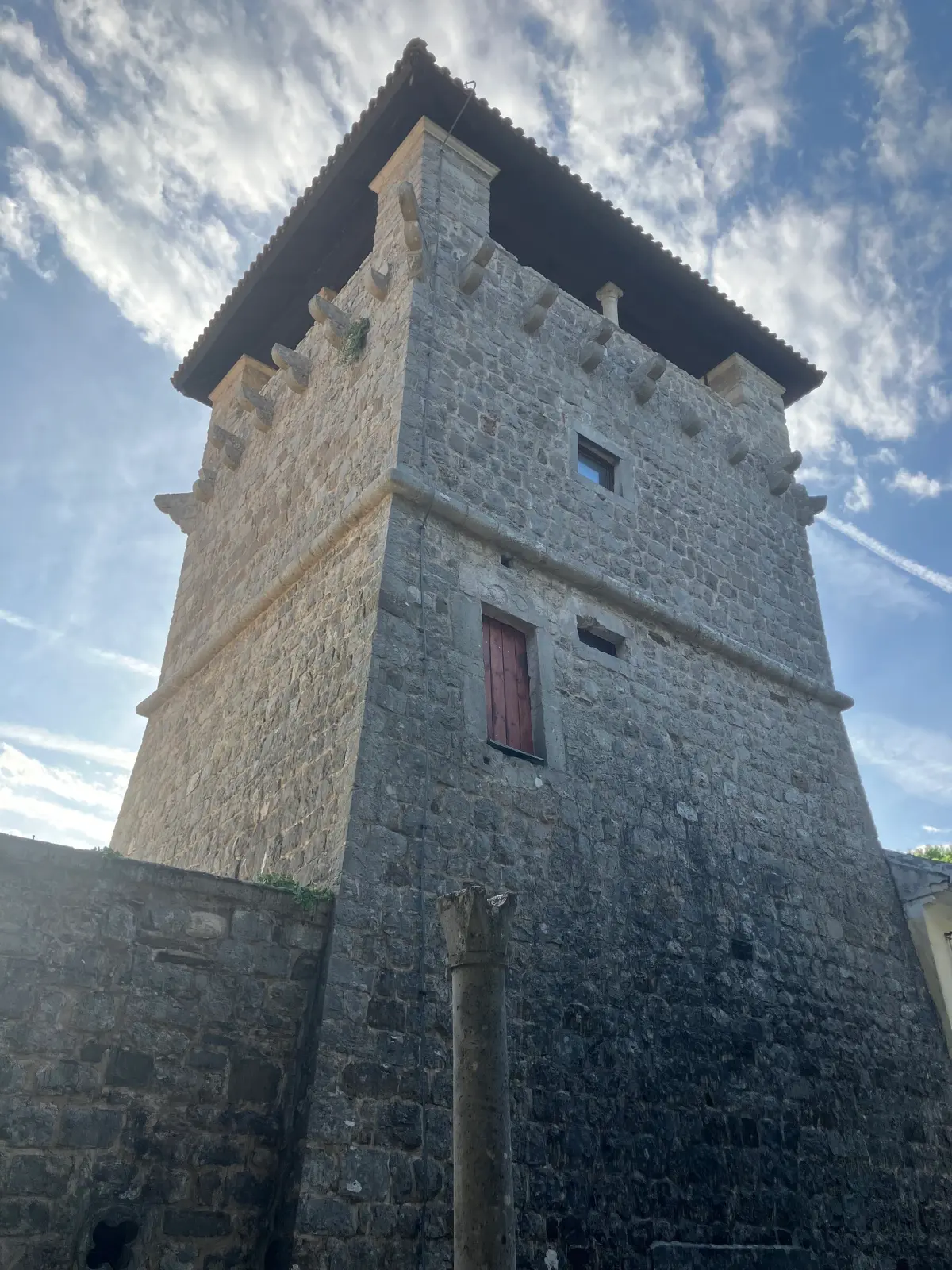
The oldest preserved part of the complex is the defensive tower, about 15 meters high. Above the entrance is an inscription with the year 1548 and the name of the master – meštar Vićencije from Lastva. The tower has four levels and today serves as the museum's exhibition space.

Chapel of St. Michael

Chapel of St. Michael

In the residence courtyard is the family Chapel of St. Michael – a small rectangular structure without an apse. Along with the tower, it is the most valuable part of the complex, which as a whole is a protected cultural monument.

The Buća family and the Lukovićs

The Buća family and the Lukovićs

The Kotor noble family Buća produced merchants, diplomats and financiers in the 14th and 15th centuries – among them Nikola Buća, protovestijar of Emperor Dušan. Later the estate passed to the seafarers from Prčanj, the Lukovićs, whose heirs ceded part of the estate in 1888 for the Austro-Hungarian Arsenal – the beginning of modern Tivat.

  • Ethnographic Heritage of Tivat

    In the former economic building, on two levels, is the museum collection “Ethnographic Heritage of Tivat”: traditional clothing and costumes, crafts, notable personalities and intangible heritage of this area. The Museum and Gallery are open from Tuesday to Sunday, 10 a.m.–4 p.m.

  • Summer stage in the garden

    In the mid-20th century, on the site of the former stone path to the sea with 130 decorative pillars, a summer stage was built in the center of the garden. In summer it hosts concerts, plays and literary evenings, and programs of the Center for Culture Tivat spread through the town.

What to do

Activities in Buća Summer Residence

  • Culture

    Museum and gallery tour

    Ethnographic collection, exhibitions in the tower and gallery space – from Tuesday to Sunday, 10 a.m.–4 p.m.

  • Summer programs on the stage

    Concerts, plays and literary evenings in the residence garden during summer – program announced by the Museum and Gallery and the Center for Culture Tivat.

  • Mountains

    Walk through cultural Tivat

    Combine the residence with the Large City Park, the Pine Promenade and the Maritime Heritage Collection in Porto Montenegro.

  • Culture

    Architecture photography

    The tower with the inscription from 1548, the entrance gate and the Chapel of St. Michael – Renaissance with traces of late Gothic in the center of a modern city.

Around here

Nearby places

  1. Tivat

    City · 0.2 km

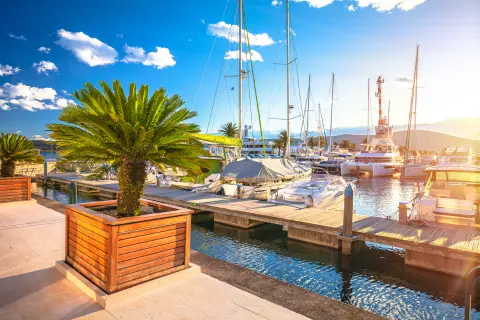
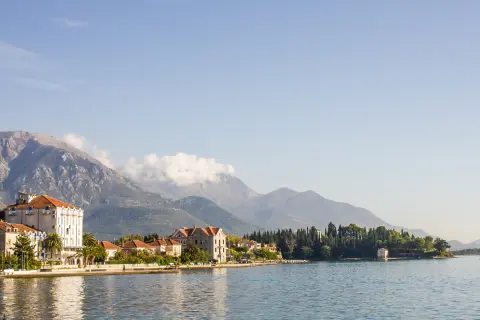
    A coastal town in Boka Kotorska, known for the superyacht marina Porto Montenegro and its Mediterranean climate.

  2. Bijela

    Village · 3.8 km

    Bijela is a coastal settlement in the municipality of Herceg Novi, situated along the Verige Strait, known for its pebble beaches and historic shipyard.

  3. Baošići

    Village · 4.4 km

    A peaceful coastal settlement with dozens of pebble beaches on the southeastern shore of the Bay of Kotor, known for the Mimosa Festival.

  4. Prčanj

    Village · 4.9 km

    Prčanj is a quiet coastal settlement along the Bay of Kotor, with a sandy-pebbly beach and rich historical architecture.

  5. Kotor

    City · 6.2 km

    A medieval town under UNESCO protection, nestled between steep mountains and the calm waters of the Bay of Kotor.

  6. Perast

    Old Town · 6.2 km

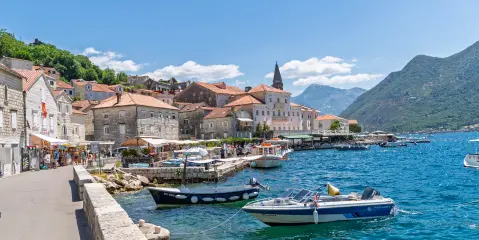
    A picturesque coastal settlement in the Bay of Kotor, known for its Baroque architecture and two island-churches.

  7. Our Lady of the Rocks

    Point of Interest · 6.2 km

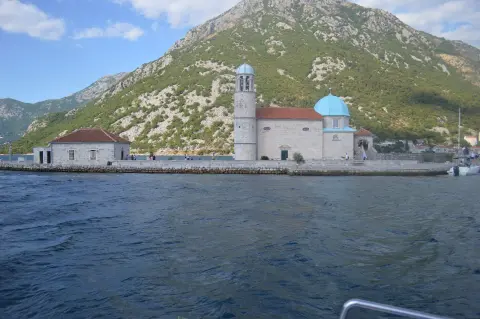
    A man-made island off Perast with a Baroque church from 1630, a museum of votive gifts and 68 paintings by Tripo Kokolja.

  8. St. John's Fortress

    Castle · 6.4 km

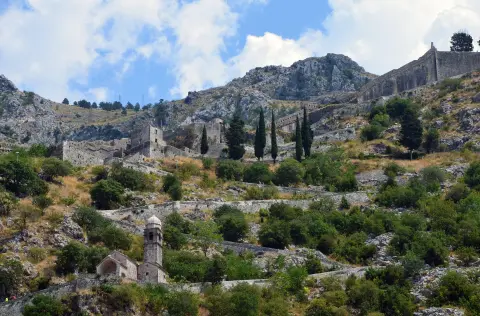
    A fortification complex above Kotor at 260m elevation, with views over the entire Bay of Kotor.

Plan Your Visit

Weather & Useful Info

When to come

Monthly averages – Tivat.

  • Jan: Air (max) 12 °C, Sea 14 °C
  • Feb: Air (max) 13 °C, Sea 13 °C
  • Mar: Air (max) 14 °C, Sea 14 °C
  • Apr: Air (max) 17 °C, Sea 16 °C
  • May: Air (max) 22 °C, Sea 19 °C
  • Jun: Air (max) 27 °C, Sea 23 °C
  • Jul: Air (max) 31 °C, Sea 25 °C
  • Aug: Air (max) 30 °C, Sea 26 °C
  • Sep: Air (max) 25 °C, Sea 24 °C
  • Oct: Air (max) 22 °C, Sea 21 °C
  • Nov: Air (max) 17 °C, Sea 18 °C
  • Dec: Air (max) 14 °C, Sea 15 °C
Air (max)SeaSwimming season
Climate and weather – Tivat
The Museum and Gallery are open year-round, from Tuesday to Sunday, 10 a.m.–4 p.m. In summer the residence is at its liveliest – programs of the Center for Culture Tivat take place in the garden and on the summer stage; in the off-season it is quieter and suitable for viewing exhibitions.

Visitor tip

Before your visit, check the program on the website or Facebook page of the Museum and Gallery Tivat – exhibitions change, and in summer there are concerts, plays and literary evenings in the garden. The museum is closed on Mondays. You can easily combine the visit with the Large City Park and the Pine Promenade, which are nearby. For information on tickets and guided tours, call +382 32 674 591.

Good to know

Opening hours
Museum and gallery Tivat: Tuesday–Sunday 10–16 h, Monday closed. Summer programs on the stage by special announcement.
Admission
Information about tickets and group visits: +382 32 674 591.
Parking
In the center of Tivat, parking is charged by zones; the easiest way to the summer house is on foot.
Accessibility
The approach from the center is flat; the tower has four levels and is not adapted for persons with reduced mobility.

Getting Here

By Plane

Tivat Airport is about 3 km from the city center – the residence can be reached by taxi or local bus to the center.

By Car

The residence is in the center of Tivat, at Trg od kulture 2. Parking in the city center is charged by zone, so it is easiest to park at a public parking lot and continue on foot.

By Bus

City and intercity buses arrive in Tivat; from the city center to the residence it takes a few minutes on foot.

By Boat

If you arrive by sea, from the Pine Promenade and from the Porto Montenegro marina you can reach the residence on foot in a few minutes.

Open in Google Maps
Day plan

Suggested Itineraries

Half a day through cultural Tivat

  1. Day 1 · Center of Tivat

    Buća Summer Residence, the park and the Pine Promenade

    Start before noon at the Buća Summer Residence: visit the ethnographic collection and the current exhibition in the tower, then stop by the Chapel of St. Michael in the courtyard. From there, walk to the Large City Park, a botanical garden that Tivat seafarers filled with saplings from distant voyages starting in 1892. Continue to the Pine Promenade and further along the waterfront to Porto Montenegro, where the Maritime Heritage Collection is located. Tip: in summer, check the evening program on the residence's summer stage and come back for a concert or play.
FAQ

Frequently Asked Questions

A fortified summer residence of the Kotor noble family Buća from the 15th century in the center of Tivat, also known as the Buća-Luković complex. It consists of a defensive tower, a residential and economic building and the Chapel of St. Michael; today it is a protected cultural monument and the seat of the PI Museum and Gallery Tivat.

The Museum and Gallery Tivat in the residence are open from Tuesday to Sunday, from 10 a.m. to 4 p.m.; they are closed on Mondays. Summer programs on the stage have special schedules – check the announcement at muzejigalerijativat.me or call +382 32 674 591.

In the center of Tivat, at Trg od kulture 2, a few minutes' walk from the Pine Promenade, the Large City Park and the Porto Montenegro marina.

The museum collection “Ethnographic Heritage of Tivat” in the former economic building, occasional art, ethnological, archaeological and documentary exhibitions in the tower and gallery, the Chapel of St. Michael in the courtyard and the summer stage in the garden.

The residence was built by the Kotor noble family Buća, and later it passed into the ownership of the Luković seafaring family from Prčanj. In 1888, the Luković heirs ceded part of the estate for the construction of the Austro-Hungarian naval Arsenal.

In October 2026, the Municipality of Tivat launched the HOT CHAI project (Interreg VI-A IPA Croatia – Bosnia and Herzegovina – Montenegro 2021–2027) for the digital transformation of the Museum and Gallery Tivat. Two AR/VR experiences are planned: a medieval naval battle and the history of the Buća family residence. The Municipality has not yet publicly announced which battle it concerns – follow the announcements of the Museum and Gallery Tivat.